

by JENN WOOD
***
Court filings continued to fly in Alex Murdaugh’s murder retrial on Thursday (October 8, 2026), as prosecutors invoked grand jury secrecy in the fight over the missing murder weapons and answered defense demands for DNA evidence, ballistics comparisons and original crime-scene scans.
A separate defense reply acknowledged a disputed cellphone discovery date was wrong by ten days, but maintained that its current expert still needed native extraction files from Maggie and Paul Murdaugh‘s phones.
Together, the filings offered potential resolutions to some disputes – while sharpening others – ahead of next Friday (October 16)’s hearing before S.C. circuit court judge Debra McCaslin.
Prosecutors agreed to provide the original FARO scans of the crime scene and additional DNA analysis project files. However, they opposed suggested comparisons between this crime and other shootings – and sought further information and judicial oversight before testing that would consume any remaining evidence.
On the most closely watched issue — the alleged handling of the missing murder weapons — prosecutors declined to confirm or deny the existence or contents of a state grand jury investigation. Instead, they emphasized Murdaugh’s friendship with Yemassee police chief Greg Alexander and said they would comply with their disclosure obligations when triggered.
To recap: Murdaugh was convicted of the murders of his wife, 52-year-old Maggie Murdaugh, and younger son, 22-year-old Paul Murdaugh, and sentenced to life in prison following a six-week trial in Walterboro, S.C. in early 2023. Those convictions were reversed in May of this year, however, after the S.C. supreme court found numerous issues with the conduct of the trial – including allegations of jury tampering and potential jury rigging.
Murdaugh is scheduled to be tried a second time in Sumter, S.C. beginning on April 5, 2027.

***
MISSING WEAPONS, GUARDED ANSWERS
Thursday marked McCaslin’s deadline for the state to respond to the defense’s motion seeking evidence connected to the alleged disposal of the murder weapons.
As FITSNews first reported September 25, 2026 a state grand jury was reportedly examining an alleged crime scene coverup involving the missing weapons. Neither weapon used to kill Maggie and Paul has ever been recovered.
The defense’s September 30 (.pdf) motion sought witness statements, investigative records and grand jury material. Attorneys also asked whether prosecutors intended to argue that anyone else participated in the killings or helped conceal weapons or clothing afterward.
Prosecutors’ three-page response declined to address the substance of the reported investigation, citing S.C. Code § 14-7-1720, which governs state grand jury secrecy.
“The state cannot prematurely confirm or deny the existence or contents of any State Grand Jury investigation until when appropriate,” prosecutors wrote.
They also declined to discuss which witnesses had been subpoenaed or testified, or to assess the accuracy of the reporting.
***

RELATED | RETRACING GREG ALEXANDER’S ROAD TO MOSELLE
***
“The State is aware of its Brady obligations and will comply if and when those obligations are triggered,” the response stated.
Much of the filing instead recounted testimony about Yemassee police chief Greg Alexander’s relationship with Murdaugh. Prosecutors cited Murdaugh’s description of Alexander as a dear friend, his attendance at the chief’s corruption trial as a friend rather than an attorney, and testimony placing Alexander in his law office. The response noted that Alexander was acquitted at that trial.
It also cited testimony from John Marvin Murdaugh, Alex’s younger brother, that Alexander gave him a ride to the Islandton, S.C. family property known as ‘Moselle’ – where the murders were committed – after his truck broke down. Those accounts documented friendship and an acknowledged trip to the crime scene, but they did not establish that Alexander handled either murder weapon or any “bloody clothes.”
They also did not answer the defense’s broader disclosure argument.
As FITSNews previously reported, attorneys argued that an account previously given to SLED did not become shielded from disclosure simply because prosecutors later investigated the same subject through a grand jury. The State’s response did not specifically account for any preexisting statement or interview records of that kind.
The secrecy statute also permits court-directed disclosure for specified purposes, including compliance with constitutional and other legal requirements. It is not an absolute prohibition on disclosure.
The response supplied no findings about the alleged disposal of the weapons. Furthermore, it left unresolved the central question raised by the defense: which records must be disclosed before the retrial, and whether they originated inside or outside the grand jury investigation.
***
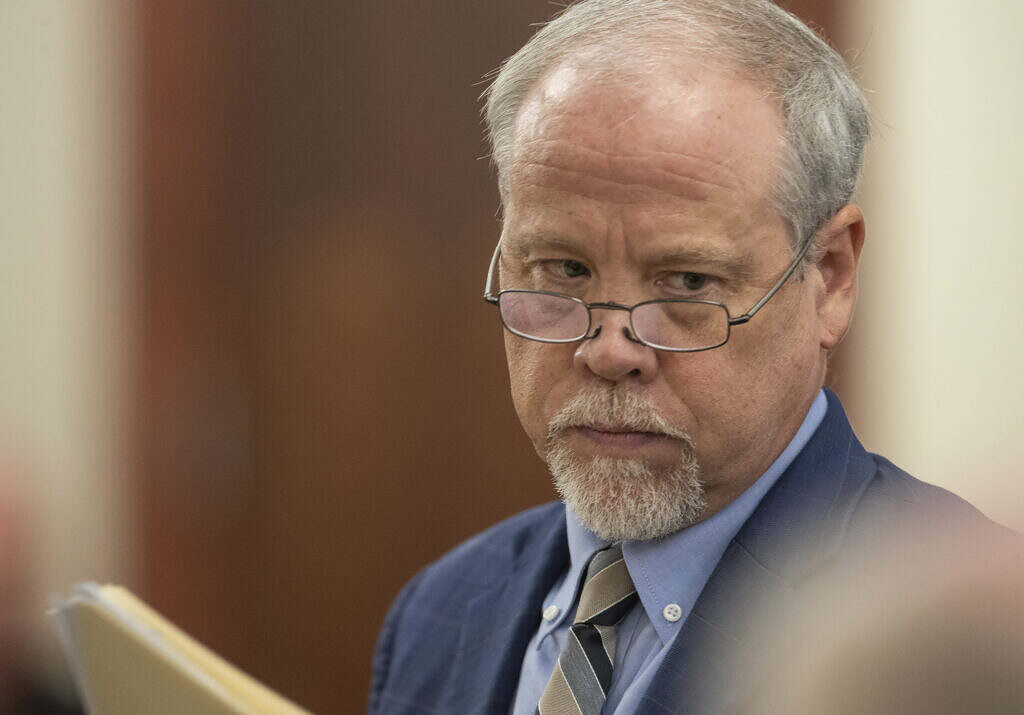
RELATED | EVIDENCE SOUGHT From Alleged Crime Scene Coverup
***
DNA: ACCESS VERSUS EXHAUSTION
The State’s DNA response (.pdf) to the defense’s request (.pdf) for additional testing of Maggie Murdaugh’s fingernail evidence and DNA collected from her cellphone focused on whether the proposed testing would consume the remaining samples, leaving nothing for further analysis.
As FITSNews reported last month, the defense sought additional testing of Maggie’s fingernail evidence and material collected from her cellphone. Attorneys questioned how SLED interpreted male DNA indicators in the underlying laboratory records.
Prosecutors said the defense had received the DNA reports and complete case file before the first trial. They stressed that the limited unidentified profile from Maggie’s left-hand fingernails was previously known and addressed at trial.
The response recounted testing by independent laboratory Othram after the court authorized an initial measurement of the available DNA. According to the State, Othram detected very small amounts of male DNA in the remaining extracts from previously tested fingernail samples, while reserve samples produced no detectable Y-chromosome target.
Prosecutors said the proposed further testing could consume all remaining material and potentially combine samples from both hands. They requested an explanation of the testing method, its objective, its likelihood of producing usable results and why nothing would remain for additional testing.
The State also sought access to the process, data and results if testing proceeded.
Those conditions were characterized as being necessary to preserve evidence and allow informed judicial oversight. The filing did not establish that additional testing would be futile, and the presence of male DNA did not establish who deposited it, when it was deposited or whether it was connected to the killings.
On Maggie’s cellphone, prosecutors said the remaining swab material and extract had been preserved. They maintained that the partial profile was unsuitable for further interpretation or comparison under SLED’s protocols and requested a clearer proposal before transferring material for additional testing.
The response also included an agreement to provide additional underlying analysis files: a STRmix project folder for the left-hand fingernail evidence and GeneMapper ID-X project files for the phone and both hands’ fingernail evidence.
That offer addressed part of the defense’s demand for analytical records. It did not settle the disagreement over testing that would exhaust the remaining samples.
***
CELLPHONES: A DATE CORRECTED
The defense’s cellphone reply (.pdf) responded to the state’s October 6 opposition to its request for underlying phone extraction files — a filing in which prosecutors accused attorneys of “brazen falsehoods” about what evidence had been provided and when.
Prosecutors disputed the claim that an approximately 81-gigabyte extraction of Alex’s phone was delivered January 30, 2023, during trial. They attached a receipt signed by attorney Phillip Barber on January 20 and emails acknowledging earlier production.
In its reply filed October 7, the defense acknowledged the error.
“The defense files do appear to be in error about the date by ten days,” attorneys wrote.
They nevertheless argued that delivery on the business day before trial did not provide materially more time for review. They clarified that Alex Murdaugh’s September extraction was now in their possession and was not part of the request to compel.
The continuing demand concerned native extractions from Maggie’s and Paul’s phones, with associated keychain files and logs.
According to the reply, original files supplied to former defense expert Chip Johnson had been deemed corrupted, and the replacements appeared to be processed reports rather than unprocessed extractions. Attorneys acknowledged those reports contained extensive extracted data, including system databases.
“The full reports were adequate for defense purposes during the first trial,” the reply Stated. “The defense has not claimed otherwise.”
The reply maintained that the current expert needed the native files for the retrial. The State’s exhibits identified extraction archives and associated files, but the parties’ accounts differed over what the replacement drives contained.
The defense offered to deliver a suitable hard drive and said its motion would become moot if prosecutors copied the extractions depicted in their exhibits and returned them at or before the October 16 hearing.
***
ORIGINAL SCANS OFFERED
The State also agreed (.pdf) to provide the original FARO laser scans of the Moselle kennel area.
Prosecutors said they supplied a 2.69-gigabyte compiled scan project in November 2022, accessible through the free, read-only FARO SCENE 2go viewer. They said the defense had not requested the raw scans before the first trial, when it had access to Moselle to conduct measurements.
The defense previously argued that its reconstruction experts needed the native files, particularly because the kennel area had since been demolished.
“SLED has possession of the original scans and the State is happy to provide those to the defense,” the response stated.
Prosecutors characterized the motion as moot. The filing did not document a completed transfer or a ruling declaring the dispute resolved.
***
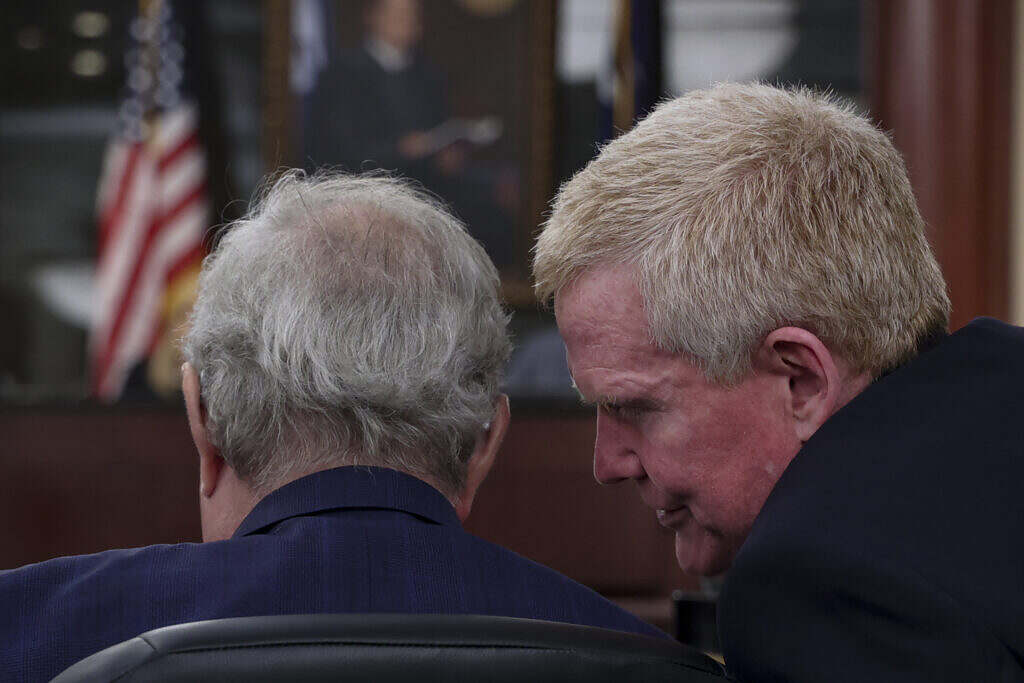
RELATED | DNA, Bullets And Missing Data: Murdaugh Defense Presses State
***
BALLISTICS: CONNECTION OR CONJECTURE?
In its response (.pdf) to the defense’s request for independent ballistics comparisons, the State opposed examination of .300 Blackout cartridge cases from recent shootings in nearby Allendale, S.C., including the April 25, 2026 killing of Frank Alexander Brown III.
Prosecutors argued that shared caliber and geographic proximity did not establish a sufficient connection to Moselle. They said the Allendale evidence generated no investigative leads linking it to the Murdaugh case through the National Integrated Ballistic Information Network (NIBIN).
The response characterized the requests as a “speculative fishing expedition” and raised concerns about laboratory workload and evidence handling in unrelated investigations. The state also argued that even a later connection to the same firearm would not necessarily exclude Murdaugh’s use of it in June 2021.
Prosecutors agreed to provide responsive database information SLED possessed, but said the agency did not possess the broad lists of crimes and recovered .300 Blackout firearms the defense requested.
Prosecutors also rejected the defense’s contention that recent descriptions of .300 Blackout’s prevalence undermined SLED testimony from the first trial that the weapons were less common at the time. They cited pandemic-era shortages and subsequent growth in popularity.
The response supplied NIBIN submission figures increasing from 42 in 2021 to 209 in 2025, with 130 recorded in 2026. Those were submission counts, not counts of murders or unique firearms, and the current-year figure was incomplete.
The State asserted that NIBIN had “mathematically ruled out a correlation.”
That was the State’s interpretation of the database results. ATF describes NIBIN as a tool for finding possible links between shootings, which examiners can then confirm by comparing the actual cartridge cases under a microscope. The filing reported no database link; it did not document a microscopic comparison ruling out a match.
Next week’s hearing will bring the competing positions into McCaslin’s courtroom. Offers to provide evidence will need to become completed transfers; objections will need to be measured against the defense’s requests and the applicable law.
With another murder trial approaching, the stakes now extend beyond increasingly hostile attorney exchanges – and into what evidence both sides will be able to examine prior to a second jury being selected to rehear the case.
***
ABOUT THE AUTHOR …

As a private investigator turned journalist, Jenn Wood brings a unique skill set to FITSNews as its research director. Known for her meticulous sourcing and victim-centered approach, she helps shape the newsroom’s most complex investigative stories while producing the FITSFiles and Cheer Incorporated podcasts. Jenn lives in South Carolina with her family, where her work continues to spotlight truth, accountability, and justice.
***
SOUND OFF…
Got something you’d like to say in response to one of our articles? Or an issue you’d like to address proactively? We have an open microphone policy! Submit your letter to the editor (or guest column) via email HERE. Got a tip for a story? CLICK HERE. Got a technical question or a glitch to report? CLICK HERE.
