

by JENN WOOD
***
Attorneys for Alex Murdaugh are asking a judge to compel prosecutors to turn over additional DNA and ballistics evidence – along with the raw data from a three-dimensional scan of the Islandton, South Carolina crime scene – as they prepare for his April 2027 murder retrial.
Murdaugh was convicted in 2023 of murdering his wife, 52-year-old Maggie Murdaugh, and younger son, 22-year-old Paul Murdaugh at the family’s Colleton County property on June 7, 2021. The South Carolina supreme court overturned those convictions in May of this year after finding that former Colleton County clerk of court Rebecca “Becky” Hill improperly interfered with the jury.
Last week, Murdaugh’s retrial was officially docketed for Sumter County.
The September 18, 2026 motion (.pdf) draws on laboratory records and correspondence attached as exhibits. It argues that the lead investigatory agency on the case – the S.C. Law Enforcement Division (SLED) – published DNA reports that do not fully explain male DNA signals recorded in its underlying data, and that the defense should be allowed to pursue testing before the remaining samples are exhausted.
Prosecutors disputed the value of further DNA testing – saying they need a clearer account of what the defense’s laboratory intends to do before agreeing to testing that could consume the samples.
The filing follows prior FITSNews coverage of the defense’s request to send fingernail evidence to Othram, an independent laboratory. At a hearing last month, S.C. circuit court judge Debra McCaslin allowed the material to be sent for an initial measurement of the DNA present, directing the defense to report those results before further testing.

***
WHAT THE DNA RESULTS SHOW
Othram has now measured four samples from Maggie Murdaugh’s fingernail clippings, according to the motion. The extracts previously tested by SLED yielded small amounts of detectable Y-chromosome material — a marker of male DNA — from both hands. The reserve samples yielded no detectable Y-chromosome target.
The defense argued that SLED’s own 2021 worksheet raises a question about its published findings. That worksheet recorded a higher concentration of male DNA in the clippings from Maggie’s right hand than in those from her left. Yet SLED reported an unidentified contributor in the left-hand sample while describing the resulting profile from the right hand as attributable to Maggie.
Murdaugh’s attorneys contend that the way SLED diluted the samples before further analysis could help explain the difference. They want permission for Othram to continue testing and want records documenting SLED’s decisions about which tests to perform. Those arguments constitute the defense’s interpretation of the laboratory data; further testing has not identified the male contributor or established when the DNA was deposited.
The motion also seeks the remaining swabs and extract from Maggie’s cellphone. SLED’s report said the phone swabs produced a partial DNA profile but that the laboratory could not determine the number of contributors or offer a further interpretation. The defense pointed to male DNA indicators in the underlying records and argued that additional analysis should have been attempted.
In a September 17, 2026 letter attached to the motion, senior assistant deputy attorney general Creighton Waters said Othram’s measurements showed “extremely low” levels of male DNA in the previously tested fingernail extracts and none detectable in the reserve samples. He cited an Othram scientist’s earlier warning that further work would be “high risk” and unlikely to yield usable results.
Waters also questioned the type of testing the defense proposed, whether it would combine samples and why no material would remain for SLED. On the phone evidence, he said approximately one-quarter of each swab and 10 microliters of extract remain, and that SLED’s electropherograms can be shared.
The defense said the court’s August ruling permits it to pursue further testing after reporting Othram’s measurements. It asked McCaslin to authorize that next step and order the phone material preserved and transferred.
***

RELATED | Murdaugh Madness: About That Allendale Murder…
***
A NEW FIGHT OVER .300 BLACKOUT EVIDENCE
The motion also targets the ammunition used to kill Maggie Murdaugh. Investigators recovered six .300 Blackout cartridge cases near her body; but the rifle that fired them has yet to be found. At Murdaugh’s first trial, prosecutors argued that a missing family rifle was the murder weapon – drawing in part on testimony connecting cartridge cases found around Moselle to one another.
The defense highlighted a statement made at that trial by SLED agent Jeff Croft, who testified that .300 Blackout weapons were “just not that common” at the time and that he had never worked a murder investigation involving one.
Waters’ letter offered a different picture of the ammunition’s prevalence in SLED’s records: Since January 2021, he wrote, the agency has entered 720 .300 Blackout cartridge cases into its ballistic imaging system, including evidence from the Murdaugh case. SLED receives such cases weekly, if not daily, he wrote.
The defense called that information potential impeachment evidence and wants records showing what SLED knew when Croft testified. The 720 figure counts cartridge cases entered over more than five years; it does not establish how many firearms produced them or whether any are connected to the Moselle killings.
Murdaugh’s attorneys also seek access to cartridge cases from the April 2026 killing of Frank Alexander Brown III in Allendale County and from two other Allendale shootings. Brown lived in Islandton, near Moselle. The defense wants its firearms examiner to compare that evidence directly with the Moselle cases and asks why, according to the motion, the Brown evidence was entered into the ballistic database nearly four months after his death.
Waters wrote that SLED’s database has produced no lead linking other evidence to the Moselle case. He also corrected an apparent misunderstanding about the Allendale shootings: the .300 Blackout evidence came from two shootings earlier on the day an Allendale police sergeant was shot, he said, not from the shooting of the sergeant. Prosecutors oppose turning over cartridge cases from those open investigations, citing the absence of a database link and concerns about the evidence and its chain of custody.
No ballistic connection between the Brown homicide, the other Allendale shootings and the Murdaugh murders has been established in the material presented with this motion.
***
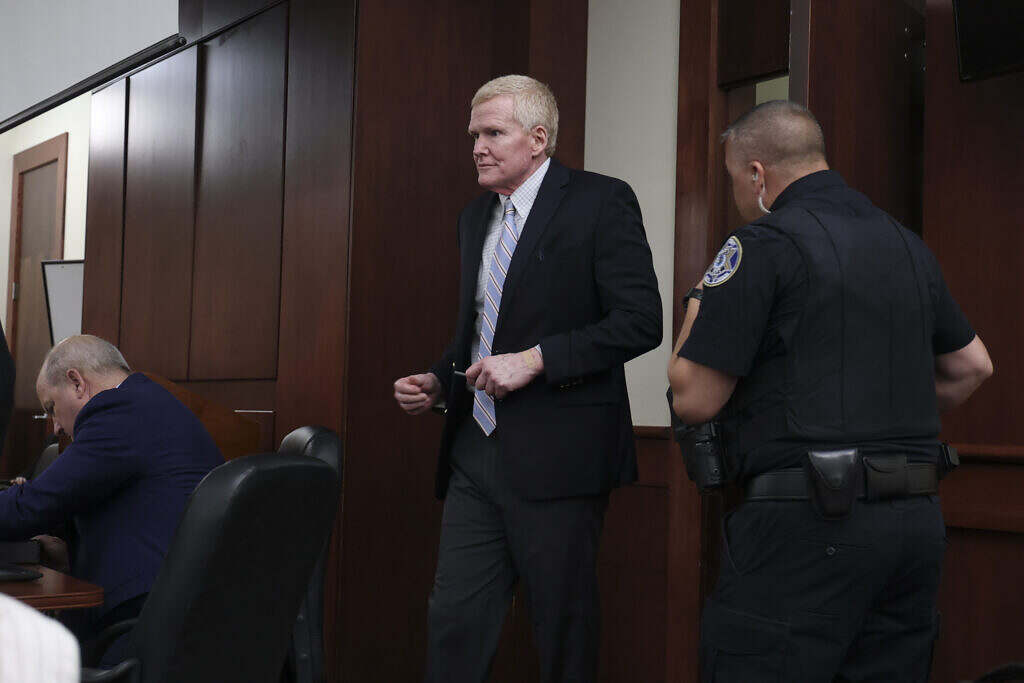
RELATED | Alex Murdaugh Murder Retrial Moved To Sumter County
***
RAW SCAN DATA REQUESTED
Finally, the defense said it received a viewable export of SLED’s three-dimensional FARO scan of the crime scene, but not the underlying files its reconstruction experts need to examine and measure the scene independently. Its attorneys say they asked Waters on September 15 to confirm whether those files still exist and had received no response by the time they filed the motion.
Because the area near the compound’s dog kennels – where the murders took place – has since been demolished, the defense argued that the original scan data cannot be replaced. It asked the court to order production of the native files or require the state to explain in writing if they were lost or destroyed.
The defense asked McCaslin to order production within ten days of a ruling.
To view the latest motion for yourself, click on the link below…
***
THE MOTION…
Subscriber-only document
This PDF is available to FITSNews subscribers. Get full access and be able to view documents like this one.
Subscribe for accessAlready a subscriber? Log in here
***
ABOUT THE AUTHOR …

As a private investigator turned journalist, Jenn Wood brings a unique skill set to FITSNews as its research director. Known for her meticulous sourcing and victim-centered approach, she helps shape the newsroom’s most complex investigative stories while producing the FITSFiles and Cheer Incorporated podcasts. Jenn lives in South Carolina with her family, where her work continues to spotlight truth, accountability, and justice.
***
SOUND OFF…
Got something you’d like to say in response to one of our articles? Or an issue you’d like to address proactively? We have an open microphone policy! Submit your letter to the editor (or guest column) via email HERE. Got a tip for a story? CLICK HERE. Got a technical question or a glitch to report? CLICK HERE.

1 comment
Might as well past my most recent observation here, too:
There is no lying about minutes and seconds on each of Paul’s and Maggie’s phones.
The Prosecution spun a wild story to be believed only if you believe in magic and believe that dogs are gods.
As early as the late morning or early afternoon of Tuesday, 8 June 2021, Rogan Gibson was interviewed by law enforcement and said he had had a four minute conversation with Paul AND Alex between 8:40 and 8:44 pm on Monday, 7 June 2021, about Cash’s tail.
So, the knowledge that Alex was at the kennels that time was not some miraculous last-minute revelation which entrapped an unwary Alex.
The interesting thing is that Paul WAS answering texts from a female friend AT THE SAME TIME he ignored a call from Rogan Gibson.
Why?
The gullible who want to swallow whole the Prosecution’s weird theories of motives and timing insist it was because Paul was shot dead in the FOUR SECONDS between his last text to his female friend and Rogan Gibson’s second call arriving.
The more likely explanation is that Paul was annoyed with the demanding and exploitative Rogan Gibson.
We know Paul was moody. He was capable of charming his Valley-Girl girlfriend Morgan off her feet one minute and slapping her and spitting on her the next. She even said it in some interview: when it was good, it was very good; but when it was bad, it was very bad.
Earlier that day, Will Loving had inspected the dove field, agreed it had to be replanted, promised to help Paul with that task after work, then bailed out on him.
The rich boys cannot be too stupid to know that their working class “friends” swarm around them to enjoy their “toys” (meaning guns, trucks, and such) and cannot be so selfless at the same time as to give those leeching “friends” priority over everything.
There are simply not enough rich playmates of the same age in a small community like Hampton/Colleton/Allendale. And even if there were, it is not wise for a lawyer who makes his living exaggerating working-class people’s claims against insurance companies to form an aristocratic isolated island of wealth in a community of covetousness.
Rich boys get annoyed at leeching friends who take and take but give nothing back just as smart girls eventually get annoyed at the intellectually-lazy ones who always ask them to do their homework for them.
The most interesting thing is that Maggie read a text from John Marvin and another from Liz SEVERAL MINUTES after Paul was supposed to have been shot in the four seconds between sending a text about movies to a girl and ignoring an incoming call from Rogan Gibson.
Are we supposed to believe that Maggie was happily reading texts while Paul was being shot few feet from her?
Or should we go the more sensible explanation that the shooting cabal descended on Moselle, lay in wait behind the tractors in the hangar until Alex left for Almeda, then did their deed?
Is it also possible that Will Loving, Rogan Gibson, and/or one or both of the Tuten brothers knew something was to happen that day, which is why Will Loving bailed out on going to Moselle?
If you can believe that Paul’s own father “sacrificed” him to gain a mere two-week sympathy delay, why can’t you believe instead that it was Paul’s leeching “friends” who knew his guns and his whereabouts who offered him up to the shooting cabal?