
by JENN WOOD
***
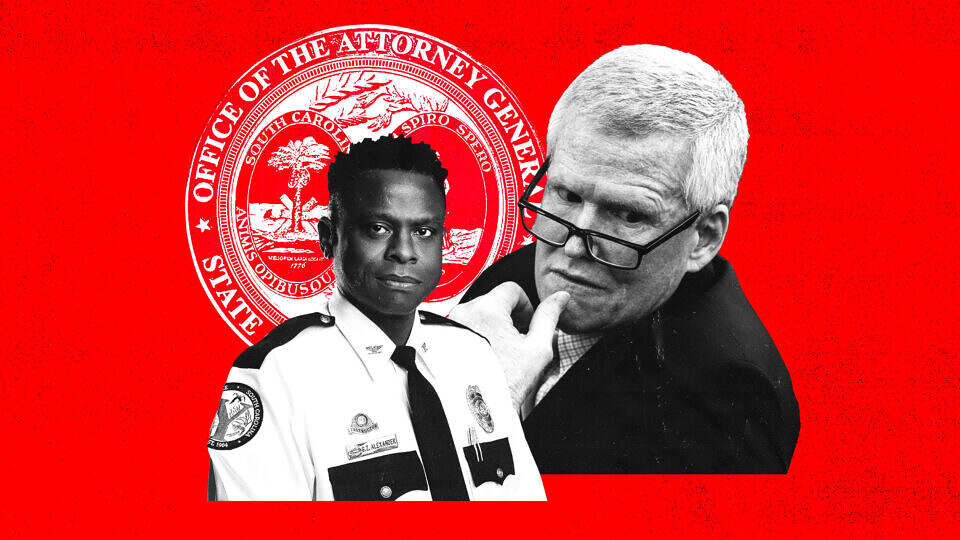
The presence of Yemassee, South Carolina police chief Greg Alexander at the Murdaugh family hunting property in Islandton, S.C. on the night Maggie Murdaugh and Paul Murdaugh were brutally murdered has never been a secret.
According to John Marvin Murdaugh – accused killer Alex Murdaugh’s younger brother – chief Alexander helped him reach the family’s property after a frantic telephone call from his brother, first accompanying him on the road, then picking him up and transporting him when the truck he was driving stopped running.
What remains unresolved – and what is currently being explored by a secret grand jury investigation – is whether that acknowledged trip accounts for all of the chief’s movements on that fateful night.
To recap: Alex Murdaugh was convicted of the murders of his wife and younger son and sentenced to life in prison following a six-week trial in Walterboro, S.C. in early 2023. Those convictions were reversed, however, after the S.C. supreme court found numerous issues with the conduct of the trial – including allegations of jury tampering and potential jury rigging. Murdaugh is scheduled to be tried a second time in Sumter, S.C. beginning on April 5, 2027.
With allegations of evidence concealment by Alexander now at the center of his brother’s looming retrial, John Marvin’s descriptions of his journey to the crime scene with the longtime family friend warrant another look.
So does the truck he left beside Highway 63 on his rush to the family hunting property, known locally as Moselle.
A review of John Marvin’s June 10, 2021 interview with the S.C. Law Enforcement Division (SLED) , his February 27, 2023 trial testimony and SLED investigatory records (.pdf) establishes investigators did examine his stranded truck. It also reveals discrepancies in how John Marvin explained his request for Alexander’s assistance — and limits on what either account establishes about the chief’s whereabouts.
Those distinctions matter as Murdaugh’s defense demands records concerning allegations that Alexander and another officer handled weapons and clothing after the killings. Alexander, through his attorney, has denied involvement in the alleged cover-up.
A RELATIONSHIP THAT PREDATES MOSELLE

***
Alexander’s relationship with the Murdaugh family predates the 2021 murders by many years.
Records (.pdf) provided by the South Carolina Criminal Justice Academy (SCCJA) show a law enforcement career beginning with Yemassee in November 2000, followed by employment with the Colleton County Sheriff’s Office, Cottageville and Estill before a return to Yemassee in November 2005.
His history also includes a SLED investigation into missing drug-seizure money.
A September 22, 2010 polygraph report (.pdf) described $10,000 seized during a July traffic stop and placed in a safe in then-captain Alexander’s office. According to the report, Alexander was one of two employees with access to the safe, and its logbook also could not be located.
The examiner classified Alexander’s September 21 examination as “deception indicated.” Alexander continued to deny taking the money, though. The report records his statement that he had intended to borrow $100 from the seizure money but found it missing when he looked in the safe.
That examiner’s assessment was not a finding of guilt. In fact, Alexander was subsequently acquitted in 2012 on the charge filed against him related to the missing money. Alex Murdaugh and his father, former solicitor Randolph Murdaugh III, publicly supported the embattled cop during that case.
Alex revisited that prosecution during his own murder trial, describing Alexander as “my dear friend” and citing the earlier case as one reason he distrusted SLED.

***
“The charges against Greg Alexander… they were so wrong that my dad and I made a conscious decision, even though he was a career prosecutor, made a decision to go to the courthouse and sit with Greg Alexander while his trial went on,” Murdaugh testified.
He characterized the charges as “clearly manufactured” — an accusation reflecting his assessment of the case, not a judicial finding.
Murdaugh also said he initially believed lead homicide investigator David Owen was the SLED agent involved in Alexander’s prosecution. Under questioning from prosecutor Creighton Waters, he acknowledged that belief was mistaken.
“I checked into that, and I found out that I was mistaken, that it was not David Owen,” he testified. “It was a different David.”
Alexander also figured in Murdaugh’s explanation of his initial interviews with investigators. Murdaugh said the chief was among those who advised him against speaking without a lawyer. When Waters suggested he had interpreted that advice as a reason to lie, Murdaugh rejected the characterization.
The relationship continued through the years – as did the scrutiny surrounding it.
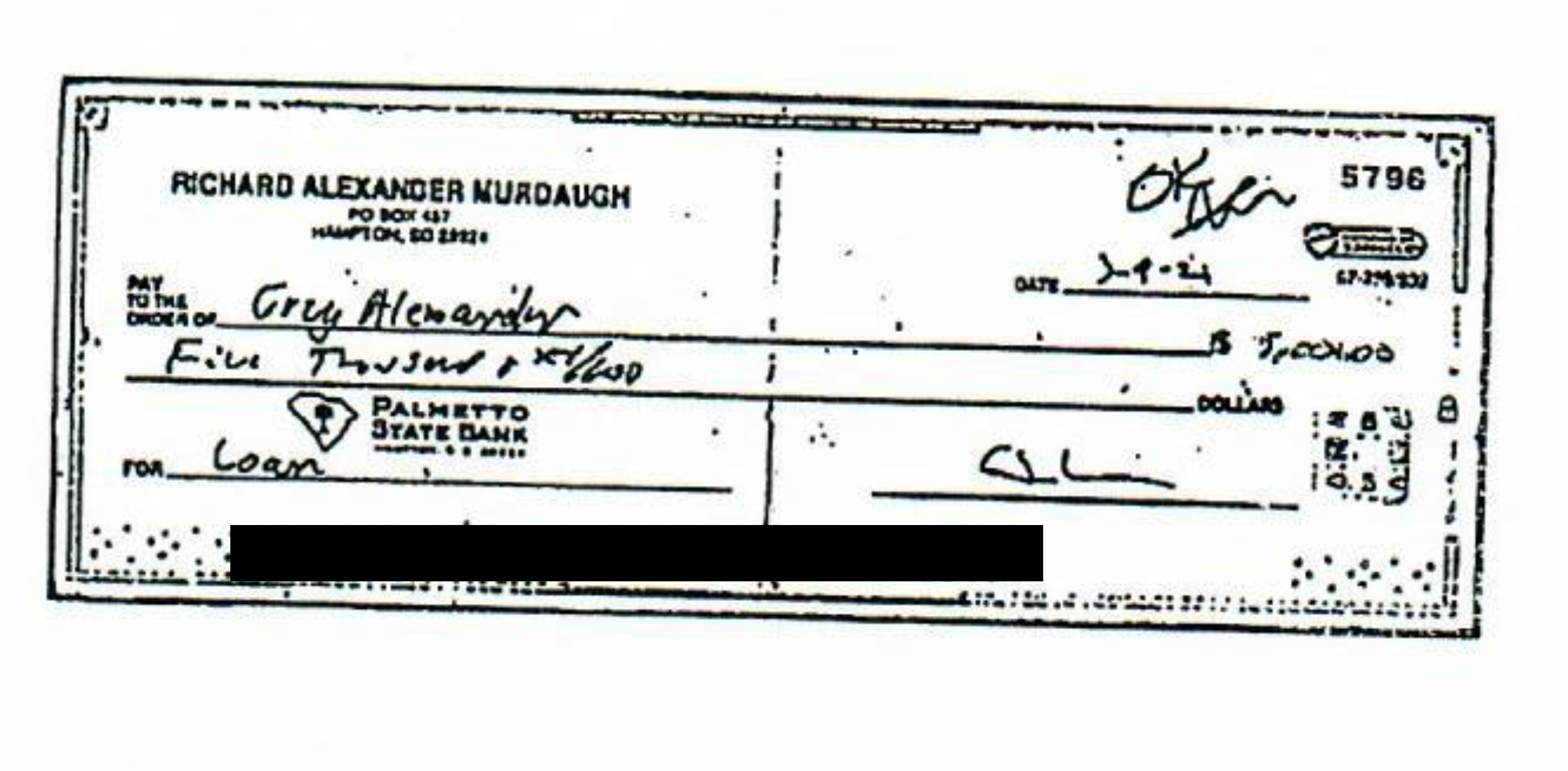
In March 2022, FITSNews exclusively reported that Alexander had received a $5,000 loan (.pdf) from Alex Murdaugh, describing the money as assistance for his parents. Although the handwritten date on the check appeared to read March 9, Alexander told FITSNews it was actually issued on July 9, 2021 — just over a month after the murders.
The friendship and financial assistance establish connections worth examining. They do not establish that Alexander helped conceal evidence.
***
THE ROAD TO MOSELLE
***
John Marvin Murdaugh’s journey to Moselle began with a truck his murdered nephew had left at his home earlier that day.
In both his June 10, 2021 interview and his trial testimony, Alex’s younger brother described a series of vehicle exchanges tied to their father’s medical appointment in Savannah, Georgia. After meeting his brother, Randy Murdaugh, to exchange vehicles, John Marvin drove their father to the appointment in their mother’s car.
Later, John Marvin arranged for Paul to return that car to his parents’ home in Almeda, S.C. and retrieve John Marvin’s white Ford F-150. Paul ultimately brought that F-150 to Moselle – and left a white Ford F-250 farm truck at John Marvin’s home in Okatie, S.C.
John Marvin described the F-250 to investigators as belonging to Alex and being used by Paul. It was the vehicle he took when Alex called him from Moselle at 10:19 p.m. EDT to tell him Maggie and Paul had been “hurt bad.”
In his interview three days after the murders, John Marvin said he dressed quickly and drove as fast as he could. He explained that he was speeding and contacted Alexander, whose jurisdiction lay along his route, to meet him on the road and accompany him to Moselle.
He described Alexander as activating his blue lights – and estimated their speed during the journey reached anywhere between 70 to 80 miles per hour.
Approximately halfway down Highway 63, John Marvin said, his truck stopped. He offered two possible explanations: it broke down or ran out of fuel. He had noticed there was not much fuel in it.
***

***
Alexander was ahead of him when the truck stopped, John Marvin insisted. According to him, he called the chief to come back and retrieve him, climbed into his vehicle and continued on to Moselle.
Nearly 21 months later, Murdaugh’s testimony supplied additional details — and a different emphasis on why he sought Alexander’s help. On the stand, John Marvin described traveling from the Okatie through Coosawhatchie, taking Interstate 95 to Yemassee and continuing toward Moselle. On the witness stand, he emphasized the farm truck’s condition.
“When I get to Yemassee, can you please help make sure I get to Moselle because this truck is sputtering and I know it wasn’t good,” he testified.
Alexander met him in Yemassee and initially followed him.
“He fell in behind me,” John Marvin said.
He then described the chief passing him shortly before Varnville, turning right onto Highway 63 and being a short distance ahead when the truck quit. Again, he said Alexander returned to pick him up and took him straight to Moselle.
The interview emphasized speeding as the reason for requesting help; the testimony emphasized a sputtering truck. The trial account also added an initial stretch when Alexander followed him.
The June 10 interview, however, does not expressly state that Alexander led the entire journey. It places him ahead when the truck stopped — a detail consistent with the later testimony. Both accounts describe the same roadside pickup and subsequent ride to Moselle.
John Marvin estimated at trial that he arrived around “11:00ish,” acknowledging he did not know the time. First responders were already at the property.
His own F-150 was also there. The F-250 remained beside Highway 63 — a distinction that matters when examining statements about firearms in either vehicle. A statement about a gun in John Marvin’s F-150 does not establish that one was in the farm truck he drove that night.
***
The gun question — and SLED’s answer about the truck
***
Immediately after John Marvin described the breakdown at trial, defense attorney Jim Griffin asked whether there were guns in the farm truck Paul had left.
“I have no idea,” John Marvin answered. “It was dark when I got in it.”
Asked whether he saw any guns, he said he did not — and explained that he had not looked in the back seat because he was focused on reaching Moselle.
His answer was a statement about what he observed. It did not establish the absence of firearms in the vehicle. The question also did not establish that Griffin knew a gun was there.
The investigative records, however, answer a separate question: the truck was searched.
SLED’s crime scene notes (.pdf) document processing on June 9, 2021 at the Colleton County Sheriff’s Office (CCSO). Agents were provided vehicle search warrants and examined both a black Chevrolet Suburban and the white 2008 Ford F-250 Super Duty.
The F-250 was photographed and searched for any items of evidentiary value.
Agents documented the presence of 12-gauge and 20-gauge shotshells in the center console, both seatback pockets and the rear passenger-side floorboard. Those shells were photographed only, according to the notes.
They collected ten unfired rifle cartridges bearing the headstamp “S&B .300 AAC BLK” from the center console as Item 65.
Agents also used BlueStar, a presumptive blood-detection reagent, in the front compartments and collected swabs from four areas that produced positive presumptive reactions:
- The driver’s door above the armrest.
- The door-side corner of the driver’s seat bottom.
- The door-side edge of the front passenger seat bottom.
- The front passenger seat back.
The subsequent laboratory results are critical. SLED’s June 25, 2021 report stated “no human blood identified” for each of those four submissions, listed as items 61 through 64.
The processing notes describe a final walkthrough with lead investigator David Owen and stated that no additional processing was requested at that time.
These same records establish a forensic examination of the F-250, but they do not provide a mechanical diagnosis explaining why it stopped running. The distinction leaves a narrower question than whether investigators ignored an abandoned truck: do separate towing, fuel, maintenance or mechanical-inspection records establish the cause of its failure?
During the June 10 interview, investigators also discussed processing the truck while explaining their request for a DNA sample from John Marvin. The stranded vehicle was already part of their inquiry.
***

RELATED | EVIDENCE SOUGHT From Alleged Crime Scene Coverup
***
What the escort establishes
John Marvin’s account places Alexander with him during the final portion of his trip to Moselle – but it does not independently establish where Alexander was prior to meeting him in Yemassee. Nor does it settle whether the chief made another trip to the property.
That gap matters because the allegations described in Murdaugh’s September 30, 2026 motion (.pdf) concern more than the escort.
Citing reporting by The Post and Courier, the defense described a Lowcountry official’s account that Alexander spoke of arriving early at the murder scene and providing Alex Murdaugh with a change of clothes. The official also expressed a belief that officers temporarily stored guns presumed to be the murder weapons – and the bloody clothing – at the police station.
The newspaper reported it could not corroborate those assertions. The defense identified the official who made the allegations, on information and belief, as former municipal judge Sheryl McKinney.
The claims have surfaced in news reports and the defense’s motion, but neither establishes that Alexander delivered clothes or had either murder weapon.
They also leave basic questions unanswered: What time was the purported earlier arrival? What clothing was allegedly provided? Who witnessed the delivery? What supported the belief that weapons or clothing reached the station?
Evidence independently fixing Alexander’s movements — including any surviving telephone, dispatch, vehicle-location or video records — could help distinguish the documented escort from the alleged earlier activity.
John Marvin’s reference to blue lights makes vehicle video a reasonable subject of inquiry. It does not establish that Alexander’s vehicle had a functioning camera, that emergency lights automatically triggered it or that footage exists.
***
THE GRAND JURY DISPUTE
The defense motion attached a subpoena signed August 31, 2026 directing Alexander to testify before the State Grand Jury on September 15 through 17.
According to the motion, Alexander was subsequently told he would no longer be called to testify after attorney Joe McCulloch notified prosecutor Creighton Waters that he represented the chief.
The defense interpreted that sequence as evidence that prosecutors were using the grand jury to develop evidence for Alex Murdaugh’s retrial while keeping it outside the usual discovery process. The subpoena shows Alexander was called to testify, but it does not explain why his appearance was canceled or show that prosecutors were trying to avoid sharing evidence with the defense.
The defense’s broader argument concerns when the information reached investigators. According to the motion and the newspaper report attached to it, the official’s account reached SLED after the first trial in 2023. The defense said it had received neither that original account nor related interview records.
The defense’s position is straightforward: information already in a homicide investigative file does not become protected from disclosure simply because prosecutors later investigate the same subject through a grand jury.
South Carolina law protects state grand jury proceedings, but it also allows court-ordered disclosure, including when constitutional requirements demand it. Grand jury secrecy is not an absolute bar to releasing relevant material.
The practical stakes extend beyond whether Alexander faces charges.
A credible account that someone removed evidence could help prosecutors explain why the murder weapons remain missing. But the defense could also use those accounts to challenge the State’s explanation, question witnesses or investigate another version of events.
S.C. circuit court judge Debra McCaslin has notified prosecutors and defense attorneys that the State’s response to the motion is due October 8, 2026. McCaslin has scheduled an emergency hearing to address these matters on October 16, 2026.
The court must determine which records must be shared and under what conditions. For now, the available record describes Alexander bringing John Marvin to Moselle – and documents SLED’s examination of the truck he left behind on his journey.
What remains missing is a complete, independently verified timeline of Alexander’s movements — and corroboration of the allegations that he handled weapons or clothing. Those unanswered questions will follow both sides into the October 16 hearing as preparations for Murdaugh’s retrial continue.
***
ABOUT THE AUTHOR …

As a private investigator turned journalist, Jenn Wood brings a unique skill set to FITSNews as its research director. Known for her meticulous sourcing and victim-centered approach, she helps shape the newsroom’s most complex investigative stories while producing the FITSFiles and Cheer Incorporated podcasts. Jenn lives in South Carolina with her family, where her work continues to spotlight truth, accountability, and justice.
***
SOUND OFF…
Got something you’d like to say in response to one of our articles? Or an issue you’d like to address proactively? We have an open microphone policy! Submit your letter to the editor (or guest column) via email HERE. Got a tip for a story? CLICK HERE. Got a technical question or a glitch to report? CLICK HERE.

4 comments
“Was it unethical as hell?” Harpootlian would say as he recounted the story. “Sure. But it was also a win-win-win.”
I’ve been saying it and writing it for years now; but I pray someone listens now that South Carolina’s ENTIRE criminal “justice” system is about to implode FOR THE SECOND TIME this decade in front of the whole nation, if not the whole world.
What have I been saying and writing for years now?
And I have earned with decades of suffering the right to say it, to lecture to the system, to scold the system.
As I said to Judge Jocelyn Newman in open court: “I feel as if I were talking to a wall.”
Perhaps the wall of indifference the system built around itself shall, God willing, crumble as did the walls of Jericho upon the Shofar blowing.
And what I am blowing in the wind is: the system you built and thought perfect because it only injures the likes of Dr. Marie Faltas (if there were anyone really like her) will come back to bite you and yours someday.
It will do so BECAUSE the system knows no other way.
The problem is not how judges are elected or appointed even if there were a better way to seat judges and hold them accountable in South Carolina.
The problem is not lawyers legislators, even though FITS is irrationally selective in his praise of some and hatred of others.
The problem is the now-institutionalized use of criminal accusations to gain unfair advantage in civil litigation, be it in civil court, family court, administrative court, or summary court.
The code of conduct for lawyers makes it unethical AND ALL LAWYERS KNOW IT.
But they all ignore it if it gets them into what they think is “a win-win-win” situation.
How do I even know what Mr. Harpootlian said about his interaction with the Senior Buster Murdaugh, Alex’s grandfather? From Valerie Bauerlein’s book The Devil at His Elbow, Chapter 35, pages 289-293.
And I know enough about copyright law to know that I am NOT infringing her rights by quoting the relevant passage verbatim, not will FITS be infringing anything by letting this comment of mine and the next one, God so willing, through.
And here is the full story which I teased in my previous comment:
DICK HARPOOTLIAN HAD been a household name in South Carolina decades before he took on Alex Murdaugh as a client. Like many defense lawyers, he’d cut his teeth as a solicitor. He’d sent the notorious serial killer Pee Wee Gaskins to death row. In a thwarted attempt to delay his execution, Gaskins had been accused of trying to have Harpootlian’s then three-year-old daughter kid-napped. Harpootlian said the scheme proved Gaskins was a “mad dog” who needed to be put down.
While solicitor, Harpootlian had been a contemporary of Buster Murdaugh’s and admired the old-er man’s ability to gin up controversy and shrug off criticism. The two of them were kindred spirits who both accepted that right and wrong were not always black and white.
Soon after Harpootlian left the solicitor’s office and opened his defense practice, he got a call from Old Buster about one of Dick’s cases. Harpootlian was representing a Black sailor who’d got-ten into a shoving match with some locals at a Varnville bar. In the melee that followed, the sailor had gotten into a car and hit one of the locals. It wasn’t clear whether the sailor had veered to hit the man or the man had jumped in front of him, but the injuries had been fatal.
“Mr. Harpootlian,” Buster said, “I’ve got the judge here in two weeks. Be here that Monday at two-thirty p.m. and your boy can plead to involuntary manslaughter with no probation. He’s got to pay the funeral bills, though.”
It was an offer that seemed too good to refuse, a plea deal instead of a murder trial in front of a Hampton jury. The only problem was that Harpootlian was already scheduled to give a speech on the other side of the state that Monday morning. He decided to charter [page 290 of THE DEVIL AT HIS ELBOW] a plane so he could arrive at the hearing on time and had his secretary call the solicitor’s secretary back to see about getting a taxi from the airport.
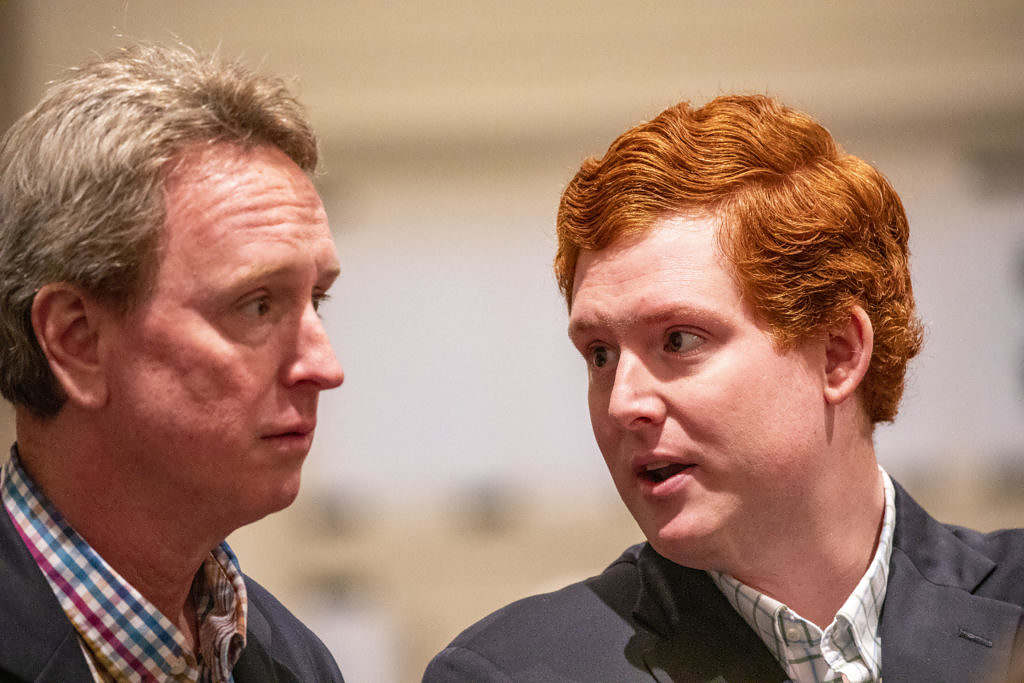
When Harpootlian landed at the tiny Hampton airport, which had no commercial flights then or ever, a young man was waiting for him, leaning against an old station wagon filled with fishing gear. He was tall and redheaded and introduced himself as Randolph Murdaugh IV, or Randy, Buster’s grandson and Alex’s older brother. When they walked into the courtroom, Buster stopped in the middle of addressing the judge and turned to face them. “Judge, the big-city lawyer who wanted me to send a taxi cab to the Hampton airport is here,” Buster said. The courtroom erupted in laughter. The client made the plea and it was a done deal.
A few weeks later, Harpootlian called his client’s parents to check on whether they’d heard anything more, because the plea meant they might face civil penalties. They said, oh, yes, they’d already been sued and settled. The Murdaugh firm had filed a wrongful death suit a few days after the plea and their insurance had paid out $1 million in coverage. Harpootlian’s clients were happy. Their son was free. The dead man’s family was compensated $700,000 for their loss and the Murdaugh firm got paid $300,000 for a few hours’ work.
“Was it unethical as hell?” Harpootlian would say as he recounted the story. “Sure. But it was also a win-win-win.”
And here is the full story which I teased in my previous comment:
DICK HARPOOTLIAN HAD been a household name in South Carolina decades before he took on Alex Murdaugh as a client. Like many defense lawyers, he’d cut his teeth as a solicitor. He’d sent the notorious serial killer Pee Wee Gaskins to death row. In a thwarted attempt to delay his execution, Gaskins had been accused of trying to have Harpootlian’s then three-year-old daughter kid-napped. Harpootlian said the scheme proved Gaskins was a “mad dog” who needed to be put down.
While solicitor, Harpootlian had been a contemporary of Buster Murdaugh’s and admired the old-er man’s ability to gin up controversy and shrug off criticism. The two of them were kindred spirits who both accepted that right and wrong were not always black and white.
Soon after Harpootlian left the solicitor’s office and opened his defense practice, he got a call from Old Buster about one of Dick’s cases. Harpootlian was representing a Black sailor who’d got-ten into a shoving match with some locals at a Varnville bar. In the melee that followed, the sailor had gotten into a car and hit one of the locals. It wasn’t clear whether the sailor had veered to hit the man or the man had jumped in front of him, but the injuries had been fatal.
“Mr. Harpootlian,” Buster said, “I’ve got the judge here in two weeks. Be here that Monday at two-thirty p.m. and your boy can plead to involuntary manslaughter with no probation. He’s got to pay the funeral bills, though.”
It was an offer that seemed too good to refuse, a plea deal instead of a murder trial in front of a Hampton jury. The only problem was that Harpootlian was already scheduled to give a speech on the other side of the state that Monday morning. He decided to charter [page 290 of THE DEVIL AT HIS ELBOW] a plane so he could arrive at the hearing on time and had his secretary call the solicitor’s secretary back to see about getting a taxi from the airport.
When Harpootlian landed at the tiny Hampton airport, which had no commercial flights then or ever, a young man was waiting for him, leaning against an old station wagon filled with fishing gear. He was tall and redheaded and introduced himself as Randolph Murdaugh IV, or Randy, Buster’s grandson and Alex’s older brother. When they walked into the courtroom, Buster stopped in the middle of addressing the judge and turned to face them. “Judge, the big-city lawyer who wanted me to send a taxi cab to the Hampton airport is here,” Buster said. The courtroom erupted in laughter. The client made the plea and it was a done deal.
A few weeks later, Harpootlian called his client’s parents to check on whether they’d heard any-thing more, because the plea meant they might face civil penalties. They said, oh, yes, they’d al-ready been sued and settled. The Murdaugh firm had filed a wrongful death suit a few days after the plea and their insurance had paid out $1 million in coverage. Harpootlian’s clients were happy. Their son was free. The dead man’s family was compensated $700,000 for their loss and the Murdaugh firm got paid $300,000 for a few hours’ work.
“Was it unethical as hell?” Harpootlian would say as he recounted the story. “Sure. But it was also a win-win-win.”
Because, though never seeking it, I earned a right AND A DUTY to lecture the system, and because the system is so self-righteous and self-congratulatory it is blind and deaf at all levels, I have to explain why that “unethical as hell” was a “lose-lose-lose” for society; and why now the majority of those who “tolerate” Alex Murdaugh’s retrial do so only in the smug assurance that he will age and die in prison anyway even if he is acquitted of the murders, and even if he were shown ACTUALLY INNOCENT of the murders.
It is lose-lose-lose for society when prosecutors decide, and judges accept and encourage, plea deals OUT OF SHEER PHYSICAL AND INTELLECTUAL LAZINESS.
Assuming Valerie Bauerlein told the story accurately (which would be an exception to her inaccuracies-filled book), all parties lost.
If Harpootlian’s client has NOT swerved to hit the victim, that client went/goes through life with an involuntary manslaughter conviction of which he is innocent and which has long-term consequences even if he did not serve time for it after the plea. That client probably lost all incentives to avoid drinking and avoid bar fights or bars altogether.
If Harpootian’s client HAD intentionally swerved to run over the victim, Society has let a murderer free because the prosecutor’s law firm on the side represented the victim’s family and had much to gain from a civil lawsuit against that murderer set free on a plea to a MUCH lesser offense.
But how could we have known which is it, you ask.
Aren’t trials supposed to be searches FOR THE TRUTH, I answer.
And here is the problem, the system is NOT built to search for the truth but to achieve what it perceives as easy “win-win-win” results.
Prosecutors, and defense lawyers the majority of whom are indeed former prosecutors, never develop the skills OR THE DESIRE to reach the ACTUAL TRUTH for its own sake BECAUSE ultimately that is the most valuable to society.
Prosecutors instead develop “skills” in finding out the narrative a jury and the public will accept, or to which a criminal defendant will plea and a judge will wink, whether that narrative were the truth or the opposite of it.
And those “skills” are manifest here: instead of true skills at ballistics matching, we are suddenly given a narrative as stupid as the Prosecution’s motive theory in the first trial, that someone magically knew the specs of the murder weapons the night of the murders and was allowed to see Police Chief Alexander stash them in an evidence locker, along with bloody clothes to boot, and having supplied Alex with a fresh change of clothes (we are not told where Chief Alexander would have gotten Alex’s size) to boot.
Mind you, if Alex were the killer, all he had to do for “a fresh change of clothes” is go to his own closet which is less than a mile from the kennels instead of going 50 miles away to Yemecee for that “fresh change of clothes.” But nothing is too stupid or too far-fetched for the committed Alex haters to accept.
If Creighton Waters wants to perpetuate such system, he should worry about what that system might someday do to his yet unborn grandson as it did to Buster-the-Elder’s grandson years later.
I know what the system did to me and why no one in that system stood up for me or even for their own self-respect.
In that “win-win-win” story, even Buster-the-Elder’s law firm lost. Sure, they won an easy $300K for a few hours work in the shade; but they lost the sense of honest earnings. Alex’s skimming of the top was only a manifestation of his “education” that easy money is proof of intellectual superiority, not moral inferiority.
If lawyers really wanted the good of society, they would be working against drunk driving and against drinking in the first place.
Instead they marinate each other (and marinate judges) in drinks in social functions and profit from drunk driving at all levels: the criminal defense lawyers get handsome fees for DUI defenses and civil plaintiffs’ lawyers get handsome contingency fees from victims’ law suits.
And the rest of society keeps getting drunk and ever more stupid.