
by WILL FOLKS
***
South Carolina’s primary elections have come and gone… setting the stage for the state’s general election on November 3, 2026. More importantly, the results of these partisan races have initiated a fundamental recalibration of the balance of power in Palmetto politics.
While our media outlet will continue aggressively advocating for the emergence of viable alternatives to the failed two-party system, as it currently stands Republicans and Democrats enjoy a stranglehold over our ostensibly representative democracy – both nationally and here in South Carolina, a critical early-voting state. For better or worse, that means the rise and fall of candidates, committees and consultancies within the Palmetto State’s two-party system have tremendous ripple effects – reverberations extending far beyond the citizens and taxpayers of South Carolina.
Look no further than Donald Trump and Joe Biden – both of whom owe their respective presidencies to the Palmetto State. Also, statewide offices in South Carolina are often springboards to national aspirations – although the last two governors who sought the presidency crashed and burned.
Anyway, the evening of Tuesday, June 23, 2026 marked yet another radical reorientation of South Carolina’s power matrix – another significant swing of the Palmetto political pendulum.
Who came out on top? On bottom? Let’s break down the new realities behind the results…
***
WINNERS
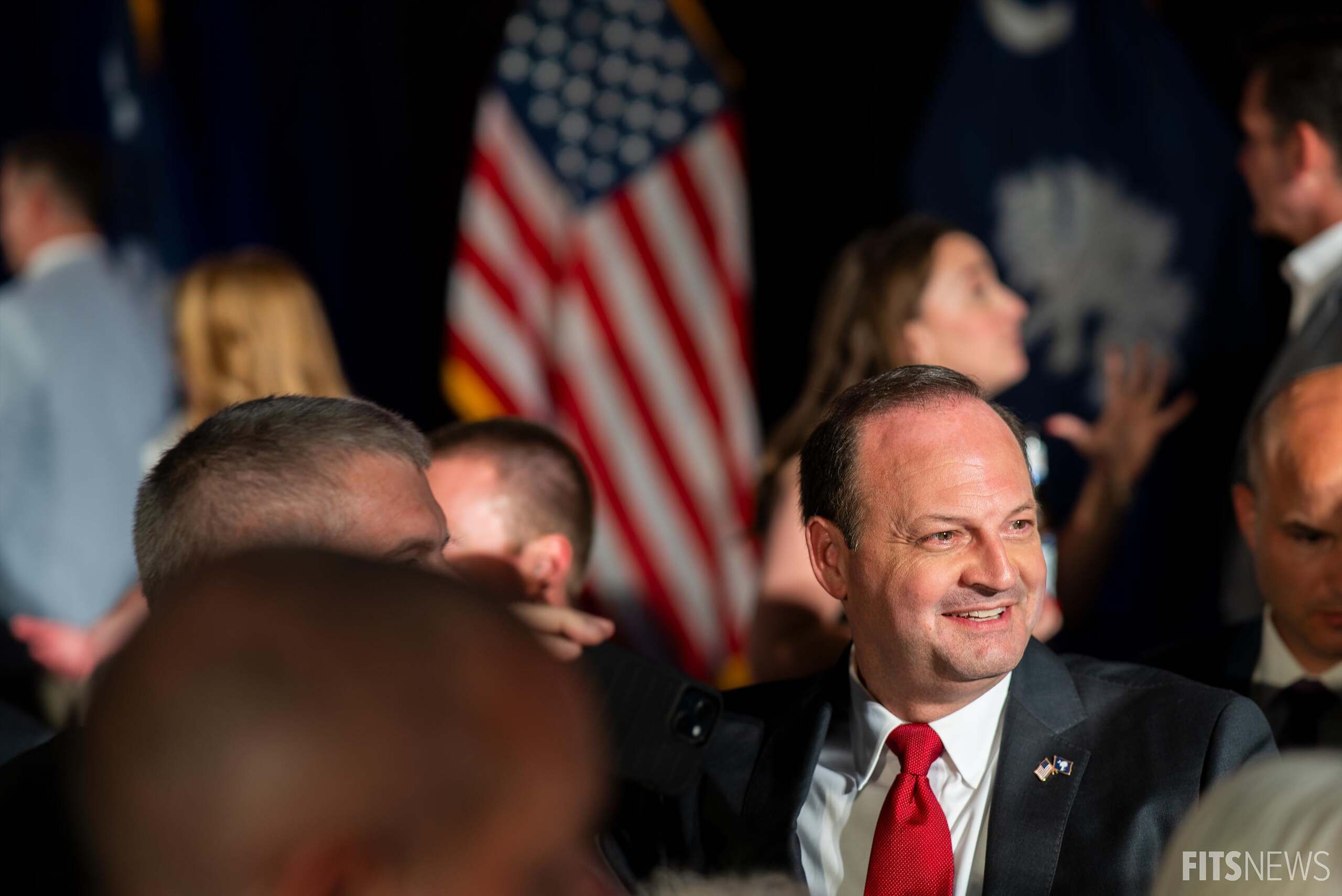
ALAN WILSON
***
Less than a month before the June 9 primary election, South Carolina’s supreme court reversed the two high-profile murder convictions secured by attorney general Alan Wilson‘s office against notorious accused killer Alex Murdaugh.
That was bad news for Wilson, but even worse news was coming. Less than two weeks before the election, president Donald Trump – who despite multiple recent stumbles still enjoys sky-high approval ratings in South Carolina – endorsed Wilson’s opponent, Pamela Evette.
With these twin boulders strapped to his back, the Lexington native’s campaign should have sunk to the bottom of Lake Murray – never to be heard from again.
Wilson not only survived these potentially fatal blows, he somehow managed to grow his base of support in spite of them – and defeat a better-funded rival by a record-breaking margin.
How did he do it?
Politicians love to talk about uniting people, but few of them actually know how to accomplish that task. Wilson does it effortlessly, intrinsically… which is a testament to the relationships he’s curated and cultivated over his sixteen years as South Carolina’s top prosecutor. It’s also a testament to his unrivaled abilities as a retail politician, his indomitable work ethic on the campaign trail – and his underlying belief that politics, like life, should be a game of addition.
***
***
Wilson’s massive margin of victory in the Republican runoff wasn’t just a mandate for him, personally, or for his policies – it was a validation of his entire underlying modus operandi, an approach the last three Republican governors of South Carolina have failed to comprehend (let alone apply).
In bringing together traditional rank-and-file Republicans, MAGA Republicans, evangelical GOP voters and Freedom Caucus supporters – against the aforementioned long odds and an unceasing onslaught of negative ads against him – Wilson has demonstrated himself to be one of the most deft and dexterous political candidates South Carolina has ever seen.
And obviously one of the most resilient…
Now comes the hard part. Getting everyone rowing in one direction is one thing… it’s something else entirely to keep them at the oars. Especially when political and ideological currents start tugging people in different directions.
Wilson is expected to encounter smooth sailing in his general election bid against Democrat Jermaine Johnson, but the real question is whether he can translate his assimilative style into tangible results for citizens and taxpayers in the (likely) event he finds himself in the governor’s chair.
That remains to be seen… but early returns are encouraging.
***
PREDICTION MARKETS

***
It used to be that tracking pre-election polls was the only way to assess the lay of the land in political races.
Not anymore…
Now, you can follow the money… literally.
The rise of prediction markets was one of the most fascinating trends to watch during the Crossroads 2026 election cycle – especially as the widely-watched Republican gubernatorial contest took numerous unexpected twists and turns.
More than $4 million was ultimately invested across the various prediction market platforms during the partisan primary and runoff elections – and that was just money put down on the outcome of the Palmetto State’s GOP gubernatorial primary. When it became clear during the final week of the runoff election that Wilson was going to cruise to the nomination, a new market sprung up – one focused on predicting his margin of victory.
While these markets are far from reliable indicators, we expect them to become a much more important part of the pre-election narrative in upcoming cycles. We also expect the money invested into them to continue climbing.
The only question now is whether South Carolina lawmakers will seek to regulate this burgeoning industry… perhaps as part of a broader gambling decriminalization push during the coming legislative session.
***
LIVE CALLS

***
Speaking of polls, one of the most accurate surveyors of the 2026 primary election cycle was Rick Quinn – son of the late, legendary strategist Richard Quinn (arguably the most inventive, influential politico the Palmetto State has ever seen).
In his work for several independent expenditure groups – including one that supported Wilson’s victorious gubernatorial bid – Quinn consistently used live calls placed to landlines and cell phones for his surveys. According to the veteran strategist, polls of live respondents are superior to text-to-web surveys – and increasingly utilized hybrid surveys which include significant portions of text-to-web responses.
Those are far less accurate barometers of public opinion, Quinn contends.
Throughout the primary campaign, Quinn would point to so-called “surges” by candidates like Lowcountry businessman Rom Reddy as being illusory – citing his polls, which showed Reddy languishing in fourth place.
Quinn wound up being right on the nose…

***
“Live calls!” he texted us on primary night as the results showed Reddy finishing exactly where Quinn’s polling had him.
It wasn’t just Quinn’s polling that was on the mark, though. The former legislative leader – whose powerful family befell a corruption investigation a decade ago – was one of the more inventive messaging and strategy players during the recently concluded cycle.
As the 2028 election machinations begin to ramp up – including the pivotal “First in the South” presidential race – keep an eye on Quinn as one of the (re)emerging players in the Palmetto political consulting space. Also, take note of powerful Daniel Island, S.C. attorney Randy Lowell – who worked closely with the veteran strategist to help amplify his impact across numerous races this spring. Expect Quinn and Lowell to comprise a formidable duo in future statewide races.
Whatever you do, though… don’t call it a “Quinnback.”
***
EARLY VOTING

***
Numbers for early voting were absolutely off the charts during the 2026 primary election, driving record turnout ahead of the initial round of voting on June 9.
A staggering 319,580 South Carolinians cast ballots ahead of the primary, while another 75,524 voted early during an abbreviated two-day period prior to partisan runoff elections on June 23, 2026. That’s a total of 395,104 early votes cast during the primary cycle, shattering records for early voting participation in a partisan primary election.
To be clear, most of the initial early voting surge was driven by Democrats eager to defeat U.S. president Donald Trump‘s ill-conceived (and ultimately unsuccessful) bid to redraw the Palmetto State’s congressional districts. But the surge held beyond that – boosting voter participation across the boards in both partisan primaries.
Also, polls of the early voting electorate have given us another data point to assess ahead of the actual day of decision… helping determine which campaigns are contenders as opposed to pretenders.
Early voting has been an increasingly important part of South Carolina’s electoral calculus ever since it made its debut in 2022, but this cycle was clearly it’s coming out party.
We’ll keep an eye on trends in early voting in the upcoming general election, but there’s no denying at this point there’s been a fundamental reshaping of how elections are conducted in the Palmetto State.
“Early voting has turned Election Day into ‘Election Fortnight,’” our columnist Mark Powell recently noted. “And South Carolinians have enthusiastically embraced it.”
***
RALPH NORMAN

***
No one deserves more credit for attorney general Alan Wilson winning the Republican governor’s nomination this spring than… Alan Wilson. As previously noted, the Palmetto State’s top prosecutor was an absolute workhorse during his 2026 bid – building winning coalitions the old-fashioned way.
A close second on the list, though, was fifth district congressman Ralph Norman.
After finishing third in the primary election on June 9, Norman seemed inclined to stay out of the head-to-head battle between Wilson and lieutenant governor Pamela Evette. That calculus changed, though, leading to a pivotal endorsement of Wilson one week prior to the runoff.
I referred to the Norman endorsement as “the final nail in Evette’s political coffin,” and it almost was…
The final nail actually came days later when Donald Trump anti-climactically backtracked on his initial endorsement of Evette and hedged his bet in the race – backing both her and Wilson.
To be clear: Wilson was well on his way to victory prior to either Norman or Trump lending him their imprimaturs. But Norman’s nod gave him major momentum at the critical mid-point of the runoff – effectively blunting any chance Evette had at getting back into the contenst. It also simultaneously signaled to fiscal conservatives – and Freedom Caucus backers – that Wilson’s candidacy was their best bet to have a seat at the table in the next gubernatorial administration.
Wilson isn’t always going to side with the Freedom Caucus over the GOP establishment in the event he inherits the governor’s mansion next January, but Norman and his allies would have been left completely out of the picture in an Evette administration.
Norman’s endorsement not only gave Wilson the final push he needed to secure his landslide margin over Evette, it gave his ideological allies a voice they would have otherwise lost in the process.
***
LOSERS
DONALD TRUMP

***
From the very beginning, president Donald Trump‘s endorsement of unpopular, Ohio-born S.C. lieutenant governor Pamela Evette was an exercise in ineptitude.
“Complete and total discombobulation,” one source close to the White House political shop told us.
On the afternoon of Friday, May 29, 2026, Trump’s political advisors were in the process of reviewing a spate of less-than-glowing poll results for the Palmetto State’s lieutenant governor – which they planned to present to Trump later that day alongside a recommendation not to endorse her. At the same time, however, Trump was on the phone with status quo South Carolina governor Henry McMaster – Evette’s mentor and one of the president’s earliest institutional supporters during his 2016 White House run.
McMaster was persuasive in promoting his protégé, because when the call ended Trump had posted to his Truth Social account his “complete and total” endorsement of Evette – shocking his own political team and seemingly gifting the governor’s mansion to McMaster’s No. 2.
Trump should have waited to hear from his political advisors, after all. His endorsement of Evette – accompanied by a reference to McMaster’s son, Henry D. McMaster Jr., as her running mate – quickly morphed into a major scandal. Allegations of insider deal-making soon consumed the endorsement, with Palmetto State Republicans rebuking both Trump’s choice and the questionable process which led to it.
Trump was still able to drag Evette to a narrow first-place finish on primary night, but her momentum collapsed shortly thereafter – compelling him to hedge his bet and issue a belated, face-saving “co-endorsement” in the waning days of the runoff election.
By then, though, it was too late to spin the story in his favor – although multiple presidential sycophants in the national “conservative press” have tried their damnedest to do so.
Reality was far less kind to Trump. Republican lawmakers rejected his redistricting push in May, and GOP voters rejected his pick for governor last month. While the president still enjoys sky-high approval among the Republican electorate in South Carolina, his status as the primum mobile in Palmetto politics – and as a ‘First in the South’ kingmaker – is clearly not what it used to be.
***
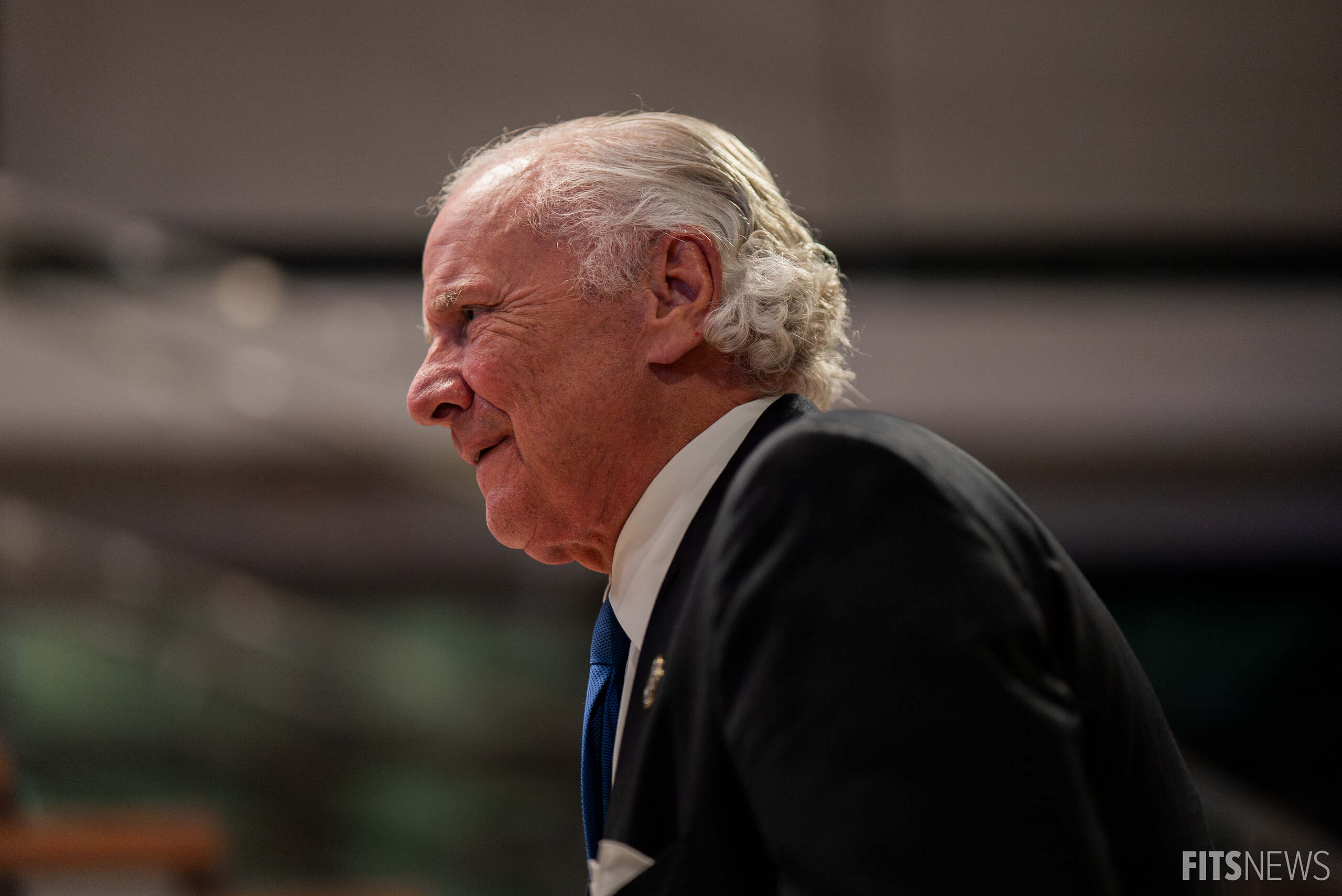
HENRY McMASTER
***
During her spectacularly failed bid for the governor’s office in 2026, Pamela Evette and her surrogates repeatedly argued that if South Carolinians enjoyed the past eight years – they should cast their votes for her and keep the momentum going.
That wound up being a colossal misreading of the electorate’s “enjoyment” of her mentor Henry McMaster‘s reign – and the so-called “momentum” it generated.
Gifted the governor’s mansion by Donald Trump in January 2017 – and dragged across the finish line by his endorsement in a competitive runoff the following June – McMaster’s support in South Carolina has always been a proverbial mile wide and an inch deep.
This lack of depth was on full display this year as the lame duck governor failed miserably to move the needle on Trump’s bid to redraw the Palmetto State’s political boundaries – and then failed even more miserably to get his anointed successor across the finish line in the GOP primary (even after securing Trump’s endorsement for her).
These twin setbacks clearly qualify McMaster for “loser” status in this election cycle, but the corresponding damage done to his son’s political prospects in the process (thanks to the lite gov scandal that dragged down the aforementioned endorsement) make these defeats all the more painful.
Few are shedding tears for the results-challenged chief executive, though.
“This is a proper exit for McMaster – one he’s earned,” a veteran lawmaker told us. “Revealed, as everyone in the State House has known for years, as feckless and impotent.”
How’s that for a political tombstone?
***
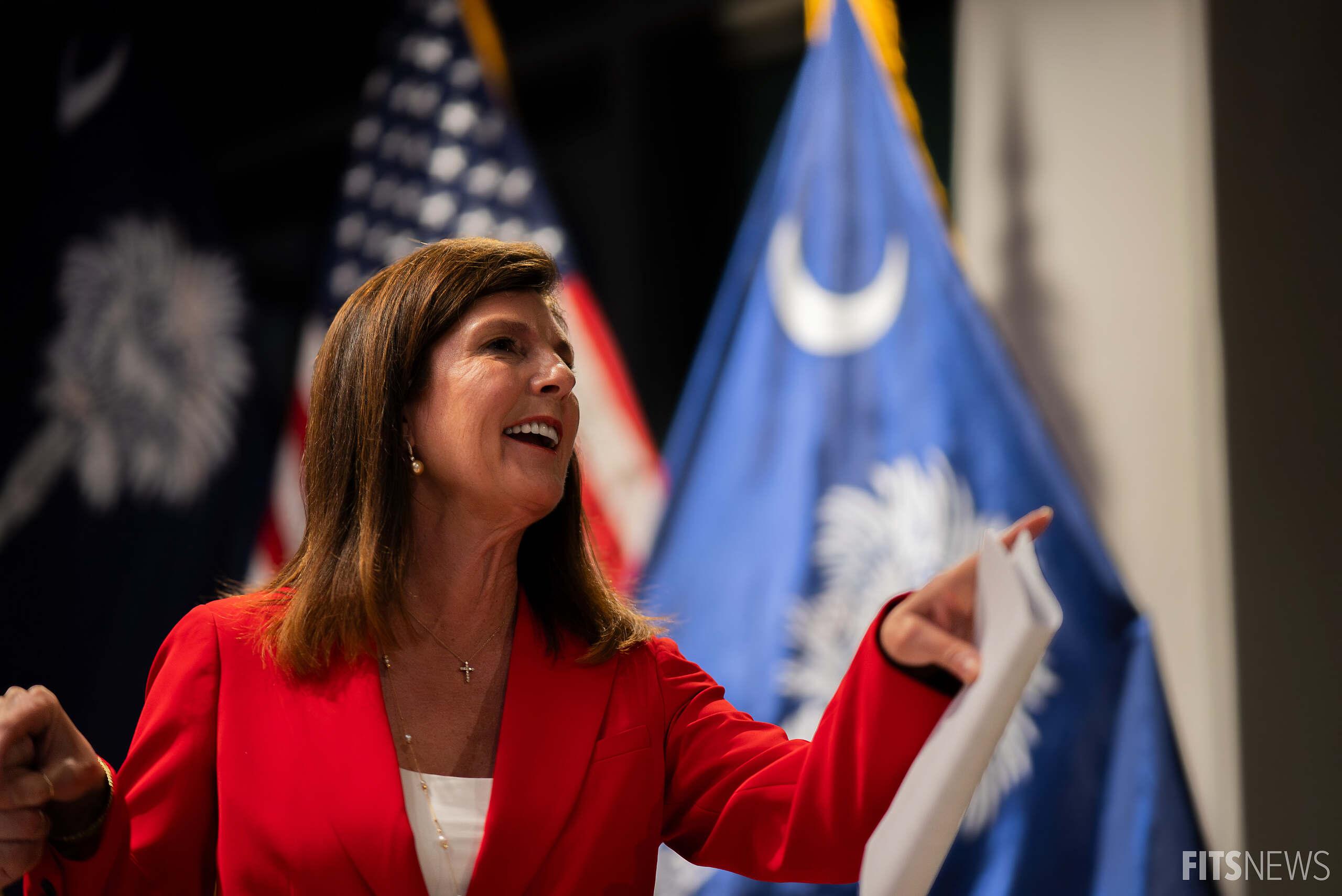
PAMELA EVETTE
***
There’s always been a profound disconnect between the rugged self-determination espoused in South Carolina’s Republican creed and the herd-like fealty demonstrated by most Palmetto State GOP politicians. And nowhere was this disconnect more visible than in the 2026 gubernatorial candidacy of Pamela Evette, the Upstate (by way of Ohio) businesswoman who was anointed by the Palmetto State’s status quo as McMaster’s successor.
A successful businesswoman, Evette had a great story to tell. She had unlimited resources – including a vast personal fortune. She had widespread institutional backing. And (for a while, anyway) she had the “complete and total endorsement” of president Donald Trump all to herself.
As I noted in our most recent Week in Review episode, though, Evette lost something along the way…
***
????? Aside from @AGAlanWilson running a great campaign, why did @PamelaEvette lose the #Crossroads2026 governor's race in South Carolina so badly? Our @TheWillFolks and @IndyJenn_ discussed that on our recent #WeekinReview ?? pic.twitter.com/yham8a6xys
— FITSNews (@fitsnews) June 30, 2026
***
Evette spent the past eight years attending hundreds of county party meetings, local ribbon-cuttings, community festivals, legislative candidate fundraisers and other local gatherings – sustained appearances which gave her a huge grassroots edge over every other candidate in this race.
The activists and party influencers attending these events – people who wield significant influence in low-turnout runoff elections – knew her, liked her and were generally inclined to support her candidacy. But with Evette cloaking herself so obsequiously in the orange sheen of Trump – at a time when Trump was endorsing neoconservative warmonger Lindsey Graham, hiding the ball on the Epstein Files, starting an unpopular war with Iran and sending gas prices soaring – something unexpected happened.
Evette forgot herself… and they forgot their predisposition toward her.
In the months leading up to the GOP primary, Evette morphed from the woman everyone thought they knew into an inaccessible and unlikeable ‘mean girl,’ someone so obsessed with Trump she couldn’t articulate much beyond the reflexive regurgitation of his name. Her campaign’s last-minute barrage of negative ads against Wilson cemented the electorate’s revulsion to her adopted personality – and her landslide runoff defeat.
***
SELF-FUNDERS

***
Fools and their money are soon parted, the old proverb goes – and there was no shortage of fools during the recently concluded South Carolina partisan primaries.
Chief among them? Lowcountry multi-millionaire Rom Reddy, who dropped at least $6.33 million of his own money into broadcast, cable, satellite and streaming advertisements during the twelve-week period from March 16, 2026 to primary day (June 9, 2026).
Reddy’s massive investment netted him only 66,992 votes – or 14.16% of ballots cast in the Republican primary, which translated into a profoundly disappointing fourth-place finish. We’ll be compiling a detailed cost-per-vote analysis in the weeks to come as additional campaign finance data becomes available, but Reddy’s return on investment was absolutely abysmal. Couple that with his total betrayal of the Palmetto State’s limited government movement, and his involvement in this election was costly on multiple levels.
Reddy wasn’t the only self-funder to go down in flames in 2026, though. Pamela Evette and Ralph Norman also plowed significant personal resources into their candidacies, and while they fared better at the ballot box than Reddy did – they still fell short of their ultimate objective.
***
Blue collars > self-funders… #Crossroads2026 pic.twitter.com/gPcbzVkQL0
— FITSNews (@fitsnews) July 3, 2026
***
Meanwhile, on the Democrat side, retired payday lending executive Billy Webster and Lowcountry trial lawyer Mullins McLeod also dropped mad stacks of cash into their candidacies – only to get crushed by state representative Jermaine Johnson‘s homegrown, low-budget bid.
Money is obviously a necessity in politics – and those who have it are always going to be operating at an initial advantage over those who don’t. But in tight economic times, the ability of the über-wealthy to relate to those struggling to make ends meet is, well… a struggle.
Reddy, in particular, proved uniquely unable to connect with the citizens he hoped to lead… with his diminutive stature, convenience store attendant accent and prickly personality making him among the most off-putting candidates South Carolina has ever seen.
It’s been said money can’t buy love… in South Carolina, it seems it can’t buy votes, either.
***
WESLEY DONEHUE
***
It’s difficult to definitively state which South Carolina political strategist was the biggest winner in the 2026 partisan primary cycle (Charleston-based Michael Mulé of Surge Public Affairs probably makes the most compelling case for this honor), but there is zero confusion as to who the biggest loser was.
Lowcountry consultant Wesley Donehue didn’t just have a bad year (i.e. the sort of year an operative would rather forget), he had the kind of year you don’t recover from. Ever. The kind of year that makes people’s trust and money – which are the veritable body and blood of electoral politics – flee from you as far as the east is from the west.
Never to return…
Donehue did far worse than set his clients’ funds on fire, feed them inaccurate polling data and dispense terrible advice, he fundamentally betrayed their trust (whether they realized it or not). At the same time, he became the epicenter of much of the duplicity and dysfunction associated with the 2026 cycle.
Donehue didn’t just lose the races in which he was involved – notably Reddy’s gubernatorial bid and David Pascoe‘s campaign for attorney general – his candidates got absolutely shellacked. But these humiliating defeats pale in comparison to the damage Donehue has done to his credibility along the way.
***
No matter what anyone says, Wesley is having a bad night. pic.twitter.com/oXcyU34g5b
— Grandpa Wes (@Grandpa_Wes) June 10, 2026
***
From the moment Reddy’s campaign launched, the Summerville, S.C.-based strategist simply couldn’t keep his eye on the ball. At pivotal moments during the primary when he should have been focused exclusively on serving his clients, Donehue was erratically dropping in and out of social media with the same frequency of Alex Forrest (Glenn Close) flicking her lamp on and off in Fatal Attraction. While other strategists kept steady hands on the tiller and stayed out of the spin cycle, Donehue was engaging in completely unhinged behavior – repeatedly becoming the focus of negative online attention to the detriment of his clients.
Oh, and dragging his clients down into the drama…
In the waning days of the election, for example, Donehue became completely obsessed with punching back at a local bakery owner in Summerville, S.C. who had gotten under his skin. In fact, he and Reddy posted exhaustively to social media about their history with this woman – utterly ignoring the task at hand.
Fortunes rise and fall in South Carolina politics – often overnight – but it’s hard to see Donehue bouncing back from his disastrous 2026 partisan primary performance. To put it in perspective, consultant Chris Slick fled to another country to avoid federal investigative scrutiny during this campaign – and then died suspiciously overseas.
And it could be argued he had a better cycle than Donehue…
***
ABOUT THE AUTHOR…
Will Folks is the founding editor of the news outlet you are currently reading. Prior to founding FITSNews, he served as press secretary to the governor of South Carolina. He lives in the Midlands region of the state with his wife and eight children.
***
SOUND OFF…
Got something you’d like to say in response to one of our articles? Or an issue you’d like to address proactively? We have an open microphone policy! Submit your letter to the editor (or guest column) via email HERE. Got a tip for a story? CLICK HERE. Got a technical question or a glitch to report? CLICK HERE.

5 comments
“Politicians love to talk about uniting people, but few of them actually know how to accomplish that task. Wilson does it effortlessly, intrinsically”
What’s the weather like that far up Wilson’s ass?
“Quinn would point to so-called “surges” by candidates like Lowcountry businessman Rom Reddy as being illusory”
JFC, anyone with 2 neurons to rub together could see that Rom was barreling straight into a seawall.
Much ado about an office that’s more impotent than DJT’s mushroom shaped dick.
Why didn’t you list Germaine Johnson among the winners and Nancy Mace among the losers?
Germaine Johnson impressed me (that alone should make him a winner, ha ha ha) with his response during his victory party to a question about Cyrus Carmack-Belton. Germaine Johnson did not demagogue or racialize the events; instead, he sensitively harkened to his own pain after his own brother was shot in the back by that brother’s best friend and put the issue where it belonged: gun violence. I was very impressed with Mrs. Germaine Johnson’s words upon her loving husband’s genuine invitation for his baby to come to the mic and say something. She is truly the opposite of the angry black woman stereotype or the chattering wife of any race stereotype. That is a couple to watch, encourage, and emulate.
But Wes Donahue needs to remake, not reinvent, himself. Sure, he has or had a company of 50 or so employees to run and genuinely worry about their livelihoods. Still, this is a rapidly changing world; and those who do not change with it risk being churned in its wheels.
Nancy Mace needs to really find the real Jesus or stop blaspheming by calling herself a Christian. She needs a conversion like Saul of Tarsus’ on the Road to Damascus or a bitter cry of remorse like Saint Peter’s after the roosted crowed thrice.
Eight years of toil and allegiance to Trump filing amicus briefs supporting Trump’s every appeal step in the courts and what did he get? Losing in the first round of the beauty contest for an endorsement to Pamela Evette.
While Attorney General, Alan Wilson has provided partial judicial justice for South Carolina. Case in point, former Spartanburg County Sheriff Chuck Wright. FITSNews has covered the saga of Wright from his disappearance, his guilty plea on federal criminal offenses, including Wilson not pursuing state crimes against Wright.
Why?
Wright, a Trump supporter, can pardon Wright convi ted on federal crimes. But Trump cannot pardon anyone convicted on state crimes.
Will Alan Wilson join me in these open questions to Retired/Active SC Circuit Judge Edgar Dickson, to Judge McCaslin, and to other judges who, I hope, will read this or be told about it by their law clerks?
I pray one of those judges will have the courage and the skill to tell current SC Chief Justice Kittredge that the overriding purpose of SC’s entire judicial branch should not be the discrediting of Dr. Marie Faltas to the point of all agents of that branch losing their self-respect and leading the whole SC population into magical thinking and exposing SC’s people and judges to the ridicule of the nation, if not the world.
To Judge Dickson, who volunteered in the one hearing I had by WebEx with him that he is a fan of Egypt-born soccer-striker Mo Salah, I hope you are enjoying the World Cup games (I only check the results of matches) and specially will enjoy the coming dual-to-soccer-death between Mo Salah and Leo Messi.
Pleasantries aside, in Judge McCaslin’s televised court room, or one next-door to it, in the then-relatively new but poorly-engineered Lexington County Courthouse Building, I sat leaning with a crutch and saw a lawyer for an inmate/PCR applicant tell Judge Dickson that said lawyer had consulted a medical doctor that lawyer did not name but will not call that medical doctor to testify and will not use her opinion because it is “too favorable” to that lawyer’s client, the inmate seeking PCR.
For the non-lawyer readers, PCR is in SC law parlance post-conviction relief which is allowed within a year after a person convicted of any crime in SC had exhausted his/her direct state appeals. PCR usually, but NOT necessarily, alleges the criminal trial/plea and/or appellate counsel(s) was/were ineffective to a point that prejudiced the person convicted of an SC crime.
If, but only if and after (with very limited exceptions), state PCR fails, the convicted person may, again within a year, seek habeas from the federal courts.
The preceding two paragraphs were ONLY to explain the context of my presence in Judge Dickson’s court in March/April 2013, and are NOT to be taken as legal advice, because I am NOT a lawyer, only better than most.
And of course, as usual, I have transcripts and official records to document what I write.
In further context explanation, the inmate/PCR applicant was one Michael Elder/Elders, who had been convicted and sentenced to 30 years for CSC with this then-pre-teen daughter. Michael had been convicted on the testimony of a SANE (Sex Abuse Nurse Examiner) nurse that the redness she saw in that that girl’s mons pubis and/or labia minora must have been due to sexually-abusive rubbing because, according to that SANE nurse, “estrogen is not present before puberty.”
Michael’s lawyer had also been separately forced on me after then-SC-Chief-Justice Toal & Co. had by judicial fiat denied me the right to self-representation to punish my success, thank God and WITHOUT A LAWYER, in thwarting Hatchet-for-Hire Heather’s (“Weiss”) scheme to FALSELY convict me of harassment and get me incarcerated for 36 years, yes, thirty-six; but I still had smaller matters arising from draconian Eighth-Amendment-violating bonds imposed on me between the FALSE harassment accusations and my COMPLETE exoneration therefrom.
That lawyer with Michael Elder/Elders as a self-paid client on one side, and me as an appointed client on the other, knew he would not get more money from either Michael or me even if he won our respective case. He also knew that winning Michael’s and/or my cases would arouse Hatchet-for-Hire Heather’s notorious wrath on that lawyer and deny him plea agreements for future clients, which is basically (despite the rare publicized trials exceptions) all criminal defense lawyers do: plea bargain.
So that lawyer decided that, in one fell swoop, he can bait me into contempt of court and lose Michael’s case by asking me, as a medical expert, to review Michael’s case. I did and was horrified by that SANE nurse’s ignorance of basic endocrinology and by her failure to put a ruler next to what she claimed to be the lesion in the that girl’s mons pubis in the photos used as prosecution exhibits.
I told that lawyer, who had induced me to read a lengthy transcript without pre-payment but with a false promise of after-payment, that I would testify that estrogen is present at birth and it is progesterone, not estrogen, that does not appear until puberty, and that the supposed UNMEASURED and undated redness on the girl’s mons pubis was transient and NOT indicative of CSC.
With that lawyer not presenting my testimony, even though I was sitting (despite my excruciating knee pain) in that courtroom, Judge Dickson denied PCR.
That lawyer did NOT even tell Michael until I saw, on Lexington County’s Public Index, a letter from Michael to Lexington County’s Clerk of Court. I went to the courthouse myself and saw the file. The letter indicated that Michael did not learn of what ruling was entered but thought he had won and was asking when could he go home.
Poor, poor thing!
That day or shortly thereafter, I emailed that lawyer, “Are you a monster, Mr. [lawyer], doing this to someone who trusted you?” I meant that failure to tell the client of the unfavorable outcome made him run out of time to appeal.
I would have reported that lawyer to SC’s ODC (Office of Disciplinary Counsel) had he not acted promptly (and undoubtedly in fear of the consequences to HIMSELF ALONE, not out of care for the client who had pre-paid his last dime to that lawyer) and acknowledged his negligence and cooperated in getting that client a belated appeal, which the client ultimately won with an appointed lawyer, but after A DECADE more of incarceration.
And, on this Sunday, I ask Judge Dickson, is the Sabbath made for people or people for the Sabbath?
Paraphrasing Jesus Christ’s statement, lawyers are made for clients, not clients for lawyers.
And rules are made for courts to dispense efficient and SPEEDY justice, NOT delay justice.
Had I stood up on my crutch that March/April 2013 day and asked Judge Dickson to hear my expert testimony which Michael’s lawyer had maliciously suppressed, would Judge Dickson have heard me or held me in contempt of court?
And I ask Judge McCaslin what she would have done had she been then in Judge Dickson’s seat on the bench.
I know what Kittredge did to me for allegedly emailing Rasputin Shearouse asking why some of my cases had inexplicably disappeared from SC C-track. Kittredge mercilessly, and after an unconstitutional trial WITHOUT A JURY (which I had timely demanded) but before himself and four associates, threw me in the fearsome Alvin S. Glenn Detention Center (ASGDC), where even some guards are violent criminals, and where I was struck with a heart condition which was then deliberately neglected by ASGDC and has since become permanent and incurable.
And NOT ONE lawyer or judge in the length and breadth of SC spoke up for me or for that Constitution they wax eloquent in defending BUT ONLY when the national cameras are rolling.
Would Judge McCaslin hear my expert testimony over Alex Murdaugh’s defense team’s heads, and over the inexplicable grudge Kittredge still holds against me even though I did nothing to him but he almost caused my death in that ASGDC?
Would Judge McCaslin, on her own motion, invite my expert testimony that would efficiently and inexpensively, not only exonerate Alex Murdaugh of the shootings of Paul and Maggie, but also compel the withdrawal of his guilty pleas for the so-called “financial crimes” because made under the duress of his then-undiagnosed depression of Paul and Maggie’s demise and Alex’s failure to prevent it by having placated whoever the real shooters were?
Would Judge McCaslin have the courage to “do the right thing” when it is THE OPPOSITE of the system-sustaining thing?
Jesus Christ dispensed a miracle cure on a sabbath because He was obeying a higher Biblical Commandment to not put off till tomorrow the good you can do today.
Jesus Christ did not await the sabbath’s lapse because He did not want a man to remain unhealed FOR EVEN ONE DAY LONGER.
A warning higher than punctilious court rules is: Justice Delayed IS Justice Denied.
5 April 2027 is NOT fast enough to BEGIN to exonerate Alex Murdaugh when Judge McCaslin has the power, on her own motion, to call independent Court Experts TOMORROW to explain to her the various SCIENTIFIC points I have been raising since I watched that now-vacated-trial unfold.
A process of a court, on its own motion, summoning neutral court experts with no financial interest in the ultimate outcome will NOT be a violation of the rules but will be obedience to the constitutional rules of MEANINGFUL Due Process and SPEEDY trial/retrial.
Alex Murdaugh already missed the funeral of his mother and the birth of his first grandchild, all while the real shooters of Paul and Maggie roam free.
Does Judge McCaslin have the courage to “do the right thing” over the system-sustaining thing?
And as always, would FITS have the courage to run this comment of mine?
FITS has my permission to run this comment of mine as a stand-alone letter.
Will he have the courage to do so?
I haven’t given up on appealing to Alan Wilson’s conscience; and I hope neither John Mobley nor Ever-Bluffing Eric Bland (“EBEB”) is a red line for you, FITS, because neither is likely to advertise on your outlets.
But an MSM removed all comments because I commented on something outrageous their VERY biased guest said.
He fed the frankly stupid conspiracy theory which won’t go away; and that is that Becky Hill was in cahoots with Alex Murdaugh so he can get a new trial when Becky’s misdeeds are discovered.
I previously responded many times, here and on other outlets, that if Becky had been paid by Alex and/or his defense team, then Becky would have pushed the jury to find Alex NOT guilty and been done with it.
Undoubtedly, John Mobley read my responses or heard of them. He came up with what he thought was a brilliant rebuttal. But in reality, his rebuttal is even more stupid that the conspiracy theory itself.
According to John Mobley, Becky Hill was “manna from heaven” because her acts let Alex’s defense team see the Prosecution’s playbook and be better prepared for the next trial.
And let me sur-rebut that in terms John Mobley and his hostess can understand.
Let’s even assume Alex is guilty and he wanted a first trial as a dress rehearsal for a new trial. Why then did Becky Hill machinate so hard to get the one likely hold out juror, the egg juror that is, kicked out before deliberations?
A hung jury would have PERFECTLY served Alex’s supposedly evil purpose of a dress-rehearsal first-trial followed by an ASSURED second trial with the Prosecution’s playbook known in advance, all WITHOUT the expense, effort AND risks of an appeal, the outcome of which is never assured.
That harkens to a confabulation EBEB invented and gave on a show: supposedly, Alex shot Paul because Paul was short and flimsy and would have suffered a lot in prison when convicted and incarcerated for the boat crash case.
Again, let me rebut that in terms even EBEB cannot counter.
Let’s assume Paul was 100% going to get convicted and imprisoned for a long time for the boat crash case. No defense, no reasonable doubt as to who (if any one) was ACTUALLY piloting the boat, no contributory negligence by the other under-age drinkers on that boat, no plea deal, no pre-trial intervention, no mercy by the court, no anything.
And let’s even assume Alex and Maggie were 100% sure of the long imprisonment awaiting Paul.
Why didn’t Alex help Paul escape or fake his own death instead?
Paul did not have to wear an ankle monitor for his bond conditions. And the Murdaughs had remote islands and places for small planes to land. And who better than Alex Murdaugh to procure a fake identify for Paul wherever he flees to?
The stupidity of the theories the Alex haters come up with is matched only by the stupidity of the theories Hatchet-for-Hire Heather came up with to FALSELY arrest me and try me for supposedly harassing my neighbor SUPPOSEDLY because that neighbor would not come to court with me against the landlady we had in common.
Further, Hatchet-for-Hire Heather INSISTED at my trial that said neighbor and supposed “victim” of mine could not go to court as a witness because that would interfere with her work schedule.
The PROBLEM with that is said neighbor was UNEMPLOYED; and Hatchet-for-Hire Heather KNEW IT but REPEATEDLY lied to court about it and suborned her witnesses to perjure themselves about it.
More important than South Carolina’s image to the nation and the world are the consciences of the prosecutors who lie and suborn perjury with impunity and the judges who let them go rogue.