

by ERIN PARROTT
***
The National Oceanic and Atmospheric Administration (NOAA) is forecasting a quieter-than-average Atlantic hurricane season for 2026 – a notable shift after several consecutive years of aggressive storm predictions and heightened concern over increasingly volatile tropical activity.
According to NOAA’s outlook – released on Thursday (May 21, 2026) – forecasters are predicting between eight (8) and fourteen (14) named storms during the upcoming Atlantic hurricane season, which officially begins just nine days from now (June 1, 2026) and runs through November 30, 2026.
Of those storms, three to six are expected to strengthen into hurricanes, while only one to three are forecast to reach major hurricane status – which is defined as a storm with maximum sustained winds of at least 111 miles per hour or stronger.
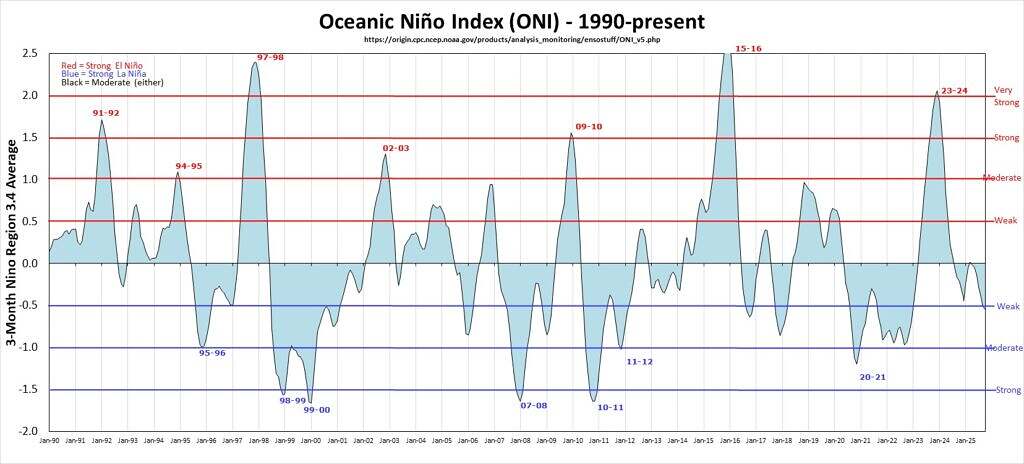
The latest NOAA projection falls below the modern seasonal average of roughly fourteen named storms (14), seven hurricanes and three major hurricanes. NOAA said there is a 55% chance the season finishes below normal, with forecasters citing the likely development of a significant El Niño pattern in the Pacific Ocean as the primary factor suppressing Atlantic storm formation.

***
El Niño refers to the periodic warming of the central and eastern equatorial regions of the Pacific Ocean – while La Niña refers to the cooling of the Pacific that takes place in its aftermath.
During El Niño years, the formation of hurricanes in the Atlantic is less likely due to increased vertical wind shear – or changes in wind speed and direction between 5,000 and 35,000 feet. Vertical wind shear breaks apart developing hurricanes – and can often stop them from forming altogether. On the other hand, during La Niña years hurricane formation – and rapid intensification of storms – is much more likely due to reduced vertical wind shear. Essentially, calmer conditions make it easier for storms to form – and quickly gain strength.
FITSNews has consistently cited water temperature data – and noted the interplay of El Niño and La Niña – in our tropical coverage, digging deeper than any other South Carolina-based media outlet on the prevailing conditions which fuel and form these storms.
***
***
“Although El Niño’s impact in the Atlantic Basin can often suppress hurricane development, there is still uncertainty in how each season will unfold,” NOAA’s National Weather Service director Ken Graham cautioned. “That is why it’s essential to review your hurricane preparedness plan now. It only takes one storm to make for a very bad season.”
The subdued outlook comes one year after NOAA and numerous private forecasting groups predicted an active 2025 hurricane season fueled by exceptionally warm Atlantic waters and lingering La Niña conditions.
As FITSNews previously reported at the time, many experts warned at the time that the basin was primed for above-normal activity – with some forecasting models projecting as many as nineteen named storms.
Instead, the 2025 season ultimately underperformed many preseason expectations, sparking broader questions about the reliability of long-range hurricane forecasting and the increasingly chaotic influence of climate-driven atmospheric patterns. While several storms still caused localized impacts, the season overall failed to produce the widespread destructive activity many had anticipated.
***
***
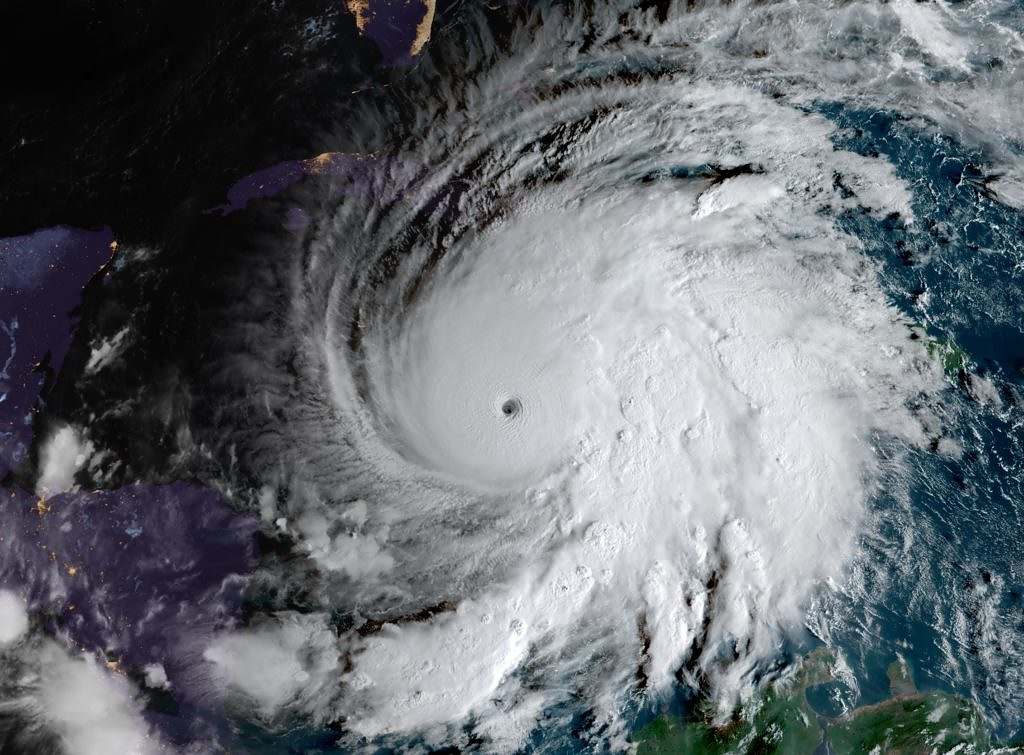
No hurricanes made landfall anywhere in the United States in 2025, marking the first time in more than a decade the American mainland was spared a direct impact. Damage associated with 2025’s storms was also dramatically lower – clocking in at $10.55 billion. Most of that damage was caused by Hurricane Melissa, which careened into Jamaica with maximum sustained winds of 185 miles per hour. Melissa tied 2019’s Hurricane Dorian as the strongest system ever to come ashore in the Atlantic basin. At landfall, Melissa’s central pressure was just 892 millibars, tying her with the 1936 Labor Day hurricane for the lowest central pressure ever recorded in a landfalling storm.
Forecasters acknowledged Thursday that despite the calmer outlook, residents along the Southeast and Gulf coasts should not become complacent – emphasizing that even a single landfalling hurricane can define an entire season.
That warning carries particular weight across South Carolina, where memories of recent tropical threats – including Hurricane Helene’s inland flooding impacts and repeated near-misses along the coast – remain fresh.
***
RELATED | LACKLUSTER 2025 HURRICANE SEASON
***
NOAA officials also noted that competing atmospheric signals still exist this season. While El Niño may suppress widespread Atlantic development, unusually warm sea surface temperatures and weaker trade winds across portions of the basin could still create windows favorable for storm intensification.
Several other forecasting agencies, including Colorado State University and The Weather Company, have likewise projected either near-normal or below-average activity for 2026 – though meteorologists caution forecast confidence this early in the season remains imperfect.
As always, emergency officials continue urging coastal residents to finalize hurricane preparedness plans before the season officially begins next week.
“Hurricane season begins on June 1, and now is the time to prepare,” governor Henry McMaster said earlier this month. “Team South Carolina is ready, but every family should have a plan in place before a storm threatens our state.”
***
ABOUT THE AUTHOR…

Erin Parrott is a Greenville, S.C. native who graduated from the University of South Carolina in 2025 with a bachelor degree in broadcast journalism. Got feedback or a tip for Erin? Email her here.
***
SOUND OFF…
Got something you’d like to say in response to one of our articles? Or an issue you’d like to address proactively? We have an open microphone policy! Submit your letter to the editor (or guest column) via email HERE. Got a tip for a story? CLICK HERE. Got a technical question or a glitch to report? CLICK HERE.
