
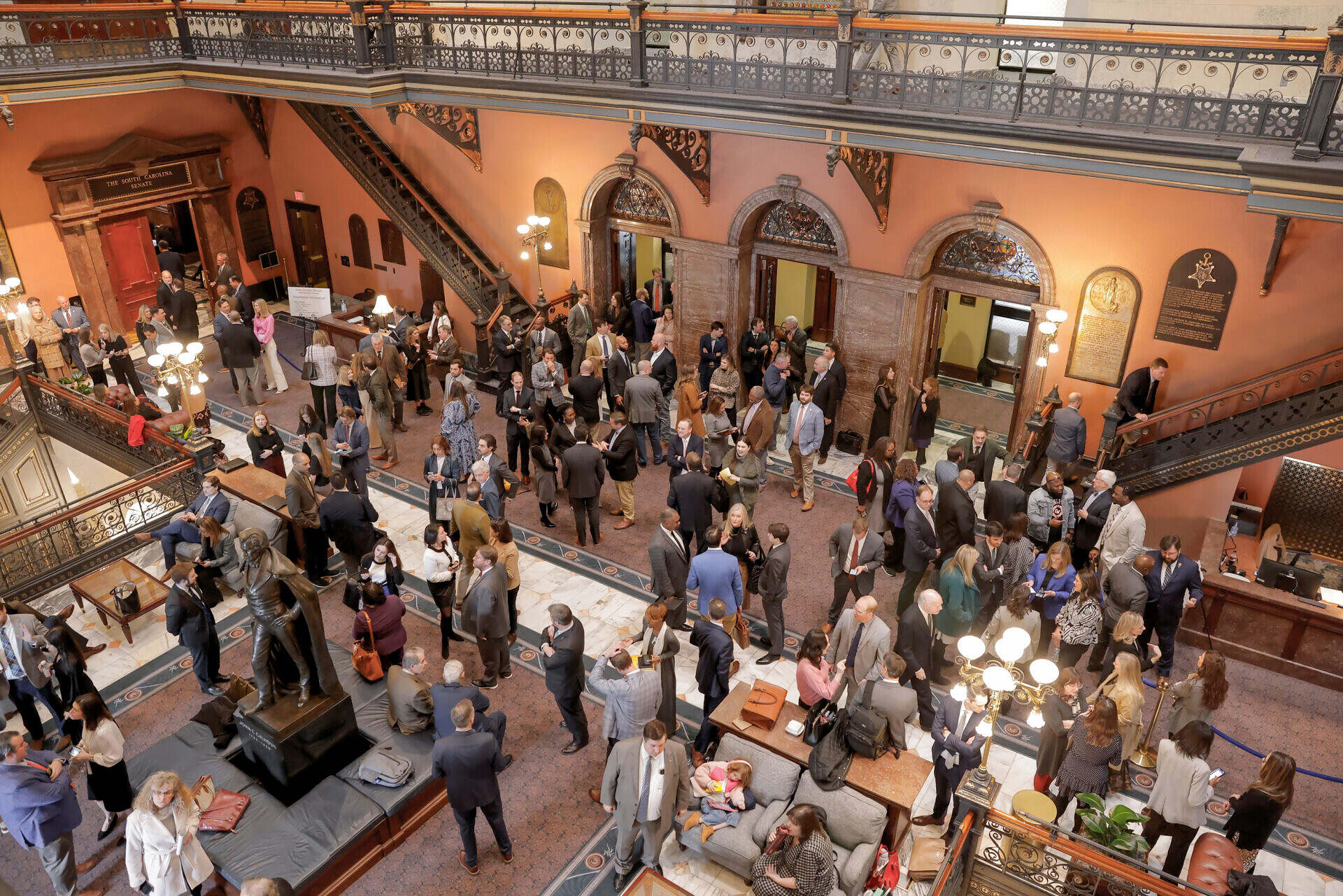
by WILL FOLKS
***
Despite several recent high-profile rebukes from prominent South Carolina senators, the Palmetto State’s legislative branch of government is still poised to tighten its vise grip on the ostensibly independent judicial branch and put another one of its former members on the state’s highest court.
South Carolina is one of only two states in America in which legislators pick judges – and the only state in which lawmakers control the nominating process for these legislative elections. This process has led to rampant corruption – prompting calls from reformers to fix the system.
It’s also led to lawmakers rewarding their colleagues with these plum judicial posts.
Lawmakers have thus far resisted making substantive changes to this incestuous system, and have in fact decided to double down on their dominance of the judiciary.
Next month, lawmakers are expected to vote in former S.C. House of Representatives speaker Jay Lucas as the next associate justice of the court – another example of cronyism but, more ominously, a direct rebuke of judicial independence. As previously reported, lawmakers are furious that incumbent associate justice John Few recently compelled them to go back to the drawing board and rewrite a controversial abortion statute – insisting they come up with a version which passed constitutional muster.

***
This is their payback… jettisoning Few and putting another left-of-center former lawmaker on the bench. Our audience will recall the so-called “Republican” legislature previously installed liberal Democrat lawmakers Jean Toal and Donald Beatty as chief justices – with catastrophic results for economic competitiveness and public safety.
“Our judiciary must be a place of integrity, independence, and equal justice under the law,” S.C. first circuit solicitor David Pascoe recently noted. “Instead, our legislature is turning it into a political spoils system, where those with influence get rewarded and those without it get run over.”
Pascoe isn’t the only one calling out this “spoils system” for what it is…
Last month, state senator Luke Rankin bemoaned the “possible perception” that Lucas’ election would threaten “public confidence in the fairness and uniformity of our judicial system.”
“Placing on our highest court a candidate whose record presents few objective indicators of judicial readiness risks further inflaming skepticism about the process and about the justice our courts administer every day,” Rankin wrote in a letter to his colleagues (.pdf).
***

RELATED | ‘WE ARE NOT CORRUPT‘
***
Last week, S.C. Senate majority leader Shane Massey implored lawmakers not to vote for Lucas, citing the same “perception” issues.
“Y’all, this looks really bad,” he said. “It looks like backroom deals are being made for someone who is not as qualified for – or deserving of – the position. It looks like the legislature is cooking the books.”
Looks like?
“Please let’s not screw this up,” Massey asked of his colleagues, although it was unclear if he was referring to the vote on Lucas or the broader judicial selection racket in which he and his colleagues have been participating for decades.
While Rankin and Massey are influential voices in the Senate, they are but two of 170 votes in a joint session of the S.C. General Assembly – which is the body that will choose the next supreme court justice (and numerous other judicial posts). In such a joint session, it takes 86 votes to win – meaning the 124-member House enjoys outsized influence over the Senate.
With current S.C. House speaker Murrell Smith pushing his members to support Lucas, it’s easy to see why the former speaker is in the driver’s seat in this race.
Or is he?
***
***
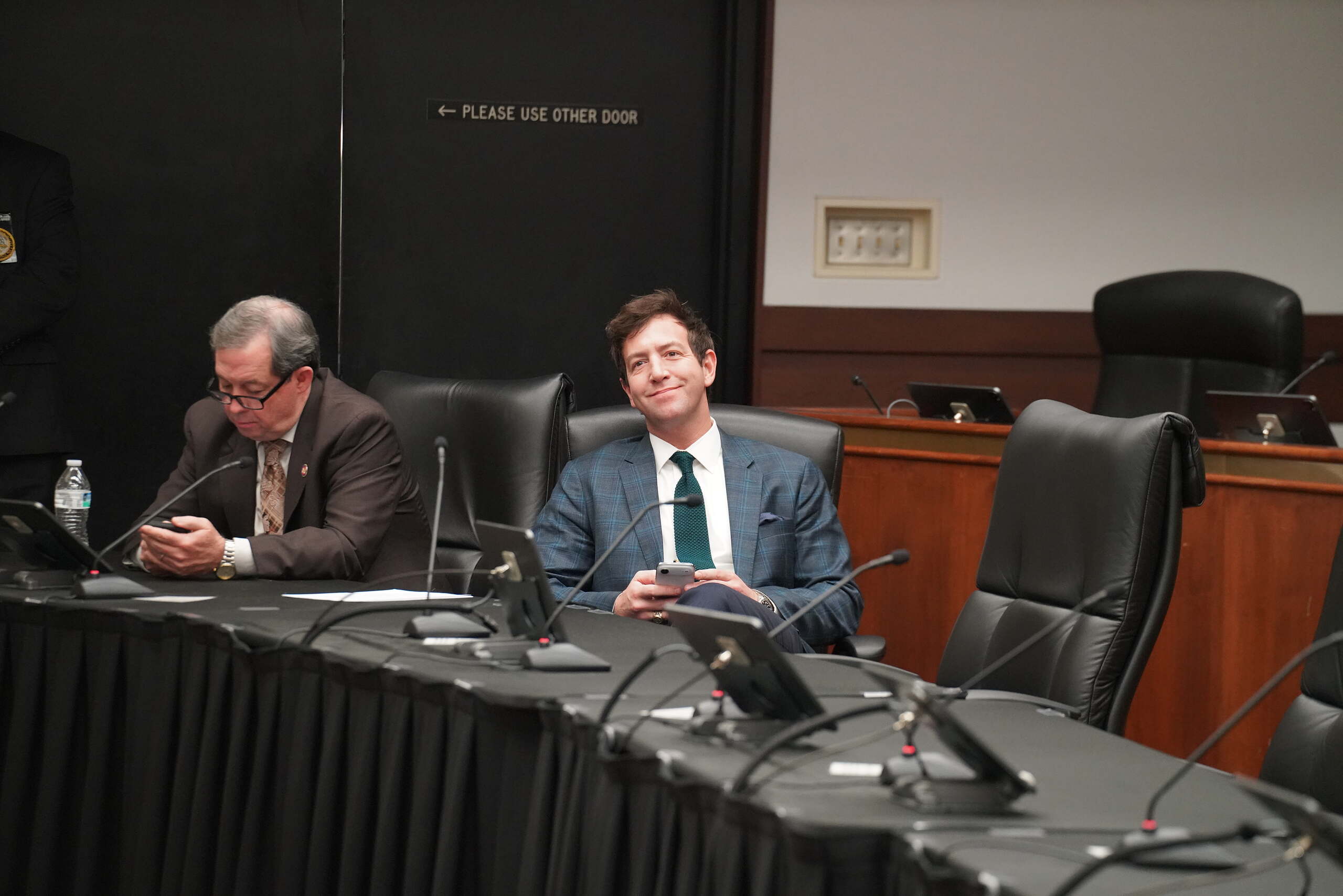
Late last week, one of Smith’s loyal foot soldiers in the S.C. House – fellow lawyer-legislator Gil Gatch – expressed concerns similar to those voiced by Rankin and Massey as it related to Lucas’ candidacy for the court. Not only that, Gatch indicated he was hearing about the issue from his constituents in Dorchester County.
“Many constituents in my district have expressed concern about the appearance of a former speaker of the House, who has never served as a judge, challenging a sitting associate justice of our supreme court,” Gatch said.
“I have full confidence in South Carolina’s judiciary, and I sincerely believe there is no finer group of judges in the country,” Gatch continued. ” I am not suggesting that anything improper is occurring, and I think very highly of Jay Lucas.”
And yet…
“That said, I am hearing from a number of people in my district who are troubled by how this looks and by the precedent it may set for future judicial elections,” Gatch concluded. “Their concern is not about any individual, but about preserving public confidence in the independence of our courts.”
Gatch stopped short of saying he would vote against Lucas, but his statements are the first real indication that concerns over the “appearance” of this legislative coup have seeped across the lobby of the S.C. State House.
If enough of Smith’s foot soldiers feel the heat that Gatch is obviously feeling from folks back home, Lucas’ election – which currently feels like a fait accompli – could wind up becoming a much harder slog for the incumbent speaker.
***
ABOUT THE AUTHOR…
Will Folks is the founding editor of the news outlet you are currently reading. Prior to founding FITSNews, he served as press secretary to the governor of South Carolina. He lives in the Midlands region of the state with his wife and eight children.
***
SOUND OFF…
Got something you’d like to say in response to one of our articles? Or an issue you’d like to address proactively? We have an open microphone policy! Submit your letter to the editor (or guest column) via email HERE. Got a tip for a story? CLICK HERE. Got a technical question or a glitch to report? CLICK HERE.

30 comments
For once I agree with Massey. It not only looks bad, it is exactly what SC citizens are tired of.
Exactly
You would think that Jay Lucas is a crazed moron and that the world would end if he were elected to South Carolina’s Supreme Court replacing that arrogant faux intellectual and womanizer John Cannon Few, who has no moral compass, only love of the sound of his own voice.
Have YOU, Will Folks, read Jay Lucas’ PDQ and his testimony before South Carolina’s Judicial Merit Selection Commission?
I did not know the man and never met him.
And frankly, my favorite candidate is Administrative Court Chief Judge Ralph King Anderson, III, a superb person and intellect in his own right and the heir of one of the best legal minds South Carolina ever saw in its judiciary: the late Ralph King Anderson, Jr., who, incidentally, was first elected to the trial bench from the General Assembly.
But after reading Jay Lucas’ PDQ and testimony, I thanked God I do not have to vote on this because I would have torn between Anderson and Lucas.
Will Folks, you served Mark Sanford, whose animosity to the Legislature was legendary. Sanford’s legacy is hiking the Appalachian trail.
What right have you to transform Jay Lucas’ honorable and capable service in South Carolina’s House of Representatives into a scarlet letter?
Why is prior service on South Carolina’s bench itself not a scarlet letter?
If, according to you, South Carolina’s current Legislature is corrupt and current governor is useless, why should we think of South Carolina’s Judiciary as the beacon of integrity and sense in a rotten state?
Your choice of the word “coup” is telling. It betrays your thinking that John Cannon Few owns his thrown and anyone who challenges “a sitting Justice” in a fair and free election is seditious.
Let’s see if you run this comment of mine.
Anyone who has never served a single day as a judge – not even as a magistrate- should not be on the voting menu for the Supreme Court, and especially its chief justice. I don’t care how nice they are or what else they’ve done. I don’t care if they were previously the best general or admiral to ever wear the uniform, or the State’s most successful business man, or a Harvard-educated lawyer with a PhD in mechanical engineering. EXPERIENCE MATTERS ON THE STATE’S HIGHEST COURT, AND TO DISREGARD THAT TO PLACE A WELL- CONNECTED FORMER LEGISLATOR ON IT WHEN THERE ARE OTHER GOOD CHOICES IS GOING TO BE VIEWED BY THE VOTING PUBLIC AS NOTHING SHORT OF BASE, RANK, CORRUPT INSIDER DEALING. It will destroy the Legislature’s credibility and give H bomb-sized ammunition to its critics to use against them. It may result in the greatest political purge in the next election since the ending of Reconstruction. Mark my words!
Whoa!
Please see my reply below to Ms. Shields.
Also, if “experience matters,” shouldn’t there be a diversity of experience with YES a decorated admiral and an MIT mechanical engineering PhD if you can find any in South Carolina?
The practice of law, and appellate judging, is and must be affected and guided by MODERN SCIENCE.
And John Cannon Few, both in a 22 February 2022 Faretta hearing he conducted FOR ME and in the oral arguments of Murdaugh, proved himself TOTALLY IGNORANT of scientific tenets.
He did not know what a natural experiment is and does not know what scientific validity is.
Nor does he have a moral compass other than what feels good to him at a particular moment.
I wish FITS would let me post the entire transcript of my colloquy with Few so that the public can see what he is really like when the cameras are NOT literally rolling. You see: that hearing and another four-hour one for me on 22 March 2022 were transcribed but NOT live-streamed or video-taped or even allowed to be attended by my Consul. That is Consul as is in diplomat, not counsel as in lawyer.
I think FITS and SC’s General Assembly, and YES, Jay Lucas himself, should push for the COMPLETE record of SC Appellate Case 2021-000815 to be public on C-Track BEFORE THE ELECTION so that the public can see how different John Cannon Few is in the dark from when under camera lights.
Dr. Faltas, aren’t you like some kind of serial litigator…haven’t you filed something to the tune of 40+ tort lawsuits against practically everyone who has so much as looked at you crossly? Don’t you essentially make a living out of suing people – to the point that you were barred from filing any new lawsuits in either state or federal district court? No offense, but you don’t seem very self-aware that these commentary sections are not a place to deluge all the readers with a 5k word tsunami that is 90% self-centered and directed to impugning Judge Few. Just say you hate him, list a few reasons why, say you and don’t want to see him elected, and move on. I’m not saying I want Few to remain on the bench, I’m just saying that Lucas getting voted in will be viewed as the worst act of inside-baseball in teh last 100 years, and there will be consequences at the ballot box for that.
Not even close, Congaree Catfish Top fan; and I do not hate anyone. As a devout Coptic Orthodox Christian I love my enemies as myself, sometimes even more.
This 40+ lawsuits against anyone who even looked at me crossly is one more OBJECTIVELY-PROVABLE LIE by the very John Canon Few you want remaining on his throne without anyone daring to challenge him.
The truth is I filed ONLY four civil suits pro se in ALL of SC state courts and, thank God, WON them the first three of them but was prevented from completing the fourth by the very unfair acts of John Few as an accomplice of Jean Toal and John Kittredge, none of whom likes the other two but they united on hating me.
I had also filed on civil appeal and two criminal appeal BEFORE December 2009 and WON the civil appeal and the second criminal appeal which effectively nullified the conviction which I had challenged in the first criminal appeal.
That could NOT have happened if I were frivolous or vexatious as they falsely portrayed me.
If my postings are too long for you, don’t read them. Nothing compels you to read anything I write except perhaps the breadth of my knowledge and the depth of my thinking.
But to keep this reply short enough for your taste, ALL my legal actions in South Carolina’s state or federal courts relate to MORE false criminal charges brought against me of which, thank God and WITHOUT A LAWYER, I defeated all but an insignificant one (front-yard parking in violation of a stupid City of Columbia ordinance.
Due to technical difficulties, I shall, God willing and FITS permitting, resume later.
Okay FITS, here is my comment again:
You would think that Jay Lucas is a crazed moron and that the world would end if he were elected to South Carolina’s Supreme Court replacing that arrogant faux intellectual and womanizer John Cannon Few, who has no moral compass, only love of the sound of his own voice.
Have YOU, Will Folks, read Jay Lucas’ PDQ and his testimony before South Carolina’s Judicial Merit Selection Commission?
I did not know the man and never met him.
And frankly, my favorite candidate is Administrative Court Chief Judge Ralph King Anderson, III, a superb person and intellect in his own right and the heir of one of the best legal minds South Carolina ever saw in its judiciary: the late Ralph King Anderson, Jr., who, incidentally, was first elected to the trial bench from the General Assembly.
But after reading Jay Lucas’ PDQ and testimony, I thanked God I do not have to vote on this because I would have torn between Anderson and Lucas.
Will Folks, you served Mark Sanford, whose animosity to the Legislature was legendary. Sanford’s legacy is hiking the Appalachian trail.
What right have you to transform Jay Lucas’ honorable and capable service in South Carolina’s House of Representatives into a scarlet letter?
Why is prior service on South Carolina’s bench itself not a scarlet letter?
If, according to you, South Carolina’s current Legislature is corrupt and current governor is useless, why should we think of South Carolina’s Judiciary as the beacon of integrity and sense in a rotten state?
Your choice of the word “coup” is telling. It betrays your thinking that John Cannon Few owns his thrown and anyone who challenges “a sitting Justice” in a fair and free election is seditious.
Let’s see if you run this comment of mine.
“no finer group of judges in the country”?
Really, FITS, you are either now paid by John Cannon Few, on whose personal shenanigans you previously reported, OR in reality Jay Lucas does not have a chance and you know it BUT you are opposing his election so that, when his candidacy is defeated, you can take credit as the most powerful media outlet in the state.
Let’s examine your, and David Pascoe’s, supposed “logic” and the supposed “logic” of Jay Lucas’ detractors.
First, Jay Lucas has long ago VOLUNTARILY left South Carolina’s Legislature after having served there capably and honorably for a decade.
Jay Lucas has NO more POWER over South Carolina’s House of Representatives than any other lawyer in private practice.
Indeed, having only a solo private practice, Jay Lucas has LESS POWER over South Carolina’s legislators than private lawyers from large law firms such as Maynard Nexsen, previously Nexsen Pruitt, which has groomed for election Michelle Childs and Tanya Gee among others.
The large law firms have power over lawyer legislators because they can hire lawyer legislatures or their relatives.
Jay Lucas’ private SOLO practice cannot do that.
Jay Lucas has EVEN LESS POWER over South Carolina’s legislators that candidates from federal or state governments such as the U.S. Attorney’s office or even county magistrates before whom any lawyer legislator might come as a criminal defendant or as a lawyer for a criminal defendant.
And Jay Lucas has ZERO financial POWER over South Carolina’s legislators because, as a private community-minded solo practice, he has no wherewithal to throw lavish parties or make corporate deals which might benefit a sitting legislator of his/her relatives or friends.
All power Jay Lucas has is the MORAL AUTHORITY of his prior honorable public service which rightly won the affection and admiration of his colleagues.
But you make it sound as if it were a crime to stand for election to any office without prior experience related to that office.
Need I remind Jay Lucas’ detractors that Donald Trump has NO GOVERNMENT EXPERIENCE WHATSOEVER when he first ran for President in 2016?
Need I remind the Democrats that Jimmy Carter had no FEDERAL experience when he ran for President in 1976 and no state government experience when he ran for Georgia Governor before that?
There is NOTHING more democracy-and-freedom-promoting-and-reinvigorating than an outsider challenging an entrenched incumbent and, hopefully, winning.
Back to “no finer group of judges in the country”! That is NOT determined by a South Carolina’s lone sitting legislator’s say-so.
There are OBJECTIVE criteria of how a judge or “group of judges” is rated “in the county.”
These criteria include how often their opinions are favorably cited by other courts and how often their judicial ideas are adopted by other state courts. Same for federal circuit courts of appeals. And for all state courts of last resorts and federal circuit courts of appeals, an additional important criterion is how often they are REVERSED by the U.S. Supreme Court.
By these OBJECTIVE criteria, South Carolina’s CURRENT and PREVIOUS supreme courts do NOT rank much better than South Carolina’s educational system.
Perhaps an outsider might, God willing, help shake that mediocrity off if FITS and David Pascoe would leave that outsider alone to have his fair chance at a free, fair, and transparent election.
FITS of the supposed open-mic policy, here again is my second comment:
“no finer group of judges in the country”?
Really, FITS, you are either now paid by John Cannon Few, on whose personal shenanigans you previously reported, OR in reality Jay Lucas does not have a chance and you know it BUT you are opposing his election so that, when his candidacy is defeated, you can take credit as the most powerful media outlet in the state.
Let’s examine your, and David Pascoe’s, supposed “logic” and the supposed “logic” of Jay Lucas’ detractors.
First, Jay Lucas has long ago VOLUNTARILY left South Carolina’s Legislature after having served there capably and honorably for a decade.
Jay Lucas has NO more POWER over South Carolina’s House of Representatives than any other lawyer in private practice.
Indeed, having only a solo private practice, Jay Lucas has LESS POWER over South Carolina’s legislators than private lawyers from large law firms such as Maynard Nexsen, previously Nexsen Pruitt, which has groomed for election Michelle Childs and Tanya Gee among others.
The large law firms have power over lawyer legislators because they can hire lawyer legislatures or their relatives.
Jay Lucas’ private SOLO practice cannot do that.
Jay Lucas has EVEN LESS POWER over South Carolina’s legislators that candidates from federal or state governments such as the U.S. Attorney’s office or even county magistrates before whom any lawyer legislator might come as a criminal defendant or as a lawyer for a criminal defendant.
And Jay Lucas has ZERO financial POWER over South Carolina’s legislators because, as a private community-minded solo practice, he has no wherewithal to throw lavish parties or make corporate deals which might benefit a sitting legislator of his/her relatives or friends.
All power Jay Lucas has is the MORAL AUTHORITY of his prior honorable public service which rightly won the affection and admiration of his colleagues.
But you make it sound as if it were a crime to stand for election to any office without prior experience related to that office.
Need I remind Jay Lucas’ detractors that Donald Trump has NO GOVERNMENT EXPERIENCE WHATSOEVER when he first ran for President in 2016?
Need I remind the Democrats that Jimmy Carter had no FEDERAL experience when he ran for President in 1976 and no state government experience when he ran for Georgia Governor before that?
There is NOTHING more democracy-and-freedom-promoting-and-reinvigorating than an outsider challenging an entrenched incumbent and, hopefully, winning.
Back to “no finer group of judges in the country”! That is NOT determined by a South Carolina’s lone sitting legislator’s say-so.
There are OBJECTIVE criteria of how a judge or “group of judges” is rated “in the county.”
These criteria include how often their opinions are favorably cited by other courts and how often their judicial ideas are adopted by other state courts. Same for federal circuit courts of appeals. And for all state courts of last resorts and federal circuit courts of appeals, an additional important criterion is how often they are REVERSED by the U.S. Supreme Court.
By these OBJECTIVE criteria, South Carolina’s CURRENT and PREVIOUS supreme courts do NOT rank much better than South Carolina’s educational system.
Perhaps an outsider might, God willing, help shake that mediocrity off if FITS and David Pascoe would leave that outsider alone to have his fair chance at a free, fair, and transparent election.
“throne” not “thrown” in my previous comments.
In the rush of the moment, the mind sees what it intended to type, not what the hand actually typed.
But a cooler second look sees the prior errors.
I pray FITS and David Pascoe see the error of their opposition to Jay Lucas’ candidacy.
“throne” not “thrown” in my previous comments.
In the rush of the moment, the mind sees what it intended to type, not what the hand actually typed.
But a cooler second look sees the prior errors.
I pray FITS and David Pascoe see the error of their opposition to Jay Lucas’ candidacy.
We all need to contact our representatives. The corruption in this state needs to end. When you have to start with “we are not corrupt” that is a red flag. I believe that there should not be a Supreme Court Justice that has not served on a lower court previously
Ms. Shields – Your last sentence says it all!
Rebecca Shields, Top Fan, why should that be so?
South Carolina’s supreme court is an appellate court with original jurisdiction, too, meaning it sometimes can act as a trial court.
So, are you saying that to ascend to a court with trial jurisdiction, a fully qualified lawyer has to have been a trial judge previously?
I don’t get it.
First, if that should be so, a STATUTE should say so. As South Carolina law now stands, any lawyer in good standing, with or without prior judicial experience, may offer for a seat on South Carolina’s Supreme Court OR Court of Appeals.
And at least recently, Blake Hewitt WITHOUT prior experience on the trial bench, offered for South Carolina’s Court of Appeals and WAS ELECTED over Alison Renee Lee, a VERY experienced trial judge with some experience on SC’s Court of Appeals, too.
These are just different preferences for different people, not principled policy-based positions.
Next, the HIGHEST appellate court OF THE LAND has no such rule OR POLICY OR PRACTICE.
The late U.S. Chief Justice Rehnquist was appointed by President Ronald Reagan straight out of the U.S. Solicitor’s Office, with not prior judicial experience AT ALL.
And CURRENT U.S. Associate Justice Elena Kegan was appointed by President Barak Obama also straight out of the U.S. Solicitor’s office, also without prior judicial experience, having previously served as Dean of Harvard Law School.
Finally, if prior judicial experience is truly necessary, there are already four sitting Justices on SC’s supreme court with very remote (Kittredge) and very recent (Verdin) and in-between (James and Hill) trial bench experience. That should be enough.
If you don’t like my difference with you, please respond civilly and objectively or hold your peace.
Notice something?
In the lower right corner of the photo, John Cannon Few stands alone glaring at groups of legislators who are talking to each other and not interested in him.
Notice another thing? John Canon Few lists one of his crowning achievements as chairing the Access to Justice Commission; YET, he co-signed order after order requiring ME, who thank God and WITHOUT A LAWYER did for myself what Alex Murdaugh’s entire defense team could not do for him, to hire a lawyer to appear before SC’s civil courts as a plaintiff or appellant and to use the tedious paper filing when ALL OTHERS IN SOUTH CAROLINA including disbarred lawyers and serial murderers and rapists may appear pro se and avail themselves of filing by e-mail.
Indeed, John Cannon Few co-signed an order putting ME in the dreaded Alvin S. Glenn Detention Center (“ASGDC”) where I was struck with Atrial Fibrillation which has since become permanent and incurable and where SEVERAL other inmates DIED due to neglect of medical needs, SOLELY BECAUSE I had allegedly used POLITE four emails to enquire about the processing of my cases WHEN THE COURTHOUSE WERE PHYSICALLY CLOSED due to CoViD-19.
“Access to Justice” indeed!
Again, it is crucial for SC’s Legislature to see the COMPLETE record of SC Appellate Case 2021-000815 and show the public how different John Canon Few is in the dark of sealed records from under national camera lights.
Before I venture to paste the entire 22 February 2022 transcript before John Canon Few and his colleagues, I tease two important excepts God willing and FITS permitting.
Here are the two stunning transcript excerpts:
[17 to page 10, line 9] A: [17-23] The other thing is you said Marion Hanna questioned me. Marion Hanna is obsessed, obsessed with trying to get people to get mentally examined. And that’s why I made the motion for your Court to take possession of her two so-called novels which are easily the worst ever written in English language. Because that is morbid. [24 to page 10, line 5] And that is really another travesty that your Office of Disciplinary Counsel did something to her, but it was — you are supposed to protect the public from women like her. Just as you’re supposed to protect the public from incompetent and ineffective and selfish and treasonous lawyers. And I do not think you’re rising to this duty. [6-9] And you are wanting me to suppress my conscience, I will not do that. I will not suppress my conscience. Now the reason I told Marion Hanna that I, and that was –
[10-11] Q: Ma’am, the reason I brought up Judge Hanna was simply to —
[12] A: She’s not a judge, I’m sorry.
[13-15] Q: — simply to point out the context in which you made the statement that you had been evaluated and you didn’t have any mental health issues.
[16] A: The reason — * * * * * * *
[25 to page 15, line 3] In every proceeding such as the one we’re going to have there are going to be evidentiary issues. A lawyer could help you to better understand those evidentiary issues. [4-11] There are substantive issues regarding contempt, and those relate particularly to what the state would have to prove and what this Court would have to find in order for you to be found in contempt of court. There may be defenses that you could assert to the contempt charge. A lawyer could help you to understand better all of the substantive issues, including whether or not there are any defenses to the charge of contempt. [12-18] There are constitutional issues that might be at stake. In fact, you have already raised constitutional issues and you’ve done it here today. And I just want to make sure you understand that there are many times when even the judges on this Court don’t understand the constitutional issues, so a lawyer could certainly help you to better understand those constitutional issues.
===========================================================================
I repeat what John Canon Few said, “And I just want to make sure you understand that there are many times when even the judges on this Court don’t understand the constitutional issues, so a lawyer could certainly help you to better understand those constitutional issues.”
============================================================================
Note how he stunningly admits that he and/or his colleagues do not understand constitutional issues.
So, either HE does not understand constitutional issues and thus is unqualified to remain on his throne OR he rightly or wrongly thinks his colleagues on SC’s supreme court are incompetent; therefore, the had no basis to FALSELY brand ME “frivolous” solely BECAUSE my constitutional arguments went over their heads.
Also notice how “clever and prescient” I was and how indifferent John Canon Few was to SC’s Supreme Court’s duty to protect the public from bad judges and bad lawyers.
If the full transcript does not appear of this comment thread, it is on other comment threads; and anyone interested can certainly FOIA it from SC’s Supreme Court or request it to make SC Appellate case 2021-000815 public on SC C-track.
Remember in reading this transcript that ALL their beef against me were four POLITE alleged emails inquiring why my cases disappeared from the public C-Track docket when the PHYSICAL courthouses were closed to the public due to CoViD-19.
For those mere alleged four POLITE emails over a 22-month period “Justice” Few first forced me to reveal my medical intimacies to recover my BASIC HUMAN RIGHT to speak for myself but later threw me in jail anyway after promising equal and fair treatment.
And he somehow expects me to be grateful?!?!?
Here, God willing and FITS permitting, is the complete transcript:
[Page 1] ORIGINAL
STATE OF SOUTH CAROLINA Before the Supreme Court of South Carolina
COUNTY OF RICHLAND TRANSCRIPT OF RECORD CORRECTED ORIGINAL
In the Matter of: Marie Assa’ad Faltas, Respondent. Appellate Case No. 2021-000815
A Hearing was held in the Courtroom of the Supreme Court of South Carolina beginning at 1:30 p.m., on Tuesday, February 22, 2022 to confirm the desire of the Respondent to proceed pro se in an upcoming Rule to Show Cause Contempt Action to be held on March 22, 2022.
The Court consisted of Justice John W. Kittredge; Justice Kaye G. Hearn; Justice John C. Few; Justice George C. James, Jr.; and Former Court of Appeals Chief Judge James E. Lockemy.
The Office of the Attorney General was represented by Donald J. Zelenka, Esquire.
The Respondent appeared pro se.
Ms. K.A. Snelling, CVR-M Court Reporter for Office of Commission Counsel
RECEIVED MAR 09 2022
S.C. SUPREME COURT
[Page 2] INDEX TO EXAMINATION
Dr. Marie Assa’ad Faltas
Examination by Justice Few —————– 5
Certificate of Reporter ———————– 22
INDEX TO EXHIBITS
There were no Exhibits Submitted during this Hearing
[Page 3, lines 1-2] (Whereupon, the Hearing commenced at 1:35 p.m. on the 22nd day of February, 2022)
[3] CLERK OF COURT: All rise.
[4 to page 4, line 5] JUSTICE KITTREDGE: [4-9] Please be seated. Thank you. Good afternoon, we’re on the record in the South Carolina Supreme Court, this is In the Matter of Dr. Marie Faltas, who is pre-sent. Chief Justice Beatty is not sitting, and in his stead we’re pleased to have Judge Lockemy with us. Thank you, sir, for sitting with us here. [10-16] The proceeding today arises from a Rule to Show Cause Contempt Action against Dr. Marie Faltas. Dr. Faltas is present, as is Mr. Zelenka from the Attorney General’s Office on behalf of the movant. The limited purpose of today’s hearing is to confirm what ap-pears to be Dr. Faltas’ desire and decision to proceed pro se in this contempt proceeding. [17-23] And Dr. Faltas, we thank you, ma’am, for being here today. We understand from your submissions that you wish to represent yourself, and we understand that and respect that. [24 to page 4, line 3] The law requires that a court ensure that an accused is properly informed of her rights before waiving the right to legal counsel and granting a request to proceed pro se, in other words, self-representation. Dr. Faltas, you’re going to be asked questions from the Court, primarily, if not exclusively, from Justice Few. And it’s nec-essary for us to ensure that whatever decision you choose to make, you do so freely and voluntarily of your own free will. [4-5] I will tell those in the Courtroom if you wish to remove your mask, you’re free to do so at this time.
[6] DR. FALTAS: Judge —
[7-11] JUSTICE KITTREDGE: It’s also necessary that I place you under oath before we begin the ques-tions about your decision for legal representation or your desire to proceed pro se. So at this time, Dr. Faltas, I’d ask if you’d raise your right hand please, ma’am?
[12-17] DR. FALTAS: No, sir, I do not swear for religious reasons. And I also handed to the Clerk a motion for this hear-ing, and it includes documented that both my knees are fractured. So I need at least permission to address the Court from a seated position, unless this is going to be a torture Star Chamber.
[18-23] JUSTICE KITTREDGE: [18-21] No, ma’am, you can remain seated the whole time, there’s no rea-son for you to stand. And we will certainly review the motion that you have filed with the Court. [22-23] Do you affirm that the statements and testimony you give to the Court today will be truthful?
[24] DR. FALTAS: Yes, sir.
[5 to page 5, line 4] JUSTICE KITTREDGE: [5 to page 5, line 3] Thank you, ma’am. That is sufficient for the oath, so now the oath has been administered. At this time I’ll turn it over to Justice Few. [4] Justice Few?
[5] DR. FALTAS – EXAMINATION BY JUSTICE FEW:
[6 to page 7, line 12] Q: [6-13] Dr. Faltas, as you know, you have the right to be represented by an attorney. As you also know, you have the right to represent yourself. As Justice Kittredge mentioned, you have fairly clearly indicated that you wish to represent yourself in this contempt proceeding. To represent yourself however you must make a valid waiver of your right to have an attorney represent you. [14-21] Now I’m going to talk to you about some of the things that we need to talk about today, and I want you to be cooperative with me. Because if representing yourself is what you want, then the purpose of this hearing is to enable you to do that. I’m aware that you are very familiar with all of these things that we’re going to talk about because you’ve been through these hearings before. [22 to page 6, line 3] But I’m going to talk to you about some of the things that I and the other members of this Court, first, must ask you in order to know after you’ve heard everything that I’m going to talk to you about do you still want to represent yourself? And second, if you want to represent yourself we need to know that you are mak-ing a valid waiver to your right to counsel. [4-18] So there are several subjects that are important to your waiver of your right to counsel, and I’m going to discuss those with you now. Your educational back-ground is important to this question. I am aware that you are highly educated. In fact, you have multi-ple degrees including a Master’s in Public Health from the University of North Carolina. You have a graduate degree in medicine from a university in Cairo. You have, in fact, practiced medicine profes-sionally, and you actually taught preventative medicine at the University of South Carolina School of Medicine. This educational background indicates that you are a highly intelligent woman. And I will note that you have listed that you are self-employed as a consultant in medical legal issues. And you have told the Court before that you speak four languages. [19 to page 7, line 3] Your understanding of legal principles and procedures is important to this question. We are aware that you have been involved in extensive litigation over many years at all levels of Court here in South Carolina, both federal and state. From my review of those cases over the years, and from my review of the motions and the returns and the other documents that you have filed in this case it is my impression that you have a broad and deep understanding of legal principles and procedures. [4-10] Your mental health is important to this question. In one of the cases that you have currently on appeal here at this Court you were interrogated by Judge Marion Hanna about whether you had ever been evaluated for mental illness. You told Judge Hanna on March the 28th, 2011 that you had been evaluated for mental health issues and you have no mental health issues. [11-12] Now Dr. Faltas, so far is there anything that I have said that you disagree with?
[13-14] A: Yes, Sir. You said that I have been through these hearings, in the plural, before.
[15] Q: Excuse me?
[16-18] JUSTICE KITTREDGE: Just one second. I want to make sure the Court Reporter can hear be-cause we’re on the record. Can you hear?
[19-20] JUDGE LOCKEMY: Probably need to move that microphone up.
[21-22] JUSTICE KITTREDGE: Which microphone is yours, Madam Court Reporter?
[23] COURT REPORTER: The silver one, if she could —
[24 to page 8, line 1] JUSTICE KITTREDGE: All right, let’s try to move both of them closer. And if you need assistance in doing that we’ll certainly accommodate you, Dr. Faltas.
[2] JUSTICE FEW: Let’s move the other one up too.
[3-5] JUSTICE KITTREDGE: Madam Clerk, let’s see if we can move the other one closer to Dr. Faltas? (Microphones moved closer to Dr. Faltas).
[6-7] Q: Okay. Now I didn’t hear what you said, so could you repeat?
[8-10] A: You’re asking me if there is something that needs correction. And I said yes, there are things that need correc-tion.
[11] Q: Tell me what it is?
[12 to page 9, line 10] A: [12-19] Okay. First you said I have been through those hearings, in the plural, before. I have not. I have been through only one hearing where Judge then South Carolina Circuit Judge Barber gave me the Faretta in-quiry. And I consider it a travesty, that he admitted that he agrees that I have a constitutional right to represent myself, but he said something to the effect that his hands are tied because of what you all ordered. [20 to page 9, line 3] I think judg-es take oath to the Constitution, not to the South Carolina Supreme Court. And I am indignant at what has been done to me. I think it is no better than Jim Crow when you have had at least 400 lawyers who either were suspended definite-ly, publicly reprimanded, indefinitely suspended, disbarred, debarred. And all 400 of them, including one who had con-sumed drugs or alcohol and killed somebody, and you did not take their rights to speak for themselves. [4-10] I consider it a violation of my human rights, basic human rights, forget about Faretta and all that stuff, it’s a basic human right to speak for oneself. And I consider what you’re doing to me Jim Crow revisited on lawful immigrants. And because my conscience requires me to tell the truth, that is part of the truth, so I’ve been only to one hearing where the Faretta —
[11-14] Q: So I used the plural when I described the Faretta Hearings that you had been through before, and you’ve corrected me that you’ve only been through Faretta one time?
[15] A: yes, sir.
[16] Q: Okay.
[17 to page 10, line 9] A: [17-23] The other thing is you said Marion Hanna questioned me. Marion Hanna is obsessed, obsessed with trying to get people to get mentally examined. And that’s why I made the motion for your Court to take posses-sion of her two so-called novels which are easily the worst ever written in English language. Because that is morbid. [24 to page 10, line 5] And that is really another travesty that your Office of Disciplinary Counsel did something to her, but it was — you are supposed to protect the public from women like her. Just as you’re supposed to protect the public from in-competent and ineffective and selfish and treasonous lawyers. And I do not think you’re rising to this duty. [6-9] And you are wanting me to suppress my conscience, I will not do that. I will not suppress my conscience. Now the reason I told Marion Hanna that I, and that was –
[10-11] Q: Ma’am, the reason I brought up Judge Hanna was simply to —
[12] A: She’s not a judge, I’m sorry.
[13-15] Q: — simply to point out the context in which you made the statement that you had been evaluat-ed and you didn’t have any mental health issues.
[16] A: The reason —
[17-23] Q: Let me follow up on that if you don’t mind? I’m going to ask you three questions right here, these are yes or no questions. Depending on your answers an explanation might be warranted. But I would like if you don’t mind, would you give me a yes or no answer to these questions. And then we’ll see whether an explanation is necessary.
[24] A: Yes; Sir.
[25 to page 11, line 1] Q: Have you taken any alcohol, medication, or drugs in the last 24 hours?
[2-3] A: Sir, I take, every day I need to take a replacement thyroid hormone.
[4] Q: So medication. And it’s by prescription?
[5] A: Yes, sir.
[6-8] Q: And when you take that medication have you taken it consistent with the prescription that was given to you by the doctor who prescribed it?
[9-11] A: I have had that condition for 42 years now. And it is just, it’s almost equivalent of insulin for diabetics.
[12-16] Q: But let me repeat my question, and I want to remind you this is a yes or no question. When you’ve taken this medication that you just referred to over the last few weeks, have you taken it accord-ing to the prescription that the doctor gave you?
[17] A: Yes, sir, every day.
[18-19] Q: Okay. Now how about alcohol or any illegal drugs?
[20] A: (Moves head from side to side).
[21] Q: I understand. You’re shaking your head no.
[22] A: No, no.
[23-24] Q: Okay. So are you under the influence today of any drugs or medication or alcohol?
[25] A: No; sir.
[Page 12, lines 1-4] Q: Have you been evaluated for your mental health since that incident that I referred to where you told — you mentioned that you’d been evaluated before, have you been evaluated since?
[5] A: Yes, sir:
[6-7] Q: Did those evaluations as far as you know reveal any mental health concerns?
[8] A: At different times I was very depressed.
[9] Q: Depressed?
[10-17] A: Depressed, yes. And the depression happens even classically in people who have been wrongly incarcerated. And once they are released there is a euphoria of the release, but after that when you look back on how much of your life is lost you do get depressed. To the day, to the day, on 22 February, 2010 I started the five-day jury trial before Judge Clifton Newman.
[18-21] Q: Ma’am, let’s stay focused, okay? And we’ll try to get through this as simply and easily as we can. I’m asking, my question for you is since March of 2011 have you been evaluated for your mental health?
[22] A: I have been depressed since then.
[23] Q: Okay. But —
[24 to page 13, line 7] A: But it doesn’t affect my ability to understand things. And most importantly, sir, one of the cures for depression is creativity. And one of the things, and I tell the joke which is true, that I got admitted to medical school in Egypt at age 17 is because I proved I was superbly qualified to be an engineer. So one of the things that cure my de-pression are the engineering inventions that I work on on my own and that this farce is taking me away from.
[8-12] Q: So I think what you said a second ago is that the depression that you just mentioned is not af-fecting your ability to understand. Are there any other mental issues right now that are affecting your ability to understand?
[13-14] A: I don’t think they affect my ability. But I’m very afraid of you all, I really am.
[15] Q: But you do have the ability to understand?
[16] A: Absolutely.
[17 to page 16, line 5] Q: [17-21] Okay. Now what I’m going to do, it’s also important to a valid waiver of counsel that you be aware of the dangers of representing yourself, and that you understand how and in what way a lawyer can help you on many of these issues. [22 to page 14, line 4] On February 17th of this year in a document that you called Respondent’s Emergency Response to this Court’s February 22nd order, which is the order — I’m sorry, February 15th order, which is the order setting this hearing, you wrote “Dr. Assa’ad Faltas reiterates that she heard the dangers of self-representation previously recited and understands what the judges mean by them.” [5-12] I have no doubt that you understand the dangers of representing yourself, but I’m still going to go over some of them now. And at the end I’m going to ask you if you understand all those dangers. There are jurisdictional issues at stake here, and you have raised some of these jurisdictional issues already. A lawyer could help you to better understand those jurisdictional issues. [13-15] You have raised recusal issues, there may be other issues that you want to raise regarding recusal. And a lawyer could help you to better understand those issues. [16-19] In every proceeding, certainly this one, there are going to be procedural issues, and you have already raised a few of the procedural issues. A lawyer could help you to better understand those procedural issues. [20-24] We have to operate in this Courtroom by rules of Court, they bind us, they bind Mr. Zelenka, and they will bind you. A lawyer could help you better to understand those rules of court and what conduct is permitted and what conduct is not permitted according to those rules. [25 to page 15, line 3] In every proceed-ing such as the one we’re going to have there are going to be evidentiary issues. A lawyer could help you to better understand those evidentiary issues. [4-11] There are substantive issues regarding contempt, and those relate particularly to what the state would have to prove and what this Court would have to find in order for you to be found in contempt of court. There may be defenses that you could assert to the contempt charge. A lawyer could help you to understand better all of the substantive issues, including whether or not there are any defenses to the charge of contempt. [12-18] There are constitutional issues that might be at stake. In fact, you have already raised constitutional issues and you’ve done it here to-day. And I just want to make sure you understand that there are many times when even the judges on this Court don’t understand the constitutional issues, so a lawyer could certainly help you to better un-derstand those constitutional issues. [19 to page 16, line 2] And if you are found guilty of contempt, there could, there are going to be punishment issues. And as you are aware, if the Court finds you guilty of Contempt of Court the Court may choose to fine you, may choose to place other restrictions on you, and even imprison you for a term of up to six months. A lawyer could help you to understand the potential consequences of a finding of contempt and help you to mitigate or perhaps even eliminate those conse-quences. [3-5] Now is there anything that I just explained to you in the way of the dangers of self-representation that you do not understand?
[6-16] A: What I do not understand is whether you’re talking about a hypothetical, rarified, romanticized lawyer who maybe graduated top of her class from Yale, or the average lawyer that is likely to be imposed on me, who works against me, who sometimes some lawyers have been described, at least one by U.S. District Judge Gergel as exhibiting stunning ignorance of the law. So I do not understand whether you mean that all lawyers have the same ability or you agree that there is a range of, number one, competence, and number two, devotion to the client?
[17 to page 17, line 4] Q: [17 to page 17, line 1] As far as I know to answer your question, as far as I know there’s really been no discussion about who the lawyer would be if you chose to be represented by a lawyer. And as you point out, there is a spectrum of quality of lawyering. We would certainly hope that we would find someone who could do what I just talked to you about, which is to help you to better under-stand all of the issues that I discussed which are what I was referring to generally as the dangers of self- representation. [2-4] Now setting the quality of the lawyer aside, do you understand all of the dangers of self-representation that I just went over with you?
[5-6] A: I even understand some that you have not mentioned.
[7-8] Q: So I understand your answer to be yes, and I understand more than what you were telling me?
[9] A: Yes.
[10-12] Q: Okay, good. Now do you have any questions for me about your right to counsel or your right to represent yourself?
[13-23] A: [13-21] I wanted to tell you that I also understand that the judges’ perception that the lawyer is better or smarter or whatever than the pro se person is itself an advantage — a disadvantage and a risk of self-representation. And to that extent, the same brilliant legal argument could come from a lawyer and you would say oh, that’s brilliant, that’s new, that gives us food for thought. But it would come from me and you would say it’s frivolous and say no more than that. [22-23] And I’ve had a natural experiment. Do you know what a natural experiment is?
[24 to page 18, line 2] Q: Well ma’am, I’m going to want us to — we’re almost done, and you’re doing great. But I want to make sure we stay focused. Do you have any other questions that you want to ask me?
[3-7] A: Yes. Do you promise to be as receptive to my pro se advocacy as you would be to a lawyer considering that my objective record so far is better than a lawyer? For one thing, for one thing I pro se, thank God, won a PCR case which withstood the state’s —
[8-15] Q: So let me answer your question. It’s really not my role to make promises here. But I will remind you, as I’m sure you know, that it is our duty to do what you just said. It’s actually part of the oath that we all take as judges to listen fairly to every person who comes in here to raise a position. So that’s my answer to your question. Are there any other questions that you have?
[16-19] A: Yes. In this proceeding you are my accusers. Do I have the right to confront you? And I have a suspicion that you want to impose a lawyer on me because you want that lawyer to force me to give up that choice.
[20-25] Q: My answer to your question is that that is one of the procedural and constitutional issues that could be raised at the trial of these contempt charges, and a lawyer could help you to better understand those procedural issues. Are there any other questions that you have?
[Page 19, lines 1-2] A: I’m sorry, sir, you have not answered my question.
[3-5] Q: Ma’am, you might not be satisfied with my answer, but I gave you my answer. Now I’m going to ask you again, are there any other questions that you have?
[6-7] A: Yes. If you could please look at the motion that I just served?
[8-10] Q: As Justice Kittredge indicated at the beginning of the hearing, we will look at the motion. Yes, ma’am. Are there any other questions?
[11-14] A: Will I be allowed to require discovery from Mr. Zelenka, and will you promise to ensure that he responds to discovery within the limited time that I have? I mean what I’m trying to —
[15-19] Q: I can answer that question by telling you again that’s one of the procedural issues that could be raised. And it is our duty to rule according to the law, and so we will follow that duty. So are there any other questions?
[20-21] A: No, thank you. And thank you for being pleasant today.
[22] Q: All right, ma’am.
[23 to page 20, line 5] A: I really was afraid that if I smiled you’d say you’re taking the procedure as a joke, you’re in con-tempt. If I didn’t smile you would say she has a hostile look on her face, she’s in contempt. Because this is exactly, ex-actly what Marion Hanna did to me. And for 12 years you all failed your duty to protect the public from that. So I was afraid of you. But I want. To thank you for being pleasant.
[6-8] Q: So having heard everything that I had to say to you, do you want this Court to appoint a lawyer for you or do you want to represent yourself?
[9-15] A: I God willing want to represent myself more than ever. However, having reviewed Faretta, the Court does have the right to appoint standby counsel over my objection. So if you want to appoint standby counsel you could do that, it would be over my objection. But I just was, you know, wanting you to have your heart at ease about having done everything possible.
[16-17] Q: So to be clear, in response to what you just said, you would object to standby counsel?
[18-19] A: But Faretta says the Court has the right to do standby counsel over —
[20-21] Q: But let me make sure I have this, you object to it though, right?
[22] A: Yes.
[23 to page 21, line 2] Q: Okay. Now I want to ask you one more question. Has any person or any other cir-cumstance put pressure on you or forced you in any way to make the decision to represent yourself, or in your mind can you tell me that you are doing this freely and voluntarily?
[3] A: Freely and voluntarily.
[4] JUSTICE FEW: Okay. Thank you, ma’am.
[5] DR. FALTAS: Thank you.
[6-7] JUSTICE KITTREDGE: [6] Thank you, Justice Few. [7] And Dr. Faltas, thank you, ma’am.
[8] DR. FALTAS: Thank you.
[9-17] JUSTICE KITTREDGE: [9-13] I will on behalf of the entire Court echo what Justice Few said about our duty to treat all litigants, represented and unrepresented fairly, equally, and in accordance with the law, both procedurally and substantively. [14-17] Are there any questions from other members of the Court? (No response). Hearing none, that concludes this matter. Thank you all for being here today. We’ll issue an order in accordance with our ruling.
[18-19] (Whereupon, the hearing concluded at 2:01 p.m. on the 22nd day of February, 2022)
RECEIVED
MAR 09 2022
S.C. SUPREME COURT
[Page 23] CERTIFICATE OF REPORTER
I, the undersigned K.A. Snelling, Official Court Reporter for the Office of Commission Counsel and Notary Public for the State of South Carolina, do hereby certify:
That the foregoing is a true, accurate, and complete transcript of record of all the proceedings had and any evidence introduced in the captioned matter on the 22nd day of February, 2022.
I do further certify that I am neither related to nor counsel for, nor interest to any party hereto.
IN WITNESS WHEREOF, I have hereunto affixed my hand this 23rd day of February, 2022.
[s/] Kathy A. Snelling CVR-M
Certified Court Reporter
Notary Public for South Carolina
My Commission Expires: May 16, 2028
My response to Congaree Catfish Top fan’s reply was under technical difficulties and has several typos which I could not review before hitting submit for fear of losing the whole text, which happened before.
So, God willing and FITS permitting, I continue my reply.
I do NOT make a living by filing lawsuits. THE REVERSE IS TRUE: these false criminal charges against me are preventing me from making a living and I rely ENTIRELY on my family who suffered along with me.
That “even looked at me crossly” cliche was IN REVERSE the basis of false criminal charges against me which could have, God forbade, kept me in cells of steel and stone for 36 years, yes 36, because Hatchet-for-Hire Heather (Weiss), she of recent Scott Spivey case fame, had the cruelty of insisting that my looking out of my own window when my neighbor was causing a commotion in the common parking lot was surveying that neighbor and harassing her.
I would post the transcript proving that that was what Heather Weiss had me tried for on 22-26 February 2026 in the court of none other than Judge Clifton Newman; but you would call that a deluge. So, trust me or go look at the transcripts for yourself.
I do not even hate Heather Weiss or my other false accusers; but I do hate the unfair ganging up on, and attacking of, an innocent person. And I have a Christian moral obligation to help. “I was a prisoner and you did not visit me.”
That is why I have been defending Alex Murdaugh and am now defending Jay Lucas, neither of whom I ever met or expect a reward from.
“22-26 February 2010” not “22-26 February 2026”
That is 16 years to the week they have been punishing me for having been innocent and having proved it without a lawyer.
And the proof that they have been punishing me ever since is that transcript which proves they mounted a whole new criminal case against me for allegedly violating an edict that all South Carolina litigants can communicate with the courts by email and phone ESCEPT ME.
That is why I say John Canon Few has no moral compass: instead of investigating those who knowingly and maliciously brought false criminal charges against me in 2009 and before and since, they were prosecuting me as late as 2022 for allegedly violating an unfair edict of theirs.
Again I ask you to see the truth: John Canon Few is NOT a victim of retaliation for a principled opinion he wrote, he is VERY unprincipled in the dark.
And I am physically tired and sorry for myself that no one, not even Judge Clifton Newman, who complimented me during that five-day jury trial as “most pleasant and gracious” and “not frivolous at all,” stood up to defend me against John Canon Few’s & Co.’s LIES about me and their branding me “frivolous and vexatious” just because they can.
I pray that John Canon Few is not re-elected and that he then takes some time to view it as divine justice for what he joined in doing to me when he could have just as easily dissented and defended me.
God bless nonetheless.
Here is the REAL quiet part out loud, to be heard, God willing and FITS permitting, clearly: South Carolina’s Supreme Court Justices THEMSELVES and basically ALL lower SC state court judges, past, present, and future, WANT THE SYSTEM THIS WAY.
They have said it many times to visiting students on case-of-the-month Wednesdays. (This is a program allowing state mostly-high-school classes to attend oral arguments of a case basically once a month and thereafter question the Justices on any polite topic EXCEPT the case that was argued.)
And the Justices make NO SECRET of why they want it this was and consider it superior to all others, although they sugar-coat it as all lawyers sugar-coat anything in their interest.
Plainly put: IT IS THE LAZIEST AND CHEAPEST SYSTEM FOR JUDICIAL CANDIDATES, although in fact other systems open other doors for corruption.
Compared to elections at large, the judicial candidate need not spend any money campaigning and needs to convince only 86 legislators instead of millions of registered voters.
And, to its credit when compared to voting-at-large states, huge campaign donations have given at least the perception, if not reality, of influence buying. A famous case from West Virginia reached the U.S. Supreme Court.
But also think about the other alternatives: gubernatorial appointments with the advice and consent of the senate. Guess what? South Carolina has EXACTLY that for magistrates. How well does that work out?
Besides, South Carolina’s governors being term limited, there is no way for the public to hold a governor accountable for bad judicial choices in his/her second term.
It is further easier to bribe one governor than 86 legislators. So, that alternative is open to corruption and lack of accountability, too.
Finally, South Carolina’s judges like their system this way because it is more likely than any other to produce a diverse bench.
Perhaps the latter is the real reason FITS and his so-called freedom-caucus patrons attack the system or pretend to attack it because their base does not want a diverse bench.
But if the Justices themselves laud their state system as superior to all others, they should not attack it as corrupt when it prefers a candidate with diverse EXPERIENCES to a stale throne-sitter.
So my comment leaves no loose threads: a more feasible and effective answer is tighter recusal laws and a requirement of annual financial disclosures as the federal system requires of its judges.
And again, the judiciary should be stripped of its control of court administration and lawyer discipline. THAT is where the separation of powers REALLY breaks down with the Judiciary arrogating to itself BOTH legislative and executive powers.
Because John Canon Few’s questions in the oral arguments of Murdaugh’s case is counted among the reasons to keep Few on his throne, I have several corrections to questions in the oral arguments; and an important lecture on some principles of science.
First, the scientific method is what brought humanity out of the dark ages and witchcraft into the light of modern tech.
You do not need to be a scientist to understand, and use in your everyday thinking and decision-making, the scientific method.
To capsulize it, the scientific method relies on OBSERVATIONS, controlled quantified replicable experimentation, and CALCULATIONS.
That is THE OPPOSITE of speculation.
Yet, speculation, and speculation alone, is what made the first responders on the scene suspect Richard Alexander Murdaugh (“RAM”); and the media-consuming public followed these speculations, most recently rehashed by Ever-Bluffing Eric Bland (“EBEB”), who profited abundantly from both the deaths of Paul and Maggie and from the murders being pinned on RAM.
The speculations go essentially, “RAM must be the shooter because I WOULD HAVE BEHAVED DIFFERENTLY if my wife and son had been shot by someone else.”
That is THE OPPOSITE of scientific thinking.
Of course, it is unethical to take a group of male lawyers in their fifties, shoot their wives and sons in their absence, then observe and quantify their reactions upon discovering the bodies.
But Science has a work-around to observe what cannot be done by controlled experiments. That work-around is THE NATURAL EXPERIMENT.
For example, it would be unethical to take a large group of heart patients, leave half of them asleep as normal, but brutally awake the other half from sleep to see if lack of sleep would increase the heart-attack deaths among them.
The natural experiment there is the change of the clock twice a year for daylight saving time.
And INDEED, it is observed that the NATURAL increase or decrease of one hour of sleeping time due changing the clock is correlated with increase or decrease of heart attacks and heart-attack deaths.
Do we have a NATURAL EXPERIMENT on how a spouse reacts IMMEDIATELY when the other spouse is fatally shot by someone else?
YES we do.
That natural experiment is the then-first-lady’s IMMEDIATE reaction when President Kennedy was shot.
And that reaction is documented in the Zapruder film.
Jackie Kennedy may have LATER hugged her husband’s lifeless body and not wanted to let go of it for burial. But Jackie Kennedy’s IMMEDIATE reaction was to jump AWAY from that body and help a secret service man to the presidential limousine for protection.
Please review the Zapruder film and stills from it for yourselves.
Self-protection is INSTINCTUAL and CONSISTENT with RAM’s running back to the house while on the 911 call to get a gun.
Law enforcement officers and investigators should be better trained to NOT use their own speculations about what they “would have” done if innocent INSTEAD OF the observations derived from natural experiments.
I have other mini-lectures about touch DNA and firearm markings which I shall, God willing and FITS permitting, post later.
Second mini-lecture: Actually, two snow flakes COULD be alike. Two unrelated people COULD have the same finger prints. And two bullets fired from different firearms COULD have the markings.
Touch DNA shall, God willing and FITS permitting, be explained in the third mini-lecture.
Just as a single lottery ticket OR fifty different lottery tickets sold in fifty states COULD hit the jackpot in the same draw.
How so?
Actually, the mathematical principle is rather simple: combinations and permutations. One looks at the probability of a limited number of subjects being selected AT RANDOM from a larger set of subjects IN ANY ORDER. The other looks at the probability of the same number of subjects being selected AT RANDOM from the same larger set of subjects IN A PARTICULAR ORDER.
Some lotteries have the winning numbers only in ascending orders (for example 1, 2, 3) others have them in any order (for example 1, 2, 3, OR 1, 3, 2, OR 2, 1, 3, OR 2, 3, 1, OR 3, 2, 1, OR 3, 1, 2). The probability of selecting 1, 2, and 3, AT RANDOM from a set of 1 – 9 IN ANY ORDER in three draws in which the already drawn number is figuratively put back in the hat is 1/9 x 1/9 x 1/9 = 1/729.
But if the already-drawn number is NOT put back in the hat, the probability is 1/9 x 1/8 x 1/7 = 1/507, which is a greater probability.
If the larger set were only 1 – 6, the probabilities are 1/6 x 1/6 x 1/6 = 1/216 and 1/6 x 1/5 x 1/4 = 1/120, which are still greater probabilities.
But is the larger set were only 1 -3, the probabilities are 1/3 x 1/3 x 1/3 = 1/27 and 1/3 x 1/2 x 1/1 = 1/6, which are still much grater probabilities.
The certainty is 1/1 and that is of drawing 1, 2 AND 3 IN ANY ORDER out of a hat with only 1 – 3 when the already drawn number is NOT put back in the hat.
The purpose of that exercise was to demonstrate that the smaller the bigger set, the higher the probability.
I do not know about snow flakes because, as soon as you capture one to examine it, it melts. Thus no scientific validation of “no two snow flakes are alike” is possible. So, stop saying it.
What about finger prints?
There are only ridges and grooves (and some scars) which form loops and whorls in THE LIMITED AREA of the size of a human finger tip multiplied by the number of fingers a normal uninjured human has. That denominator is large BUT MUCH SMALLER the billions of human beings on earth. So, the probability of two unrelated human beings out of the billions on earth having the identical prints of one, for example right index, finger is NOT ZERO. In fact it is substantial.
So, the idea that fingerprints are unique is NOT scientifically valid.
First, there is no biologically-plausible need or evolutionary reason for it to be so.
Next, to actually positively validated, ALL human beings on earth would have to be accurately ten-finger finger-printed with PRECISELY the same technique. All that is required for it to be disproven is to find two unrelated human beings with the same prints of one finger, which believe it or not, has already happened twice.
That is the same for tool markings on spent bullets. There is a finite number of markings on the very small area of a bullet; so, it is QUITE POSSIBLE for two bullets fired from different weapons to have the same markings.
In the Murdaugh case oral arguments, Justice Few WRONGLY stated the theories of uniqueness of finger prints and of tool marks are valid but they are not applied rigorously enough in the field.
Certainly, except for DNA, almost nothing forensic was applied rigorously enough. if at all, in the Murdaugh investigation. But the underlying theories of uniqueness of fingerprints and of tool marks are mathematically invalid.
Ready for mini-lecture 3?
(Detected typos corrected)
Second mini-lecture: Actually, two snow flakes COULD be alike. Two unrelated people COULD have the same finger prints. And two bullets fired from different firearms COULD have the same markings.
Touch DNA shall, God willing and FITS permitting, be explained in the third mini-lecture.
Just as a single lottery ticket OR fifty different lottery tickets sold in fifty states COULD hit the jackpot in the same draw.
How so?
Actually, the mathematical principle is rather simple: combinations and permutations. One looks at the probability of a limited number of subjects being selected AT RANDOM from a larger set of subjects IN ANY ORDER. The other looks at the probability of the same number of subjects being selected AT RANDOM from the same larger set of subjects IN A PARTICULAR ORDER.
Some lotteries have the winning numbers in ascending order only (for example 1, 2, 3); others have them in any order (for example 1, 2, 3, OR 1, 3, 2, OR 2, 1, 3, OR 2, 3, 1, OR 3, 2, 1, OR 3, 1, 2).
The probability of selecting 1, 2, and 3, AT RANDOM from a set of 1 – 9 IN ANY ORDER in three draws in which the already drawn number is figuratively put back in the hat is 1/9 x 1/9 x 1/9 = 1/729.
But if the already-drawn number is NOT put back in the hat, the probability is 1/9 x 1/8 x 1/7 = 1/504, which is a greater probability.
If the larger set were only 1 – 6, the probabilities are 1/6 x 1/6 x 1/6 = 1/216 and 1/6 x 1/5 x 1/4 = 1/120, respectively, which are still greater probabilities.
But if the larger set were only 1 – 3, the probabilities are 1/3 x 1/3 x 1/3 = 1/27 and 1/3 x 1/2 x 1/1 = 1/6, respectively, which are still much grater probabilities.
The certainty is 1/1 and that is of drawing 1, 2 AND 3 IN ANY ORDER out of a hat with only 1 – 3 when the already drawn number is NOT put back in the hat.
The purpose of that exercise was to demonstrate that the smaller the bigger set, the higher the probability.
I do not know about snow flakes because, as soon as you capture one to examine it, it melts. Thus no scientific validation of “no two snow flakes are alike” is possible. So, stop saying it!
What about fingerprints?
There are only ridges and grooves (and some scars) which form loops and whorls in THE LIMITED AREA of the size of a human finger tip multiplied by the number of fingers a normal uninjured human has. That denominator is large BUT MUCH SMALLER the billions of human beings on earth. So, the probability of two unrelated human beings out of the billions on earth having the identical prints of one, for example right index, finger is NOT ZERO. In fact it is substantial.
So, the idea that fingerprints are unique is NOT scientifically valid.
First, there is no biologically-plausible need or evolutionary reason for it to be so.
Next, to actually positively validate it, ALL human beings on earth would have to be accurately ten-finger-finger-printed with PRECISELY the same technique. All that is required for it to be disproven is to find two unrelated human beings with the same prints of one finger, which believe it or not, has already happened at least twice in documented court cases.
That is the same for tool markings on spent bullets. There is a finite number of markings on the very small area of a bullet; so, it is QUITE POSSIBLE for two bullets fired from different weapons to have the same markings.
In the Murdaugh case oral arguments, Justice Few WRONGLY stated that the theories of uniqueness of finger prints and of tool marks are valid but they are not applied rigorously enough in the field.
Really, except for DNA, almost nothing forensic was applied rigorously enough, if at all, in the Murdaugh investigation. But the underlying theories of uniqueness of fingerprints and of tool marks are mathematically invalid.
Ready for mini-lecture 3?
Before mini-lecture 3, I need to know, FITS, how mean can you get?
Yesterday, you fantasized about Few withdrawing so that the process could be started over again with a new slate of candidates one of whom might defeat Jay Lucas.
What on earth could Jay Lucas have done to you except having served in South Carolina’s ELECTED General Assembly decently and ably?
If you have given up on Few being re-elected and you want an SC Supreme Court Justice with prior judicial experience and NO General Assembly “taint,” why not tout the candidacy of Ralph King Anderson, III instead?
He certainly has PLENTY of prior judicial and managerial experience as Chief Judge of the Administrative Law Court, is not “tainted” by prior service in the General Assembly, is a brilliant legal mind and devout Christian, having written a book on The Lord’s Prayer, is a previous prosecutor in the Attorney General’s office, and would be the first disables jurist to serve on SC’s supreme court.
I will not re-iterate my showing that Few is NOT the martyr for the Constitution you paint him to be. In fact, he is on the transcribed record as admitting he and his colleagues “many times” do not understand constitutional issues.
And if and when Few does understand the constitutional issues, such as the judiciary cannot issue a judicial order “on its own volition” without a case or controversy being before the respective tribunal, Few is willing to overlook that fundamental principle to achieve a personal obsession to hold someone in contempt of court for not worshiping Few & Co.
I will not re-iterate what I previously documented; but I would emphasize that your branding former Justices Toal and Beatty as “liberal” is totally off-base.
Toal is pro-death penalty; and the greatest concordance between her and any of the Justices with whom she had served is between her and Kittredge.
That means that on the split decisions of SC’s supreme court during Toal’s service, whether as Chief or Associate, she and Kittredge were on the same side, whether majority or dissent.
That was in a published painstaking law revies article.
Also, when Toal was challenged for re-election in 1996, it was none other than the Greenville far right who rescued her because of her anti-abortion position.
If you don’t like Toal, you wouldn’t like Hewitt, who clerked for her.
And Beatty was no liberal, just an excellent, common-sense, hard-working, non-self-promoting jurist.
To blame Donald Beatty for South Carolina’s supposed poverty and high crime rate makes no more sense than blaming him for hurricane Hugo.
FITS have some shame and decency.
John Cannon Few’s last-minute withdrawal is an act of cowardice, selfishness, arrogance, and for a former Duke mascot, total lack of sportsmanship. Yes, it is customary for the lowest-vote-pledge-getting candidate to withdraw; BUT that is for open seats when the screening had already been done for an open seat and the withdrawal of the unfavored candidate does NOT halt the election. The rules are different when the incumbent is a candidate and withdraws at the last minute. The other candidates have to be re-screened and the election rescheduled, perhaps to a date AFTER Few’s current term expires. Thus, he plans to continue on the bench UNELECTED beyond his elected term. Few should have stood up like a man in the election and let the world see how few, if any, votes he had earned. Instead, like an unruly child, he took the football and went home. Or, like the Biblical Samson, Few brought the temple down on himself and his competitors. Ironically, Few boasts an article of his titled “The Courage of a Lawyer.” What Few did is the OPPOSITE of courage. Few talks the talk but does NOT walk the walk. That alone suffices to explain why few, if any, electors in South Carolina’s General Assembly liked Few for a second term on SC’s supreme court. A man’s character matters when he wants to continue as a judge. And character is revealed, not by a man’s word, but by a man’s instinctual acts in a crunch. Instead of graciously acknowledging the competitor who bested Few in vote pledges, Few threw a temper tantrum and delayed the likely-successful candidate’s election, perhaps indefinitely.
How proud of themselves can FITS and Few be?
Jenn Wood has a story today about essentially a PR bond given to an alleged stabber.
Compare that to the miniscule under-$300 bond with no treatment required received by Katheryn Dennis Calhoun Ravanel after her drunk driving arrest last year or two years ago.
Then compare both to the humongous $40,000.00 (forty-thousand) bond I was given upon my false arrest on known-false charges of harassing my neighbor “in the first degree” by looking through my own window when that neighbor, Teresa Felicia Ingram-Jackson, was causing a commotion under that window and loudly and profanely berating a third neighbor.
I was also required to undergo mental examination before release, even after paying cash 10% of that bond which, adjusted for inflation amounts to about $60,000.00 (sixty-thousand) today.
That bond was not refunded to me until the charges were, than God and WITHOUT A LAWYER, dismissed WITH PREJUDICE. I requested interest but was denied.
Who pushed for that humongous bond? Hatchet-for-Hire Heather Weiss, who KNEW before hand that said Ingram-Jackson was an unemployed college drop-out who “entertained” in her apartment at least one cocaine dealer, Cory/Corey Lamont Curry, convicted in 2001 by none other than Hatchet-for-Hire herself.
And who affirmed the denial of my request to convert my bond to unconditional PR bond AFTER a jury refused to convict me in the court of none other than Judge Clifton Newman?
None other that John Cannon Few, then Chief Judge of South Carolina’s Court of Appeals.
When “his honor” said that he is “proud of everything” he did as a jurist, that was a renewed metaphoric to my face.
BTW, that same Theres Ingram-Jackson, name deliberately misspelled by the City of Columbia, was later convicted of victimizing ME with disorderly conduct.
But the same City which hounded me for bonds for false charges never bothered TO THIS DAY to even collect the fine from that Ingram-Jackson woman, who CONTINUED to live in Columbia and to have at least one subsequent drug conviction there.
Is “the honorable” John Cannon Few “proud” of that unequal justice under the law during his tenure and by his own hands?
One more source of “pride” for John Canon Few must be the ramp-to-nowhere, now and apparently hurriedly placed there before the 11 February 2026 Murdaugh oral arguments, at the front of South Carolina’s supreme court building.
In prior comments on this media outlet, I noted how Kittredge had forced his new clerk, Pat Howard, to send me a letter LYING about an ADA-compliant ramp being built in 2023 at the front of the building when there was, and there still is, a perfectly good ramp in the back of the building only the Court does not want the great unwashed public to use it.
2023 no new ramp.
2024 no new ramp.
2025 no new ramp.
2026 a new ram to nowhere pops up for the photo ops.
It has too steep a slope and no adjacent handicapped public parking spot.
For a wheel-chair bound litigant/visitor to SC’s supreme court building to use that new-found ramp, (s)he had to be dropped on it from a helicopter.
And then the wheel-chair would tumble back from the steep slope.
Quite possibly that unnecessary and non-functional ramp cost tax-payers more than the legislature pay raise SC’s supreme court struck down and is now playing victimhood and martyrdom for having done so.
Shane Massey, who was only two weeks ago FITS’ hero for opposing Jay Lucas’ candidacy, just became FITS’ villain-of-the week for opposing Jenny Wooten’s elevation to lead SC Votes.
This comment is timely because YESTERDAY, SC’s supreme court FINALLY made public the extent of self-dealing and nepotism of Abbeville County Master-in-Equity Curtis G. Clark.
I repeat my previous-stated solutions to judicial corruption: it is not in the method of appointment, but in (1) STRICT recusal rules with possibility of impeachment for willfully defying mandatory recusal; (2) mandatory annual or even semi-annual disclosure of all the financial interests and sources of outside income of (a) the judicial officer, (b) his/her up-to-second-degree relatives by blood or marriage, and (c) all other members of the judicial officer’s household, including co-habitants “without benefit of the clergy.” Again the possibility of impeachment should be built-in for any judicial officer who intentionally falsifies/conceals matters in his/her financial disclosure; and (3) statutes/rules of court allowing the re-opening within a reasonable time after discovery of any ruling/decision later discovered to have been tainted by an improper interest/motive of the judicial officer.
Returning to Jenny Wooten, whose beauty apparently cast on Will Folks, Jr. a spell so strong his yesterday’s heroes became today’s villains.
Jenny Wooten is the very definition of nepotism (from the root words for niece and nephew). She is literally the niece of now-Senior U.S. District Judge Terry L. Wooten (the twin brother of Jenny’s father, Jerry) and the BFF of now-totally-retired former U.S. District and Circuit Judge Dennis W. Shedd.
Both Terry Wooten and Dennis Shedd served in the late Strom Thurmond’s office when his fathering of a biracial daughter through his statutory rape of a black teen-aged house maid was a secret kept by payments to the biracial daughter and by elevation to U.S. Attorney or to U.S. Judge of those in Thurmond’s office or family who knew the secret.
The relationship between Dennis and Wooten extends to marriages and hiring decisions. Shedd’s daughter, Sara, a bitcoin dealer, is married to a former Wooten law clerk. And Shedd’s son, Michael, clerked for Wooten and married another Wooten clerk, Erica Wells Shedd, who now works for Governor McMaster, who appointed Dennis Shedd to chair SC Votes. Shedd, in turn, elevated Jenny.
See the tangled web of connections over merit?
And that voting machines contract FITS now declaims? Dennis Shedd admits to having taken it home but not having read it before signing off on it.
Why did Shedd not read that $32 million proposed contract before signing off on it? Because Shedd is accustomed to signing off on things he did not read but were written for his signature by his clerks when he was a district judge and by the office of staff counsel when he was in the U.S. Court of Appeals for the Fourth Circuit.
Interestingly, Shane Massey, who was only two weeks ago FITS’ hero for opposing Jay Lucas’ candidacy, just became FITS’ villain-of-the week for opposing Jenny Wooten’s elevation to lead SC Votes.
This comment is timely because YESTERDAY, SC’s supreme court FINALLY made public the extent of self-dealing and nepotism of Abbeville County Master-in-Equity Curtis G. Clark.
I repeat my previous-stated solutions to judicial corruption: it is not in the method of appointment, but in (1) STRICT recusal rules with possibility of impeachment for willfully defying mandatory recusal; (2) mandatory annual or even semi-annual disclosure of all the financial interests and sources of outside income of (a) the judicial officer, (b) his/her up-to-second-degree relatives by blood or marriage, and (c) all other members of the judicial officer’s household, including co-habitants “without benefit of the clergy.” Again the possibility of impeachment should be built-in for any judicial officer who intentionally falsifies/conceals matters in his/her financial disclosure; and (3) statutes/rules of court allowing the re-opening within a reasonable time after discovery of any ruling/decision later discovered to have been tainted by an improper interest/motive of the judicial officer.
Returning to Jenny Wooten, whose beauty apparently cast on Will Folks, Jr. a spell so strong his yesterday’s heroes became today’s villains.
Jenny Wooten is the very definition of nepotism (from the root words for niece and nephew). She is literally the niece of now-Senior U.S. District Judge Terry L. Wooten (the twin brother of Jenny’s father, Jerry) and the BFF of now-totally-retired former U.S. District and Circuit Judge Dennis W. Shedd.
Both Terry Wooten and Dennis Shedd served in the late Strom Thurmond’s office when his fathering of a biracial daughter through his statutory rape of a black teen-aged house maid was a secret kept by payments to the biracial daughter and by elevation to U.S. Attorney or to U.S. Judge of those in Thurmond’s office or family who knew the secret.
The relationship between Dennis and Wooten extends to marriages and hiring decisions. Shedd’s daughter, Sara, a bitcoin dealer, is married to a former Wooten law clerk. And Shedd’s son, Michael, clerked for Wooten and married another Wooten clerk, Erica Wells Shedd, who now works for Governor McMaster, who appointed Dennis Shedd to chair SC Votes. Shedd, in turn, elevated Jenny.
See the tangled web of connections over merit?
And that voting machines contract FITS now declaims? Dennis Shedd admits to having taken it home but not having read it before signing off on it.
Why did Shedd not read that $32 million proposed contract before signing off on it? Because Shedd is accustomed to signing off on things he did not read but were written for his signature by his clerks when he was a district judge and by the office of staff counsel when he was in the U.S. Court of Appeals for the Fourth Circuit.