
by JENN WOOD
***
With the South Carolina supreme court’s remittitur (.pdf) now officially returning Alex Murdaugh‘s murder charges to the circuit court in Colleton County, attention is shifting from the reasons the court reversed his convictions to a question that has largely been overshadowed in recent weeks.
What evidence will decide this case on retrial?
For Murdaugh attorney Phil Barber, that’s not a question he’s fully prepared to answer at the moment. However, he is pushing back against some of the evidence presented against his client during the first trial – evidence prosecutors have publicly described as “overwhelming.”
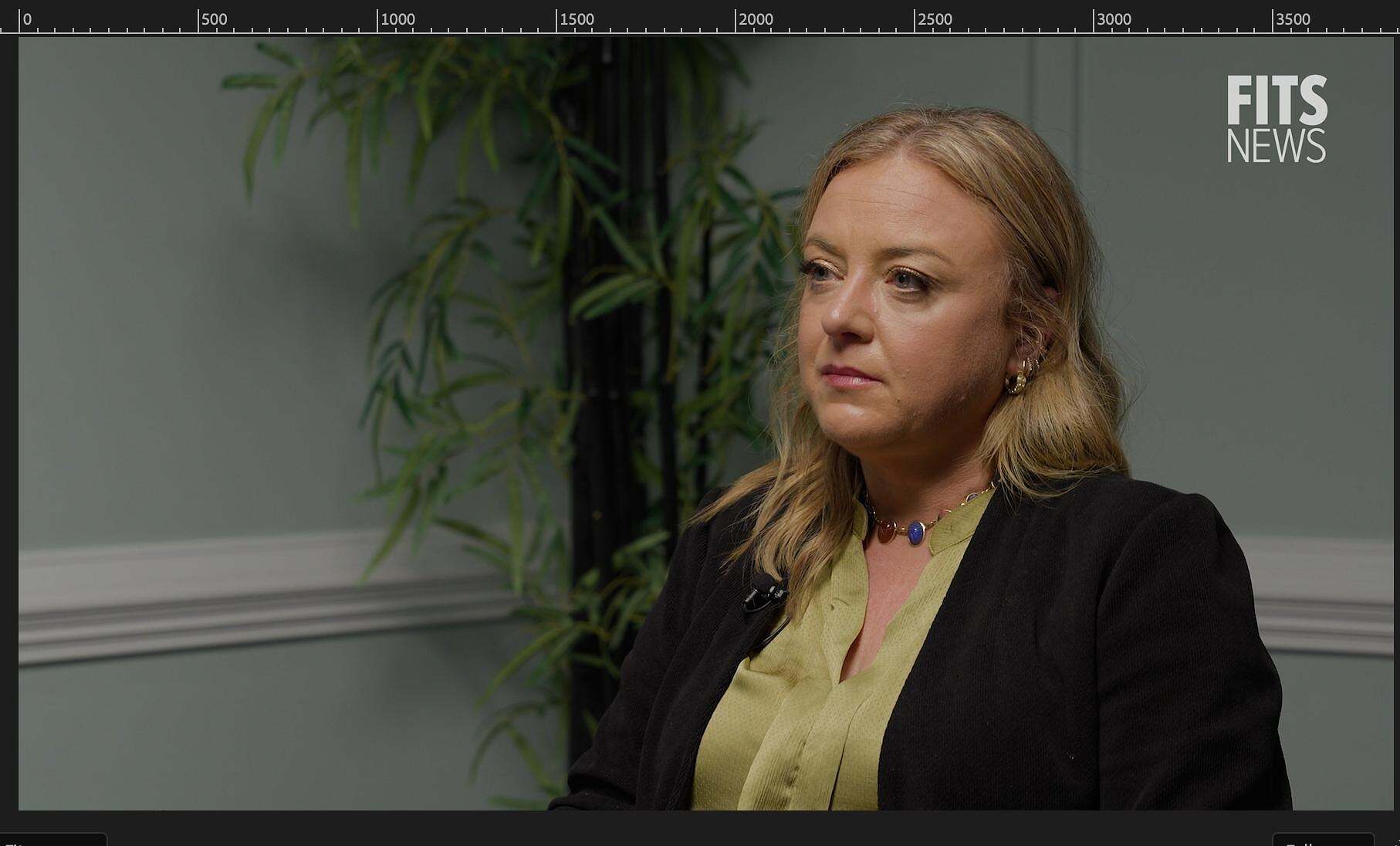
One of the architects of Murdaugh’s successful appeal and a key member of the defense team during both the trial and appellate proceedings, Barber sat down this week for what he described as his first and only interview about the case.
Unlike some of the more public-facing members of Murdaugh’s defense team, Barber has remained largely out of the spotlight throughout the saga. He is perhaps best known for his meticulous cross-examinations of several of the state’s most important forensic and technical witnesses at the first trial – including cellular expert Paul McManigal and S.C. State Law Enforcement Division (SLED) timeline witness Peter Rudofski.
Now, with the murder convictions vacated and a second trial looming, Barber says he felt compelled to speak publicly for one reason: to challenge repeated post-trial assertions from prosecutors that the evidence against Murdaugh was “overwhelming.”
“I’m here simply to counter that,” Barber told FITSNews. “Not overwhelming.”

***
Barber was careful not to argue Murdaugh’s innocence. Nor did he discuss the defense’s strategy for the next trial. Instead, he said his goal was to rebut years of public statements made by prosecutors, investigators and others after the original verdict — statements he believes created the impression that Murdaugh’s guilt was essentially beyond debate.
“My hope is just to rebut those statements so that people at least have an open mind and don’t come to it with a presumption that he’s guilty,” Barber said.
His comments come just weeks after the South Carolina supreme court reversed Murdaugh’s murder convictions, finding former Colleton County clerk of court Rebecca “Becky” Hill improperly influenced jurors during the original trial. In doing so, the court specifically rejected the notion that the strength of the state’s case could excuse constitutional violations.
In fact, the justices went out of their way to note that “reasonable minds may debate whether the evidence here was overwhelming.”
That observation forms the foundation of Barber’s argument…
***
REVISITING THE TIMELINE…
***
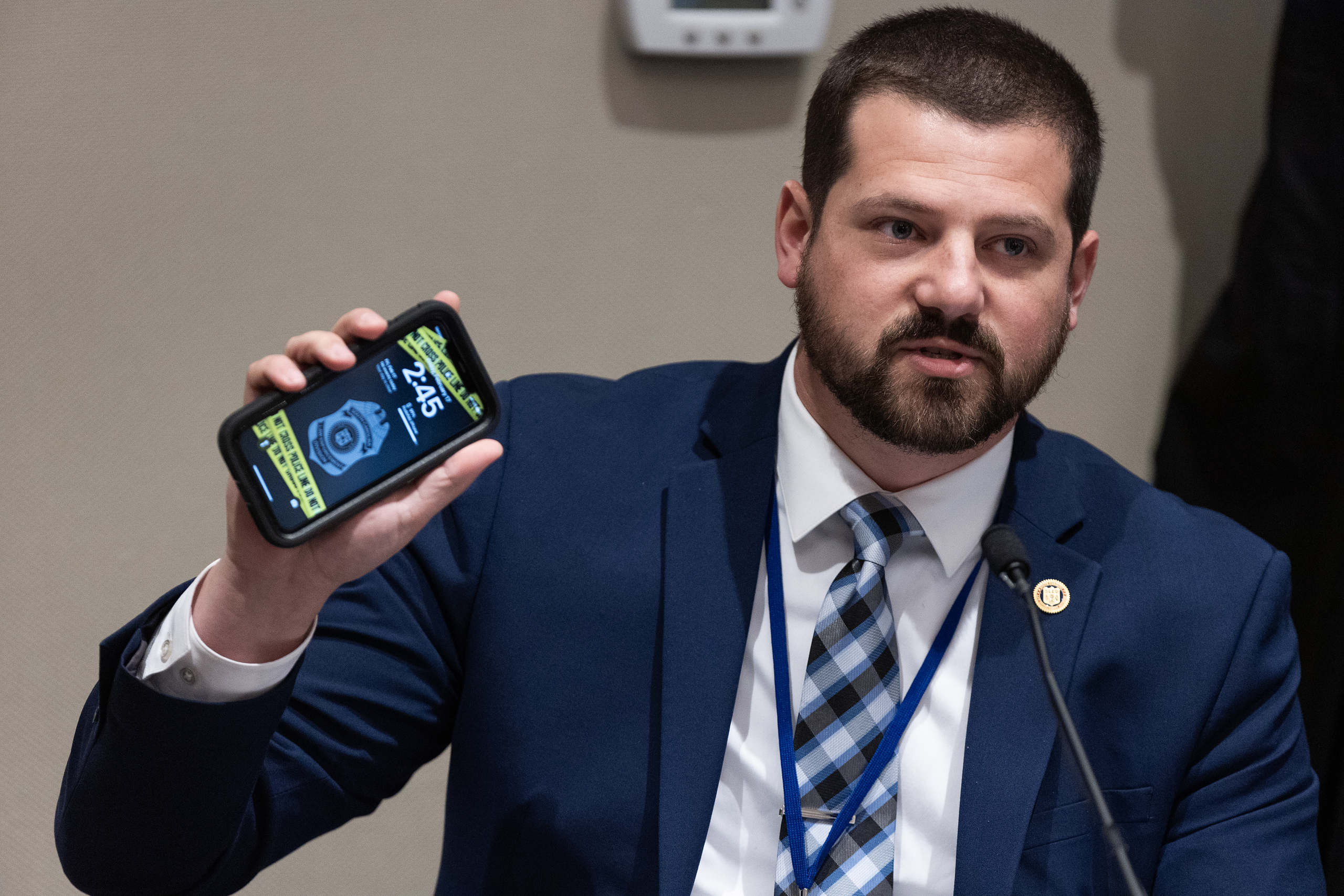
Much of Barber’s criticism focuses on the timeline presented by Rudofski — the witness who synthesized cellphone data, vehicle telemetry, call logs and forensic evidence into the minute-by-minute narrative prosecutors used to secure convictions against Murdaugh for the murders of his wife, Maggie Murdaugh, and younger son, Paul Murdaugh.
By the time Rudofski took the stand near the end of the six-week trial, jurors had already heard from dozens of witnesses and experts. His role was different. Rather than introducing new evidence, he pulled together the state’s entire case — combining cellphone records, OnStar data, step counts, text messages and witness testimony into a single chronological account of what prosecutors argued happened on the night of June 7, 2021. It was the culmination of the state’s case and, in Barber’s view, should have been its strongest presentation.
“He should be the strongest,” Barber said. “He’s summarizing their case at the end.”
But Barber argues the timeline jurors ultimately saw was presented with a degree of certainty not fully supported by the underlying data.
At trial, prosecutors relied heavily on a series of digital events occurring within a remarkably narrow window. Paul Murdaugh’s phone was unlocked for the last time just before 8:49 p.m. Maggie Murdaugh’s phone locked at 8:49:31 p.m. Alex Murdaugh’s phone remained inactive until shortly after 9:02 p.m. before connecting to his Chevrolet Suburban at 9:06:53 p.m. and departing the family property for his mother’s home in Almeda, S.C. Prosecutors argued those timestamps established a roughly 17-minute period in which the murders occurred before Murdaugh left the property.
Barber’s challenge centers on one critical assumption – that Maggie’s phone locking at 8:49 p.m. meant she was already dead.
***
RELATED | MURDAUGH ATTORNEYS RESPOND TO HIDDEN TEXTS
***
According to Barber, other cellphone evidence suggests the issue is not nearly that straightforward. During the interview, he pointed to data indicating Maggie may have continued actively using her phone until approximately 8:55:32 p.m. — more than six minutes after the lock event prosecutors emphasized.
“If she’s still using her phone until 8:55, now you’re talking about seven minutes,” Barber said.
That statement refers to the period between Maggie’s alleged last phone activity and the moment Alex’s phone became active again at the main house shortly after 9:02 p.m. Under Barber’s interpretation, only about six-and-a-half minutes would separate those events.
Even using the broader benchmark of Murdaugh’s departure from Moselle at 9:06:53 p.m., Barber argues the available window shrinks from roughly 17 minutes to approximately 11 minutes.
Why does that matter? Because every minute removed from the state’s timeline increases the amount of activity Murdaugh would have needed to accomplish in an extraordinarily compressed period of time.
Under the prosecution’s theory, Murdaugh would have had to kill both victims with two different firearms, move around the crime scene, dispose of the murder weapons, clean himself of biological and forensic evidence, travel back to the main house, retrieve his cellphone and prepare to leave the property — all before departing for his parents’ home in Almeda.
“You’ve got seven minutes to clean everything up, get in a golf cart, go up a quarter mile, get to the house, not leave evidence at the house, get your phone, and then he’s back,” Barber said.
Whether future jurors ultimately accept that argument remains to be seen. But the broader point Barber repeatedly returned to throughout the interview was that the state’s timeline depends on a series of inferences layered on top of digital data — not merely the raw data itself.
For Barber, the issue is not whether prosecutors assembled a timeline that is plausible – it’s whether the available evidence proves that timeline (and only that timeline) beyond a reasonable doubt.
***
THE KENNEL VIDEO PROBLEM
Barber readily acknowledges the defense’s biggest challenge remains the kennel video – which seemed to shred Murdaugh’s alibi when it was introduced into evidence at the first trial.
Recorded on Paul Murdaugh’s cellphone at 8:44 p.m., the now-infamous video captured Alex Murdaugh’s voice in the background near the kennels just minutes before prosecutors say the murders occurred. The recording became one of the most consequential pieces of evidence introduced at trial because it directly contradicted Murdaugh’s repeated statements to investigators that he had not gone to the kennels that evening.
When the video surfaced, Murdaugh was caught in the first of many lies.
Before its discovery, investigators had relied heavily on circumstantial evidence. Afterward, prosecutors were able to place Murdaugh at the murder scene within minutes of the killings and portray his subsequent denials as evidence of consciousness of guilt.
The video also played a central role in Murdaugh’s decision to testify, during which he admitted lying to investigators about his whereabouts on the night of the murders – but failed to provide a compelling reason for doing so.
***
***
Barber does not dispute the significance of that lie.
“It all comes back to lying about being there that night,” he said.
What Barber does dispute, however, is the extent to which every other piece of evidence has been interpreted through that lens. Once prosecutors established that Murdaugh lied about being at the kennels, he contends, many of the unanswered questions surrounding the timeline were effectively explained away rather than independently proven.
Among those questions is one he repeatedly returned to during the interview: why would someone who had supposedly planned the murders feel such urgency afterward?
Under the state’s theory, Murdaugh had no appointments to keep, no witnesses expecting to see him and no immediate reason to leave Moselle. Yet prosecutors contend he managed to kill two people with separate weapons, dispose of critical evidence, clean himself up, return to the main house and leave for Almeda within a matter of minutes before ultimately calling 911.
“Under the state’s theory, he has all night,” Barber said. “Nobody’s expecting them anywhere that night.”
That point surfaced repeatedly during the interview: if Murdaugh truly orchestrated the murders, why rush to call 911?
Why dispose of Maggie’s cellphone along the roadside rather than hide it somewhere on the sprawling 1,700-acre property?
Why leave so many potential loose ends behind?
To Barber, those questions undermine the notion of a carefully executed murder plot. Prosecutors, of course, argue the opposite — that Murdaugh’s lies, changing stories and behavior after the murders reveal consciousness of guilt. Barber acknowledges those facts are suspicious. But he maintains that suspicious behavior after the fact is not the same thing as proof beyond a reasonable doubt that Murdaugh committed the murders.
“While that’s undoubtedly a suspicious thing to do,” Barber said of Murdaugh’s lies, “it’s not proof.”
***
RELATED | FORENSICS, PHOTOSHOP & LOOSE ENDS
***
LINGERING QUESTIONS…
Perhaps the most consequential aspect of Barber’s interview had little to do with cellphone data, step counts or vehicle telemetry. Instead, it centered on a question that has followed the case since the earliest days of the investigation: was evidence pointing away from Alex Murdaugh never fully explored?
Throughout the interview, Barber repeatedly returned to what he views as unresolved investigative loose ends — pieces of evidence that were documented, acknowledged or collected, but which never ultimately played a meaningful role in the state’s theory of the case.
Among them were tire tracks near the kennels that investigators acknowledged did not appear to match vehicles known to be at Moselle, a footprint discovered near Maggie Murdaugh’s body, unidentified DNA recovered during the investigation and other indicators Barber believes pointed toward the possibility that additional individuals were present at the crime scene.
Those issues have appeared before in defense filings and courtroom testimony, but Barber framed them differently during this interview. For him, the significance of these items is not necessarily that they prove someone else committed the murders – it is that investigators never conclusively determined they didn’t.
One example involves the tire tracks discovered in the wet grass near the kennels. According to Barber, investigators documented the tracks and preserved photographs of them, yet there was never a meaningful effort to determine who left them or whether they were connected to the murders. Similar questions surround a footprint found near Maggie Murdaugh’s body — evidence Barber says should have generated extensive follow-up investigation into who was present at the scene that night.
Barber also pointed to what he sees as investigative inconsistencies beyond the crime scene itself.
***

***
From the night of the murders, Alex Murdaugh consistently told investigators he had left Moselle and driven to Almeda to visit his ailing mother. That trip quickly became a central component of the state’s timeline, yet Barber noted investigators did not execute a search warrant at the Almeda property until nearly three months later.
By that point, any potentially relevant forensic evidence connected to the property had long since been exposed to countless variables – raising questions about what investigators could realistically hope to recover.
For Barber, the delay is difficult to reconcile with the state’s contention that Murdaugh immediately became the primary suspect.
“If you think he’s your killer, and he’s telling you exactly where he went after the murders, why aren’t you searching that location immediately?” Barber asked during the interview.
The defense has long argued that the delayed search of Almeda is another example of an investigation that was simultaneously focused on Murdaugh while failing to aggressively pursue potentially important evidence.
Then there is the DNA evidence. Defense attorneys have long pointed to the existence of DNA from an unidentified male recovered from beneath Maggie Murdaugh’s fingernails. In appellate filings, they argued the profile was never submitted to the FBI’s Combined DNA Index System (CODIS), a national database routinely used to compare unknown DNA samples against known offenders and other collected profiles.
Standing alone, Barber acknowledges none of those facts necessarily exonerate Murdaugh.
The unidentified DNA could be innocent.
The tire tracks could be unrelated.
The footprint could belong to someone with a legitimate reason to be on the property.
***
???? A lot of people covering #Murdaugh pick sides – only seeing things they want to see. Not us. Our @IndyJenn_ has dug deeper into this story than anyone, and continues to drive the search for real truth… https://t.co/nZxbixZem9
— FITSNews (@fitsnews) May 25, 2026
***
But Barber argues that homicide investigations are supposed to eliminate possibilities through investigation — not assumptions. That criticism ties directly into a broader allegation the defense has advanced for years: that investigators developed tunnel vision almost immediately after arriving at Moselle.
During trial, jurors heard testimony describing law enforcement’s practice of building investigative circles around potential suspects. According to the defense, Alex Murdaugh was placed at the center of that circle on the night of the murders and never removed, while alternative suspects were never meaningfully pursued. The same argument later became a central theme in appellate filings challenging the integrity of the investigation.
To be clear, prosecutors reject that characterization and maintain the evidence ultimately pointed overwhelmingly toward Murdaugh.
But Barber argues the unresolved questions matter even more now than they did during the first trial because investigators themselves later acknowledged a possibility that appeared inconsistent with the state’s original presentation.
Following the trial, several law enforcement officials publicly discussed the possibility that more than one person could have been involved in the murders — an acknowledgment Barber believes raises obvious follow-up questions.
If multiple people may have been present, who were they?
Were any of the unidentified tracks, footprints or forensic findings connected to them?
And if those possibilities existed, why were they never fully investigated?
“Now you’re left with who are these people?” Barber said. “How do we know they didn’t do it?”
Those questions do not establish Murdaugh’s innocence. Nor do they identify an alternative suspect. What they do, according to Barber, is highlight a recurring theme he believes will become increasingly important as the case moves toward retrial: not what investigators ultimately proved, but what they may have left unanswered.
***

RELATED | WHAT ALEX MURDAUGH’S JURY DIDN’T HEAR
***
BEHAVIORAL EVIDENCE VS. FORENSIC EVIDENCE
Another recurring theme throughout Barber’s interview involved what he views as an overreliance on behavioral evidence.
From the beginning of the trial, prosecutors argued Alex Murdaugh’s lies, changing stories and post-crime conduct reflected consciousness of guilt. They pointed to his false statements about being at the kennels, inconsistencies involving his clothing, efforts to influence witness recollections and other actions they argued demonstrated he was attempting to conceal his role in the murders. Those themes featured prominently in the state’s closing argument.
Barber does not dispute that jurors are entitled to consider such evidence. What he disputes is whether those behavioral indicators can substitute for direct forensic proof.
Throughout the interview, he repeatedly contrasted what he described as narrative-driven conclusions with hard physical evidence — or, in some cases, the absence of it.
The kennel video serves as the clearest example.
Barber readily acknowledges the video is devastating for the defense because it places Murdaugh at the kennels minutes before the murders and proves he lied to investigators about being there. But he argues that once jurors conclude Murdaugh lied, there is a tendency to interpret every other disputed fact through that same lens.
“It all comes back to lying about being there that night,” Barber said. “Everything that doesn’t make sense is explained away with that.”
Barber pointed to several pieces of evidence he believes illustrate that problem, including the gunshot residue evidence associated with a blue raincoat recovered from Randolph Murdaugh’s home, assumptions surrounding the state’s cleanup theory and other conclusions that he argues depend more on inference than direct proof.
To Barber, the issue is not whether Murdaugh’s behavior was suspicious.
The issue is whether suspicious behavior can bridge gaps in the forensic evidence.
“The state has all the power,” Barber said. “You would expect them to be focused on the facts and evidence of the case.”
That distinction — between what the physical evidence establishes and what jurors are asked to infer from a defendant’s actions — remains one of the central fault lines heading into a potential retrial.
***
WHAT HAPPENS NEXT?
With the remittitur now issued and the case officially returned to circuit court, attention is beginning to shift from the Supreme Court’s reversal to the evidence that will eventually be presented to a new jury.
That process is likely to take months.
Prosecutors must decide how to proceed in light of the high court’s guidance on financial-crimes evidence, while defense attorneys continue preparing for what will effectively be a second murder trial.
But before either side enters a courtroom again, one reality remains unavoidable:
The original verdict no longer exists.
The S.C. Supreme Court vacated Murdaugh’s convictions not because it found him innocent, but because it concluded his constitutional right to a fair trial had been compromised. In doing so, the justices rejected the notion that the strength of the evidence could excuse improper interference with the jury process. They also observed that “reasonable minds may debate whether the evidence here was overwhelming.”
That observation sits at the center of Barber’s argument.
For more than three years, public discussion of the case has largely revolved around a single premise: that the evidence against Alex Murdaugh was so overwhelming that the outcome was inevitable.
Barber’s interview challenges that premise – not by claiming Murdaugh is innocent, not by identifying an alternative suspect and not by attempting to relitigate the case in the media. Rather, Barber argues that many of the state’s most important conclusions were built upon assumptions, interpretations and investigative decisions that deserve renewed scrutiny now that a new trial is on the horizon.
Whether jurors ultimately agree is a question for another courtroom.
But as the Murdaugh saga enters yet another chapter, many of the questions that existed in March 2023 remain unanswered today.
Over the coming weeks, FITSNews will revisit the evidence presented during the original trial — examining the timeline, cellphone data, crime scene investigation, forensic evidence, financial-crimes motive theory and other key components of the state’s case as prosecutors prepare to retry one of the most consequential murder cases in South Carolina history.
Because before a new jury is seated, the evidence itself deserves another look.
***
ABOUT THE AUTHOR …
As a private investigator turned journalist, Jenn Wood brings a unique skill set to FITSNews as its research director. Known for her meticulous sourcing and victim-centered approach, she helps shape the newsroom’s most complex investigative stories while producing the FITSFiles and Cheer Incorporated podcasts. Jenn lives in South Carolina with her family, where her work continues to spotlight truth, accountability, and justice.
***
SOUND OFF…
Got something you’d like to say in response to one of our articles? Or an issue you’d like to address proactively? We have an open microphone policy! Submit your letter to the editor (or guest column) via email HERE. Got a tip for a story? CLICK HERE. Got a technical question or a glitch to report? CLICK HERE.

4 comments
The excellent Phil Barber still doesn’t get it, not despite of, but because of, being an excellent lawyer.
An excellent lawyer thinks like a lawyer; and a super-excellent lawyer thinks like a judge, a formal government judge that is.
But jurors and the majority of the public are neither lawyers nor government-employed judges.
That “overwhelming evidence” construct is a judge-made one to decide whether the totality of the evidence, when balanced against acknowledged judicial error or defense-counsel error, compels vacation of a guilty verdict.
But jurors do NOT think like that.
Indeed, jurors are instructed to do THE OPPOSITE of that.
Jurors are told in so many words, “you may believe one witness against many, or many witnesses against one. You may credit one piece of evidence against all others, or you may credit many pieces of evidence against one. … Judge the witnesses by their demeanor ….”
In other words, jurors are told “go stare at the witnesses and choose what you fancy.”
All this lawyerly stuff doesn’t matter to jurors.
All this “beyond reasonable doubt” stuff means nothing to jurors if they latch on to one witness and/or one fact and say to themselves, “this is THE ONE the judge told me I may pick out of the whole trial.”
Sadly, the kennel video is that one fact future jurors will latch-on to no matter what else is presented in a new trial.
Heck! Even YOU, Jenn Wood, IN THE SAME NIGHT, aired an interview with James Lasdun hocking a shlock book pretending to be Sigmund Freud analyzing why Alex Murdaugh MUST HAVE killed Paul and Maggie, before airing your interview with Phil Barber’s cool, cerebral and scrupulous analysis of the forensic evidence.
Jurors may, are even likely to, discard ALL forensic evidence of Alex Murdaugh’s innocence BECAUSE the judge will tell them, in long-approved jury charge, “you may believe one fact against many.”
Unless the public understands that the kennel video has no importance because it is too early before the REAL time of the shootings, and that IN FACT Alex Murdaugh never ACTUALLY lied about his brief visit to the kennels (he only omitted that detail after telling the responders that he was with Paul and Maggie for dinner only a quarter mile from the kennels), Alex Murdaugh is doomed again.
Facts need to be out there to show that it is PHYSICALLY IMPOSSIBLE for Alex to have been the shooter for him to have a chance.
For me, those facts are the victim’s stomachs’ contents at autopsy and non-human (likely avian) spatter on Alex’s white T-shirt.
I do not understand why my repeated explanation for those facts gets ignored other than, perhaps, lawyers’ vanity is, at the end of the day, more important to them than their client’s actual innocence.
The excellent Phil Barber still doesn’t get it, not despite of, but because of, being an excellent lawyer.
An excellent lawyer thinks like a lawyer; and a super-excellent lawyer thinks like a judge, a formal government judge that is.
But jurors and the majority of the public are neither lawyers nor government-employed judges.
That “overwhelming evidence” construct is a judge-made one to decide whether the totality of the evidence, when balanced against acknowledged judicial error or defense-counsel error, compels vacation of a guilty verdict.
But jurors do NOT think like that.
Indeed, jurors are instructed to do THE OPPOSITE of that.
Jurors are told in so many words, “you may believe one witness against many, or many witnesses against one. You may credit one piece of evidence against all others, or you may credit many pieces of evidence against one. … Judge the witnesses by their demeanor ….”
In other words, jurors are told “go stare at the witnesses and choose what you fancy.”
All this lawyerly stuff doesn’t matter to jurors.
All this “beyond reasonable doubt” stuff means nothing to jurors if they latch on to one witness and/or one fact and say to themselves, “this is THE ONE the judge told me I may pick out of the whole trial.”
Sadly, the kennel video is that one fact future jurors will latch-on to no matter what else is presented in a new trial.
Heck! Even YOU, Jenn Wood, IN THE SAME NIGHT, aired an interview with James Lasdun hocking a shlock book pretending to be Sigmund Freud analyzing why Alex Murdaugh MUST HAVE killed Paul and Maggie, before airing your interview with Phil Barber’s cool, cerebral and scrupulous analysis of the forensic evidence.
Jurors may, are even likely to, discard ALL forensic evidence of Alex Murdaugh’s innocence BECAUSE the judge will tell them, in long-approved jury charge, “you may believe one fact against many.”
Unless the public understands that the kennel video has no importance because it is too early before the REAL time of the shootings, and that IN FACT Alex Murdaugh never ACTUALLY lied about his brief visit to the kennels (he only omitted that detail after telling the responders that he was with Paul and Maggie for dinner only a quarter mile from the kennels), Alex Murdaugh is doomed again.
Facts need to be out there to show that it is PHYSICALLY IMPOSSIBLE for Alex to have been the shooter for him to have a chance.
For me, those facts are the victim’s stomachs’ contents at autopsy and non-human (likely avian) spatter on Alex’s white T-shirt.
I do not understand why my repeated explanation for those facts gets ignored other than, perhaps, lawyers’ vanity is, at the end of the day, more important to them than their client’s actual innocence.
A rare polite and open-minded commenter on Jen Wood’s interview with Phil Barber asked five question.
Here is my reply to him/her:
@DayandBayNana08 , I will only answer 3 and 5 for you because there is OBJECTIVE evidence to give you.
Blanca testified that Richard Alexander Murdaugh (“RAM”) wore long kaki pants and a blue shirt under some sport coat when he left for work around noon on 7 June 2021.
We know FOR SURE that each of RAM and Paul returned to Moselle from their different work locations around 7:00 pm and rode together around Moselle for an hour or so.
Paul made a video of himself laughing at his father standing before a sapling he had planted but failed to support; so that sapling was falling. RAM is wearing a blue shirt and long kaki pants in that sapling video.
Also, Blanca testified that she found long kaki pants on the floor of the bathroom the morning of 8 June 2021 and laundered them.
Problem of RAM’s day outfit solved.
The next outfit in which we see RAM on video consists of a white T-shirt and green shorts. He wore them to Almeda, according to RAM’s mother’s night caregiver. We see them on the bodycams of the officers who responded to RAM’s 911 call upon his return from Almeda. RAM gave the T-shirt and shorts to those officers who gave them to SLED who analyzed them and testified about them at trial.
Problem of RAM’s night outfit solved.
I do not know what is missing unless someone has evidence of a missing outfit in between.
As to your question (5), the clothes Maggie wore to the kennels went with her body to the autopsy which, according to the officers searching the Moselle house started THAT NIGHT or early the next morning.
What Blanca SAYS she saw on the floor the next morning are some CLEAN pajamas and underwear of Maggie’s PROBABLY laid there by some of the Murdaugh family members and some of the lawyers’ wives who HURRIEDLY descended on Moselle after they heard the news and thought they might spend the night there to comfort and protect RAM. Except that RAM, Buster, and Brooklyn (Buster’s then girlfriend, now wife and mother of RAM’s first grandchild, also called RAM) could not stand to spend the night at Moselle and went to Almeda.
I cannot help you with the cleaners because I do not believe there were any cleaners other than the REAL shooters who lay in waiting until RAM left for Almeda at 9:07 pm. I believe the real shooters went armed with previously-stolen family guns to scare some confession and/or some settlement out of Paul and Maggie; and when things got out of hand, they shot them very unprofessionally.
You asked politely and this is a civil response SUPPORTED BY THE ACTUAL TESTIMONY AT TRIAL; and I hope you take it in that spirit.
? The Mushelle Smith nonsense is rehashed, too. Here is my reply:
@janepipkin8139 , first, you’re assuming every Prosecution witness told and the absolute truth and could not have been mistaken or misunderstood things in any way.
Next, that whole Mushelle Smith testimony was one more red herring by the Prosecution. It has no importance whatsoever because the EXACT times of Alex’s departure from Moselle to Almeda and return back are known TO THE SECOND from the phone and vehicle On-Star data; and Alex knew it, too; so, it would have been stupid AND USELESS for him to ask Mushelle to say something different.
Third, someone interested in getting Alex convicted started a Go-Fund-Me page for Mushelle WHILE SHE WAS TESTIFYING.
If that is your “overwhelming evidence,” it is overwhelming of a thoroughly corrupt trial.