

by JENN WOOD
***
On Tuesday in Charlotte, North Carolina, Stephen Federico sat before a U.S. House Judiciary subcommittee, a framed photo of his 22-year-old daughter in front of him. His voice was steady — but his words were anything but restrained.
“Think about your child … dragged out of bed … begging for her life … and then — bang. Dead.” he told lawmakers, recounting how his 22-year-old daughter, Logan Hailey Federico, was murdered inside a rental home near the University of South Carolina.
Her accused killer is a career criminal with a seemingly interminable rap sheet – somehow who should have been sentenced to decades in prison.
“Alexander Devonte Dickey was arrested 39 times, 25 felonies – and he was on the street,” Federico said.
Federico’s testimony — raw, furious and precise — revolved around what he called a litany of cascading failures: missing fingerprints and incomplete charging documents, lenient pleas and a revolving courthouse door that left a known, repeat offender free to escalate with impunity.

***
“He should’ve been in jail for over 140 years,” Federico said. “You know how much time he spent in prison? A little over 600 days in 10 years.”
South Carolina’s system failure cost Logan Federico her life.
A loyal friend and devoted “Swiftie,” Federico often visited her friends in Columbia. She dreamed of finishing her degree at the College of Charleston and becoming an elementary school teacher. On May 3, 2025, however, her promising life was cut short when police say Dickey broke into the home where she was staying and murdered her with a shotgun.
Dickey’s record of violent crime stretches back a decade and includes nearly 40 arrests, at least 25 felony charges, and a series of convictions — yet, as Federico noted, he spent little more than 600 days behind bars. As FITSNews previously reported, many of his charges were mislabeled, pled down, or never properly entered into the state’s fingerprint-based “Citizens Access to Criminal Histories,” or “CATCH” report system.
In one pivotal 2014 burglary case, Dickey was sentenced as a first-time offender because earlier convictions from other counties never appeared on his CATCH record.
***

RELATED | ‘THE SYSTEM FAILED LOGAN’
***
A MESSAGE OF ACCOUNTABILITY
Federico’s message to lawmakers was simple: stop letting violent offenders cycle in and out of jail. He pointed to Dickey as the clearest example of a system that protects criminals more effectively than the public. Officers who eventually apprehended him didn’t need facial recognition — they recognized him from prior arrests.
He also hammered on record-keeping failures, calling out the “lack of communication” that hides prior convictions and undermines sentencing. These breakdowns, he argued, made it possible for a man with nearly 40 arrests to be free the night Logan was killed.
Federico also criticized the silence from prosecutors. Since Logan’s death, Federico said his family has not heard from S.C. fifth circuit solicitor Byron Gipson.
“Four months, no communication,” he told lawmakers. “It’s like — get lost, Mr. Federico. This is our case. We’ll handle it how we want.”
“You woke up a beast,” he added. “I will fight until my last breath for my daughter.”
South Carolina’s fingerprint-based criminal history system is supposed to give prosecutors and judges a complete picture of a defendant’s past. But when fingerprints aren’t submitted – and when warrants are served without rebooking – or when convictions from other counties never make it into the CATCH database, dangerous gaps appear. Those gaps ripple through the system, softening pleas, skewing bond hearings and erasing the repeat-offender status that should trigger tougher sentences.
Federico’s testimony laid those failures bare on a national stage, framing his daughter’s death not as an isolated tragedy but as the inevitable result of systemic neglect.
***

RELATED | FATHER OF LOGAN FEDERICO SEEKS DEATH PENALTY IN HIS DAUGHTER’S MURDER
***
THE RESPONSE
Following Federico’s blistering testimony, South Carolina attorney general Alan Wilson issued a statement signaling the state is now coordinating prosecution plans with law enforcement.
“Attorney General Alan Wilson has spoken with all of the relevant law enforcement agencies, and they’re working together on the plan for prosecuting Alexander Dickey, the man charged with the senseless murder of Logan Federico in Columbia on May 3rd,” the statement noted. “Attorney General Wilson and the law enforcement partners involved are committed to delivering justice, upholding the rule of law, and demanding law and order. The office will provide updates as soon as they are available.”
The pledge marks the first public signal of prosecutorial coordination since Logan’s death — and stands in stark contrast to the silence Federico says he has endured from local officials.
***
‘YOU HAVE THE POWER… DO YOUR JOB’
Federico stressed his fight isn’t political – it is focused solely on compelling those endowed with authority to exercise it in accordance with their promises to the public.
“Stop protecting the people that keep taking our children from us,” he said. “You have the power … do your job.”
He also recalled the hours after Logan’s death — how her body lay undiscovered for seven hours in the rental home, and how Dickey went on a spending spree with her debit card shortly thereafter.
For Federico, the issue boils down to something basic: competence, accountability, and the will to fix what’s broken. His daughter’s case has forced South Carolina’s broken judicial system into the center of a national debate — and as he made clear, he isn’t stepping away until real justice is done.
UPDATE…
The office of S.C. fifth circuit solicitor Byron Gipson has released the following statement:
“Solicitor Byron E. Gipson and members of the prosecution team met with the Federico family and their legal counsel regarding the status of this case within days of Alexander Dickey’s arrest. Since that time, Solicitor’s Office staff have been in contact with Stephen Federico, as well as his counsel, on numerous occasions, both via text and telephone, including a telephone call as recently as Sept. 11. The substance of those conversations will remain confidential. This office is committed to regular communication with the Federico family throughout the pendency of this case.”
***
ABOUT THE AUTHOR …
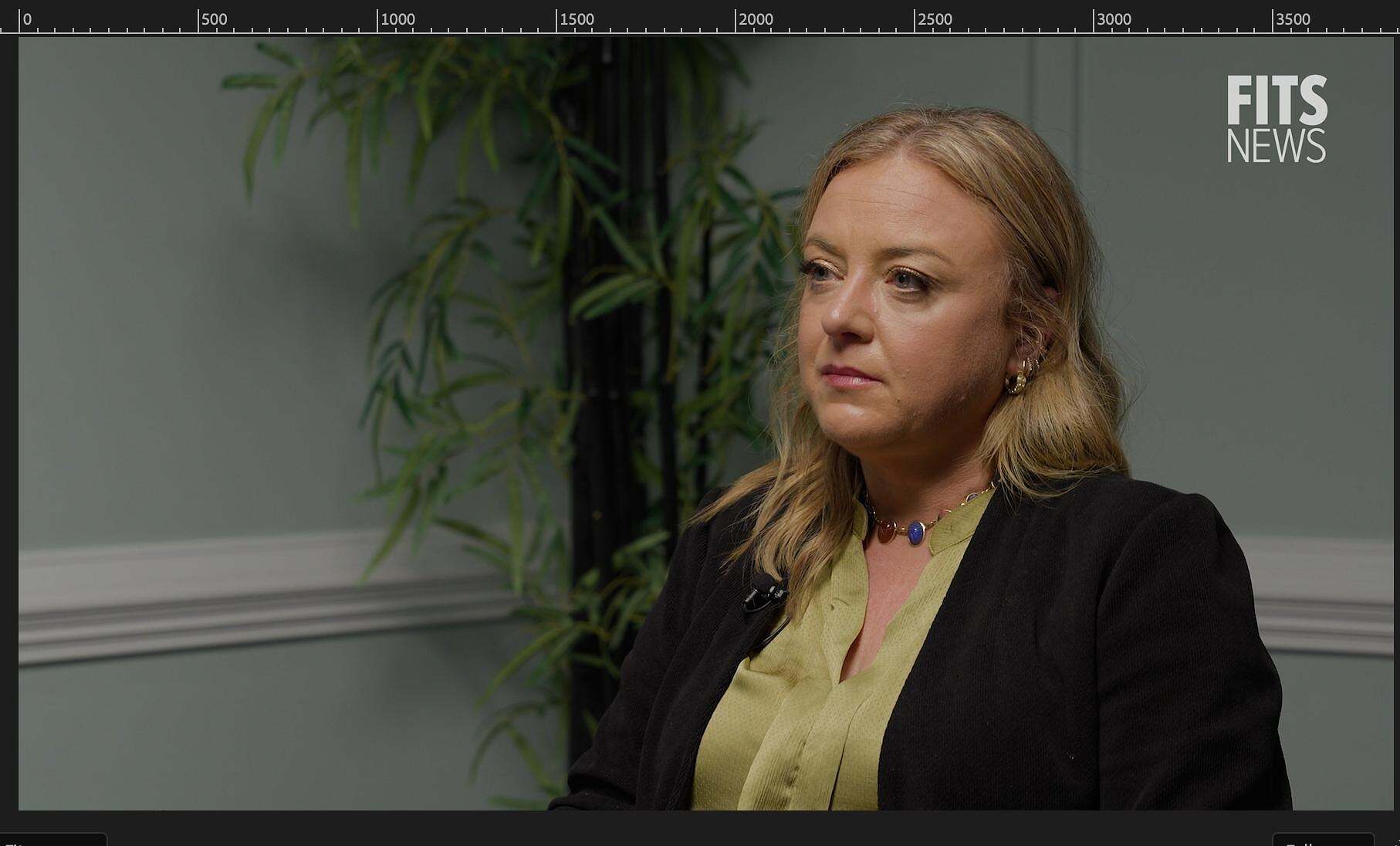
As a private investigator turned journalist, Jenn Wood brings a unique skill set to FITSNews as its research director. Known for her meticulous sourcing and victim-centered approach, she helps shape the newsroom’s most complex investigative stories while producing the FITSFiles and Cheer Incorporated podcasts. Jenn lives in South Carolina with her family, where her work continues to spotlight truth, accountability, and justice.
***
SOUND OFF…
Got something you’d like to say in response to one of our articles? Or an issue you’d like to address proactively? We have an open microphone policy! Submit your letter to the editor (or guest column) via email HERE. Got a tip for a story? CLICK HERE. Got a technical question or a glitch to report? CLICK HERE.

9 comments
5th Circuit Solicitor Byron Gipson was busy ensuring that the elderly business owner who shot an armed up-and-coming thug and replacement for Alexander Devonte Dickey stays behind bars. Gipson had priorities, you know!
The old Asian businessman must remain behind bars at all costs. Dickey was not a priority for him or Leon.
This is an interesting article. You keep labelling the judicial system as “broken.” But your article says the primary reason this man was not in prison was record-keeping by law enforcement and plea bargaining by the prosecution. So that would be the executive branch right? The one you and the DOGE guy want to give exponentially more power to?
Given that all plea bargains have to be accepted by a judge, consistently lenient plea bargains that allowed the criminal to remain free also reflect a failure of the judicial system. Judges have the power to question the state on the facts, prior criminal history of the defendant, and why the deal is what it is and reject it. They failed to exercise their power appropriately, and this failure has become routine. Guess you don’t know anything about the justice system outside the fact solicitors are technically part of the executive branch under lankford. See the big picture next time and you won’t sound so stupid
Sorry for sounding stupid, anonymous commenter, and I appreciate you calling me out. I always appreciate some help understanding the justice system.
So, judges have supervisory authority over prosecutorial decisions. I don’t think I knew that. And I suppose it works both ways? If a solicitor is being too harsh the judge can also force them to offer a fair deal? I guess if solicitors are subservient to judges, you are right, they are not really part of the executive branch.
Shouldn’t the buck stop with the AG of the state?
Jen, thanks for the informative article. The real issue in this matter was the former Judge Bentley Douglas Price. True wisdom comes when you call a situation by its rightful name which in this matter is Bentley Douglas Price.
As a father of two daughters, one of whom is applying to the College of Charleston, I am ripped, angry and scared. That said, the 411 day sentence from April ’22 was not signed by anyone named “Price.” It looks like “Miller” to me.
OK SC legislators it has taken national news coverage to air out your broken and corrupted JMSC process of picking the judges in SC many of whom your own lawyer/legislators will see in court and gain a favorable verdict. If that isn’t broken and corrupted, nothing is. DO SOMETHING.
Corrupt system, corrupt judges picked by corrupt lawyer/legislators. This is sadly becoming too common.