
by JENN WOOD
***
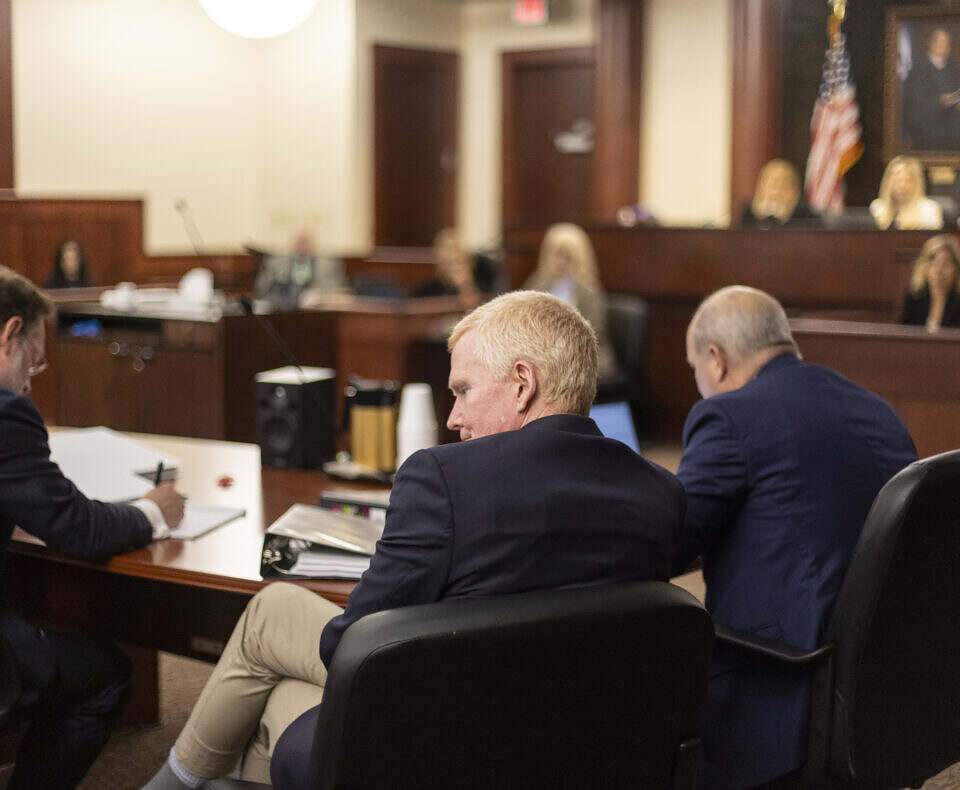
Attorneys for Alex Murdaugh are asking a South Carolina judge to throw out his murder and weapons indictments, alleging investigators manufactured forensic evidence, presented false testimony to grand jurors and leaked a discredited blood-spatter claim to the press before he was charged.
In a memorandum (.pdf) dated Friday (October 30, 2026), the defense also accused prosecutors of improperly using the state grand jury to develop evidence for Murdaugh’s upcoming retrial — while invoking its secrecy provisions to keep that evidence outside the defense’s view.
The filing supported a motion to dismiss (.pdf) originally submitted on August 7, 2026. It brings several long-running disputes into a single challenge to the four indictments under which prosecutors intend to try Murdaugh again.
The requested remedy would not permanently end the prosecution – but it would force prosectors to reboot it.
Murdaugh’s attorneys want the indictments dismissed without prejudice – meaning the state would be free to present its case to another grand jury. They argue prosecutors could obtain new indictments without moving the April 5, 2027 trial date.

***
“(Murdaugh) asks the court to dismiss the indictments that the fabricated evidence procured, without prejudice,” attorneys wrote, so prosecutors would be “free to seek true bills, on competent evidence, from a grand jury that has not been deceived.”
The decision on whether to toss the indictments is down to S.C. circuit court judge Debra McCaslin, who is presiding over Murdaugh’s retrial.
To recap: Murdaugh was convicted of the June 7, 2021 murders of his wife, 52-year-old Maggie Murdaugh, and younger son, 22-year-old Paul Murdaugh, and sentenced to life in prison following a six-week trial in Walterboro, S.C. in early 2023. Those convictions were reversed, however, after the S.C. supreme court found numerous issues with the conduct of the trial – including allegations of jury tampering and potential jury rigging.
As FITSNews previously reported, McCaslin moved the retrial to Sumter County after concluding Murdaugh could no longer receive a fair and impartial trial in Colleton County.
***
RETURN OF THE BLOODY SHIRT
***
***
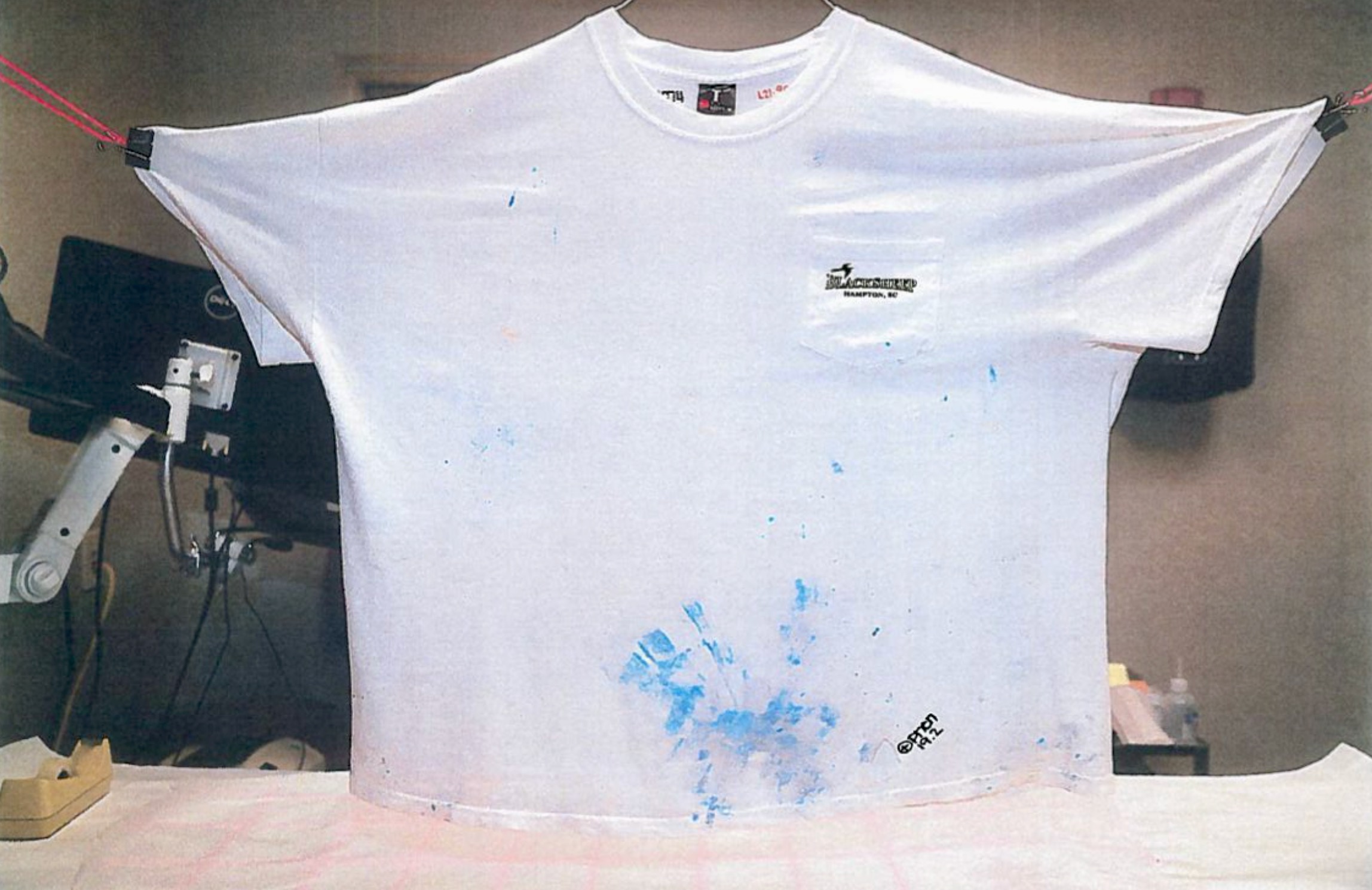
At the heart of the memorandum is the white T-shirt Murdaugh wore when investigators encountered him after the June 7, 2021 killings at Moselle, the family’s hunting property in Colleton County.
As this outlet previously reported in July, the spatter narrative once appeared to be among the most damaging elements of the investigation. By late 2022, however, its forensic foundation had begun to unravel.
The new memorandum traces that dispute through laboratory records, emails, expert reports and testimony from Murdaugh’s first trial.
According to the defense, testing conducted by the S.C. Law Enforcement Division (SLED) in August 2021 failed to identify human blood in the tested shirt cuttings. A November 2021 supplemental report recorded those negative results and was addressed to lead investigator David Owen – who later testified that he did not see it until November 30, 2022.
Nevertheless, SLED retained Oklahoma-based bloodstain-pattern consultant Tom Bevel to examine the shirt evidence.
***

***
Bevel’s initial February 2022 report concluded the stains were consistent with transfers rather than back spatter from a bullet wound. Following additional discussions with SLED and an in-person examination in Oklahoma, he issued a revised opinion identifying more than 100 stains as consistent with spatter.
The defense alleged SLED engineered that reversal while withholding the negative blood-test results from Bevel until December 2022. Attorneys also claimed chemical processing had permanently altered the shirt, preventing an independent examination of its original condition.
Those accusations build on an issue FITSNews examined in August: what Owen told the Colleton County grand jury that returned Murdaugh’s indictments in July 2022.
According to the memorandum, Owen told grand jurors an expert identified blood spatter on the shoulders and front of the shirt — and that DNA in the purported spatter areas belonged to Alex, Maggie and Paul. The defense argued that account contradicted both the blood-testing results and the locations where Paul’s DNA was identified.
Prosecutors ultimately presented no blood spatter evidence at the first trial – but the defense argued that decision did not cure the alleged harm to Murdaugh at the earlier grand jury proceeding. They want to know whether false evidence influenced the decision to indict, regardless of what evidence prosecutors later presented to the trial jury.
***
RELATED | Key Evidence And Venue Disputes Take Shape
***
OWEN’S TESTIMONY CHALLENGED AGAIN
The memorandum also targeted Owen’s statements concerning shotguns recovered at Moselle, the sprawling Murdaugh family property where the murders took place.
Attorneys say Owen told Murdaugh during an August 2021 interview that guns at the property were loaded with a combination of shells similar to those used to kill Paul. At trial, Owen acknowledged using deception during that interview to elicit a response.
The defense alleged he subsequently repeated the inaccurate ammunition claim under oath to both the state grand jury and the Colleton County grand jury.
“An agent who lies to a suspect and then tells the same lie to two grand juries has not made an error; he has made a case,” the memorandum stated.
Attorneys argued the claim supplied another purported connection between the guns at Murdaugh’s home and the unrecovered shotgun used to kill his son.
***
THE MEDIA LEAK ALLEGATION
The defense also accused the state of using the disputed spatter opinion to shape public perception prior to seeking the indictments.
The memorandum specifically cited FITSNews’ April 26, 2022 reporting which stated sources familiar with the investigation believed high-velocity impact spatter on Murdaugh’s clothing directly tied him to the killings. It also referenced subsequent reporting by CNN and People.
Defense attorneys asserted they possess sworn deposition testimony identifying the person who provided the information to a reporter – and linking the disclosure back to the state. The memorandum did not identify that person. Instead, the defense offered to submit the testimony if McCaslin requested it – or if prosecutors denied responsibility for the leak.
***
RELATED | EVIDENCE SOUGHT From Alleged Crime Scene Coverup
***
GRAND JURY SECRECY UNDER SCRUTINY
The filing’s other major argument concerned the state grand jury’s role in the investigation — both before Murdaugh’s indictment and in the months leading up to his retrial.
The defense distinguished that statewide investigative body from the Colleton County grand jury that returned the murder indictments. It argued murder is not an enumerated offense within the state grand jury’s statutory jurisdiction – and challenged its use to compel testimony from witnesses connected to the killings.
Attorneys cited investigative logs and subpoenas involving witnesses who later testified at the murder trial. They contend prosecutors continued using the state grand jury after Murdaugh’s indictment to gather evidence for an already pending prosecution.
The memorandum acknowledged a grand jury can legitimately investigate other people and other crimes after a defendant has been indicted. The defense argued the issue is whether preparing the pending case became the sole or dominant purpose of the inquiry.
That argument now addresses the murder weapons in this case – which have never been recovered. As FITSNews previously reported, the defense sought records tied to an alleged conspiracy to conceal weapons and clothing after the killings. A subpoena directed Yemassee police chief Greg Alexander – a Murdaugh family “fixer” – to appear before the state grand jury in September. However, his appearance was canceled after attorney Joe McCulloch notified prosecutors he was representing Alexander.
***
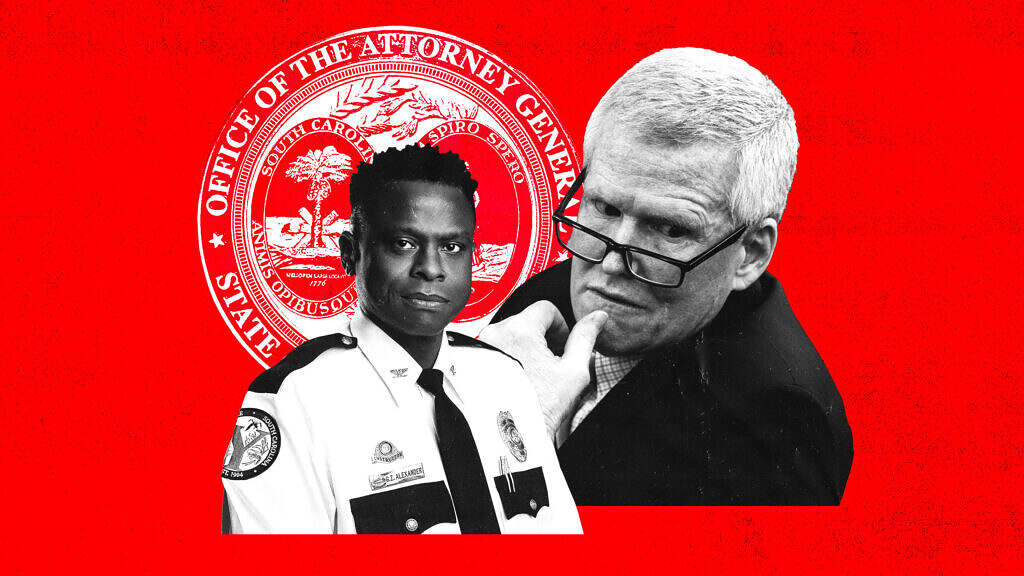
RELATED | THE ROAD TO MOSELLE
***
McCulloch previously called the allegations involving Alexander “absurd.”
Prosecutors have invoked grand jury secrecy and characterized the subject as a fresh lead concerning possession of the firearms after the murders. They have maintained they understand their obligation to disclose favorable evidence and will comply when that obligation is triggered.
At the October 16, 2026 hearing, lead prosecutor Creighton Waters told McCaslin the inquiry could yield nothing, favorable evidence requiring disclosure or information damaging to Murdaugh involving one of his friends.
The defense now argues that explanation supports its claim that prosecutors are measuring the secret inquiry’s value by what it could produce for the murder retrial.
McCaslin previously told prosecutors to disclose the material if their obligation to turn over favorable evidence was triggered. That directive did not establish the defense’s allegations about the weapons or resolve the broader challenge now presented in the dismissal memorandum.
***
WHAT DISMISSAL WOULD MEAN
The defense argued the alleged false testimony warrants examining the evidence behind the indictments — and dismissing them if the misconduct substantially influenced the decision to indict or leaves grave doubt that the decision was unaffected.
Attorneys also invoked the dismissal of Michael Colucci’s murder indictment, pointing to Owen’s involvement in that prosecution and the failure to document and disclose information bearing on the defense’s suicide theory.
Here, they argued, requiring prosecutors to return to a grand jury would be a measured response that preserves the state’s ability to prosecute while removing the benefit of the alleged misconduct.
Dismissal could also affect a separate evidentiary fight. As FITSNews reported in August, Murdaugh’s attorneys have challenged prosecutors’ effort to use his first-trial testimony at the retrial, including arguments concerning whether the second trial proceeds under the same indictments. Dismissing and replacing the indictments could sharpen that dispute; it would not automatically resolve it.
McCaslin previously indicated she intended to address the dismissal motion at the next pretrial hearing, scheduled for November 13, 2026, in Lexington County.
The defense said the Colleton County grand jury next meets December 10, 2026 – providing an opportunity for prosecutors to seek replacement indictments before the April retrial.
Whether the existing indictments stand will turn on McCaslin’s assessment of the alleged misconduct and its effect on the grand jury’s decision.
***
THE MOTION…
Subscriber-only document
This PDF is available to FITSNews subscribers. Get full access and be able to view documents like this one.
Subscribe for accessAlready a subscriber? Log in here
***
ABOUT THE AUTHOR …

As a private investigator turned journalist, Jenn Wood brings a unique skill set to FITSNews as its research director. Known for her meticulous sourcing and victim-centered approach, she helps shape the newsroom’s most complex investigative stories while producing the FITSFiles and Cheer Incorporated podcasts. Jenn lives in South Carolina with her family, where her work continues to spotlight truth, accountability, and justice.
***
SOUND OFF…
Got something you’d like to say in response to one of our articles? Or an issue you’d like to address proactively? We have an open microphone policy! Submit your letter to the editor (or guest column) via email HERE. Got a tip for a story? CLICK HERE. Got a technical question or a glitch to report? CLICK HERE.
