

by WILL FOLKS
***
South Carolina’s supreme court has yet to issue its decisive ruling on convicted killer Alex Murdaugh‘s high-profile appeal of his two murder convictions (and the two life sentences subsequently imposed upon him as a result).
Speculation about the court’s impending decision is running rampant, but as of now there is no definitive timetable for the justices to issue an order in the case…
Murdaugh was convicted three years ago of murdering his wife – 52-year-old Maggie Murdaugh – and younger son, 22-year-old Paul Murdaugh, at the family’s Colleton County hunting property on the evening of June 7, 2021. Those convictions seem likely to be overturned, however, due to documented jury tampering – and alleged jury rigging – at Murdaugh’s internationally watched double homicide trial.
In fact, some are saying the justices have already made up their minds to reverse Murdaugh’s convictions – and remand his case back to South Carolina’s circuit court.
If the supreme court does kick the case back to the circuit court level… what happens then?
***

RELATED | MURDAUGH APPEAL RUMORS SWIRL
***
Our lead researcher Jenn Wood and I will be discussing that potentiality extensively in our upcoming ‘Week in Review‘ episode, but in the meantime we wanted to dispense with potentialities – and put the prosecutors who would decide what happens next on the spot (and on the record) as to their intentions.
Specifically, we wanted see what attorney general Alan Wilson – whose office oversaw Murdaugh’s initial prosecution – and the four candidates vying to replace him would do in the increasingly likely event these verdicts are overturned.
So… will the anticipated reversal and remand of Murdaugh’s convictions result in a retrial?
Typically, questions like that yield a divergence of opinion… but not in this case.
In this case, the answer is an unambiguous – and unanimous – “yes.”
Alex Murdaugh will be retried for the murders of his wife and son.

***
Wilson’s office confirmed it would opt to retry Murdaugh, a key determination considering many of the initial procedural matters tied to such a retrial could happen prior to him leaving office in January 2027.
“This office will always aggressively continue the pursuit of justice at any stage of the court process,” a statement from Wilson’s office noted.
But whichever aspiring politician follows Wilson as the Palmetto State’s top prosecutor, the decision on prosecuting Murdaugh a second time remains the same.
S.C. first circuit solicitor David Pascoe – one of the three GOP candidates for attorney general – told us “of course” he would retry the notorious convicted killer.
“There is substantial evidence of guilt,” Pascoe said, noting he had retried murder cases “several times during my career.”
Pascoe also took a mild jab at Wilson’s office, saying he would re-convict Murdaugh “in two weeks or less.”
Murdaugh’s first trial took six weeks, as lead prosecutor Creighton Waters controversially introduced all manner of evidence tied to Murdaugh’s financial crimes, which the state insisted was central to his motive for murder. While that evidence may have helped secure the convictions, a big part of Murdaugh’s appeal maintains this information was improperly admitted into the trial by presiding judge Clifton Newman.
S.C. eighth circuit solicitor David Stumbo also indicated he would be inclined to retry Murdaugh in the event the case gets kicked back to the lower court.
***
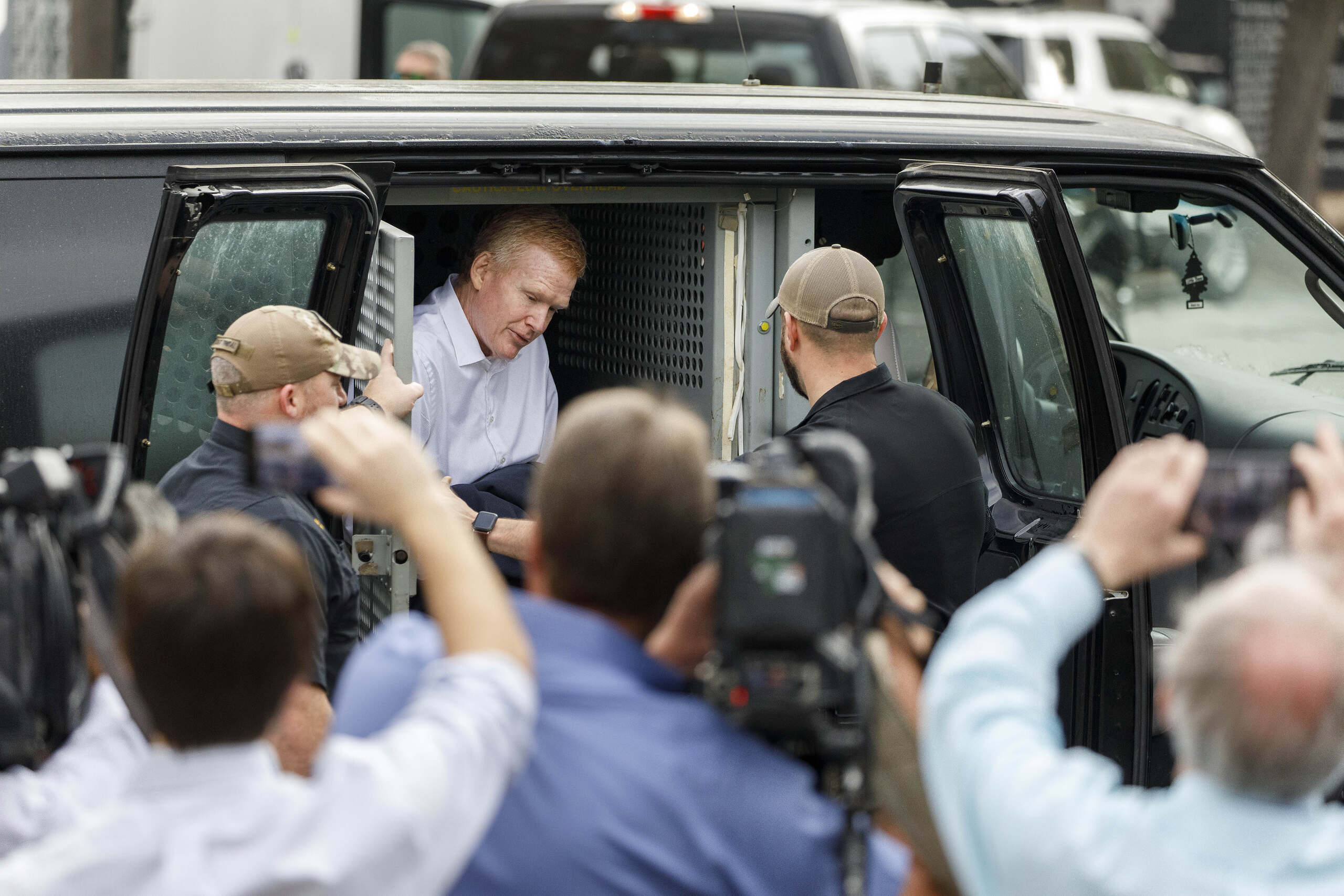
***
“I cannot think of a time in my career when I have had a reversal of a homicide (or any other serious case) that I did not schedule for re-trial when it came back from appeal,” Stumbo told us. “So, even though it would be irresponsible of me as a prosecutor to give a definitive answer to that question on a case where I have not personally reviewed all the facts and evidence in the case, there is certainly a very high likelihood that the case would be re-tried if it is reversed and I am the elected attorney general at that time.”
State senator Stephen Goldfinch was actually the first of the five attorneys to respond to our inquiry, telling us – immediately and decisively – that he would retry Murdaugh if the decision fell to him.
“I would,” he said. “And you can count that answer as true, because I don’t have an actual conflict of interest like some others.”
That’s a reference to Pascoe – a longtime political ally of Murdaugh’s lead defense attorney, former state senator Dick Harpootlian.
Charleston, S.C. attorney Richard Hricik, the Democrat nominee for attorney general, also said he would retry Murdaugh.
“Unequivocally yes,” Hricik told us. “The rule of law is the rule of law. When an attorney occupies a position of trust and confidence in a situation like this – and betrays that trust – I think a retrial is in the public interest because of the nature of the crimes and the elevated profile of the case.”
Be on the lookout for our upcoming ‘Week in Review‘ for additional discussion of this case… which based on these responses certainly appears poised to become the Palmetto State’s ‘Retrial of the Century.’
***
ABOUT THE AUTHOR…
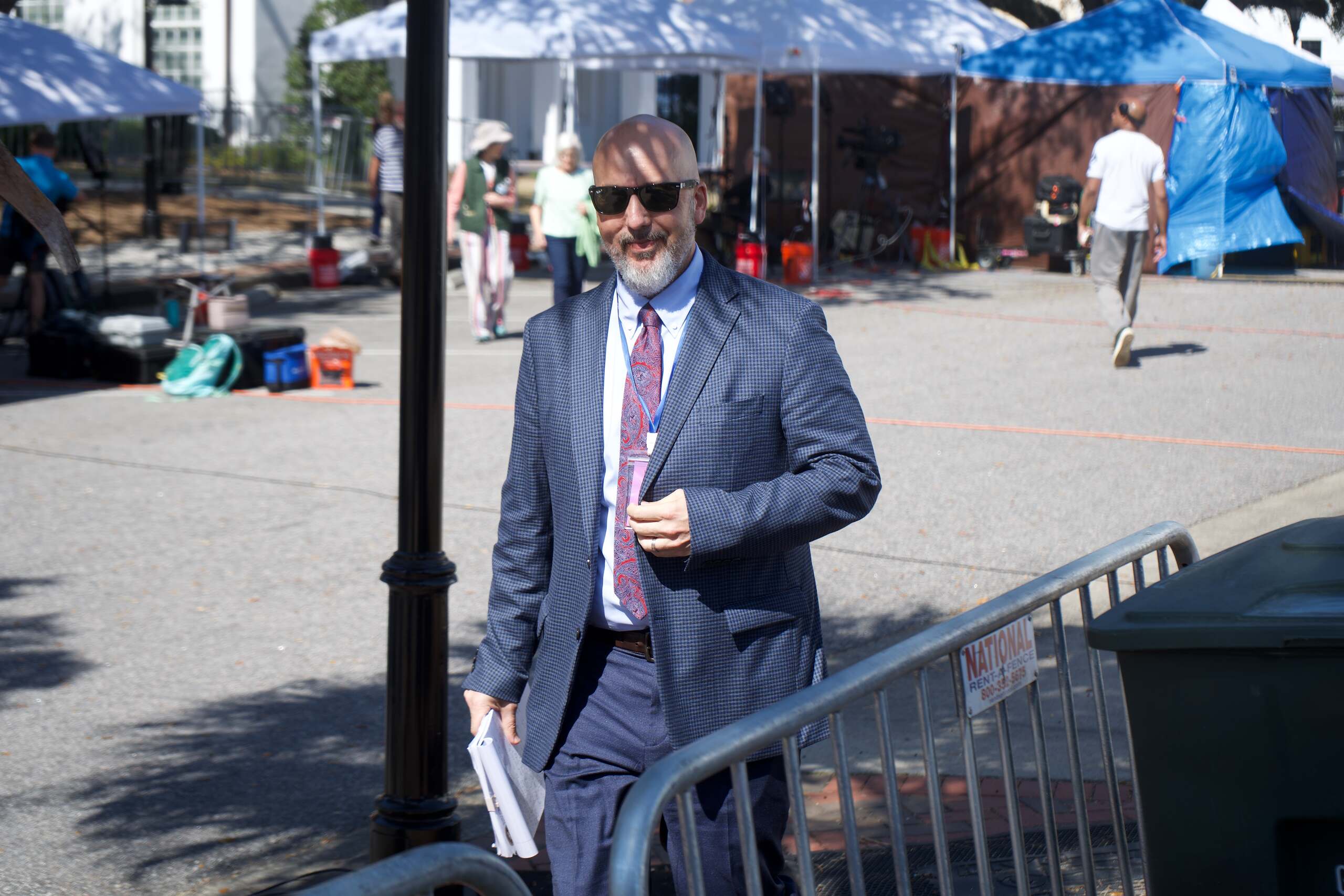
Will Folks is the founding editor of the news outlet you are currently reading. Prior to founding FITSNews, he served as press secretary to the governor of South Carolina. He lives in the Midlands region of the state with his wife and eight children.
***
SOUND OFF…
Got something you’d like to say in response to one of our articles? Or an issue you’d like to address proactively? We have an open microphone policy! Submit your letter to the editor (or guest column) via email HERE. Got a tip for a story? CLICK HERE. Got a technical question or a glitch to report? CLICK HERE.

6 comments
I am gratified that FITS now calls it the terminologically correct “two murder convictions” instead of the oxymoronic “double murder convictions” because, as I recently explained, a victim can be murdered only once since the life goes out only once and the taking of a life is the sine qua non element of murder. You can “double shoot” someone but you can’t “double murder” him/her.
Nor, if you made a “360-degree turn” do you change direction at all. You would be facing exactly where you started.
To turn in the extreme opposite direction, you have to make a “180 degree turn.”
Some of my writing is sinking in somewhere, thank God.
So encouraged, I here recap what I previously detailed about the scientific and social impossibility of Richard Alexandre Murdaugh (“RAM”) having been the or a shooter of Maggie or of Paul Murdaugh on 7 June 2021.
1. The content of the victims’ stomachs at autopsy, when compared to the known time and composition of their last, large and relatively fatty, last meal, makes impossible for them to have died only 22 minutes after that last meal unless both of them were afflicted with gastric dumping syndrome, of which there is no history for either victim.
2. Paul’s video of Cash-the-dog’s tail was not sent, not because Paul was shot right after taking it, but because it shows no lesion (or “pone” as Rogan Gibson had termed it to police in his interview) on Cash’s tail. What Paul had suspected to be a lesion was in reality either an optical elusion or a piece of caked mud that fell off with Cash’s furious wagging of its tail and/or Paul’s sleeving that tail through his non-phone-holding hand as seen in the video. In other words, Paul did not send the video because he became absolutely convinced that it was utterly unnecessary. And the phone battery was at 1% going to 0%.
3. The spatter on RAM’s white T-shirt is from the flapping of the chicken which Bubba-the-dog had caught and caused to die. It tested positive for blood but negative for human blood. That proves it was what RAM wore to the kennels whence he went to Almeda. Since it had no human blood, the wearer could not have been the shooter.
4. Nor could Ram have been wearing the long kaki pants seen in Paul’s earlier snap-chat video of the sapling which kept falling. Blanca testified that she found those pants in the shower and laundered them the day after the murders. Blanca would not have laundered those pants if they had been blood soaked. Nor would she had left them on the shower room floor before she left Moselle the morning or early afternoon of 7 June 2021 had those long kaki pants been on the shower room floor from the previous day.
5. If RAM were the real shooter, he would have spent the night in Almeda in his hospitalized father’s empty bed and left the bodies to be discovered by one or more of the Moselle hands the morning of 8 June 2021. Instead, RAM hurried back to Moselle after checking on his agitated Alzheimer-afflicted mother whose agitation was augmented by her husband’s absence.
6. If RAM needed sympathy or a delay in the boat crash case, he would have obtained that a-plenty from the predicted death of his terminal father on 10 June 2021, the day of a non-determinative hearing in the boat crash case.
7. If Ram needed to protect Paul from imprisonment upon conviction in the criminal part of the boat crash case (which conviction was highly unlikely in any event), RAM would have helped Paul escape, not killed him. The deniability of assisting a fugitive is much greater than murder and the penalties are much lighter. And RAM could have gotten as much sympathy, and a continuance of the civil side of the boat crash case, by Paul being found missing rather than dead.
8. If RAM needed to kill an immediate relative for sympathy and delay, why two, not just one? And why by shooting instead of, for example. dissolving opioid pills in Maggie’s or Paul’s drinks and passing it off as an accident?
9. Could the supposed mastermind of so many long-undetected financial fraud schemes, among many shrewd lawyers at that, not have thought of more effective and less drastic and detectable way to gain sympathy and delay?
10. Even more stupid are the explanations that popped up for that supposed blue tarp and of Becky Hill’s conduct, all of which I will not re-analyze here.
But I invite one and all to politely ask me if there is something they do not understand in what I just summarized.
And I invite Will Folks, even if he does not feel guilty about having stoked the media prejudice against RAM, to become an effective agent in RAM’s exoneration. The joy of helping exonerate the innocent is among the greatest an adult human can experience.
I am gratified that FITS now calls it the terminologically correct “two murder convictions” instead of the oxymoronic “double murder convictions” because, as I recently explained, a victim can be murdered only once since the life goes out only once and the taking of a life is the sine qua non element of murder. You can “double shoot” someone but you can’t “double murder” him/her.
Nor, if you made a “360-degree turn” do you change direction at all. You would be facing exactly where you started.
To turn in the extreme opposite direction, you have to make a “180 degree turn.”
Some of my writing is sinking in somewhere, thank God.
So encouraged, I here recap what I previously detailed about the scientific and social impossibility of Richard Alexandre Murdaugh (“RAM”) having been the or a shooter of Maggie or of Paul Murdaugh on 7 June 2021.
1. The content of the victims’ stomachs at autopsy, when compared to the known time and composition of their last, large and relatively fatty, last meal, makes impossible for them to have died only 22 minutes after that last meal unless both of them were afflicted with gastric dumping syndrome, of which there is no history for either victim.
2. Paul’s video of Cash-the-dog’s tail was not sent, not because Paul was shot right after taking it, but because it shows no lesion (or “pone” as Rogan Gibson had termed it to police in his interview) on Cash’s tail. What Paul had suspected to be a lesion was in reality either an optical elusion or a piece of caked mud that fell off with Cash’s furious wagging of its tail and/or Paul’s sleeving that tail through his non-phone-holding hand as seen in the video. In other words, Paul did not send the video because he became absolutely convinced that it was utterly unnecessary. And the phone battery was at 1% going to 0%.
3. The spatter on RAM’s white T-shirt is from the flapping of the chicken which Bubba-the-dog had caught and caused to die. It tested positive for blood but negative for human blood. That proves it was what RAM wore to the kennels whence he went to Almeda. Since it had no human blood, the wearer could not have been the shooter.
4. Nor could Ram have been wearing the long kaki pants seen in Paul’s earlier snap-chat video of the sapling which kept falling. Blanca testified that she found those pants in the shower and laundered them the day after the murders. Blanca would not have laundered those pants if they had been blood soaked. Nor would she had left them on the shower room floor before she left Moselle the morning or early afternoon of 7 June 2021 had those long kaki pants been on the shower room floor from the previous day.
5. If RAM were the real shooter, he would have spent the night in Almeda in his hospitalized father’s empty bed and left the bodies to be discovered by one or more of the Moselle hands the morning of 8 June 2021. Instead, RAM hurried back to Moselle after checking on his agitated Alzheimer-afflicted mother whose agitation was augmented by her husband’s absence.
6. If RAM needed sympathy or a delay in the boat crash case, he would have obtained that a-plenty from the predicted death of his terminal father on 10 June 2021, the day of a non-determinative hearing in the boat crash case.
7. If Ram needed to protect Paul from imprisonment upon conviction in the criminal part of the boat crash case (which conviction was highly unlikely in any event), RAM would have helped Paul escape, not killed him. The deniability of assisting a fugitive is much greater than murder and the penalties are much lighter. And RAM could have gotten as much sympathy, and a continuance of the civil side of the boat crash case, by Paul being found missing rather than dead.
8. If RAM needed to kill an immediate relative for sympathy and delay, why two, not just one? And why by shooting instead of, for example. dissolving opioid pills in Maggie’s or Paul’s drinks and passing it off as an accident?
9. Could the supposed mastermind of so many long-undetected financial fraud schemes, among many shrewd lawyers at that, not have thought of more effective and less drastic and detectable way to gain sympathy and delay?
10. Even more stupid are the explanations that popped up for that supposed blue tarp and of Becky Hill’s conduct, all of which I will not re-analyze here.
But I invite one and all to politely ask me if there is something they do not understand in what I just summarized.
And I invite Will Folks, even if he does not feel guilty about having stoked the media prejudice against RAM, to become an effective agent in RAM’s exoneration. The joy of helping exonerate the innocent is among the greatest an adult human can experience.
You are wonderful! And the whole country needs you.
What the what, FITS?
Why is A very important reply of mine to Alan Wilson’s and Creighton Waters’ press conference an hour ago not appearing?
Here it is again:
? @reenakemp9132 , if you listened carefully to what Creighton Waters said in the press conference few minutes ago, you will understand that Creighton Waters ABANDONED the sacred prosecutorial duty to explore exculpatory evidence with the same zeal as inculpatory evidence.
He did NOT do that.
Indeed, he BRAGGED about doing THE OPPOSITE.
He said in so many words “aggressive” and “concern for double jeopardy.”
TRANSLATION: if you, as a prosecutor, obey your duty to include exculpatory evidence and the criminal defendant gets acquitted, the State cannot appeal because of double jeopardy. But if you as a prosecutor “aggressively” include irrelevant and prejudicial evidence, and it causes a wrongful conviction, the criminal defendant can appeal and if “the system works” he gets a new trial as just happened.
Right? NO, no, no! WRONG, wrong, wrong!
“The system” trusts the prosecutors to err on the side of caution, not on the side of conviction at any price.
Lives get destroyed because of wrongful convictions, even if later reversed.
The public confidence in the legal system gets rightly shaken.
And most significantly, the REAL perpetrator gets to avoid accountability (for five years now and going) or forever.
If Alan Wilson were truly non-political, he should have announced a reopened neutral investigation and invited all with new information to contribute.
SCIENTIFICALLY, Alex Murdaugh is already-proven ACTUALLY innocent because the shootings did NOT happen as early as the Prosecution pretended.
The food in Paul and Maggie’s stomachs AT AUTOPSY was too little and too digested for their lives to have ended ONLY 19 or 22 MINUTES after their KNOWN large, and relatively fatty, last meal ended at 8:30 pm on 7 June 2021, just as the sun BEGAN SETTING on that Low Country day so close to the summer solstice.
Those who took the time to attend the hearings and/or go the now-reversed trial, should take the time to read this TRUE CRIME story from Oregon as told in Atlas Obscura:
How a Victim’s Last Meal Can Identify a Killer
To solve crimes, two botanists identify half-digested potatoes, tomatoes, and lettuce under a microscope.
by Tove DanovichDecember 12, 2017
It was 10 p.m. when the two men held up a blue Dutch Brothers coffee kiosk in Eugene, Oregon. They were wearing dark clothing and had covered their faces with handkerchiefs. The first man told the lone barista to turn around with his hands on the back of his head and close his eyes. They likely hoped that the second man could grab the cash while the other watched the barista. But the plan went wrong. The barista got out his gun and shot and killed the first man. The second man tried to get in a few shots, but soon ran away on foot.
The kiosk’s surveillance cameras were out of order, and nearby cameras did not capture the two men on video. The case might have reached a dead end there if not for the criminal’s autopsy and, specifically, the identification of what the dead man ate for dinner that night.
As a forensic analyst for the Eugene Police Department, Lisa Pope doesn’t perform autopsies, but she is sometimes in the room to help tie up any forensic loose ends. Pope was there, in 2010, for the autopsy.
“[The Medical Examiner] was examining the stomach contents, which is a part I don’t like because it doesn’t smell good,” Pope recalls. “But I started paying attention—he was pulling out food that wasn’t well-digested.”
Thanks to the process of chewing combined with caustic stomach acids, it’s typically difficult to identify foods from a deceased’s stomach contents. “But he’s pulling out chunks of hamburger about the size of my index finger, a piece of cheese, then a piece of bacon about a half inch long,” Pope says. “Then he pulls out half a French fry.”
Pope recognized it at once. It was a thick cut fry with the skin still attached—a signature of Wendy’s fries. Even better, Pope knew there was a Wendy’s restaurant just a few blocks from the Dutch Brothers kiosk. She called the lead detective, and when they asked Wendy’s for surveillance footage from that night, they found clear video of the deceased suspect and his partner ordering food, eating their meal, and then trying on their masks before walking out the door. The detectives couldn’t believe it. “If it weren’t for the stomach contents, we might not have gotten that video,” Pope says.
The first forensic autopsy used to determine whether foul play was involved in a victim’s death took place in the early 1300s. Yet these autopsies were performed sparingly, and they usually aimed to simply determine whether a victim died from heart attack or poison, knife wounds or a gunshot. If a man died of a coughing fit, the autopsy may have only looked at the throat and chest—ignoring the rest of the body. Physicians only saw what they looked for, and it wasn’t until the mid-1800s that people started championing more comprehensive autopsies that looked at every organ of the body and documented each one according to a set standard.
The Dutch Brothers Kiosk is a rare example of an old-school form of stomach analysis (using only what can be detected with the eye) working. Yet a closer look at stomach contents could lead to these almost unbelievable successes happening more often. Today most autopsies only look at stomach contents to get a vague idea of how long it’s been since a victim’s last meal. It’s rare that the deceased was such a terrible chewer that foods can be identified with the naked eye. But forensic botanists and co-authors of the book Forensic Plant Science, Jane Bock and David Norris, have proven that looking at stomach contents under a microscope can be an important tool in solving a crime—even if it is only just starting to catch on.
Bock and Norris were normal, American academics—she a botanist and he an animal ecologist—until 1982, when they got a call from an Assistant Coroner in Denver. A young woman had been murdered. The investigators knew she had eaten with her boyfriend the day before at a McDonald’s. As anyone who has seen a detective show knows, the significant other is always a primary suspect. Yet some of the deceased’s stomach contents didn’t seem to match their last meal together.
The stomach stops working after death, creating a gastronomic time capsule of the victim’s last moments. Though digestion varies from person to person, a meal is typically fully digested (and the stomach empty) six hours after eating. To determine time of death, examiners commonly look at body temperature and rigor mortis (for more recently killed victims) or decomposition and insect activity (for bodies found later). They rarely rely on stomach contents.
Yet many common models are subject to external factors such as temperature. A body found in a scorching desert will actually heat up, and a body found in a snowbank will cool more rapidly. Even rigor mortis, which can also be sped up or slowed based on the weather, relies on subjective assessments of a body’s stiffness.
While most investigators take these factors into consideration, Norris says that stomach contents are very useful, too, and can sometimes provide a more accurate timeline of the victim’s last hours. If you know about a person’s last meal and can see the volume of material left in the stomach, you can determine (if the stomach is nearly empty) that a victim was killed six hours after eating or (if full) closer to one hour after a last meal.
“This determined who the suspects were and who they weren’t,” Norris says, referring to cases where a suspect had an alibi for, say, the later possible time of death range but not the earlier one. “A lot of methods are used to determine time of death, but they all have a fairly large plus or minus factor.” In other words, stomach contents are equally or more reliable than other commonly used methods when you know the time of a victim’s last meal and can identify the meal under a microscope.
For Bock and Norris’s first case, the Denver coroner sent stomach contents swabbed onto slides. Bock, a botanist unused to dealing with dead animal material, had refused to look at them otherwise. When they examined the slides, they discovered that not only was there no trace of hamburger, but the victim’s last meal had actually been a salad—under a microscope they detected remnants of cabbage, green peppers, and kidney beans. Her last meal had been at a Wendy’s, which, in the 1980s, was one of the few fast food restaurants to have a salad bar. (Unlike the would-be Dutch Brothers robber, this woman chewed her food before swallowing, which meant fries or salad remnants couldn’t be identified by sight alone.) The boyfriend had an alibi for the evening and was no longer considered a suspect. Norris says that years later, serial killer Henry Lee Lucas confessed to her murder. (Take it with a grain of salt: Lucas has variously confessed to committing 60 to 3,000 unsolved murders.)
In another of Bock and Norris’ famous cases, a woman named Jill Coit was suspected of killing her estranged husband, Gerry Boggs. Boggs had been her ninth husband (she was married 11 times to nine different men), and they’d separated acrimoniously. Boggs was one of those men who start every morning the same way: He got up and ordered coffee, hash browns, toast, and eggs at a local diner. Then he opened the store that he ran with his brother Doug. But one morning when Doug got to work, the store was still closed. He called, but got no answer. When checked on Gerry after work, Doug discovered his brother’s body. He had been hit with a shovel, burned with a stun gun, and shot three times.
Coit was an obvious suspect—she had a pattern of marrying men for their money, and a previous husband had been killed under suspicious circumstances. She had an alibi for the later half of the day when Boggs was murdered, but not for that morning. His stomach contents were sent to Bock and Norris, who found potato and onion consistent with the contents of his last meal—breakfast. Based on that information, authorities obtained a search warrant for Coit’s home where they found the murder weapons. Jill Coit is currently serving a life sentence without possibility of parole.
Despite their early successes (and having a few of their famous cases dramatized for the television show Forensic Files), Bock and Norris have found that getting a new form of forensic science accepted by investigators is sometimes an uphill battle.
“If you pick up most textbooks on forensic science, they don’t cover botanic material at all,” Norris says. That’s one of the reasons why he and Bock wrote a textbook about forensic botany. Changing the standards for forensic science may require an overhaul of the whole system.
Yet in the 30 years he and Bock have been solving cases with botany, the number of cases they get asked to work on has gone down while the number of workshops they’ve been brought in to teach keeps increasing. They were recently invited to a regional FBI lab. “We feel that it may be a reflection that we are getting the word out.”
Over their three decade career, investigators throughout the Unites States have sent stomach contents to Bock and Norris. “Some of them would come FedEx,” Norris says. “They typically put absorbent material in with it in case the container broke, but it would be shipped like any other liquid.” Often, agents drove or flew into Colorado and delivered the contents directly to the forensic botanists. Norris says that most people are familiar with what stomach contents look like: “It looks like vomit.”
As long as the food in the sample had a cell wall—think plants rather than meat, cheese, or processed foods, which turn to “goosh,” as Norris calls it, soon after mingling with stomach acids—they can tell exactly what it was. Even when meat is relatively intact, Norris explains, since all skeletal muscle looks alike, it’s impossible to tell steak from grasshopper meat. In other words, there’s now another (admittedly macabre) reason to eat vegetables at every meal.
Gastro Obscura covers the world’s most wondrous food and drink.
© 2026 Atlas Obscura. All rights reserved.
FITS and friends, for the nth’s time, Paul’s kennels video did NOT and CANNOT “prove[ Alex] did it.” It only proved Alex was at at the kennels with Paul and Maggie ONLY 13 minutes before Alex left for Almeda and ONLY 19 minutes after the threesome had A LARGE and relatively fatty dinner TOGETHER at the Moselle house a walking distance away from the kennels. the kennels with Paul and Maggie ONLY 13 minutes before Alex left for Almeda and ONLY 19 minutes after the threesome had A LARGE and relatively fatty dinner TOGETHER at the Moselle house a walking distance away from the kennels.
at the kennels with Paul and Maggie ONLY 13 minutes before Alex left for Almeda and ONLY 19 minutes after the threesome had A LARGE and relatively fatty dinner TOGETHER at the Moselle house a walking distance away from the kennels.
What DISPROVES Alex “did it” is the REAL time of the shootings, which SCIENTIFICALLY is circa 9:30 pm when Alex was holding his ailing and about-to-be-widowed mother’s hand in Alex’s parents’ home in Almeda.
Also, had Alex been the real shooter, he would have spent the night in his terminally-hospitalized father’s empty bed in the Almeda house and left the bodies to be discovered in the morning by the first Moselle farm/kennel workers to arrive there.
Moreover, if you look closely at the photo of Maggie’s phone on the grass, you must conclude it was hand-placed there, not thrown from a moving car’s window. The fragile twigs above it are intact and would have been broken by, or bent under, a heavier-than-themselves object with the momentum of being thrown from a car window.
That phone was either pilfered or wrestled from Maggie’s left hand by a member of the shooting cabal BEFORE THE SHOOTING to prevent Maggie from calling for help. That member of the shooting cabal had to dispose of the phone far enough from Maggie’s reach but close enough for that member to return to the crime scene and rejoin the shooting cabal to “clean” the scene and get away.
All other explanations of the OBJECTIVE undeniable observations are Alex-haters’ “logic” more twisted than the DNA double helix.
Any more questions?