
by JENN WOOD
***
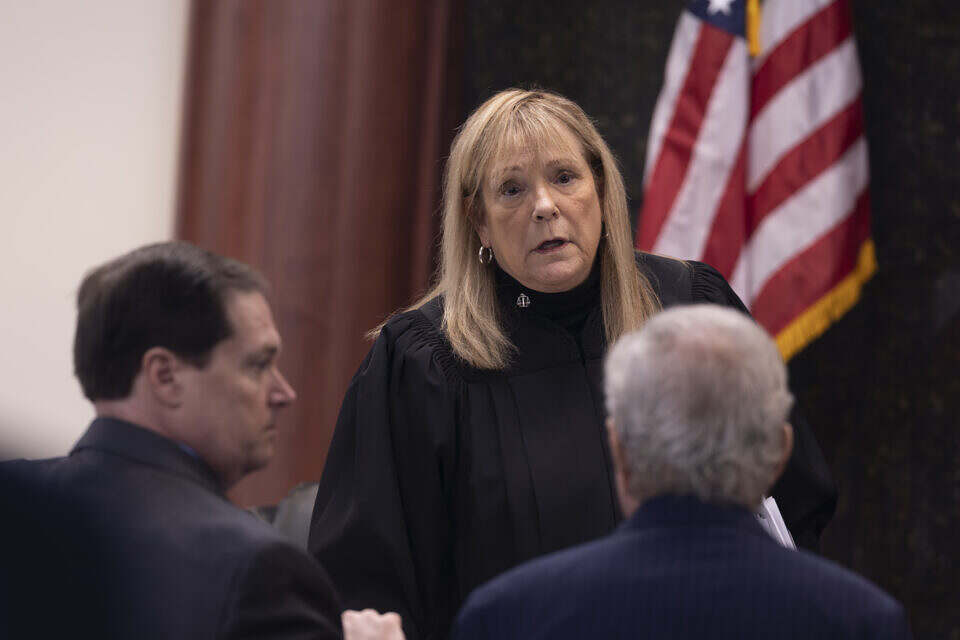
Three days after South Carolina circuit court judge Debra McCaslin declined to dismiss accused killer Alex Murdaugh’s murder indictments, his attorneys asked her to reconsider – arguing she applied the wrong legal standard and made findings of fact unsupported by the public record.
In a motion filed Monday (November 23, 2026), Murdaugh’s attorneys asked McCaslin to dismiss all four indictments against their client without prejudice – meaning prosecutors would be free to seek them again. If she declined to do so based on the existing record, the defense motion (.pdf) asked her to hear sworn testimony about what investigators and prosecutors knew prior to a Colleton County grand jury indicting Murdaugh in July 2022.
The indictments charged Murdaugh with two counts of murder and two counts of possessing a weapon during the commission of a violent crime. His wife, 52-year-old Maggie Murdaugh, and younger son, 22-year-old Paul Murdaugh, were shot and killed at the family’s Moselle property on June 7, 2021. Less than two years later, Murdaugh was convicted of those crimes by a Colleton County jury.
The S.C. supreme court unanimously overturned these convictions in May, however, finding former Colleton County clerk of court Rebecca “Becky” Hill improperly influenced jurors.

***
What grand jurors heard
At a November 13, 2026 hearing in Lexington, S.C., defense attorney Jim Griffin argued former S.C. Law Enforcement Division (SLED) agent David Owen gave grand jurors two false forensic links between Murdaugh and the killings. Owen told them an expert had identified blood spatter on Murdaugh’s white T-shirt and that DNA in the areas of purported spatter included Paul’s. He also described shotguns recovered at Moselle as having been loaded like the gun used to kill Paul.
Lead prosecutor Creighton Waters defended the expert’s blood spatter opinion, acknowledged the ammunition testimony was imprecise and argued neither statement substantially influenced the grand jury’s decision to indict.
In her order (.pdf), McCaslin found no basis to conclude that the disputed testimony substantially influenced grand jurors and said the remaining evidence overwhelmingly established probable cause. She found that none of the shotguns recovered from the house contained the combination of shells Owen described.
McCaslin also faulted Owen for testifying without first reviewing a November 2021 SLED lab report addressed directly to him. She said law enforcement had a duty to review the full evidentiary record and represent it accurately.
“Oversights of this nature undermine public confidence in the integrity of the criminal justice system,” McCaslin wrote. However, she found the record did not establish that Owen knowingly or willfully gave false testimony or that prosecutors intentionally presented false evidence.
***
How the defense challenged the ruling
In Monday’s motion, Murdaugh’s attorneys argued McCaslin recited the correct legal standard but applied it incorrectly. They said she relied on the strength of the remaining evidence to conclude the disputed testimony did not substantially influence the grand jury. Even if the other evidence supported probable cause, the defense argued, the court still had to assess whether the testimony substantially influenced the decision to indict or whether there was grave doubt the decision was free of that influence.
A cell phone video uncovered months after the crime captured Murdaugh’s voice at the scene of the shooting while Maggie and Paul were still alive – but just minutes before prosecutors insist the first shots rang out. The defense argued the spatter testimony purported to place him near Paul when the shotgun was fired.
The attorneys further argued McCaslin treated proof of bad faith as a requirement for dismissal. They pointed to State v. Thrift, the 1994 decision McCaslin cited in her order (.pdf). In that case, the S.C. supreme court found prosecutors had acted in good faith.
The court upheld dismissal of that defendant’s indictment because the testimony was severely prejudicial.
***
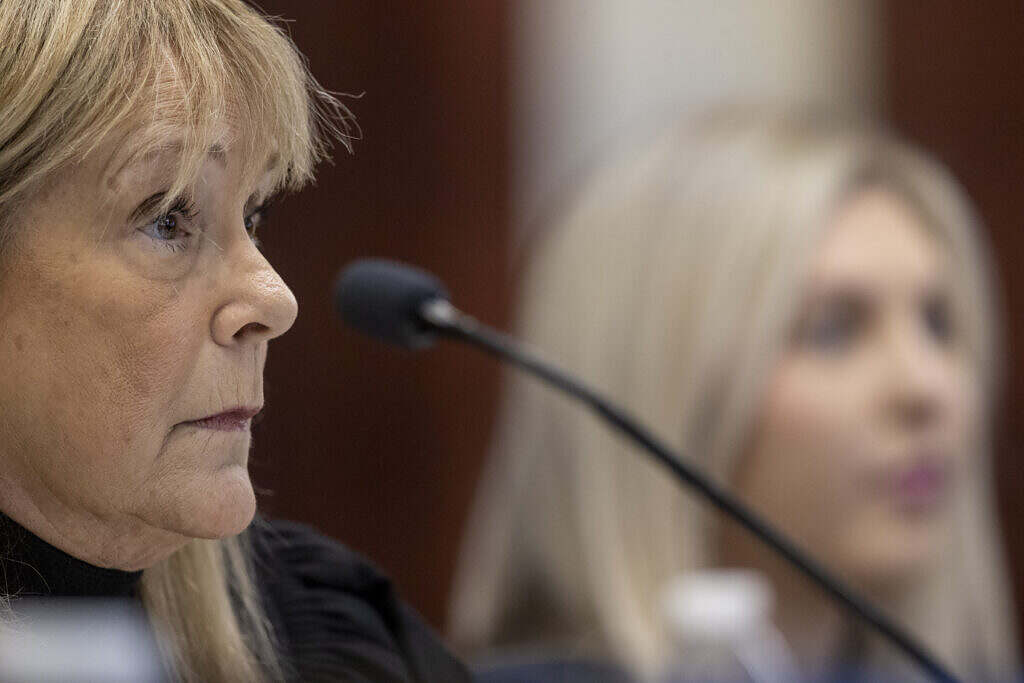
RELATED | Judge Declines To Dismiss Murder Indictments
***
Who knew about the lab report?
Murdaugh’s attorneys argued McCaslin attributed DNA results for three shirt stains to the wrong lab report. In the July 2021 DNA report, SLED reached no conclusion about whether Paul Murdaugh contributed DNA to two of those stains and could not interpret the third. The report listed Paul Murdaugh as a possible contributor in two other samples from the bottom of the shirt, neither of which the State had identified as spatter, the defense said.
In the separate November report, SLED’s lab said it found no human blood in any of the 12 shirt samples it tested.
The attorneys also challenged McCaslin’s finding that Owen and the attorney general’s office were unaware of the blood test results when he testified. They said SLED personnel opened the November report 10 times before the indictments. The analyst who performed the tests testified that the results were “probably” discussed at an April 20, 2022, meeting with prosecutors. The defense also pointed out that Owen’s grand jury narrative included a raincoat DNA result that appeared on the same page of the report as the negative blood test results for the shirt.
The filing further disputed McCaslin’s account of how bloodstain-pattern analyst Tom Bevel changed his opinion. McCaslin wrote that Bevel reviewed higher-quality photographs and examined the shirt before identifying what he believed was spatter. The defense said all 49 JPEGs on a disc SLED delivered in March 2022 were already in a set of photos Bevel had received before he first concluded that the stains were consistent with transfers. After reviewing the lab report, Bevel stood by his revised opinion and suggested that chemical treatment of the shirt could have produced a false negative. The defense noted that he offered that explanation after the indictments.
***
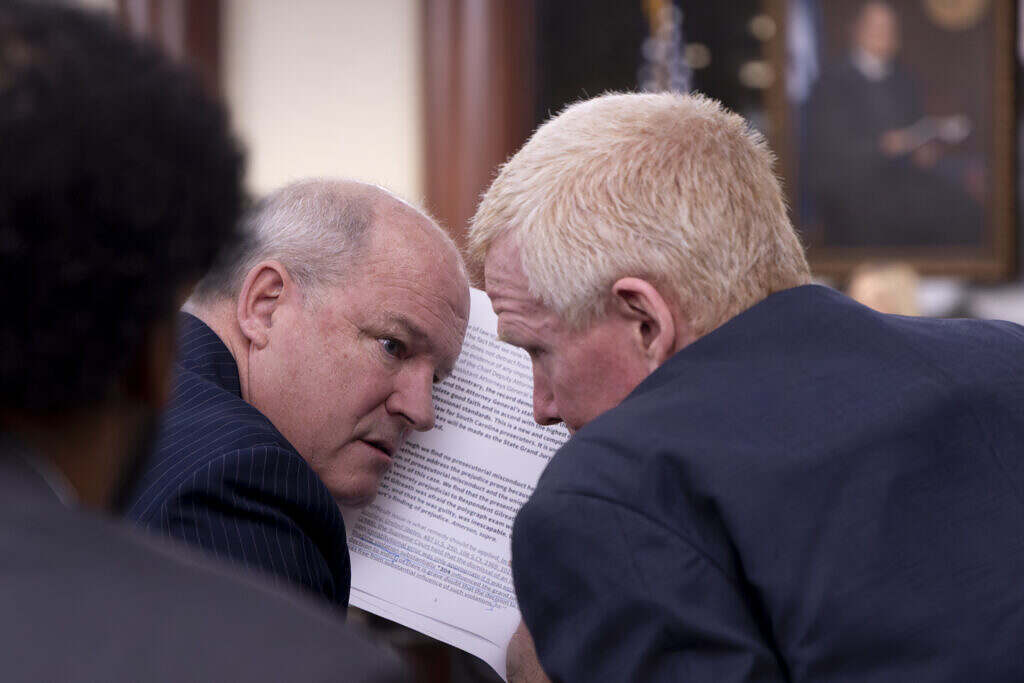
RELATED | THE LEGAL CONSEQUENCES OF STARTING OVER
***
What the defense asked the judge to change
Murdaugh’s attorneys argued McCaslin’s reliance on the remaining evidence led her to treat disputed trial issues as settled. They asked her to withdraw language identifying the blue raincoat as Murdaugh’s and placing him at the Moselle kennels “just minutes” before the killings. The attorneys said no witness identified the coat as his and argued the timing of the killings was for the trial jury to decide. They also cited Owen’s trial testimony as evidence that he presented the kennel video to grand jurors and said the record did not show they heard the FBI’s vehicle data analysis.
The attorneys noted that no witnesses testified at the November 13, 2026 hearing. If McCaslin declined to dismiss the indictments on the existing record, they asked her to direct the State to identify everyone who attended the April 2022 meeting with prosecutors. They also asked her to hear testimony from Owen, his supervisor and lab personnel about when investigators and prosecutors first learned of the blood test results.
The defense asked McCaslin to rule on whether Owen acted recklessly, whether SLED’s knowledge should be attributed to prosecutors and whether prosecutors had a duty to correct the testimony. The attorneys said they sought explicit rulings to preserve these issues for a possible appeal.
Dismissal without prejudice would allow prosecutors to seek new indictments. The defense argued they could do so before jury selection, which is scheduled to begin April 5, 2027, in Sumter County. When McCaslin asked at the November 13 hearing whether prosecutors could return to a grand jury and still be ready by April 5, Waters replied, “full steam ahead.”
***
THE MOTION…
Subscriber-only document
This PDF is available to FITSNews subscribers. Get full access and be able to view documents like this one.
Subscribe for accessAlready a subscriber? Log in here
***
ABOUT THE AUTHOR …

As a private investigator turned journalist, Jenn Wood brings a unique skill set to FITSNews as its research director. Known for her meticulous sourcing and victim-centered approach, she helps shape the newsroom’s most complex investigative stories while producing the FITSFiles and Cheer Incorporated podcasts. Jenn lives in South Carolina with her family, where her work continues to spotlight truth, accountability, and justice.
***
SOUND OFF…
Got something you’d like to say in response to one of our articles? Or an issue you’d like to address proactively? We have an open microphone policy! Submit your letter to the editor (or guest column) via email HERE. Got a tip for a story? CLICK HERE. Got a technical question or a glitch to report? CLICK HERE.

1 comment
Am I a legal genius or what?
Alex Murdaugh’s defense filed a motion for Judge McCaslin to reconsider her order as I had PUBLICLY and privately told them to do.
Those who made fun of me, for the nth time in this case, eat crow!