
by JENN WOOD
***
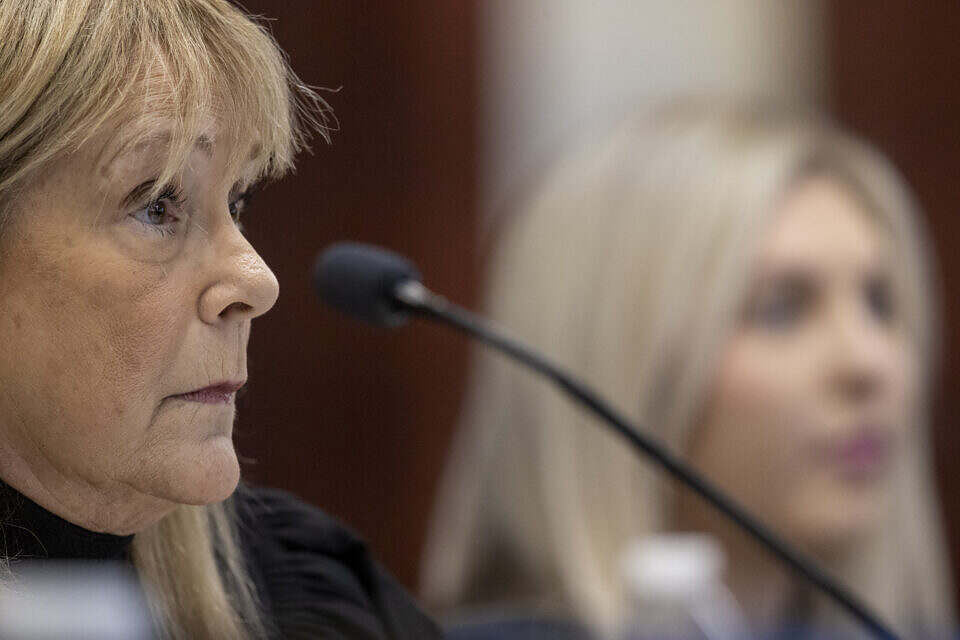
South Carolina circuit court judge Debra McCaslin denied (.pdf) Alex Murdaugh’s motion to dismiss his murder indictments Friday (November 20, 2026), finding the evidence supported the charges even without disputed grand jury testimony about blood spatter and shotgun ammunition. His retrial is scheduled to begin April 5, 2027, in Sumter County.
McCaslin faulted former S.C. Law Enforcement Division (SLED) agent David Owen for overlooking a laboratory report addressed to him before he testified. She found the record did not establish that Owen knowingly testified falsely or that prosecutors intentionally presented false evidence. She also found the defense failed to show that the disputed testimony substantially influenced grand jurors’ decision to indict.
The order keeps in place all four indictments returned by a Colleton County grand jury in July 2022, charging Murdaugh with two counts of murder and two counts of possessing a weapon during the commission of a violent crime. His wife, 52-year-old Maggie Murdaugh, and younger son, 22-year-old Paul Murdaugh, were shot and killed at the family’s Moselle property on June 7, 2021.
The S.C. supreme court unanimously overturned Murdaugh’s 2023 murder convictions in May after finding that former Colleton County clerk of court Rebecca “Becky” Hill improperly influenced jurors and deprived him of a fair trial. McCaslin moved the retrial to Sumter County in September.

***
The shirt and the shotgun shells
At the November 13 hearing in Lexington, defense attorney Jim Griffin argued Owen gave grand jurors two false forensic links between Murdaugh and the killings. One involved purported blood spatter on the white T-shirt Murdaugh was wearing when deputies arrived at Moselle. The other involved whether shotguns recovered there were loaded with the same combination of shells used to kill Paul. The defense sought dismissal without prejudice, which would have allowed prosecutors to seek new indictments.
SLED’s November 10, 2021 lab report said no human blood was identified in the tested shirt cuttings. That report was left out of the materials sent to bloodstain-pattern analyst Tom Bevel, who initially identified no spatter in a draft report. After reviewing better photographs and examining the shirt, Bevel identified more than 100 stains he considered consistent with spatter.
McCaslin found that Owen’s testimony reflected Bevel’s revised opinion and that neither Owen nor the Attorney General’s Office was aware of the lab report when Owen testified. After reviewing the report, Bevel stood by his opinion and said chemical treatment of the shirt could have produced a false negative.
“Oversights of this nature undermine public confidence in the integrity of the criminal justice system,” McCaslin wrote.
On the ammunition, McCaslin acknowledged that no shotgun recovered from the residence contained the matching combination of shells. Investigators did find shells consistent with both types used to kill Paul elsewhere on the property, she wrote. The Colleton County grand jury proceedings were neither recorded nor transcribed, so the court could not determine precisely what Owen told jurors. McCaslin attributed any inaccuracies about the loads to confusion or imprecise descriptions and found the record did not establish intentional fabrication.
***
RELATED | The Legal Consequences Of Starting Over
***
Why the indictments stand
Lead prosecutor Creighton Waters argued that the state had enough independent evidence to support the charges and that the disputed testimony did not substantially influence the decision to indict. Under the S.C. supreme court’s 1994 decision in State v. Thrift, dismissal for this kind of grand jury error requires a showing that the misconduct substantially influenced the decision or that there is grave doubt the decision was free from that influence.
McCaslin pointed to the video from Paul’s phone that placed Murdaugh at the kennels with Maggie and Paul minutes before their deaths, contradicting his account of his whereabouts. She also cited cellphone and other digital timeline evidence, .300 Blackout casings found near Maggie’s body that examiners linked to casings recovered elsewhere at Moselle, and a family rifle of the same caliber that was never recovered. She found the independent evidence overwhelmingly established probable cause.
McCaslin also rejected the defense’s claim that prosecutors used the separate State Grand Jury to improperly gather evidence for the murder case. She found the overlap with the financial crimes investigation fell within the scope of that inquiry and that the defense presented no evidence of misuse.
McCaslin wrote that the defense can challenge inconsistencies in the forensic findings and investigators’ earlier statements through cross-examination at the retrial.
The parties are scheduled to return to court in Sumter County on January 20, 2027, for the next pretrial hearing.
***
THE ORDER…
Subscriber-only document
This PDF is available to FITSNews subscribers. Get full access and be able to view documents like this one.
Subscribe for accessAlready a subscriber? Log in here
***
ABOUT THE AUTHOR …

As a private investigator turned journalist, Jenn Wood brings a unique skill set to FITSNews as its research director. Known for her meticulous sourcing and victim-centered approach, she helps shape the newsroom’s most complex investigative stories while producing the FITSFiles and Cheer Incorporated podcasts. Jenn lives in South Carolina with her family, where her work continues to spotlight truth, accountability, and justice.
***
SOUND OFF…
Got something you’d like to say in response to one of our articles? Or an issue you’d like to address proactively? We have an open microphone policy! Submit your letter to the editor (or guest column) via email HERE. Got a tip for a story? CLICK HERE. Got a technical question or a glitch to report? CLICK HERE.
