
by JENN WOOD
***
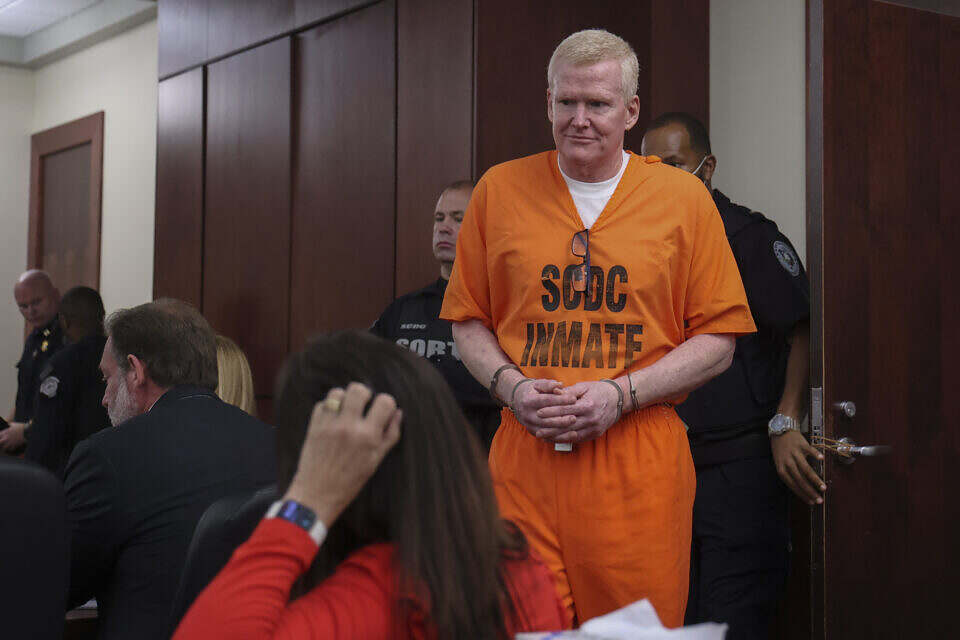
Attorneys for convicted fraudster and accused killer Alex Murdaugh filed a trio of responses on Thursday (August 13, 2026) challenging prosecutors over where his murder retrial will take place, whether jurors should be able to hear testimony he gave during his first trial and whether the defense must surrender its own extraction of his cellphone.
The filings come just one day before Murdaugh is scheduled to return to court for another pretrial hearing — and less than eight months before jury selection is expected to begin.
Murdaugh is again facing two counts of murder and two weapons charges in connection with the June 7, 2021 killings of his wife, 52-year-old Maggie Murdaugh, and their younger son, 22-year-old Paul Murdaugh, at the family’s Moselle hunting property in Colleton County, South Carolina.
A jury convicted Murdaugh on all four charges in March 2023. Those convictions were unanimously overturned by the South Carolina supreme court in May after the justices concluded former Colleton County clerk of court Rebecca “Becky” Hill improperly inserted herself into the jury’s deliberative process.
The court concluded Hill “placed her fingers on the scales of justice” through improper comments and communications with jurors — conduct that deprived Murdaugh of a constitutionally fair trial.
Murdaugh’s retrial is scheduled to begin April 5, 2027. Before then, however, S.C. circuit court judge Debra McCaslin must resolve a growing list of evidentiary, logistical and constitutional disputes that could substantially reshape the second case against South Carolina’s most notorious accused murderer.

***
“CHARLESTON OR BUST?”
One of the most consequential questions is whether the retrial should remain in Colleton County — or anywhere within the Palmetto State’s fourteenth judicial circuit.
Murdaugh’s attorneys have asked McCaslin to move the proceeding to Charleston County, arguing the Murdaugh family’s century-long legal and political presence in the Lowcountry, the saturation of publicity and the connections between local residents and individuals involved in the case make it impossible to obtain an impartial jury within the circuit.
In a response (.pdf) filed Wednesday, prosecutors acknowledged the publicity surrounding the case is “undeniably unique in the history of South Carolina,” but accused the defense of adopting a “Charleston or bust” position.
The state argued Charleston would be among the most expensive and logistically difficult places in South Carolina to conduct the retrial — particularly during the spring tourist season.
Prosecutors cited downtown traffic, limited parking, elevated hotel prices, possible flooding and the large influx of attorneys, witnesses, jurors, media representatives and spectators expected to attend.
***
***
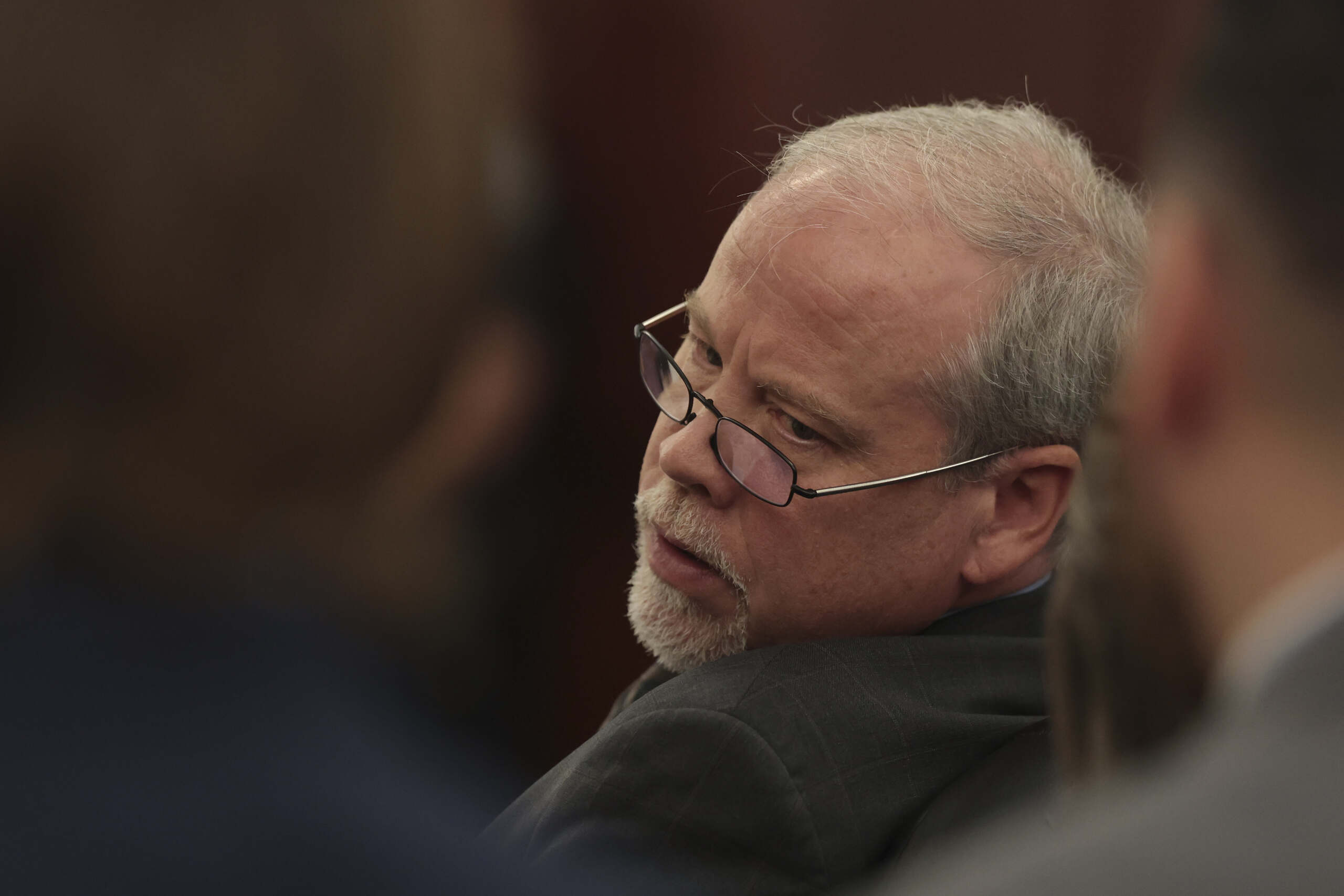
They also noted Charleston County borders Colleton County and lies within the same media market — potentially undercutting the defense’s argument that moving the case there would provide a jury less affected by local coverage.
According to prosecutors, careful jury screening worked during the first trial. The parties qualified more than enough prospective jurors through detailed questionnaires, agreed-upon exclusions and individualized questioning.
Prosecutors contend the relevant question is not whether prospective jurors have heard about Murdaugh, but whether they can set aside that knowledge and decide the case based solely on the evidence presented in court.
In an age of Netflix documentaries, social media and worldwide digital coverage, prosecutors argued, publicity surrounding the case is no longer confined to any particular South Carolina county.
“There has to be a trial somewhere — and media attention has been everywhere,” prosecutors wrote.
Although prosecutors opposed Charleston, they identified Spartanburg, Newberry, Lancaster, York and Florence counties as potential alternatives with more convenient facilities and lower costs.
***
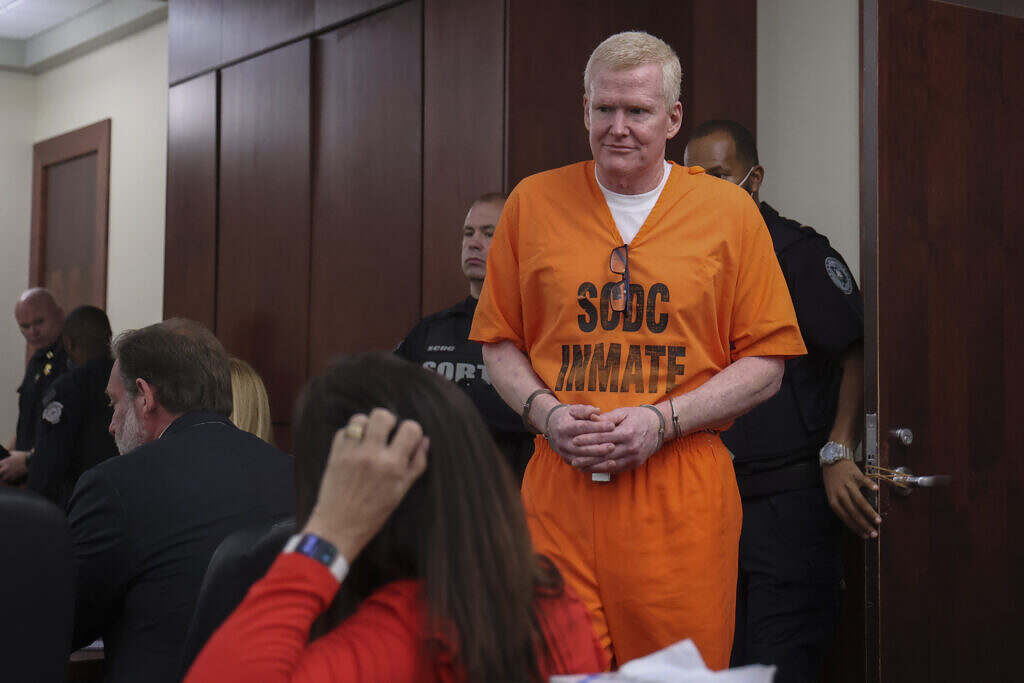
RELATED | MURDAUGH SEEKS DismissAL OF Murder Charges
***
DEFENSE FIRES BACK
Murdaugh’s attorneys responded Thursday (.pdf) by arguing prosecutors had effectively conceded the retrial should leave the fourteenth judicial circuit — objecting only to the defense’s preferred destination.
The defense noted the state did not defend Colleton, Hampton, Beaufort, Jasper or Allendale counties as appropriate locations for the retrial. Instead, each alternative suggested by prosecutors is also located outside the circuit.
“The parties therefore agree upon everything that matters except the destination,” the defense wrote.
Murdaugh’s family held the role of fourteenth circuit solicitor for nearly 100 years – and Murdaugh himself was an assistant solicitor in the office at the time of the murders.
Murdaugh’s attorneys also seized upon an order issued Wednesday in the long-running civil litigation arising from the 2019 boat crash that killed 19-year-old Mallory Beach. In that case, S.C. circuit court judge Keith Kelly granted a request to transfer a related trial out of Hampton County after reviewing survey evidence concerning the extensive publicity and public attitudes surrounding the Murdaugh saga.
The defense argued that ruling supported its contention that the fallout from the Murdaugh cases has made a fair trial impossible throughout the fourteenth circuit.
***
? NEW: Alex Murdaugh’s attorneys want his murder indictments dismissed over David Owen’s grand jury testimony — or, alternatively, his retrial moved from Colleton County to Charleston.
— Jennifer Wood (@IndyJenn_) August 10, 2026
A two-front defense attack ahead of Friday’s pretrial hearing. @fitsnews
READ:…
***
It also creates a complication for one of the state’s preferred destinations: The Beach litigation was transferred to Spartanburg County — the same county prosecutors identified as a possible location for Murdaugh’s murder retrial.According to the defense, that case will now further “occupy the courthouse and saturate the community” the state proposed as a venue for the retrial.
Murdaugh’s attorneys also challenged the State’s logistical objections to Charleston, arguing they were based on speculation rather than affidavits, studies or other evidence. Charleston, they argued, has a significantly larger jury pool, sixteen courtrooms, extensive hotel infrastructure and demonstrated experience hosting heavily publicized trials.
The defense further contended that Newberry County has a population and jury pool comparable to Colleton County, while Lancaster and Florence counties are each less than one-third the size of Charleston County.
York County, meanwhile, sits at the opposite end of the state — maximizing the burden on Lowcountry witnesses while doing little to preserve the regional character of the case.
The defense also disputed the contention that Masters week would make Charleston prohibitively expensive, noting the tournament is held roughly 150 miles away in Augusta, Georgia.
Murdaugh’s attorneys again asked McCaslin to transfer the retrial to Charleston County.
***
***
CAN JURORS HEAR MURDAUGH’S FIRST TESTIMONY?
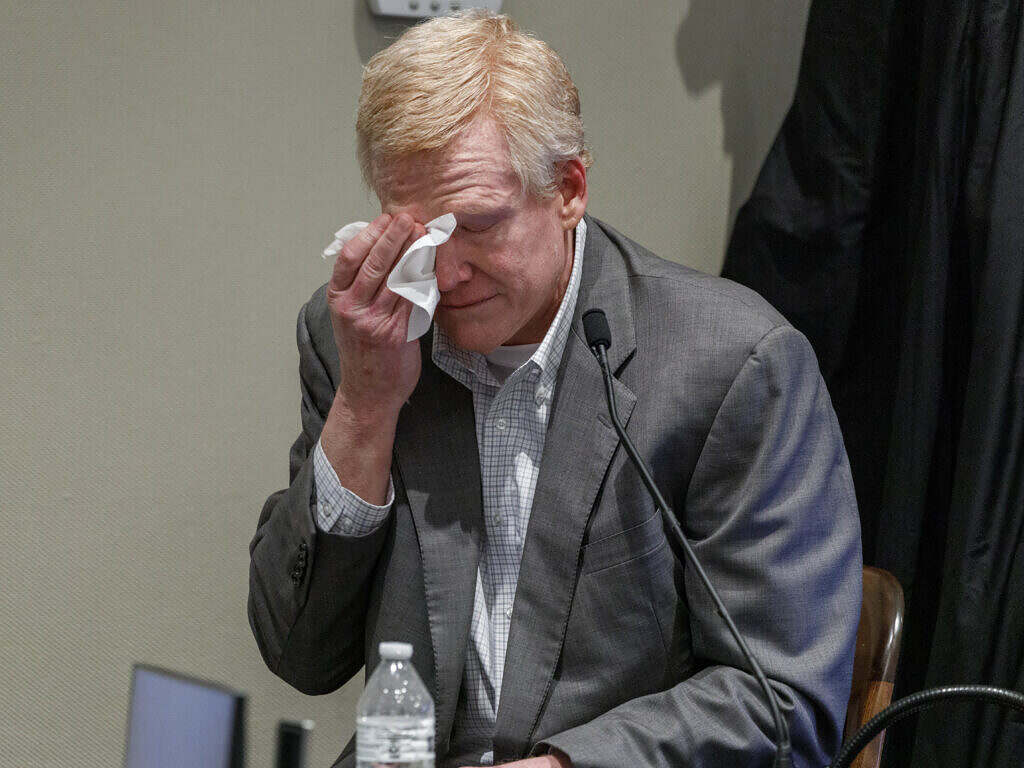
A separate dispute could determine whether prosecutors are permitted to play – or read – Murdaugh’s prior testimony for the new jury, even if he elects not to take the witness stand again.
Murdaugh testified for two days during his first trial, denying that he killed his wife and son while admitting he repeatedly lied to investigators about being at the Moselle kennels shortly before the murders.
His presence was conclusively established by a cellphone video recorded by his son Paul mere minutes before prosecutors say the killings occurred.
On the stand, Murdaugh blamed his initial lies on paranoia caused by his opioid addiction and distrust of law enforcement. Prosecutors now want to use portions of that testimony during their case-in-chief at the retrial.
In their response (.pdf), the defense argued doing so would violate Murdaugh’s Fifth Amendment right against self-incrimination because his testimony was prompted by financial-crimes evidence that should not have been admitted during the first trial.
Prior to the 2023 trial, Murdaugh’s attorneys unsuccessfully fought to exclude extensive testimony concerning millions of dollars he stole from clients, law partners and others who trusted him. Trial judge Clifton Newman permitted prosecutors to present the evidence as proof of motive, allowing them to argue Murdaugh’s financial house of cards was collapsing — and that the killings temporarily diverted scrutiny from missing money.
In reversing Murdaugh’s convictions, the supreme court concluded much of that evidence “should have been excluded” and that prosecutors went “far too long and far too deep” into the financial crimes.
***
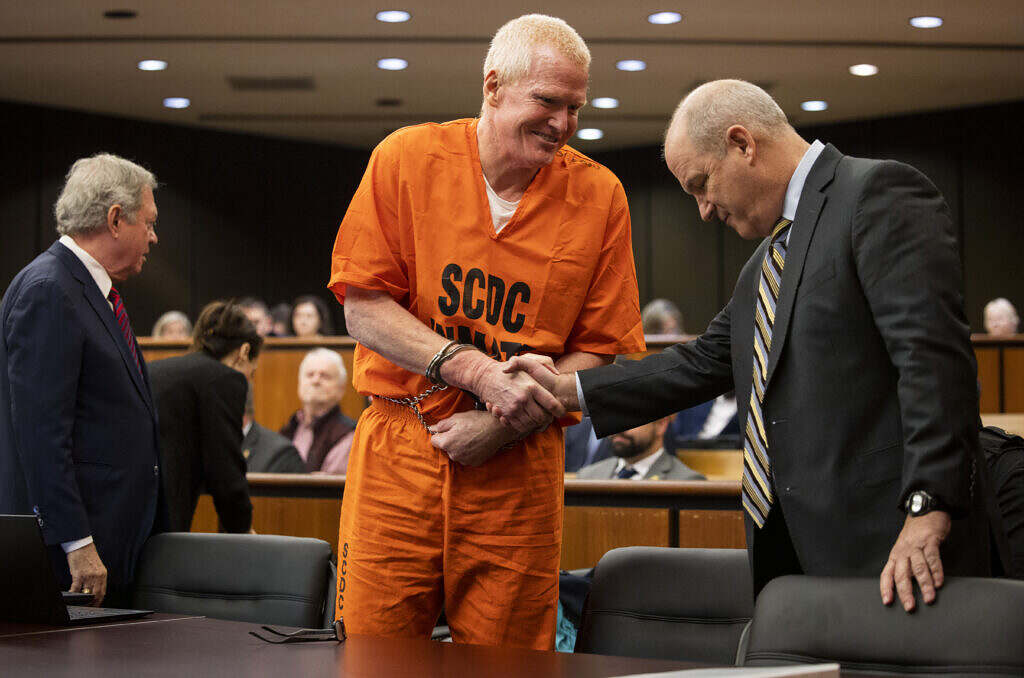
RELATED | MURDAUGH VERDICT REVERSAL
***
However, the justices did not categorically bar all financial evidence from the retrial. They directed the new trial court to determine the issue based on the circumstances and evidence presented this time.
Murdaugh’s attorneys now argue that his decision to testify was a direct response to the extensive financial evidence placed before the first jury. They relied heavily on Harrison v. United States, a 1968 U.S. Supreme Court decision which held that prior testimony induced by improperly admitted evidence cannot automatically be used against a defendant at a subsequent trial.
At the time Murdaugh elected to testify, his attorneys specifically placed on the record that the financial-crimes evidence influenced that decision.
According to Thursday’s filing, prosecutors now bear the burden of demonstrating Murdaugh would have testified even if that evidence had been excluded.
“From this clean slate the State would exempt exactly one artifact of the corrupted proceeding: Mr. Murdaugh’s own words,” the defense wrote.
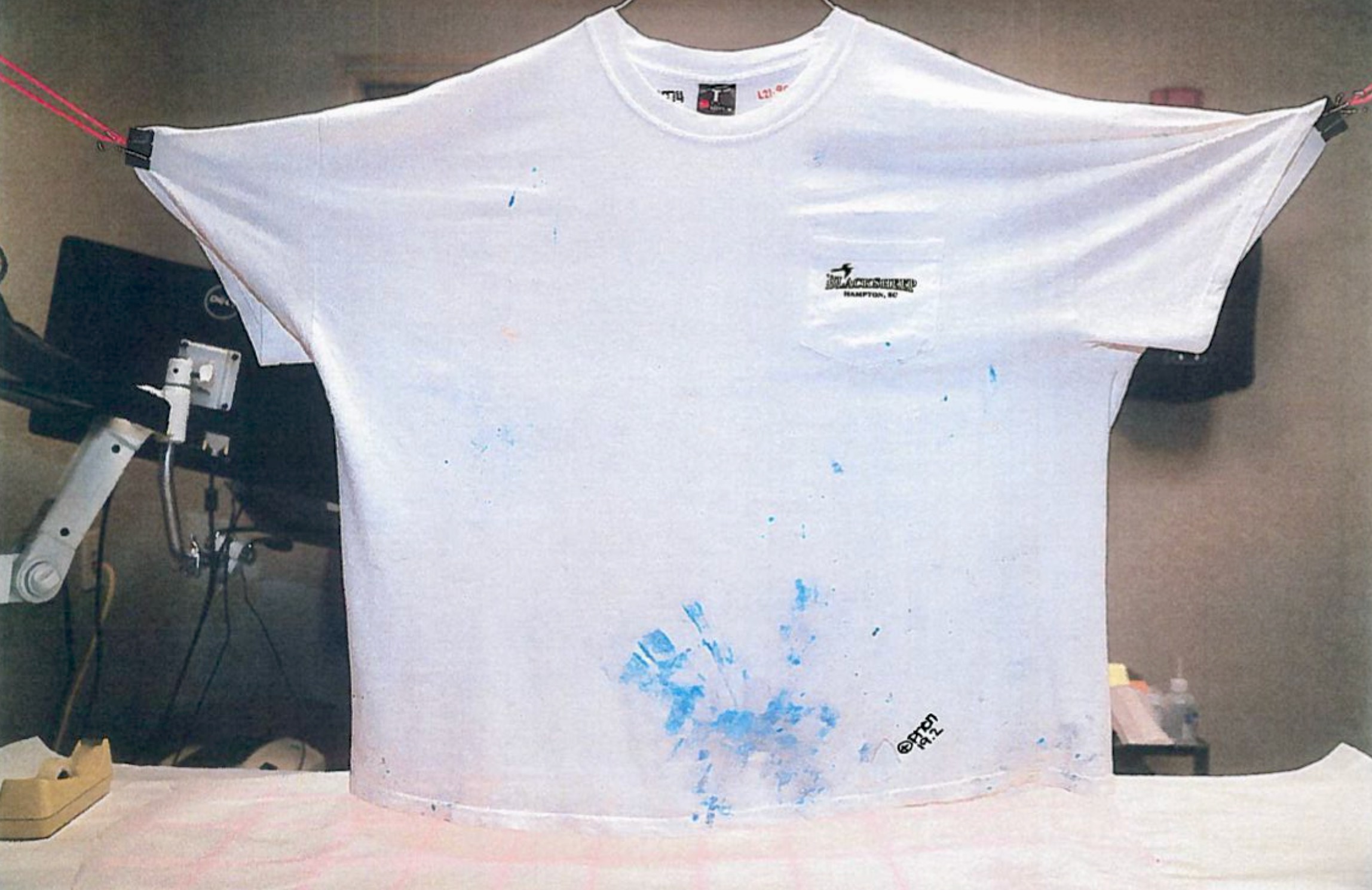
The filing also raised another potentially explosive question concerning the indictments under which prosecutors are seeking to try Murdaugh again. In July 2022, lead SLED investigator David Owen told the Colleton County grand jury that blood spatter had been identified on the white T-shirt Murdaugh wore on the night of the killings — and that DNA found in the purported spatter belonged to Murdaugh, Maggie and Paul.
By that point, however, confirmatory HemaTrace testing had detected no human blood on the shirt. A November 2021 SLED supplemental serology report likewise recorded “no human blood detected” for each cutting tested, according to the defense.
***
***
SLED nevertheless retained bloodstain-pattern consultant Tom Bevel to review the shirt. Bevel initially concluded the stains were consistent with transfers — not high-velocity impact spatter — and that he would expect “little to no spatter” on the shooter.
After discussions with SLED and the production of enhanced photographs, Bevel issued a revised opinion identifying more than 100 stains as consistent with spatter on the front of Murdaugh’s shirt.
The state ultimately presented no blood-spatter evidence at trial. Under cross-examination, Owen acknowledged that what he told the grand jury about the shirt was “not correct.” Prosecutors later emphasized during closing arguments that the blood evidence had been investigated but was not presented because “it didn’t turn out to be” what investigators initially believed.
Murdaugh’s attorneys now characterize Owen’s grand jury testimony as more than an investigative mistake. In a separate motion filed August 7, 2026, they accused the state of obtaining the indictments through false forensic evidence and asked the court to dismiss them.
The defense used that pending motion to challenge the State’s contention that Murdaugh’s prior testimony remains admissible because the retrial will proceed under the same indictments. If McCaslin were to dismiss those indictments and compel prosecutors to return to a grand jury for new true bills, Murdaugh’s attorneys argued the state’s own interpretation of South Carolina law could prevent it from using his former testimony during its case-in-chief.
The filing acknowledges that prosecutors could potentially replace the indictments by presenting the case to another grand jury without the disputed blood-spatter evidence. But the defense argues that possibility only exposes the weakness of making the admissibility of Murdaugh’s testimony depend on whether a retrial proceeds under the same indictment numbers.
Owen’s grand jury statements are likely to become a significant issue beyond this particular evidentiary dispute.
As FITSNews has previously reported, the former lead murder investigator has faced questions over investigative failures, grand jury statements and undisclosed evidence in another murder prosecution — issues that could place both Owen’s credibility and the integrity of SLED’s investigation under renewed scrutiny during Murdaugh’s retrial.
The defense also argued the state has not identified which portions of Murdaugh’s testimony it wants to introduce – or how those statements would relate to the evidence admitted during the retrial.
Murdaugh’s attorneys asked McCaslin to deny the request — or at minimum postpone a decision until prosecutors identified the specific testimony it intends to use and the court determines what financial-crimes evidence will be admissible.
***
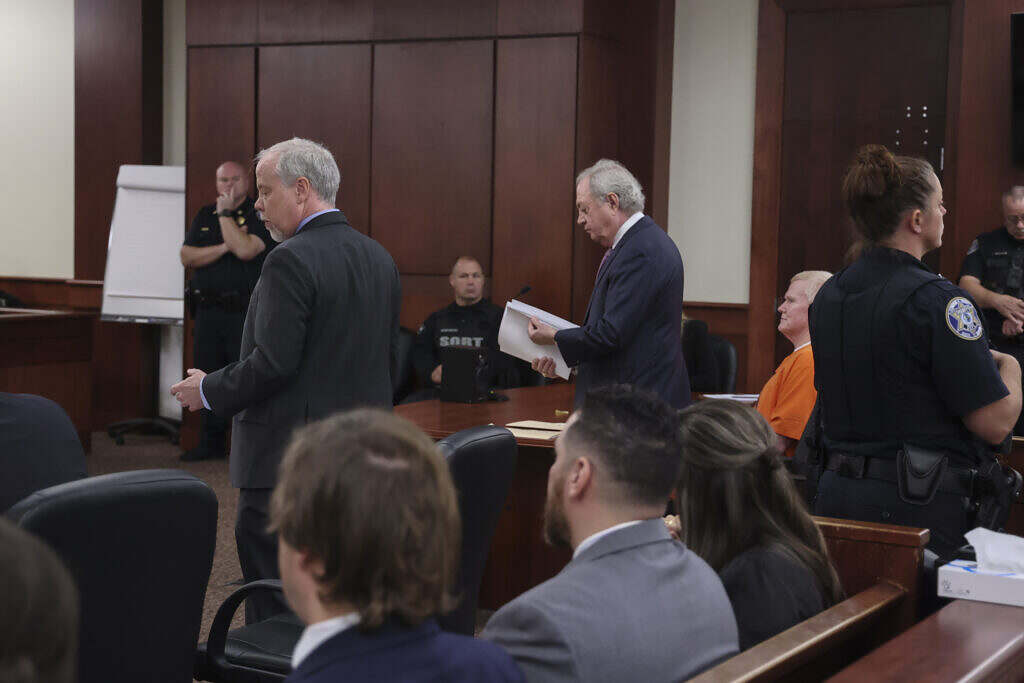
RELATED | State Seeks To Use Alex Murdaugh’s Prior Testimony
***
CELLPHONE EXTRACTION DISPUTE
The third filing (.pdf) concerned data extracted from Murdaugh’s cellphone before SLED seized the device in September 2021.
Prosecutors previously asked the court to compel the defense to provide an extraction performed by a defense-retained expert in August 2021. They said that extraction could contain data generated closer in time to the killings — before certain information was overwritten or lost.
Murdaugh’s attorneys contended the request was both technically misguided and legally unauthorized.
According to the defense, the expert performed a “logical extraction,” which captured user-accessible information such as text messages, call logs, photographs and videos. It did not capture deleted files, system databases or non-user-accessible information prosecutors say they are seeking.
“The motion asks for the one kind of extraction that cannot contain the one kind of data the motion seeks,” the defense wrote.
Investigators already performed their own logical extraction of Murdaugh’s phone three days after the killings, according to the filing. SLED later seized the device and performed a full file-system extraction in September 2021.
Prosecutors have also retained physical possession of the phone for approximately five years.
The defense argued the expert’s extraction constituted protected attorney-client work product because it was performed at counsel’s direction by an expert the defense had not designated as a trial witness.
Under South Carolina’s criminal discovery rules, Murdaugh’s attorneys contend they are not required to surrender internal defense materials unless they decide to introduce them at trial.
If the defense later elects to use the extraction, attorneys said they will comply with any resulting discovery obligation.
***
LIMITED AGREEMENT ON PRIVILEGE REVIEW
Murdaugh does not oppose the State’s separate request for a fresh review of potentially privileged material contained within its own cellphone data.
The defense agreed the review may be performed by a “taint team” separated from investigators and prosecutors — but requested safeguards preventing potentially privileged communications from reaching the prosecution prematurely.
Under the proposed procedure, the review team would identify communications it believes are not privileged and submit them to the court and defense. Murdaugh would then have an opportunity to object before the material is provided to anyone investigating or prosecuting the case.
The defense asked McCaslin to memorialize both the firewall and the pre-disclosure objection process in any order.
The latest filings provided an early glimpse of how different the second trial could look from the first.
The court must determine not only where a new jury will be selected, but how much of the State’s original case survives the supreme court’s ruling — and whether Murdaugh’s own words can follow him into a courtroom where he may choose not to speak again.
***
ABOUT THE AUTHOR …
As a private investigator turned journalist, Jenn Wood brings a unique skill set to FITSNews as its research director. Known for her meticulous sourcing and victim-centered approach, she helps shape the newsroom’s most complex investigative stories while producing the FITSFiles and Cheer Incorporated podcasts. Jenn lives in South Carolina with her family, where her work continues to spotlight truth, accountability, and justice.
***
SOUND OFF…
Got something you’d like to say in response to one of our articles? Or an issue you’d like to address proactively? We have an open microphone policy! Submit your letter to the editor (or guest column) via email HERE. Got a tip for a story? CLICK HERE. Got a technical question or a glitch to report? CLICK HERE.

2 comments
That Anne Emmerson on Criminally-Obsessed is probably criminally-deceptive in the people she dredges up and presents as experts against Richard Alexander Murdaugh’s (“RAM”) defense.
Here is what I just posted on her most recent episode:
Really?!? Temperature cannot be taken without disrupting the body, the victim’s clothes, and the crime scene?!? Really!?!
Where do you get these so-called experts from?
Has your expert never seen or heard of the thermometer that is just pointed at the forehead without even touching the skin? We all had one pointed at us at least once during the CoViD-19 era.
And post-mortem lividity when the possible span is less than two hours?1?1?
Does your so-called expert even know what “lividity” means and what causes it?
Lividity means “greenness” and it comes from the settled red blood cells breaking up and releasing their iron which is green.
That does NOT happen in the first two hours after death.
That so-called expert should go back to whatever school he graduated from, if he graduated from any school at all.
I throw at the arrogant lawyer and judges what the most quoted one of their ranks wrote: Judge Richard Posner of the U.S. Court of Appeals for the Seventh Circuit, with tens of books and hundreds of appellate opinions he authored, said it very succinctly: “I choose science” he wrote, meaning science over law.
Heck! You don’t even need the science of Botany to eliminate this big-production number about what Maggie’s phone would have done when thrown from a fast-driving car window.
You don’t need a debate about whether the guy who sat alone in his locked office the last weekend of the now-vacated first trial and threw HIS OWN PHONE around to find out how often it would light up is an expert or not.
All you need is a common-sense look at the photo of that phone when found on location.
There are still-rooted flimsy compete twigs ABOVE the phone. These twigs would have been broken and stayed UNDER the phone had the phone been thrown from above.
Maggie’s cell phone was placed BY HAND in that location.
Why?
Because a member of the shooting cabal which lay in wait for Alex to leave Moselle wrestled that phone from Maggie’s left hand (hence the DNA under her left, but not right, hand fingernails) to prevent her from calling for help. Once having secured that phone, that shooting-cabal member ran with the phone far enough for Maggie to reach it but near enough for that cabal member to return to Moselle on foot and help the rest of the cabal clean the scene up.
They say the scene tells the story. This is the story the scene of the found phone tells me.
Think about it.