
|
Getting your Trinity Audio player ready...
|
by JENN WOOD
***
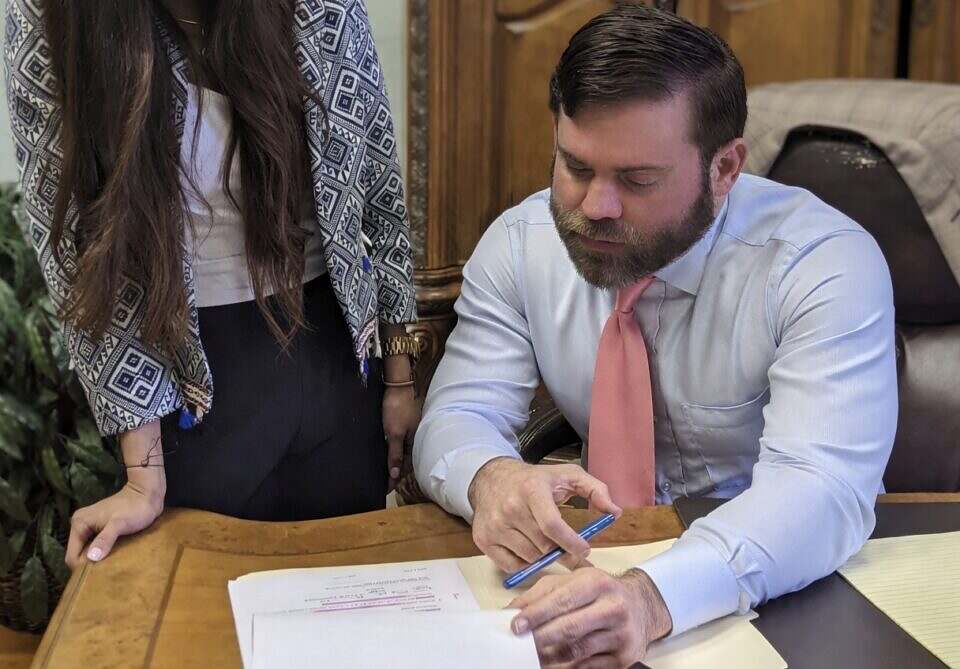
More than three years after the overdose death of prominent Charleston attorney David Aylor sent shockwaves across South Carolina’s legal community, the man who admitted distributing the fentanyl that killed him has now been sentenced to prison.
On Wednesday (May 28, 2026), U.S. district court judge Bruce Howe Hendricks sentenced Lowcountry legal investigator Levi Phillip Miles to five years in federal prison – followed by three years of supervised release – for his role in the 2023 death of Aylor.
There is no parole in the federal system.
Hendricks also imposed a $40,000 fine during the hearing in Charleston federal court.
Miles previously pleaded guilty to conspiracy to distribute fentanyl and oxycodone and to distribution of fentanyl after federal prosecutors formally concluded the pills he supplied caused Aylor’s fatal overdose.
As FITSNews exclusively reported last year, Miles’ plea agreement included a stipulation that his offense “resulted in the death” of the victim identified in court filings as “D.F.A.” — initials corresponding to David Aylor.
Wednesday’s hearing attracted numerous supporters for Miles — including former S.C. circuit court judge Bentley Price, one of Aylor’s longtime friends who was also present at Aylor’s residence the day his body was discovered in January 2023.
Price’s presence underscored the deeply personal and unusually intertwined relationships surrounding a case that has lingered over Charleston’s legal community for years.

***
A LENIENT DEAL?
Federal prosecutors previously argued (.pdf) Miles’ advisory sentencing guideline range was between 168 and 210 months — or roughly between fourteen (14) to 17.5 years in prison.
That calculation stemmed largely from Miles’ stipulation that the fentanyl distribution “resulted in the death” of Aylor. Prosecutors also emphasized that a forensic toxicologist concluded fentanyl was the “but for” cause of Aylor’s death.
Defense attorneys, however, sought either a noncustodial sentence or a substantial downward departure, portraying the case not as a traditional fentanyl trafficking operation but as a tragic, mutually destructive relationship between two men struggling with addiction, alcohol abuse and emotional dependency.
Their sentencing memorandum (.pdf) described Aylor and Miles as cousins, best friends and longtime employer-employee partners whose relationship became increasingly unhealthy in the months leading up to Aylor’s death.
The filing also included excerpts from text messages recovered from Aylor’s cellphone in which the attorney repeatedly requested pills from Miles using coded references like “smurf turds” and “turds.”
***

***
In one December 2022 exchange included in the filings, Aylor texted Miles: “Man you got any turds? I’m dying with this migraine.”
Moments later, according to prosecutors, Aylor added: “If I can’t get rid of this migraine I’m going 187 via suicide by cop.”
Defense attorneys argued Miles ultimately obtained pills specifically because Aylor had become increasingly desperate and persistent in requesting them.
They also emphasized Miles stopped abusing drugs and alcohol immediately after Aylor’s death and had maintained sobriety for more than three years prior to sentencing.
Dozens of letters submitted to the court (.pdf) described Miles as remorseful, rehabilitated and devastated by the loss of his cousin. One supporter wrote that “nobody at the funeral was more devastated than Levi.”
Another described the relationship between the two men as one driven by “loyalty and pressure” rather than greed or predatory intent.
***

RELATED | DEVELOPMENT IN DAVID AYLOR’S DEATH
***
FOLLOWING THE TRAIL OF FENTANYL
FITSNews first reported Aylor’s death on January 2, 2023 — and later broke the news that fentanyl was involved in the overdose.
This outlet also first revealed that federal investigators had seized Aylor’s cellphone and that the device had become a central piece of evidence in what evolved into a sprawling investigation led by the U.S. Drug Enforcement Administration (DEA).
As previously reported, investigators ultimately recovered more than one million messages and hundreds of thousands of images and videos from the phone. Federal prosecutors later stated that the review process — which involved special filtering procedures to protect attorney-client privilege — took months and required review by Department of Justice (DOJ) attorneys in Washington, D.C.
According to prosecutors, evidence recovered from the phone ultimately allowed investigators to identify Miles as the source of the fatal fentanyl pills.
Federal filings further revealed that Miles’ longtime source for legitimate prescription pills dried up during the summer of 2022 after a prescribing physician lost the ability to issue prescriptions. Prosecutors contend Miles then turned to counterfeit pills that unknowingly contained fentanyl.
Aylor was found dead inside his Charleston home on January 2, 2023. Toxicology testing later determined he died from mixed drug toxicity involving fentanyl, alcohol and benzodiazepines.
The case drew widespread attention not only because of Aylor’s prominence in South Carolina legal circles, but because of the unusual circumstances investigators documented at the scene — including unlabeled vials, syringes and a disabled security camera.
***
WHAT REMAINS UNRESOLVED
While Miles’ sentencing closes one major chapter in the federal case, lingering questions remain regarding the broader fentanyl supply chain tied to Aylor’s death.
As part of his plea agreement, Miles agreed to cooperate fully with federal investigators and provide information regarding other criminal activity connected to the distribution network.
Federal officials have never publicly identified the ultimate source of the fentanyl-laced pills. Nor have prosecutors indicated whether additional charges remain possible.
Still, Wednesday’s sentencing marked a significant milestone in one of the most closely watched overdose investigations Charleston has seen in years — one that exposed not only the deadly reach of fentanyl, but the deeply personal relationships entangled within its devastation.
***
ABOUT THE AUTHOR …
As a private investigator turned journalist, Jenn Wood brings a unique skill set to FITSNews as its research director. Known for her meticulous sourcing and victim-centered approach, she helps shape the newsroom’s most complex investigative stories while producing the FITSFiles and Cheer Incorporated podcasts. Jenn lives in South Carolina with her family, where her work continues to spotlight truth, accountability, and justice.
***
SOUND OFF…
Got something you’d like to say in response to one of our articles? Or an issue you’d like to address proactively? We have an open microphone policy! Submit your letter to the editor (or guest column) via email HERE. Got a tip for a story? CLICK HERE. Got a technical question or a glitch to report? CLICK HERE.

1 comment
Federal prosecutors tied Miles directly to the fentanyl overdose death of prominent Charleston attorney,
Prominent? Is that the word we are using?