
by JENN WOOD
***
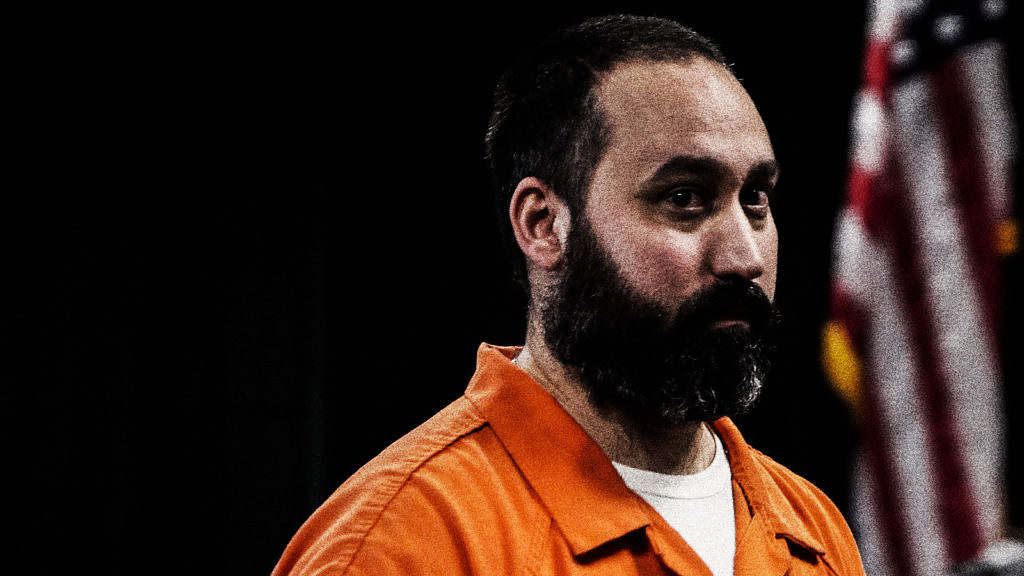
Days after accused killer Rosmore “Ross” Vilardi launched a sweeping challenge to the evidence assembled against him, South Carolina prosecutors have begun defining the boundaries they want imposed on his defense.
The S.C. Attorney General’s Office (SCAG) has filed three pretrial motions seeking to prevent Vilardi’s attorneys from discussing a prior civil settlement with the Anderson County Sheriff’s Office (ACSO), questioning earlier decisions not to prosecute him or suggesting another person committed the murders without first satisfying South Carolina’s legal standard for third-party guilt evidence.
The filings add another layer to a rapidly expanding pretrial battle ahead of Vilardi’s four-count murder trial, which is scheduled to begin October 13, 2026, in Anderson County.
Vilardi is accused of participating in the 2015 killings of his wife’s mother, 60-year-old Cathy Scott; her stepfather, 58-year-old Terry Michael “Mike” Scott; her grandmother, 82-year-old Violet Taylor; and her step-grandmother, 80-year-old Barbara Scott.
His wife and former co-defendant, Amy Vilardi, was convicted of all four murders in February and sentenced to four consecutive life terms.
Ross Vilardi will be tried separately before a new jury. Before that happens, though, S.C. circuit court judge Jane Merrill is scheduled to hear two days of pretrial arguments on July 27-28, 2026.
Vilardi’s attorney, Shaun Kent, has already asked Merrill to dismiss the prosecution owing to an eight-year delay between the murders and his arrest. The defense has also moved to exclude or suppress cellphone evidence, financial testimony, bloody footwear impressions, arrest warrants and expert analysis developed during a renewed investigation involving the television program Cold Justice.
Prosecutors’ newly filed motions do not directly answer every defense challenge. Instead, they seek to limit how Kent may present several themes that could become central to Vilardi’s case.

***
KEEPING THE CIVIL SETTLEMENT FROM THE JURY
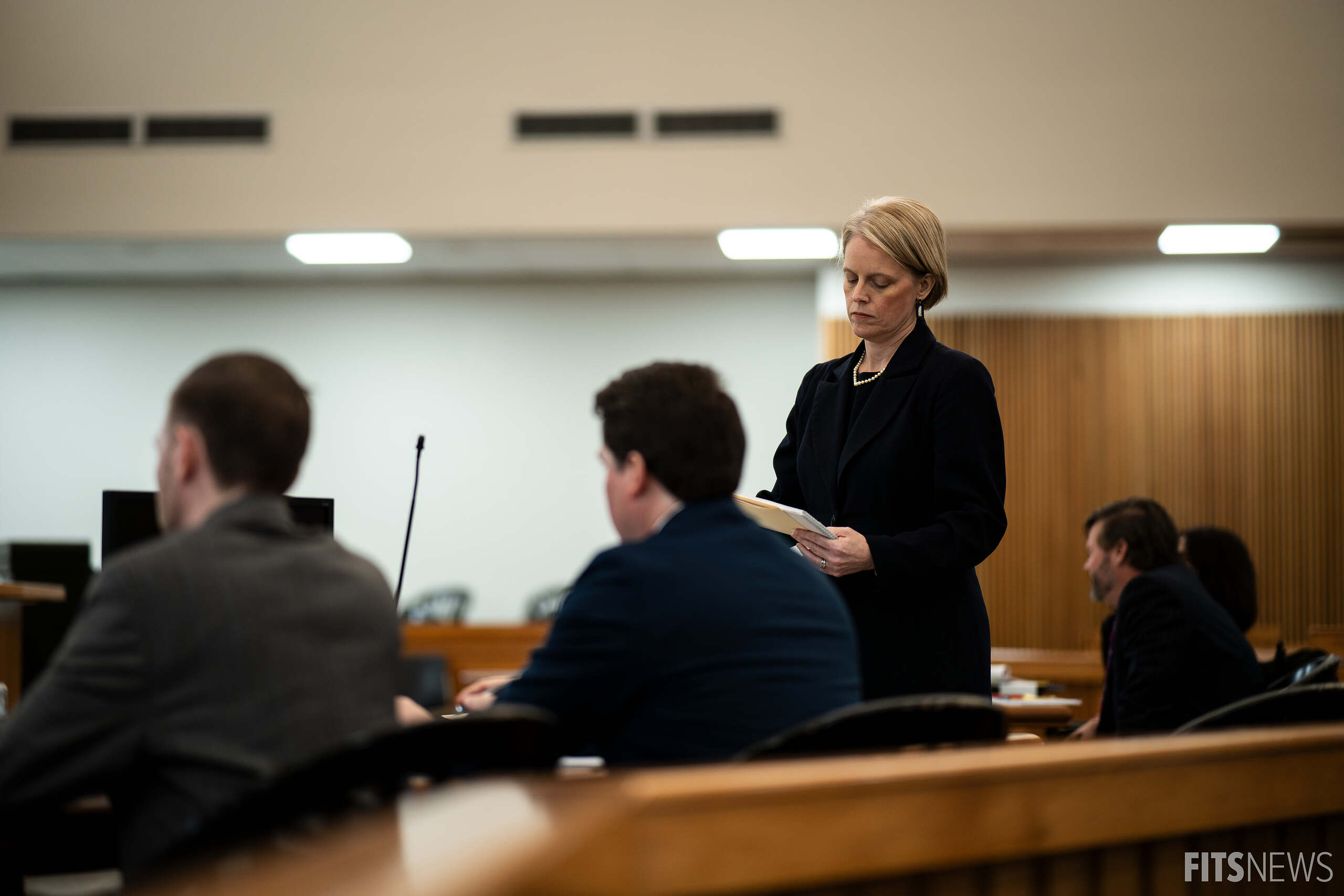
The most detailed of the state’s motions (.pdf) concerns a civil lawsuit Ross and Amy Vilardi filed against ACSO following the seizure of money, collectibles and vehicles from the Refuge Road property.
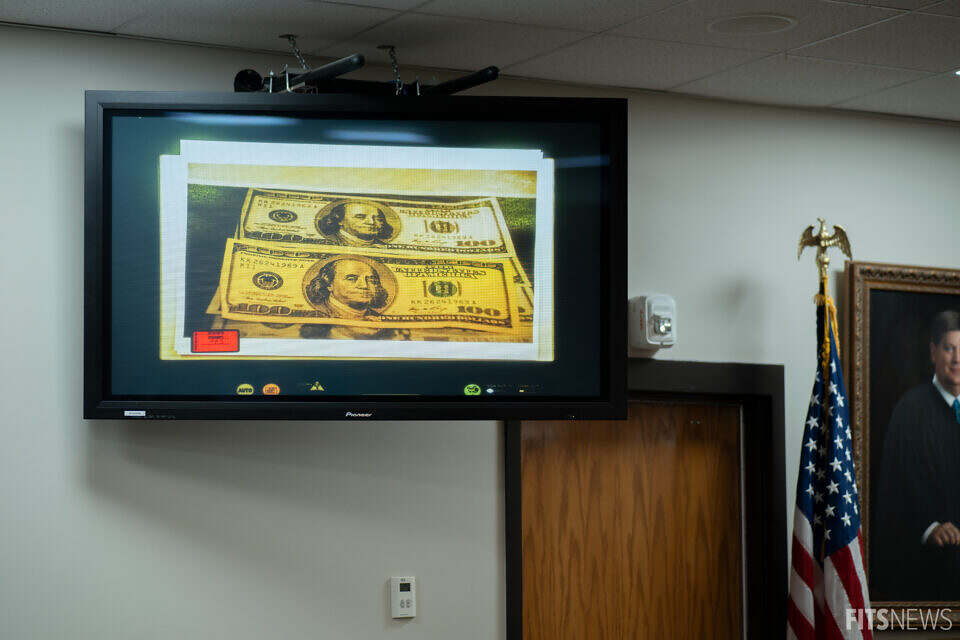
After the victims were discovered on November 2, 2015, investigators executed a search warrant and collected evidence from the property, including substantial amounts of cash.
A dispute later developed over who rightfully owned the money.
The Vilardis filed a civil action against ACSO in May 2016, and the litigation continued until the parties reached a settlement in December 2021. According to the state’s filing, the agreement required each side to pay its own legal expenses and expressly stated that neither party admitted liability.
Prosecutors now want Merrill to prevent the defense from mentioning the lawsuit or settlement during opening statements, witness examinations, arguments or closing statements unless the court first determines the evidence is admissible.
The request directly targets a significant component of Vilardi’s financial-evidence challenge.
In his earlier motion (.pdf), Kent argued that the civil settlement undermines the State’s attempt to portray money found in the Vilardis’ home as proceeds stolen from the victims. The settlement ultimately resulted in $34,890 being distributed to Ross and Amy Vilardi, with additional funds allocated to other relatives and trusts established for the couple’s children.
Kent contends that outcome weakens the prosecution’s financial motive theory.
***
***
Prosecutors contend the settlement proves no such thing.
Citing Rule 408 of the South Carolina Rules of Evidence, prosecutors maintain evidence of a compromise or settlement generally cannot be used to prove the validity or invalidity of a disputed claim. They argue Vilardi should not be permitted to use the settlement to establish that the seized cash properly belonged to him or to disprove allegations that money was taken from the victims.
Prosecutors further contend the settlement could confuse jurors into believing ACSO’s agreement to return money represented a determination that the cash was lawfully acquired.
Prosecutors cited federal cases recognizing that jurors may assign improper significance to settlement agreements — potentially treating the payment or return of money as an admission concerning disputed conduct.
Although the cited case involved prosecutors seeking to use a settlement against a defendant, prosecutors argued the same logic applies in reverse: Jurors could incorrectly assume law enforcement would not have returned money to a person suspected of murder unless authorities had determined the money was legitimately his.
Prosecutors also rely on Rule 403, which allows relevant evidence to be excluded when its probative value is substantially outweighed by the danger of unfair prejudice, confusion or misleading the jury.
The state is asking Merrill to conduct an in-camera review — outside the jury’s presence — before allowing any evidence relating to the civil case.
***
RELATED | Ross Vilardi Launches Sweeping Challenge to Evidence
***
PRIOR DECISIONS NOT TO PROSECUTE
A second motion (.pdf) seeks to prevent the defense from presenting testimony or argument concerning “prior prosecutorial decisions” made during the investigation.
Although Ross and Amy Vilardi were viewed as suspects shortly after the murders, neither was arrested until December 2023. They were indicted the following month — more than eight years after the four victims were killed.
That gap now forms the foundation of Ross Vilardi’s motion to dismiss (.pdf).
Kent argues the delay substantially prejudiced Vilardi’s ability to defend himself because witnesses have died, memories have deteriorated and certain evidence can no longer be meaningfully examined.
He also maintains the renewed investigation failed to uncover a decisive scientific breakthrough, confession or newly identified eyewitness. Instead, the defense characterizes the prosecution as a reinterpretation of evidence investigators possessed years earlier.
The State’s one-page motion asks Merrill to prevent Kent from questioning witnesses or arguing before jurors about earlier decisions not to bring charges or the information prosecutors relied upon when making those decisions.
Prosecutors contend such testimony would “invade the province of the jury” and create confusion under Rule 403.
The distinction could become significant.
Merrill may consider the history of the investigation, prosecutors’ reasons for delaying charges and any resulting prejudice when deciding Vilardi’s pre-indictment-delay motion. The State’s filing, however, suggests prosecutors do not want the eventual trial jury evaluating whether earlier investigators or prosecutors believed the case was strong enough to support charges.
If granted, the motion could prevent the defense from arguing that the absence of charges for eight years reflects weakness or uncertainty in the State’s evidence.
***
ALTERNATIVE SUSPECTS
The State’s third motion (.pdf) addresses evidence suggesting someone other than Vilardi committed the murders.
Prosecutors are asking Merrill to prevent the defense from mentioning any theory of third-party guilt unless the proposed evidence first satisfies the standard established in the 1941 South Carolina Supreme Court decision State v. Gregory.
Under that precedent, evidence implicating another person must be inconsistent with the defendant’s guilt and raise a reasonable inference of the defendant’s innocence. Mere suspicion is insufficient. Instead, the defense must present a chain of facts or circumstances that clearly points to another person as the guilty party.
The State wants that determination made outside the jury’s presence before Kent may raise an alternative suspect during opening statements, witness questioning, arguments or closing statements.
The filing does not identify a particular third party the defense is expected to implicate.
During Amy Vilardi’s trial, however, her attorneys repeatedly emphasized the lack of direct physical evidence placing her inside the victims’ home during the murders and questioned whether investigators had sufficiently examined other people connected to the victims and property.
Ross Vilardi’s defense may attempt to pursue similar avenues — particularly given the circumstantial nature of the State’s case.
The prosecution’s motion would not categorically prevent Vilardi from presenting evidence that someone else committed the crimes. It would require Kent to first show Merrill that the evidence amounts to more than conjecture or an unsupported suggestion.
Prosecutors have asked the court to review any proposed third-party guilt evidence in camera before determining whether jurors may hear it.
***
RELATED | Amy Vilardi Murder Trial: Cash, Cell Phones And Family Tensions
***
COMPETING NARRATIVES
Taken together, the latest motions reveal the competing narratives the parties are preparing to present in October.
The defense wants jurors to hear that investigators seized money later returned through a civil settlement, that prosecutors declined to bring charges for more than eight years and that the State may have failed to adequately pursue other possible suspects.
Prosecutors want the jury focused on the evidence admitted in the murder trial — not civil litigation, institutional charging decisions or speculative alternatives unsupported by a concrete evidentiary link.
The legal questions are narrower than the narratives surrounding them.
Merrill must decide whether the civil settlement has a legitimate evidentiary purpose beyond proving ownership of the disputed cash, whether prior prosecutorial decisions are relevant to any issue the jury must decide and whether any evidence implicating a third party meets South Carolina’s threshold for admissibility.
Those decisions will be made alongside the defense’s much broader challenges to the prosecution.
Kent is seeking dismissal of the case based on pre-indictment delay and suppression of the arrest warrants and cellphone evidence. He also wants the court to exclude or restrict testimony involving the bloody footwear impressions, digital forensic examiner Eric Devlin, forensic accountant Charles Schulze and evidence portraying the Vilardis as financially distressed.
For prosecutors, the financial evidence, electronic communications and footwear impressions form important components of the circumstantial case.
For the defense, the prior civil litigation, lengthy charging delay and possibility of investigative alternatives could provide jurors with a different framework through which to evaluate that evidence. Merrill’s rulings will determine how much of either narrative reaches the jury.
***
ABOUT THE AUTHOR …
As a private investigator turned journalist, Jenn Wood brings a unique skill set to FITSNews as its research director. Known for her meticulous sourcing and victim-centered approach, she helps shape the newsroom’s most complex investigative stories while producing the FITSFiles and Cheer Incorporated podcasts. Jenn lives in South Carolina with her family, where her work continues to spotlight truth, accountability, and justice.
***
SOUND OFF…
Got something you’d like to say in response to one of our articles? Or an issue you’d like to address proactively? We have an open microphone policy! Submit your letter to the editor (or guest column) via email HERE. Got a tip for a story? CLICK HERE. Got a technical question or a glitch to report? CLICK HERE.
