

by JENN WOOD
***
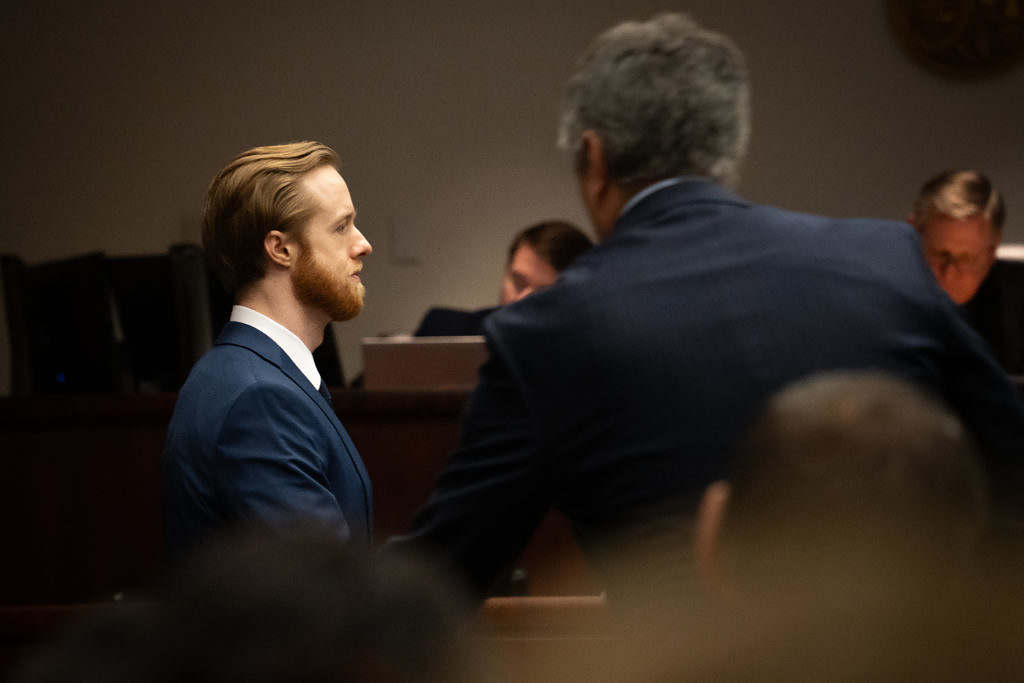
South Carolina prosecutors are pushing back against convicted killer Zachary David Hughes‘ latest effort to secure a new trial in the ‘Rose Petal Murder’ case – a graphic, high-profile slaying that took place five years ago inside a suburban home in Greer, S.C.
According to the state, even if it were conclusively established that victim Christina Parcell sexually abused her young daughter – which Hughes says motivated him to murder her – it would not have provided him with a legal justification for the crime.
In a motion (.pdf) clocked by the Greenville County clerk of court last Wednesday (October 28, 2026), prosecutors urged the court to dismiss the defense’s request – rejecting claims that prosecutors concealed critical evidence and misled the court about its significance.
The motion – filed one week after Hughes’ attorneys formally requested a new trial – represents the prosecution’s most direct response yet to allegations surrounding their mishandling of sexually explicit images involving Parcell and her daughter prior to Hughes’ February 2025 murder trial.
“Any evidence, new or old, showing that (Parcell) sexually abused her minor child was not relevant to any possible legal defense then, is not relevant now, and will not be in the context of a new trial,” prosecutors wrote.
The state’s filing came one week after Hughes’ attorneys formally moved for a new trial, alleging prosecutors engaged in a “win-at-all-cost” effort to exclude exculpatory evidence, deliberately mislead the court and silence defense counsel from publicly discussing the material.
At the center of the increasingly contentious dispute is a question that has followed this case for years: What did prosecutors know about the child exploitation evidence involving the victim, when did they know it — and did their representations to the court about the sensitive material prevent Hughes from presenting a legitimate defense?

***
A CASE THAT CONTINUES UNRAVELING…
Christina Parcell, a 41-year-old veterinary technician, was found brutally slain shortly after 11:00 a.m. on October 13, 2021 in the front living room of a suburban home owned by her sister, Lutina Parcell, in the Canebrake neighborhood of Greer, S.C. Christina Parcell’s fiancé, Bradly Post, told authorities he discovered her body after multiple calls to her phone that morning went unanswered.
The Greenville County coroner ruled Parcell’s death a homicide caused by multiple sharp force injuries — dozens of stab wounds concentrated in the head and neck area. Several of those wounds perforated vital blood vessels, causing massive bleeding and rapid death.
The crime scene itself quickly became central to the case’s notoriety. As FITSNews reported, the killer dragged and posed Parcell’s body in the living room and scattered rose petals — or deadheaded roses — around her after the attack. Prosecutors later characterized the scene as staged and ritualistic, emphasizing its brutality as evidence of malice.
Hughes, a Juilliard-educated concert pianist with no publicly known connection to Parcell at the time of his arrest, was taken into custody on November 3, 2021. At trial, prosecutors relied on surveillance imagery, forensic evidence and Hughes’ own movements to place him at the scene — ultimately framing the killing as a deliberate execution.
But the case was never confined to Hughes and Parcell alone…
Running parallel to the murder investigation was a bitter custody dispute involving Parcell and her former boyfriend, John Mello, a Greenville music producer and the father of Parcell’s young daughter. Prosecutors alleged Hughes and Mello were close friends who communicated extensively via the encrypted messaging app WhatsApp in the weeks leading up to the killing — a relationship that later became a flashpoint in the trial and ultimately led to criminal charges against Mello.
***

***
Hughes never disputed killing Parcell. Instead, he maintained he believed her daughter was being sexually abused and that he acted in an effort to protect the child.
The homicide investigation subsequently uncovered evidence leading to child sexual abuse material (CSAM) charges against Bradly Post, Parcell’s fiancé and one of the State’s key witnesses against Hughes.
Throughout Hughes’ prosecution, his attorneys argued evidence recovered from Post’s electronic devices was critical to explaining their client’s actions. Prosecutors fought to exclude much of that evidence, arguing allegations concerning Parcell’s involvement were unsupported, speculative and irrelevant to the murder charge. S.C. circuit court judge Patrick C. Fant III ultimately prevented much of the disputed evidence from ever reaching the jury. Hughes was convicted in February 2025 and sentenced to life in prison.
Then, thirteen months later, Post pleaded guilty. During Post’s March 2026 plea hearing, assistant attorney general Camille Guthrie told the court investigators had recovered hundreds of images and videos depicting Parcell and her daughter nude or in lingerie.
“In many of these videos,” Guthrie said, “it is clear that Mrs. Parcell is setting up a video camera to film herself and her daughter doing nude exercises and posing.”
Post agreed under oath that prosecutors’ factual summary was “substantially true and correct.” Those statements prompted Hughes’ attorneys to argue prosecutors had fundamentally changed their position after securing his murder conviction.
As FITSNews previously reported, the defense contended there were two possible explanations: either prosecutors discovered evidence after Hughes’ trial that corroborated his defense, or they already possessed the evidence and misrepresented its existence or significance while seeking to exclude it.
On July 21, 2026, the South Carolina Court of Appeals granted Hughes’ request to suspend his appeal and return the case to circuit court for consideration of a motion for a new trial based on after-discovered evidence.
***
RELATED | Former Prosecutor’s Account Fuels New Trial Bid
***
‘NO NEW INVESTIGATIVE MATERIAL’
In their latest filing, prosecutors disputed the fundamental premise of Hughes’ request for a new trial – contending the images and videos at the center of the controversy are the same materials recovered from Post’s electronic devices during the original investigation (materials Hughes’ attorneys accessed multiple times before trial).
They also maintained the same evidence was subsequently used to prosecute Post.
“There is no new investigative material,” prosecutors argued.
Prosecutors further contended that statements made during Post’s guilty plea do not constitute after-discovered evidence simply because prosecutors characterized the material differently during that proceeding. According to the filing, a prosecutor’s assessment of evidence when making charging decisions or negotiating a plea agreement does not amount to a new factual discovery. Prosecutors further disputed the defense’s contention that their position concerning Parcell had fundamentally changed.
While acknowledging Parcell appeared in exploitation material involving her daughter, prosecutors argued there was no way to determine whether she willingly participated in its production or acted under coercion, particularly because her death prevented investigators from questioning her about the images.
***

***
Post, meanwhile, had invoked his Fifth Amendment right against self-incrimination while his criminal charges remained pending. Prosecutors maintained those circumstances prevented prosecutors from proving or disproving Parcell’s alleged criminal involvement.
“Defendant reads too much into the statements made at Post’s guilty plea,” prosecutors wrote.
Rather than representing a binding determination concerning Parcell’s conduct, prosecutors argued Guthrie’s statements reflected prosecutorial discretion and an assessment of the evidence for purposes of resolving Post’s case.
The distinction is significant.
Hughes’ attorneys contend the State’s March 2026 presentation contradicted its earlier representations to the court. Prosecutors now argue that acknowledging the existence of images involving Parcell is not equivalent to establishing her criminal responsibility for producing them.
***
EVEN IF THE ALLEGATIONS WERE TRUE…
Prosecutors’ second argument went beyond whether the evidence was newly discovered – noting that even if Hughes could establish Parcell sexually abused her daughter, the evidence would not have provided a legally recognized defense to her murder.
Hughes maintained he killed Parcell to protect the child from ongoing abuse. But prosecutors emphasized that Parcell’s daughter was at school when Hughes entered her home and stabbed her to death.
According to their response, that circumstance defeated Hughes’ claim that he was acting in defense of another person facing an imminent threat of death or serious bodily injury.
The filing cited South Carolina case law establishing that defense of others, like self-defense, requires a legally sufficient showing of necessity and imminent danger. Prosecutors also pointed to evidence of Hughes’ planning, his actions during the killing and his subsequent attempts to conceal his involvement. They argued those circumstances are incompatible with a lawful claim of defense of others.
“Even if (Parcell) was a sexual abuser, (Hughes) was not legally entitled to be her judge, jury, and executioner,” prosecutors wrote.
The State further maintained that evidence involving Parcell and Post would not negate the malice element of murder or otherwise establish Hughes’ innocence. At most, prosecutors argued, the material could have been used to challenge Post’s credibility — a purpose they contend would have been limited because of his relatively minor role in the State’s overall case.
That argument is particularly important because South Carolina law does not permit a new trial based on after-discovered evidence that is merely cumulative or useful only for impeachment.
***

RELATED | ‘Rose Petal Murder:’ Appeal Takes Aim at Prosecutors
***
THE DEFENSE’S ALLEGATIONS
The State’s motion followed a series of developments in Hughes’ appeal that have increasingly focused on the conduct of the prosecution itself.
As FITSNews reported in August, Hughes’ attorneys retained a former federal special agent and began interviewing prosecutors and investigators to determine what information was available before trial.
One assistant solicitor who participated in Hughes’ prosecution reportedly acknowledged that he and his co-counsel viewed images depicting Parcell and her daughter nude as early as August or September 2024 — months before Hughes’ trial. That prosecutor reportedly maintained the State’s characterization of the defense’s allegations was justified because the full context of the images could not be established without questioning Parcell.
More recently, Hughes’ attorneys disclosed an interview with a former assistant solicitor who prosecuted John Mello in a separate case involving the custody dispute over Parcell’s daughter.
According to the defense, that former prosecutor personally reviewed images and videos recovered from Post’s devices in March 2024 and subsequently shared his findings with the Thirteenth Circuit Solicitor.
The former prosecutor reportedly told Hughes’ defense team that the material changed his opinion of Parcell and that he believed the State’s subsequent representations concerning her alleged involvement were untrue.
He also reportedly facilitated the uploading of sanitized images to the Solicitor’s Office’s discovery system, making the material accessible to members of Hughes’ prosecution team.
Those assertions have not been independently established through testimony presented in the remand proceedings.
Nevertheless, they form part of the defense’s broader argument that prosecutors possessed information contradicting their representations to the trial court.
On October 21, Hughes’ attorneys formally moved for a new trial, alleging the State engaged in a “win-at-all-cost” effort to exclude exculpatory evidence, deliberately misled the court and attempted to silence defense counsel from publicly discussing the material.
The State’s latest filing rejects the defense’s entitlement to a new trial but focuses primarily on whether the evidence qualifies as after-discovered and whether it could have affected the verdict.
The specific allegations concerning individual prosecutors’ knowledge and representations remain disputed.
***
THE LEGAL HURDLE
Under South Carolina law, Hughes must satisfy a five-part test established in State v. Spann to obtain a new trial based on after-discovered evidence.
He must demonstrate that the evidence was discovered after trial, could not have been discovered earlier through reasonable diligence, is material, is not merely cumulative or impeachment evidence and would probably change the result if a new trial were granted.
Prosecutors contend Hughes cannot satisfy any of those requirements.
Their position is that the evidence was already available before trial, that the State’s later statements do not transform it into new evidence and that the underlying allegations would not have supported a legally viable defense even if presented to the jury.
The defense, however, has framed its request as involving more than the images themselves.
Hughes’ attorneys contend the State’s alleged concealment and misrepresentations raise independent questions about the fairness of the proceedings and whether their client received the due process protections guaranteed by law.
That distinction could become central to the court’s consideration of the motion.
A finding that evidence does not satisfy the requirements for an after-discovered-evidence claim would not, by itself, resolve every conceivable constitutional allegation. Whether those allegations have been properly raised and can support relief in these proceedings remains a separate legal question.
The State has requested that the court summarily dismiss Hughes’ new-trial motion and schedule expedited oral argument.
No ruling on that request is reflected in the filing.
***
WHAT HAPPENS NEXT?
The latest motion places two competing interpretations of the same evidence squarely before the court.
Hughes’ attorneys maintain that information uncovered during their post-conviction investigation demonstrates prosecutors misrepresented evidence that could have been critical to their client’s defense.
The State maintains the underlying evidence was available all along, its position has not materially changed and none of the disputed material could have justified Hughes’ actions under South Carolina law.
Those arguments are not interchangeable.
One concerns whether prosecutors possessed and accurately represented potentially exculpatory evidence.
The other concerns whether that evidence, even if admitted, could have changed the outcome of Hughes’ trial.
For now, Hughes’ conviction remains intact, and his direct appeal remains on hold while the trial court considers his request for a new trial.
But the ongoing litigation has shifted the focus of the case beyond what happened inside Christina Parcell’s home on October 13, 2021. It now includes a separate dispute over what happened inside the prosecution — and whether the State’s handling of the evidence compromised the fairness of the proceedings that followed.
***
THE MOTION TO DISMISS…
Subscriber-only document
This PDF is available to FITSNews subscribers. Get full access and be able to view documents like this one.
Subscribe for accessAlready a subscriber? Log in here
***
ABOUT THE AUTHOR …
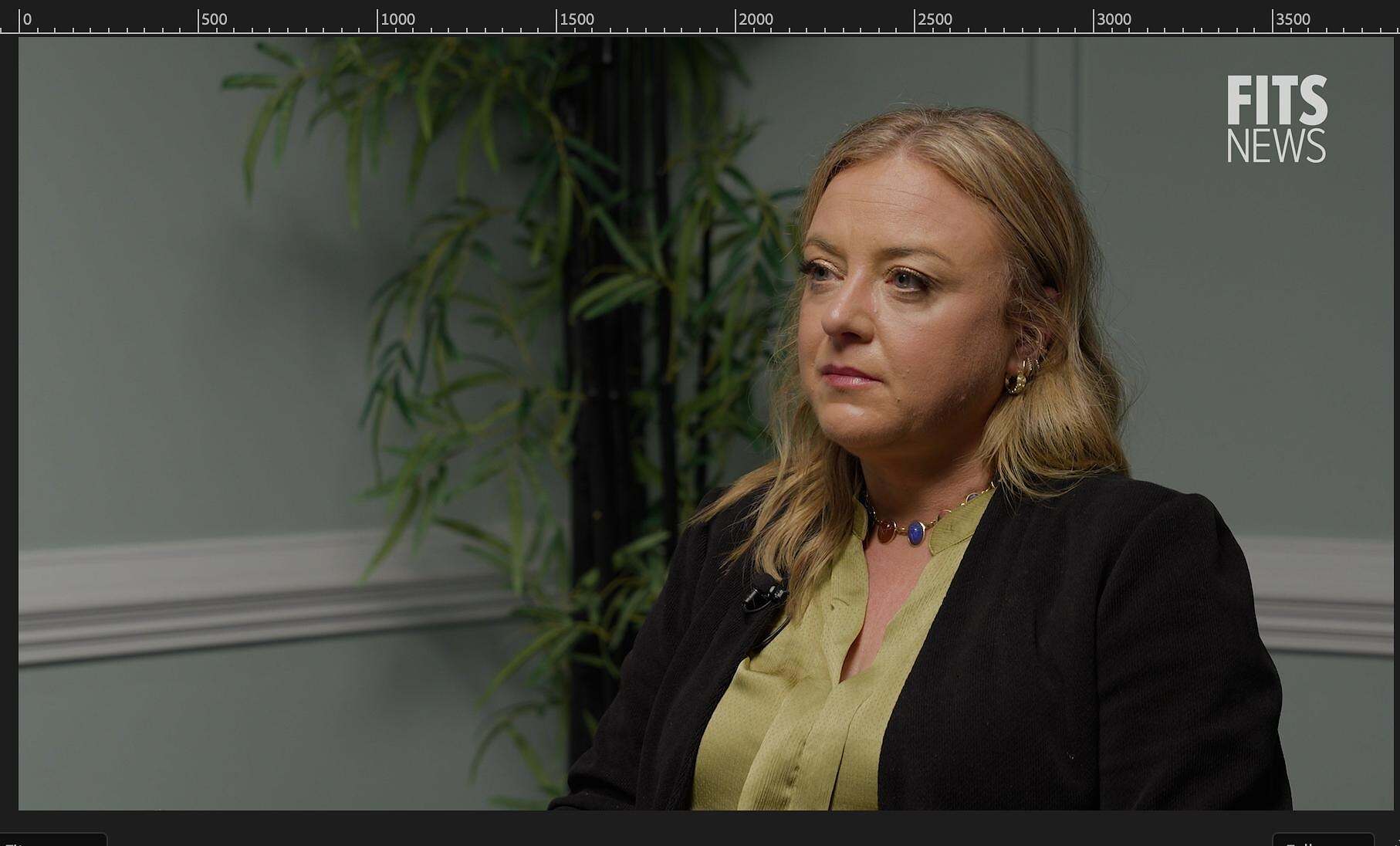
As a private investigator turned journalist, Jenn Wood brings a unique skill set to FITSNews as its research director. Known for her meticulous sourcing and victim-centered approach, she helps shape the newsroom’s most complex investigative stories while producing the FITSFiles and Cheer Incorporated podcasts. Jenn lives in South Carolina with her family, where her work continues to spotlight truth, accountability, and justice.
***
SOUND OFF…
Got something you’d like to say in response to one of our articles? Or an issue you’d like to address proactively? We have an open microphone policy! Submit your letter to the editor (or guest column) via email HERE. Got a tip for a story? CLICK HERE. Got a technical question or a glitch to report? CLICK HERE.
