

by JENN WOOD
***
Alex Murdaugh’s attorneys pushed back hard on Friday (October 9, 2026) against prosecutors’ responses to their recent evidence demands, arguing grand jury secrecy cannot shield earlier criminal investigative records.
They also said prosecutors’ promises to provide other material needed to be fulfilled…
In four replies (.pdf) submitted a day after prosecutors in the office of attorney general Alan Wilson made their latest arguments, Murdaugh’s attorneys asked S.C. circuit court judge Debra McCaslin to privately review grand jury testimony concerning the alleged disposal of the missing murder weapons. Attorneys also sought permission to proceed with additional DNA testing, independent microscopic comparisons of cartridge cases and firm deadlines for production of laboratory records and original crime-scene scans.
As FITSNews reported Thursday, prosecutors agreed to provide some of the requested evidence but opposed other demands — disputes the defense’s latest filings brought into sharper focus ahead of a scheduled hearing next Friday (October 16, 2026).
Their central message: prosecutors’ agreements resolve only part of the defense’s requests, while its objections leave significant questions for the judge.
To recap: Murdaugh was convicted of the murders of his wife, 52-year-old Maggie Murdaugh, and younger son, 22-year-old Paul Murdaugh, and sentenced to life in prison following a six-week trial in Walterboro, S.C. in early 2023. Those convictions were reversed in May of this year, however, after the S.C. supreme court found numerous issues with the conduct of the trial – including allegations of jury tampering and potential jury rigging.
Jury selection for the retrial is scheduled to begin April 5, 2027, in Sumter County.

***
MISSING WEAPONS: SECRECY UNDER SCRUTINY
The most consequential reply concerned information the defense says reached the S.C. Law Enforcement Division (SLED) in 2023 about the alleged removal of weapons and clothing from the Islandton, S.C. family property – known locally as ‘Moselle’ – where the murders were committed
As FITSNews first reported on September 25, 2026 a state grand jury was reportedly examining an alleged crime-scene coverup involving the missing murder weapons. Neither gun used to kill Maggie and Paul has been recovered.
In Thursday’s response, prosecutors declined to confirm or deny the existence or contents of a state grand jury investigation. Much of their filing instead recounted testimony documenting Murdaugh’s friendship with Yemassee police chief Greg Alexander.
Friday’s defense reply challenged both the secrecy argument and the relevance of that emphasis.
“A statement given to SLED agents in 2023” is distinct from evidence received by a state grand jury, attorneys argued, adding that a later decision to investigate the subject through that process “does not retroactively seal SLED’s investigative file.”
The defense said prosecutors had not denied receiving an account in 2023 that a police chief spoke of arriving early at Moselle and providing Murdaugh with a change of clothes, or that weapons and clothing were taken to a police station. It also argued that the response did not deny the lead case agent knew of the account.
***

RELATED | RETRACING GREG ALEXANDER’S ROAD TO MOSELLE
***
According to Murdaugh’s lawyers, evidence of someone else removing the weapons could be favorable to Murdaugh – even if that person was his friend. Prosecutors argued at trial that Murdaugh transported the weapons to his parents’ home in nearby Almeda, S.C. – a location investigators failed to search until several months after the murders.
“Evidence that the weapons left the scene in someone else’s hands contradicts the theory the state tried — that Mr. Murdaugh alone carried them to Almeda,” attorneys wrote.
Such an account would not, by itself, establish who committed the murders. But the defense contends it could challenge the prosecution’s explanation of what happened afterward and provide material for questioning witnesses.
Attorneys also renewed their demand to know whether prosecutors intend to present a different account of the crime at the retrial – one potentially involving other participants.
“If the point is instead that the state intends to try a different theory in April, one in which others participated, then the defense is entitled to know that, too,” Murdaugh’s attorneys argued.
***

***
The defense directly challenged prosecutors’ assurance that it would comply with its disclosure obligations “if and when those obligations are triggered.”
According to the reply, those obligations arose when SLED received the statement — rather than when prosecutors later pursued the subject through a grand jury.
The defense proposed separate treatment for the two categories of records it seeks.
For the underlying SLED investigative materials, attorneys requested an immediate response to their disclosure demands. For grand jury testimony, they asked McCaslin to review the transcripts in camera – or in her chambers privately – before deciding what must be turned over.
The reply cited the secrecy statute’s provision permitting court-directed disclosure to comply with constitutional and other legal requirements or to further justice. It also cited a S.C. supreme court decision in support of judicial review when prosecutors resist disclosure.
That approach would allow the judge to examine the testimony herself rather than rely solely on either side’s description of it.
***
RELATED | Murdaugh Retrial: Secrecy, Science And A Flood Of Filings
***
DNA: THE DEFENSE IDENTIFIES ITS TEST
The DNA reply supplied a more specific testing proposal while asking McCaslin to resolve the dispute over evidence that could be exhausted during analysis.
The defense said Othram would perform Y-chromosome STR analysis on material from Maggie Murdaugh’s fingernails and, if transferred, material collected from her cellphone. The testing could be performed through Othram’s wholly owned subsidiary, Sorenson Forensics, which the defense described as fully accredited for the procedure.
The proposed analysis targets male DNA in samples containing a known female contributor.
The State had sought more information about the testing process and an opportunity to object before the remaining material was consumed. Friday’s reply argued that the parties had already exchanged their positions and that the issue was ready for a decision at the October 16, 2026 hearing.
Attorneys also disputed the practicality of preserving a portion for additional State testing.
“A sample at this concentration cannot be divided and still yield a result; dividing it guarantees that neither laboratory obtains one,” they asserted.
The defense also requested transfer of the remaining cellphone swabs and extract under a documented chain of custody, arguing that moving the material to another laboratory would not itself consume it. Prosecutors have confirmed that the phone material remains preserved but have not unconditionally agreed to its transfer.
On the analytical records prosecutors agreed to provide, the defense asked for a firm deadline and clarification that production would include the underlying native data.
***
BALLISTICS: NO LEAD, NO EXCLUSION?
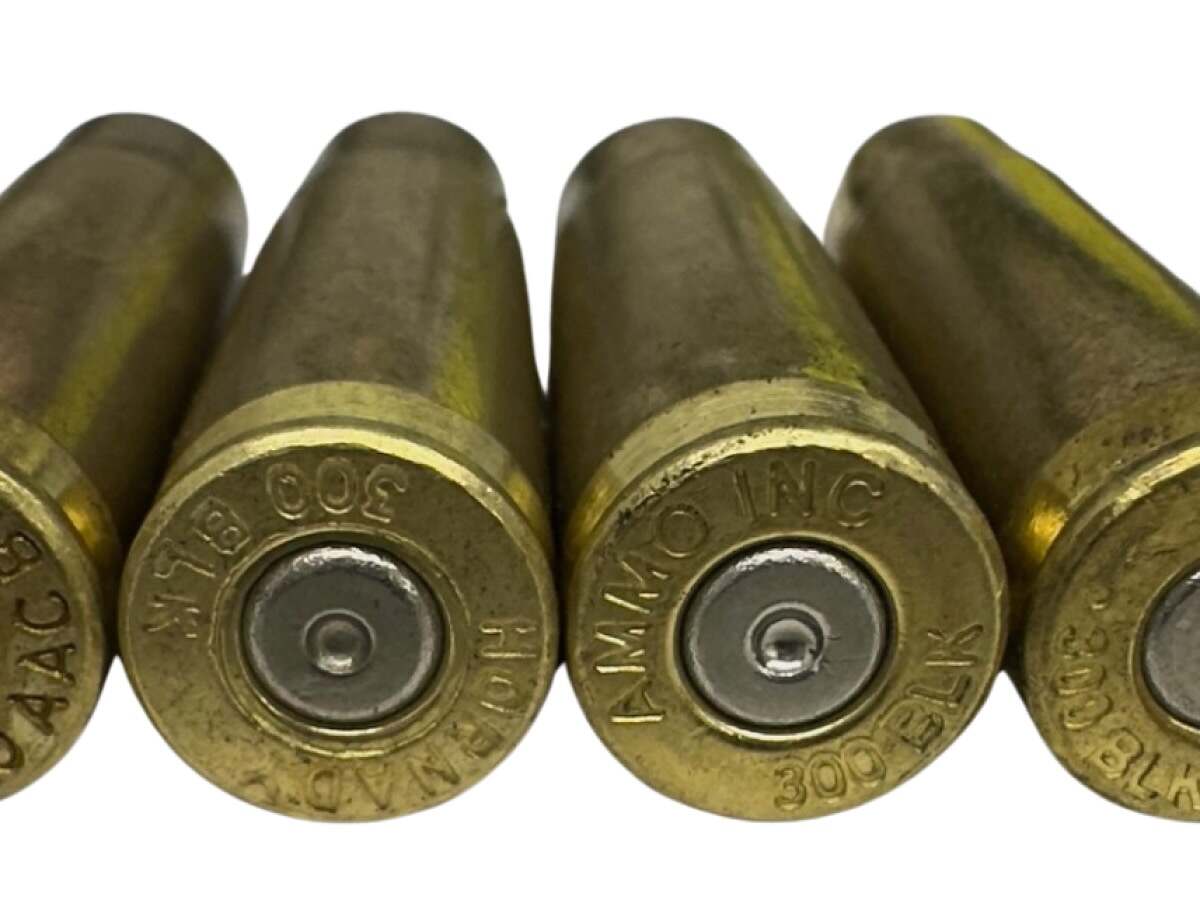
The ballistics reply challenged prosecutors’ contention that the National Integrated Ballistic Information Network (NIBIN) had already “mathematically ruled out a correlation” between the Moselle cartridge cases and evidence from two Allendale cases.
The defense seeks microscopic comparisons involving the April 25, 2026 killing of Frank Alexander Brown III and several shootings that took place on April 27, 2024.
Prosecutors opposed those comparisons, arguing that caliber and geographic proximity did not establish a sufficient connection and that the database searches produced no investigative leads linking the cases.
Friday’s reply drew a distinction between the absence of a database lead and an examiner’s exclusion following a microscopic comparison.
“It is not an examiner’s exclusion,” attorneys wrote, adding prosecutors had not represented that an examiner compared the Moselle and Allendale cartridge cases under a microscope.
***
***
The defense proposed an examination by its own firearms expert at SLED’s laboratory, under a protective order and conditions imposed by the court.
It also sought the records underlying the database results, arguing that the entry log attached to the State’s response showed what was submitted rather than what the comparisons returned.
The reply renewed a separate challenge to the first trial’s portrayal of .300 Blackout weapons as uncommon. Attorneys pointed to prosecutors’ figures showing 123 NIBIN entries across 2021 and 2022 and argued that the underlying records could inform cross-examination at the retrial.
As FITSNews noted Thursday, those figures represent database submissions — not counts of murders or unique firearms.
Even a confirmed connection to a later shooting would not necessarily exclude Murdaugh’s use of a weapon in June 2021. The defense argued that the significance of such a connection would be a question for the jury, should the comparison produce one and the evidence be admitted.
***
RELATED | DNA, Bullets And Missing Data: Murdaugh Defense Presses State
***
SCANS: A PROMISE IS NOT PRODUCTION
The dispute over original FARO crime-scene scans appeared closer to resolution, but the defense rejected the State’s description of its motion as moot.
“It is not moot until the data are produced,” attorneys wrote.
Prosecutors said Thursday that SLED possessed the original scans and would provide them. Friday’s reply asked McCaslin to specify what that production must include and set a deadline.
The requested material extends beyond images that can be viewed in a read-only program. It includes the individual scans, the complete project folder, registration information, panoramic images and records documenting collection and processing.
The defense said its reconstruction experts could not begin work dependent on those files until they received them.
Attorneys clarified that they were not claiming the State withheld the raw scans during the first trial. Their complaint concerned the response to the current request.
They said the issue would be resolved if the complete data were delivered at or before the October 16 hearing.
For the disputes that remain, Friday’s filings ask McCaslin to turn offers into deadlines and competing arguments into decisions. The defense warned that continued delays could make the April trial date difficult to maintain — while leaving the judge to determine what must be disclosed, what testing may proceed and under what conditions.
***
THE MOTIONS…
Subscriber-only document
This PDF is available to FITSNews subscribers. Get full access and be able to view documents like this one.
Subscribe for accessAlready a subscriber? Log in here
***
ABOUT THE AUTHOR …

As a private investigator turned journalist, Jenn Wood brings a unique skill set to FITSNews as its research director. Known for her meticulous sourcing and victim-centered approach, she helps shape the newsroom’s most complex investigative stories while producing the FITSFiles and Cheer Incorporated podcasts. Jenn lives in South Carolina with her family, where her work continues to spotlight truth, accountability, and justice.
***
SOUND OFF…
Got something you’d like to say in response to one of our articles? Or an issue you’d like to address proactively? We have an open microphone policy! Submit your letter to the editor (or guest column) via email HERE. Got a tip for a story? CLICK HERE. Got a technical question or a glitch to report? CLICK HERE.
