

|
Getting your Trinity Audio player ready...
|
by JENN WOOD
***
The South Carolina supreme court’s groundbreaking decision reversing accused killer Alex Murdaugh‘s murder convictions was not a ruling about guilt or innocence – it was a test of whether the integrity of South Carolina’s judicial system would survive one of the most controversial, closely watched murder trials in modern American history.
Across twenty-seven pages (.pdf), the state’s highest court repeatedly returned to the same conclusion: former Colleton County clerk of court Rebecca “Becky” Hill improperly inserted herself into jury deliberations during one of the most high-profile murder trials in modern American history — and, in doing so, crossed a constitutional line the court could not ignore.
“Rebecca Hill placed her fingers on the scales of justice, thereby denying Murdaugh his right to a fair trial by an impartial jury,” the unanimous opinion stated.
On its face, that language was extraordinary… and it only grew more pointed from there.
***
***
“Our justice system provides — indeed demands — that every person is entitled to a fair trial, which includes an impartial jury untainted by external forces bent on influencing the jury toward a biased verdict,” the justices wrote.
“Although we are aware of the time, money, and effort expended for this lengthy trial, we have no choice but to reverse the denial of Murdaugh’s motion for a new trial due to Hill’s improper external influences on the jury and remand for a new trial.”
That principle — not a reassessment of the evidence against Murdaugh — was the foundation of the ruling.
At no point did the court suggest prosecutors failed to present a compelling case against him. Nor did the justices imply Murdaugh had been exonerated. Instead, the opinion focused almost entirely on whether the constitutional guarantee of an impartial jury remained intact after Hill’s conduct.
According to the court, it did not.
***
THE COMMENTS THAT UNDID THE VERDICTS…

***
At the center of the ruling were comments Hill allegedly made to jurors throughout the six-week trial — remarks the supreme court ultimately concluded were neither isolated nor harmless.
Jurors testified Hill repeatedly inserted herself into discussions surrounding Murdaugh’s testimony before he took the stand in his own defense. According to the opinion, multiple jurors recalled Hill warning them not to be “fooled” by the defense – and encouraging them to scrutinize Murdaugh’s demeanor and body language while he testified.
One juror testified Hill instructed them “[t]o watch his actions” and “[t]o watch him closely.”
Another juror stated Hill warned them “not to be fooled” by evidence presented by Murdaugh’s attorneys — comments the juror said made it seem “like he was already guilty.”
An alternate juror similarly recalled Hill telling jurors: “They’re going to say things that will try to confuse you. Don’t let them confuse you or convince you or throw you off.”
The supreme court ultimately accepted those allegations as credible — a critical turning point in the opinion’s analysis.
“We have no reason to find Hill did not make all of the statements the jurors reported,” the justices wrote.
***
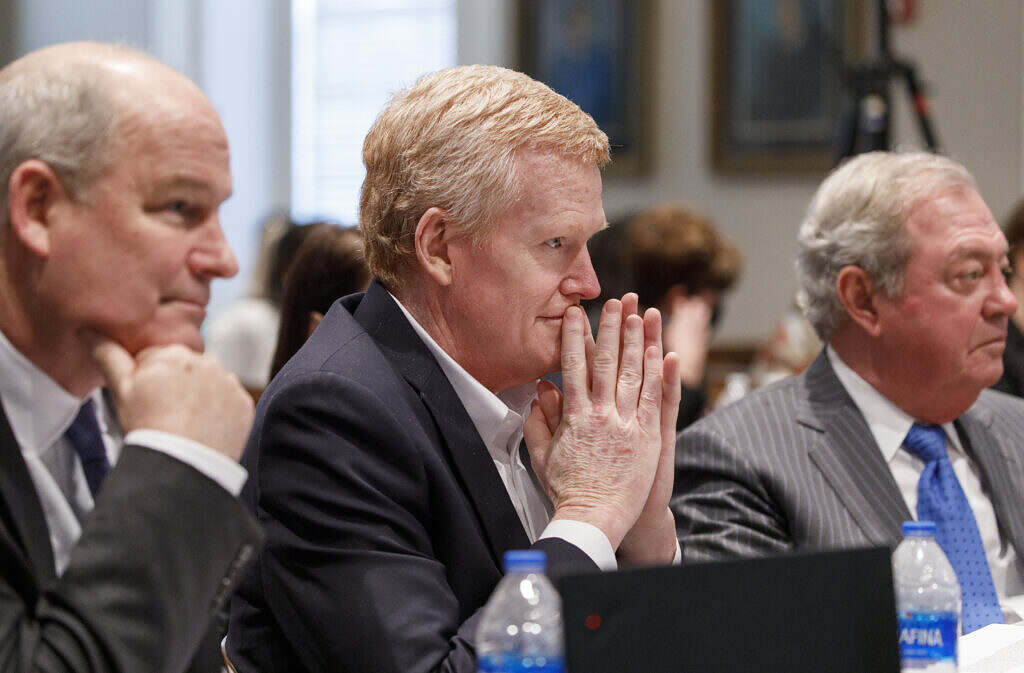
RELATED | SUPREME COURT STRIKES DOWN MURDAUGH CONVICTIONS
***
That finding mattered because the court concluded Hill’s remarks directly targeted the defendant’s credibility — the central issue before the jury once Murdaugh chose to testify.
In reaching that conclusion, the justices compared Hill’s conduct to one of the most significant jury-influence cases ever decided by the U.S. supreme court — Parker v. Gladden, a 1966 case in which a bailiff overseeing a sequestered jury told jurors a murder defendant was guilty. In that case, the nation’s high court concluded the comments of a court officer carried extraordinary weight with jurors because of the authority and trust attached to the position.
“Like the bailiff’s statements in Parker, Hill’s comments attacked the defendant’s character and credibility, which certainly were matters before the jury,” the opinion stated.
The comparison was significant because it framed Hill’s conduct not as casual courtroom chatter, but as constitutionally dangerous outside influence coming from an elected court official charged with safeguarding the integrity of the trial itself.
The justices went even further.
“Hill became a character witness on behalf of the state, encouraging the jurors to question Murdaugh’s credibility,” the wrote.
Then came perhaps the opinion’s most consequential conclusion regarding Hill’s conduct: “By urging the jurors not to be fooled or convinced by Murdaugh’s defense, Hill essentially implored the jurors to find him guilty, the ultimate issue in the case.”
***
FROM ‘FLEETING COMMENTS’ TO CONSTITUTIONAL ERROR

***
The justices’ conclusion that Hill’s comments went beyond the innocuous constituted a sweeping rejection of the prosecution’s long-standing argument – that the clerk’s conduct amounted to little more than inappropriate, yet insignificant commentary.
For months, prosecutors characterized Hill’s remarks as “foolish and fleeting” — arguing the evidence against Murdaugh was so overwhelming that no reasonable possibility existed the verdict had been affected.
The supreme court saw it differently. In the view of all five justices, Hill’s status as clerk of court fundamentally amplified the prejudicial effect of her comments.
“Hill’s position as the Colleton County Clerk of Court, an officer of the court who managed the trial and was the primary caretaker of the jury, amplified the impact Hill’s comments had on the jury,” the justices wrote.
That distinction became critical as the court drew comparisons between this case and the prior jury misconduct cases it cited throughout the opinion.
Rather than treating Hill’s remarks as procedural or administrative, the justices concluded they directly addressed the merits of the case itself. Even comments previously characterized as relatively mundane — such as Hill describing the day of Murdaugh’s testimony as “important” or “epic” — took on a different meaning when viewed alongside her broader remarks encouraging jurors not to trust the defense.
The court concluded those statements insinuated “there was something unusual and suspicious about his decision to testify.”
Taken together, the justices found Hill’s conduct crossed the line from improper commentary into constitutionally impermissible outside influence.
***
THE ‘REMMER’ STANDARD
***
Much of the opinion centered on a legal doctrine that became central to Murdaugh’s appeal long before Wednesday’s ruling was issued: Remmer v. United States — a landmark 1954 U.S. supreme court decision involving allegations that an outside party attempted to improperly influence a juror during trial.
In Remmer, the nation’s high court established that when jurors are exposed to improper outside influence relating to the merits of a criminal case, courts are not supposed to presume the misconduct was harmless. Instead, prejudice against the defendant is presumed – unless the state can prove otherwise.
This distinction became critical in Murdaugh’s case because it shaped who ultimately carried the burden of proof once the jury tampering allegations emerged.
Throughout the appellate process, Murdaugh’s attorneys argued former chief justice Jean Toal applied the wrong legal standard when she denied his motion for a new trial following a January 2024 evidentiary hearing. Specifically, they argued Toal improperly required Murdaugh to prove Hill’s comments actually changed the verdict — rather than requiring the state to prove the jury was not improperly influenced.
The defense repeatedly argued that under Remmer, once improper outside communication with jurors is established, the burden shifts to prosecutors.
“When a state official communicates with jurors about a criminal case during trial, the law presumes the tampering was prejudicial to the defendant’s right to a fair trial,” Murdaugh’s attorneys argued in their appeal briefing.
On Wednesday, the supreme court largely agreed…
***
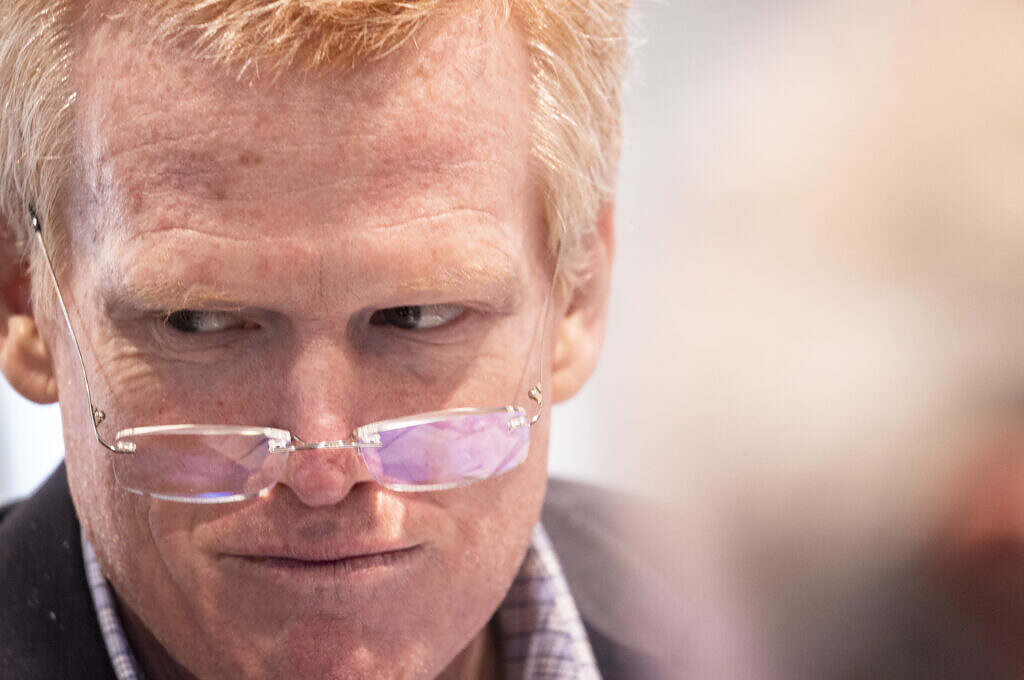
RELATED | MURDAUGH RETRIAL: PROSECUTORS WEIGH IN
***
In one of the most consequential portions of the ruling, the justices formally adopted the Fourth Circuit’s three-step framework under Remmer for analyzing improper outside influence on jurors in South Carolina courts moving forward.
Under that doctrine, a defendant must first show the outside contact with jurors was “more than innocuous.” Once that threshold is met, prejudice is presumed — and the burden shifts to the prevailing party to prove there was “no reasonable possibility” the communication affected the verdict.
The justices concluded Hill’s conduct easily crossed that threshold.
“Prejudice is presumed from Hill’s comments,” the court ruled.
That finding alone dramatically altered the legal posture of the case. Rather than forcing Murdaugh to prove the jury was actually swayed by Hill’s remarks, the burden shifted to the State to prove the comments were harmless despite the misconduct.
Ultimately, the supreme court concluded prosecutors failed to meet that burden.
Importantly, the justices also rejected the notion that overwhelming evidence of guilt could somehow cure constitutional problems involving outside influence on a jury.
“There is no ‘overwhelming evidence’ exception to the right to a fair trial,” Murdaugh’s attorneys argued during the appeal — a position that ultimately aligned closely with the supreme court’s reasoning.
That conclusion effectively doomed the verdicts.
***
RULE 606(B) — AND WHY THE JURORS’ ANSWERS DIDN’T SAVE THE STATE

***
Another major portion of the opinion focused on Rule 606(b) of the South Carolina Rules of Evidence — a technical but enormously consequential evidentiary rule that ultimately undercut one of the State’s strongest defenses to the jury tampering allegations.
That issue became increasingly important during the January 2024 evidentiary hearing presided over by former chief justice Toal, where jurors were repeatedly questioned not only about what Hill allegedly said to them, but whether those comments actually affected their deliberations or ultimate verdicts.
At the time, those answers became central to the state’s argument that Hill’s conduct — while perhaps inappropriate — did not ultimately prejudice Murdaugh because jurors largely insisted they still based their verdict solely on the evidence presented at trial.
The supreme court, however, concluded much of that testimony should never have been considered in the first place. Under Rule 606(b), jurors are generally permitted to testify about whether improper outside influence reached the jury room — but they are prohibited from testifying about their internal thought processes, mental impressions or how those outside influences affected deliberations.
The distinction may sound subtle, but legally it was enormous.
In practical terms, jurors could testify that Hill made comments about Murdaugh’s credibility or instructed them not to be “fooled” by the defense. But they could not properly testify about whether those comments changed their votes, influenced their reasoning or affected how they weighed evidence during deliberations.
“We find that the plain language of Rule 606(b), SCRE, authorizes jurors to testify about improper extraneous comments by a third party but not on the comments’ effects on the jurors’ deliberative process,” the justices wrote.
The court explained the rule exists to protect the sanctity and privacy of jury deliberations themselves — preventing post-trial litigation from devolving into after-the-fact examinations of jurors’ mental reasoning.
***
RELATED | CONTEMPT HEARING SET FOR MURDAUGH PODCASTER
***
Citing federal precedent, the justices noted that while courts must investigate outside influence on jurors, they are not permitted to “probe” the internal decision-making process of the jury once deliberations begin.
That conclusion had enormous implications for the prosecution’s case.
Much of the state’s argument during post-trial proceedings relied on jurors saying they still believed they reached the correct verdict despite Hill’s comments. The supreme court concluded those answers were legally irrelevant under Rule 606(b).
In other words, once the court determined improper outside influence reached the jury, prosecutors could not salvage the verdict by pointing to jurors who later insisting they believed they were able to remain impartial in spite of the prejudicial statements.
The justices specifically held that Toal erred both in asking jurors those questions – and in relying on the answers – during its prejudice analysis.
The ruling also directly undermined one of the most important conclusions reached by Toal during the 2024 hearing — particularly her reliance on testimony from Juror Z, who at one point appeared to walk back earlier claims that Hill’s comments affected her verdict.
According to the supreme court, those discussions about the juror’s mental processes should never have factored into the analysis at all. The justices went even further, explicitly overruling portions of prior South Carolina precedent that had permitted inquiry into jurors’ internal reasoning during deliberations.
Taken together, the Rule 606(b) portion of the opinion did more than help overturn Murdaugh’s convictions. It fundamentally reshaped how South Carolina courts are expected to handle future claims of jury tampering and outside influence moving forward.
***
THE COURT’S WARNING ON THE FINANCIAL CRIMES EVIDENCE
***
Although the supreme court reversed Murdaugh’s convictions based on jury tampering, the justices still chose to address one of the defense’s other major appellate arguments: the enormous volume of financial crimes evidence admitted during the six-week murder trial.
Importantly, the court stopped well short of ruling that all evidence related to Murdaugh’s thefts, fraud schemes and financial misconduct should have been excluded altogether. In fact, the opinion revealed some disagreement among members of the court on that broader question.
“The first of these categories — whether the trial court should have excluded all the financial crimes evidence — is a point on which not all members of the Court would have ruled the same way had we been the trial court,” the justices wrote.
The court acknowledged that allowing at least some of the evidence fell within judge Clifton Newman’s discretion during the original proceedings.
Still, the justices made it unmistakably clear they believed prosecutors — with the approval of Newman during the six-week trial — were permitted to go far beyond what was reasonably necessary to establish motive.
“As to the second category … we unanimously hold the trial court allowed the state to go far too long and far too deep into aspects of Murdaugh’s financial crimes that were not probative of the State’s theory of motive,” the opinion stated.
The justices concluded that overreach created a “considerable danger of unfair prejudice” and that portions of the evidence “should have been excluded.”
That guidance could significantly reshape any future prosecution.
“Because we order a new trial on this basis, it is not necessary that we review every evidentiary issue Murdaugh raises on appeal from his conviction,” the opinion stated. “However, we address the admissibility of Murdaugh’s financial crimes to offer guidance on this thorny issue to the trial court on remand.”
***
In calling balls and strikes on #Murdaugh, there is ZERO evidence to suggest the office of @AGAlanWilson did anything other than an incredible job trying this case. Today's reversal is attributable to misconduct by disgraced county clerk of court Becky Hill and, in part,… pic.twitter.com/A0NZKS5uA9
— FITSNews (@fitsnews) May 13, 2026
***
At trial, prosecutors argued Murdaugh murdered his wife and son as pressure mounted from years of financial thefts and fraud — a theory often referred to as the “gathering storm” motive narrative.
Newman allowed extensive testimony related to Murdaugh’s financial crimes, concluding the evidence was relevant to motive, intent and state of mind.
The supreme court did not reject that theory outright.
Instead, the justices signaled concern with the sheer scope and volume of the evidence presented to jurors.
“By our calculation, the state spent a total of 12.5 hours of actual testimony before the jury over ten days of trial to introduce evidence related to Murdaugh’s financial crimes,” the court wrote.
“We are convinced the state could have effectively presented evidence to support its motive theory in a fraction of that time.”
The opinion repeatedly emphasized the danger that such evidence could improperly shift the jury’s focus away from the murders themselves and toward Murdaugh’s broader character and criminal conduct.
Under Rule 403 of the South Carolina Rules of Evidence, otherwise relevant evidence may still be excluded if its probative value is substantially outweighed by the danger of unfair prejudice.
That balancing test became central to the court’s analysis.
The justices warned trial courts to carefully distinguish between evidence legitimately necessary to establish motive and evidence that simply paints a defendant as a bad person likely capable of committing murder.
At several points, the opinion appeared to signal concern that the murder trial risked becoming, in part, a referendum on Murdaugh’s financial misconduct rather than a narrowly focused homicide prosecution.
While the justices stopped short of declaring Newman committed reversible error on the issue, the guidance unmistakably suggested prosecutors may face substantially tighter evidentiary limits if the case is retried.
That could create one of the most important strategic shifts heading into any second trial.
During the original proceedings, the financial crimes evidence became deeply intertwined with the prosecution’s narrative — helping establish Murdaugh as a desperate man facing mounting exposure and collapse.
But if future trial courts narrow the scope of that evidence, prosecutors may be forced to present a far more streamlined motive case focused much more tightly on the murders themselves.
***
THE COURT’S DEVASTATING ASSESSMENT OF HILL — AND WHAT COMES NEXT

***
Beyond the jury tampering allegations themselves, the opinion repeatedly returned to Hill’s conduct outside the courtroom — including her pursuit of publicity, her interactions with the media and her now-infamous book about the trial.
The justices repeatedly pointed back to findings made by former chief justice Toal during the January 2024 evidentiary hearing — including her conclusion that Hill believed a guilty verdict would help sell books. In recounting those findings, the supreme court noted Toal described Hill as someone who “was attracted by the siren call of celebrity” and who “allowed her desire for the public attention of the moment to overcome her duty to her oath of office.”
The opinion also repeatedly emphasized Hill’s later guilty plea to perjury stemming from statements she made during post-trial proceedings — further undercutting her credibility before the court.
Then came one of the most remarkable passages in the opinion: a footnote openly ridiculing Hill’s book, Behind the Doors of Justice: The Murdaugh Murders.
“As her book’s title suggests, it turns out Hill was quite busy behind the doors of justice, thwarting the integrity of the justice system she was sworn to protect and uphold.”
For a unanimous supreme court opinion, the language was unusually sharp — and underscored just how personally and institutionally offended the justices appeared to be by Hill’s conduct.
Importantly, though, the opinion stopped well short of declaring Murdaugh innocent or dismantling the prosecution’s underlying theory of the murders themselves.
At no point did the justices suggest prosecutors lacked substantial evidence against him. Nor did the court imply the verdict was reversed because the evidence was insufficient.

***
Instead, the ruling focused almost entirely on whether the constitutional guarantee of an impartial jury survived the actions of an elected court official who — according to the opinion — improperly inserted herself into the trial process.
“This right can be infringed when a third party makes improper contact with the jury,” the court wrote, “for the right is meaningful only if the jury remains free from outside influence.”
That principle ultimately became the center of the ruling.
Now, the case returns to circuit court for what could become one of the most consequential retrials in modern South Carolina history.
Importantly, the supreme court’s decision did not dismiss the murder indictments against Murdaugh. Instead, it vacated the convictions and remanded the case for a new trial — meaning prosecutors must now decide how and when to proceed.
S.C. attorney general Alan Wilson has already stated publicly his office intends to retry Murdaugh for the murders of Maggie and Paul — and as FITSNews founding editor Will Folks recently reported, each of the candidates seeking to succeed Wilson as attorney general has similarly indicated they would pursue a retrial.
Exactly what that retrial looks like, however, remains unclear.
Among the unresolved questions:
- whether prosecutors will narrow their presentation of financial crimes evidence following the supreme court’s guidance,
- whether defense attorneys will attempt to move the trial out of Colleton County,
- which judge will ultimately preside over the proceedings,
- and how aggressively the defense may attempt to leverage the supreme court’s findings regarding Hill’s conduct in future pretrial litigation.
Meanwhile, Murdaugh himself will remain incarcerated regardless of what happens next.
Although his murder convictions and life sentences were vacated, he is still serving lengthy state and federal sentences tied to dozens of financial crimes to which he previously pled guilty.
Still, Wednesday’s ruling fundamentally altered the legal landscape surrounding one of the most infamous criminal prosecutions in modern American history.
And after nearly three years of appeals, hearings and allegations of misconduct, the supreme court delivered its clearest conclusion yet:
The integrity of the trial itself did not survive Becky Hill’s conduct.
***
ABOUT THE AUTHOR …

As a private investigator turned journalist, Jenn Wood brings a unique skill set to FITSNews as its research director. Known for her meticulous sourcing and victim-centered approach, she helps shape the newsroom’s most complex investigative stories while producing the FITSFiles and Cheer Incorporated podcasts. Jenn lives in South Carolina with her family, where her work continues to spotlight truth, accountability, and justice.
***
SOUND OFF…
Got something you’d like to say in response to one of our articles? Or an issue you’d like to address proactively? We have an open microphone policy! Submit your letter to the editor (or guest column) via email HERE. Got a tip for a story? CLICK HERE. Got a technical question or a glitch to report? CLICK HERE.

13 comments
Just so there is no chance of Alex Murdaugh missing this, here is my most recent comment on today’s other article of yours:
Dick and Jim have now, thank God, cleaned up part of their expensive mess. They should take a quick victory lap and let Richard Alexander Murdaugh (“RAM”) represent himself in seeking dismissal of the murder charges outright and withdrawal of his guilty pleas to the financial crimes, which pleas were made under the psychiatric duress of having been falsely accused AND FALSELY CONVICTED of the murders of his wife and younger son.
Neither Judge Clifton Newman, nor Federal Judge Gergel inquired about that psychiatric duress because that is not part of the litany made by non-physician judges.
Again, I volunteer to be RAM’s medical expert witness free of charge in such motions.
And again, I am not a lawyer but was complimented on the transcribed record by at least one federal jurist as better than lawyers.
And again, I do have a personal interest; but one which makes more credible, not less credible, as a medical expert.
They can find no other like me in this vicinity, not only for my excellent intellect and education, but more significantly for my moral authority.
I will NOT testify free of charge for RAM if Dick and Jim do not step aside, for no reason other than their pasts as prosecutors make them lack the moral authority to expose prosecutorial abuses.
It is my time and talents and my choice to whom I give them free of charge.
It is now RAM’s choice whether to expose the system of prosecutorial abuses, and of using criminal charges to gain unfair advantage in civil litigation, which three generations of his ancestors built, which came back to bite him and his sons, or to let others suffer from it.
I can, God willing, take on the abusive prosecutorial system without RAM; but RAM cannot do it without me.
Again, I made my choice. RAM needs to make his quickly.
A very important reply of mine to Alan Wilson’s and Creighton Waters’ press conference few minutes ago deserves to be re-pasted here:
? @reenakemp9132 , if you listened carefully to what Creighton Waters said in the press conference few minutes ago, you will understand that Creighton Waters ABANDONED the sacred prosecutorial duty to explore exculpatory evidence with the same zeal as inculpatory evidence.
He did NOT do that.
Indeed, he BRAGGED about doing THE OPPOSITE.
He said in so many words “aggressive” and “concern for double jeopardy.”
TRANSLATION: if you, as a prosecutor, obey your duty to include exculpatory evidence and the criminal defendant gets acquitted, the State cannot appeal because of double jeopardy. But if you as a prosecutor “aggressively” include irrelevant and prejudicial evidence, and it causes a wrongful conviction, the criminal defendant can appeal and if “the system works” he gets a new trial as just happened.
Right? NO, no, no! WRONG, wrong, wrong!
“The system” trusts the prosecutors to err on the side of caution, not on the side of conviction at any price.
Lives get destroyed because of wrongful convictions, even if later reversed.
The public confidence in the legal system gets rightly shaken.
And most significantly, the REAL perpetrator gets to avoid accountability (for five years now and going) or forever.
If Alan Wilson were truly non-political, he should have announced a reopened neutral investigation and invited all with new information to contribute.
A very important reply of mine to Alan Wilson’s and Creighton Waters’ press conference few minutes ago deserves to be re-pasted here:
? @reenakemp9132 , if you listened carefully to what Creighton Waters said in the press conference few minutes ago, you will understand that Creighton Waters ABANDONED the sacred prosecutorial duty to explore exculpatory evidence with the same zeal as inculpatory evidence.
He did NOT do that.
Indeed, he BRAGGED about doing THE OPPOSITE.
He said in so many words “aggressive” and “concern for double jeopardy.”
TRANSLATION: if you, as a prosecutor, obey your duty to include exculpatory evidence and the criminal defendant gets acquitted, the State cannot appeal because of double jeopardy. But if you as a prosecutor “aggressively” include irrelevant and prejudicial evidence, and it causes a wrongful conviction, the criminal defendant can appeal and if “the system works” he gets a new trial as just happened.
Right? NO, no, no! WRONG, wrong, wrong!
“The system” trusts the prosecutors to err on the side of caution, not on the side of conviction at any price.
Lives get destroyed because of wrongful convictions, even if later reversed.
The public confidence in the legal system gets rightly shaken.
And most significantly, the REAL perpetrator gets to avoid accountability (for five years now and going) or forever.
If Alan Wilson were truly non-political, he should have announced a reopened neutral investigation and invited all with new information to contribute.
And here is another reply to another commenter today:?
@Nonna7384 , you’re again assuming that the shootings were at 8:49 – 8:52, which (as I explained many, many times previously) is ABSOLUTELY INCONSISTENT with the victims’ stomachs’ contents at autopsy where the food was too little and too digested for the demise to have occurred only 22 minutes after their large and relatively fatty last meal ended at 8:30 pm. The real shooters were not really mad at the Murdaughs; they only wanted to silence Paul and Maggie from testifying that there were no dogs when Gloria Satterfield fell. Also, shooting Alex would have ended the civil part of the boat crash case because the suit was against Alex and Buster for “bad parenting” and for Paul’s use of Buster’s ID. Please look up my previous comments here and elsewhere. Thanks!
Yet you were the one pontificating about what a great jurist Newman was
Not so! I was only defending now-Retired/Active SC Circuit Judge Clifton Newman against BLATANTLY racist attacks on him.
He presided over my 22-26 February 2010 General Sessions jury trial in Richland County, where and when, thank God and WITHOUT A LAWYER, I did for myself what RAM’s entire defense team could not do for him: prevent a jury from returning a wrongful conviction (although, now thank God, they cleaned up part of their own mess).
My jury hopelessly deadlocked after over five hours of deliberations into the night. And after an Allen charge and sending the jury back to deliberate some more, Judge Clifton Newman declared a mistrial shortly before midnight.
I became a legend of pro se advocacy in the Richland County courthouse. And to dispirit me, false rumors were spread that my jury was split 10-2 of 11-1 for conviction although Judge Clifton Newman never asked for the jury split because that is the correct law and the jury left without talking to anyone.
Perhaps Becky Hill had heard of my feat, which is why she was in such panic to get Myra Catherine Crosby off the jury lest he hangs RAM’s jury as the rumors pretended one juror hung mine,
How would Becky Hill even have known about my case? Easy! David Amadeo Fernandez.
Fernandez was Columbia Assistant City Attorney (“CACA”) in 2008-2014 or so. And he was DIRECTLY seeking to hold me in contempt of court every time I advocated for my constitutional rights to a speedy retrial after the mistrial or dismissal of the false criminal charges against me.
For the 30 months between February 2010 and August 2012, I was arrested three more times on more false charges of which I was later acquitted; and I was again incarcerated by the out-of-control Marion Oneida Hanna (a white literal “bastard” whose father never married her mother), who flew into a rage when she heard that I had OUTSIDE OF COURT called then-CACA Fernandez a bastard for having received a motion of mine by hand-delivery then immediately thrown it on the floor to deny service.
Marion Oneida Hanna was later privately-something by South Carolina’s Office of Disciplinary Counsel for her lack of decorum (putting it charitably) in a 28 March 2011 hearing where I had been diverted to her to thwart my renewed motion for speedy retrial or dismissal of the harassment charges which had then been improperly remanded to Columbia Municipal Court (“CMC”) because Hatchet-for-Hire Heather (Weiss) did not have the integrity of dismissing them but knew she had no TRUE facts to retry them after my post-trial reseach uncovered the subornation, perjury, forgery, and fabrication deployed against me in my trial in Judge Clifton Newman’s court.
In August 2012, always than God and WITHOUT A LAWYER, I got the false harassment charges against me dismissed WITH PREJUDICE with CACA Fernandez staring evilly but helplessly at me.
Back to CACA Fernandez, he followed Hatchet-for-Hire Heather to SC Attorney General’s office (“SCAG”) after having procured from that office a letter saying BASICALLY that said office will prosecute someone who injures a dog but will not prosecute someone who injures Dr. Marie Faltas even if local prosecutors recuse themselves.
Guess where CACA Fernandez pops up on the national stage next!
Right: Murdaugh’s trial where Fernandez confabulated a bucket of bloody water at the kennels AND the fake FaceBook post which got Myra Catherine Crosby off the jury.
I do not speak or write without OBJECTIVE support.
In the transcript of the in-chambers proceedings, Fernandez FALSELY tells Judge Clifton Newman “we know [Myra Catherine Crosby’s husband’s] name: Tim Stone.”
I checked few minutes ago; and Fernandez was still listed at SCAG’s office.
But Fernandez did not appear alongside Allan Wilson and Creighton Waters yesterday evening’s press conference.
Coincidence or is SC’s supreme court following up on Fernandez’ role in the machinations against Myra Catherine Crosby?
I do not know. But what I do know is that Allan Wilson can lay no claim to prosecutorial integrity unless and until he SERIOUSLY investigates Heather Weiss’ and Fernandez’ histories of LYING to courts to obtain FALSE convictions.
Not so! I was only defending now-Retired/Active SC Circuit Judge Clifton Newman against BLATANTLY racist attacks on him.
He presided over my 22-26 February 2010 General Sessions jury trial in Richland County, where and when, thank God and WITHOUT A LAWYER, I did for myself what RAM’s entire defense team could not do for him: prevent a jury from returning a wrongful conviction (although, now thank God, they cleaned up part of their own mess).
My jury hopelessly deadlocked after over five hours of deliberations into the night. And after an Allen charge and sending the jury back to deliberate some more, Judge Clifton Newman declared a mistrial shortly before midnight.
I became a legend of pro se advocacy in the Richland County courthouse. And to dispirit me, false rumors were spread that my jury was split 10-2 of 11-1 for conviction although Judge Clifton Newman never asked for the jury split because that is the correct law and the jury left without talking to anyone.
Perhaps Becky Hill had heard of my feat, which is why she was in such panic to get Myra Catherine Crosby off the jury lest he hangs RAM’s jury as the rumors pretended one juror hung mine,
How would Becky Hill even have known about my case? Easy! David Amadeo Fernandez.
Fernandez was Columbia Assistant City Attorney (“CACA”) in 2008-2014 or so. And he was DIRECTLY seeking to hold me in contempt of court every time I advocated for my constitutional rights to a speedy retrial after the mistrial or dismissal of the false criminal charges against me.
For the 30 months between February 2010 and August 2012, I was arrested three more times on more false charges of which I was later acquitted; and I was again incarcerated by the out-of-control Marion Oneida Hanna (a white literal “bastard” whose father never married her mother), who flew into a rage when she heard that I had OUTSIDE OF COURT called then-CACA Fernandez a bastard for having received a motion of mine by hand-delivery then immediately thrown it on the floor to deny service.
Marion Oneida Hanna was later privately-something by South Carolina’s Office of Disciplinary Counsel for her lack of decorum (putting it charitably) in a 28 March 2011 hearing where I had been diverted to her to thwart my renewed motion for speedy retrial or dismissal of the harassment charges which had then been improperly remanded to Columbia Municipal Court (“CMC”) because Hatchet-for-Hire Heather (Weiss) did not have the integrity of dismissing them but knew she had no TRUE facts to retry them after my post-trial reseach uncovered the subornation, perjury, forgery, and fabrication deployed against me in my trial in Judge Clifton Newman’s court.
In August 2012, always than God and WITHOUT A LAWYER, I got the false harassment charges against me dismissed WITH PREJUDICE with CACA Fernandez staring evilly but helplessly at me.
Back to CACA Fernandez, he followed Hatchet-for-Hire Heather to SC Attorney General’s office (“SCAG”) after having procured from that office a letter saying BASICALLY that said office will prosecute someone who injures a dog but will not prosecute someone who injures Dr. Marie Faltas even if local prosecutors recuse themselves.
Guess where CACA Fernandez pops up on the national stage next!
Right: Murdaugh’s trial where Fernandez confabulated a bucket of bloody water at the kennels AND the fake FaceBook post which got Myra Catherine Crosby off the jury.
I do not speak or write without OBJECTIVE support.
In the transcript of the in-chambers proceedings, Fernandez FALSELY tells Judge Clifton Newman “we know [Myra Catherine Crosby’s husband’s] name: Tim Stone.”
I checked few minutes ago; and Fernandez was still listed at SCAG’s office.
But Fernandez did not appear alongside Allan Wilson and Creighton Waters yesterday evening’s press conference.
Coincidence or is SC’s supreme court following up on Fernandez’ role in the machinations against Myra Catherine Crosby?
I do not know. But what I do know is that Allan Wilson can lay no claim to prosecutorial integrity unless and until he SERIOUSLY investigates Heather Weiss’ and Fernandez’ histories of LYING to courts to obtain FALSE convictions.
And the rumor mill, prejudicial publicity, and crazy ideas, start again; but should be promptly pruned this time.
Some media outlets had reported, and now without evidence reassert, that Maggie was looking for a divorce lawyer.
Media, mainstream or alternative, has grown careless, inaccurate, and/or downright malicious in false reporting.
But some law suits, difficult as they are, succeed in punishing such conduct or deterring it ab initio.
Case in point: Buster’s law suit against Michael Dewitt, Netflix et. al., is still proceeding against the defendants who did not settle.
And I am still hoping the wonderful Dr. Erin Presnell who did Stephen Smith’s first autopsy (100% confirmed by the second autopsy) sues: (1) that idiot Thomas Moore, who had pompously to gone harass her to change her diagnosis; (2) that unscrupulous paid-propagandist-masquerading-as-journalist Valerie Bauerlein, who wrote in her book that Dr. Presenell was fired after she did Stephen Smith’s autopsy when, in fact, Dr. Presnell had been PROMOTED, not fired; and (3) that washed-up self-important has-been Katie Couric, who said in her interview with Sanctimonious Sandy Smith (“SSS”) that Dr. Presnell should not be still practicing because it sounds as if “she’s not very competent.”
Perhaps Dr. Presnell is too involved in her professional work to waste time on a good law suit; or perhaps SLED’s refusal to release the results of the second autopsy which 100% confirmed Dr. Presnell’s work is one more of Malicious Mandy Matney’s (“MMM”) machinations to run the statute-of-limitations clock on Dr. Presnell’s potential law suit(s) for defamation per se.
I do not know. But I do know (being NOT a lawyer but better than most) that the statute of limitations for defamation runs from the date of the last publication; and these shows keep getting re-run.
Back to the FALSE reports that Maggie “drove to Charleston looking for a divorce attorney,” did Maggie take a metal detector and scan Charleston’s side walks for a lost “divorce attorney”? Or stand in the Four-Corners-of-the-Law holding a sign saying, “Lost and looking for a divorce attorney?” Or what?
In this day and age, one doesn’t drive somewhere looking for an attorney. One finds one on the internet or by word of mouth and phones the attorney’s office to make an appointment.
NOT ONLY IS THERE ABSOLUTELY NO EVIDENCE OF SUCH CONTACT BETWEEN MAGGIE AND A DIVORCE ATTORNEY, Blanca was yesterday on Ann Emmerson’s “Criminally Obsessed” show re-affirming what Maggie’s sister and close friends already said: Alex and Maggie’s marriage was as strong as ever and they cared for each other very much.
As to Mark Tinsley’s law suit, and setting aside the question of who, if anyone, was actually piloting the boat at the moment of the crash, Paul’s drunkenness that night was due to alcohol sold by Parker’s and other stores, NOT supplied by Alex OR Maggie.
True, parents should not give their under-age children alcohol; but Mark Tinsley’s law suit would have failed on the essential question of the lack of foreseeable linkage between Paul having a beer with his parents at a party a year earlier and the boat crash.
It would also have failed on the contributory negligence of the parents of the other five young people on that boat for letting their offspring go on a night boat ride with a known under-age drinker.
Mark Tinsley’s law suit would have failed at many points. It succeeded only in the same way that The Godfather-I movie depicts Khartum-the-horse’s severed head in the bed of the rich and powerful movie director succeeding in giving a singer a coveted come-back role.
A prize horse severed head in your bed or your wife and younger son found shot to death in your kennels make you “not refuse” the offer you adamantly refused previously.
That is why I am crusading against civil plaintiffs’ or defendants’ lawyers participating in criminal proceedings, genuine or malicious, to gain unfair advantage in civil litigation, which is unethical and forbidden by the Rules of Professional Conduct, if only anyone would enforce them!
And the rumor mill, prejudicial publicity, and crazy ideas, start again; but should be promptly pruned this time.
Some media outlets had reported, and now without evidence reassert, that Maggie was looking for a divorce lawyer.
Media, mainstream or alternative, has grown careless, inaccurate, and/or downright malicious in false reporting.
But some law suits, difficult as they are, succeed in punishing such conduct or deterring it ab initio.
Case in point: Buster’s law suit against Michael Dewitt, Netflix et. al., is still proceeding against the defendants who did not settle.
And I am still hoping the wonderful Dr. Erin Presnell who did Stephen Smith’s first autopsy (100% confirmed by the second autopsy) sues: (1) that idiot Thomas Moore, who had pompously to gone harass her to change her diagnosis; (2) that unscrupulous paid-propagandist-masquerading-as-journalist Valerie Bauerlein, who wrote in her book that Dr. Presenell was fired after she did Stephen Smith’s autopsy when, in fact, Dr. Presnell had been PROMOTED, not fired; and (3) that washed-up self-important has-been Katie Couric, who said in her interview with Sanctimonious Sandy Smith (“SSS”) that Dr. Presnell should not be still practicing because it sounds as if “she’s not very competent.”
Perhaps Dr. Presnell is too involved in her professional work to waste time on a good law suit; or perhaps SLED’s refusal to release the results of the second autopsy which 100% confirmed Dr. Presnell’s work is one more of Malicious Mandy Matney’s (“MMM”) machinations to run the statute-of-limitations clock on Dr. Presnell’s potential law suit(s) for defamation per se.
I do not know. But I do know (being NOT a lawyer but better than most) that the statute of limitations for defamation runs from the date of the last publication; and these shows keep getting re-run.
Back to the FALSE reports that Maggie “drove to Charleston looking for a divorce attorney,” did Maggie take a metal detector and scan Charleston’s side walks for a lost “divorce attorney”? Or stand in the Four-Corners-of-the-Law holding a sign saying, “Lost and looking for a divorce attorney?” Or what?
In this day and age, one doesn’t drive somewhere looking for an attorney. One finds one on the internet or by word of mouth and phones the attorney’s office to make an appointment.
NOT ONLY IS THERE ABSOLUTELY NO EVIDENCE OF SUCH CONTACT BETWEEN MAGGIE AND A DIVORCE ATTORNEY, Blanca was yesterday on Ann Emmerson’s “Criminally Obsessed” show re-affirming what Maggie’s sister and close friends already said: Alex and Maggie’s marriage was as strong as ever and they cared for each other very much.
As to Mark Tinsley’s law suit, and setting aside the question of who, if anyone, was actually piloting the boat at the moment of the crash, Paul’s drunkenness that night was due to alcohol sold by Parker’s and other stores, NOT supplied by Alex OR Maggie.
True, parents should not give their under-age children alcohol; but Mark Tinsley’s law suit would have failed on the essential question of the lack of foreseeable linkage between Paul having a beer with his parents at a party a year earlier and the boat crash.
It would also have failed on the contributory negligence of the parents of the other five young people on that boat for letting their offspring go on a night boat ride with a known under-age drinker.
Mark Tinsley’s law suit would have failed at many points. It succeeded only in the same way that The Godfather-I movie depicts Khartum-the-horse’s severed head in the bed of the rich and powerful movie director succeeding in giving a singer a coveted come-back role.
A prize horse severed head in your bed or your wife and younger son found shot to death in your kennels make you “not refuse” the offer you adamantly refused previously.
That is why I am crusading against civil plaintiffs’ or defendants’ lawyers participating in criminal proceedings, genuine or malicious, to gain unfair advantage in civil litigation, which is unethical and forbidden by the Rules of Professional Conduct, if only anyone would enforce them!
The dualling post-opinion interviews constrain me to reiterate my call for the defense team to bow out and let Alex represent himself.
Sadly, as committed to his client as Mr. Harpootlian is, he seems to have learned NOTHING from the now-reversed conviction where he and Jim Griffin ASSUMED the jury will discount Creighton Waters’ crazy theories on the time of death and on motive.
Even more sadly, cases are now won or lost, not in courtrooms but in public opinion; and seeing the majority of comments on the post-reversal stories, Creighton Waters is already winning the retrial.
For those deluded by, and extolling, Creighton Waters, listen carefully to what he he said in his presser after the opinion reversing the conviction but sparing HIM overt criticism.
You will understand that Creighton Waters ABANDONED the sacred prosecutorial duty to explore exculpatory evidence with the same zeal as inculpatory evidence.
He did NOT do that.
Indeed, he BRAGGED about doing THE OPPOSITE.
He said in so many words “aggressive” and “concern for double jeopardy.”
TRANSLATION: if you, as a prosecutor, obey your duty to include exculpatory evidence and the criminal defendant gets acquitted, the State cannot appeal because of double jeopardy. But if you as a prosecutor “aggressively” include irrelevant and prejudicial evidence, and it causes a wrongful conviction, the criminal defendant can appeal and if “the system works” he gets a new trial as just happened.
Right? NO, no, no! WRONG, wrong, wrong!
“The system” trusts the prosecutors to err on the side of caution, not on the side of conviction at any price.
Lives get destroyed because of wrongful convictions, even if later reversed.
The public confidence in the legal system gets rightly shaken. And most significantly, the REAL perpetrator gets to avoid accountability (for five years now and going) or forever.
If Alan Wilson were truly non-political about this, he should have announced a reopened neutral investigation and invited all with new information to contribute.?
Murdaugh derangement syndrome is spreading.
Trying again:
So, Creighton Waters now vindictively brandishes the death penalty?
He’s in over his head.
Now that the Catholic Church has declared its opposition to the death penalty to be a core belief, Prancing Creighton Waters (“PCW”) cannot exclude jurors opposed to the death penalty if they are Catholic.
Instead of itching to execute the innocent, Alan Wilson should show some zeal in improving murder investigations.
To expiate for his Frankenstein creation, FITS should do a whole show or a whole story on the scientific failures of the investigation into Paul and Maggie’s shootings.
Here is more about ballistics which is augmented by this (link to video deleted for publishability).
It shows SLED, presumably in the early morning of 8 June 2021, supposedly collecting evidence from around and inside the house at Moselle.
Many mistakes appear in that short clip:
1. The spent bullets collected from around the exterior seven-step stoop are BASICALLY rubbed together by the evidence gatherer thus HOPELESSLY contaminating the subsequent tool-mark microscopic examination and analysis if such analysis were a science to begin with.
2. The evidence gatherers arrived without simple plastic or paper bags in which to put each bullet separately with an identification of the precise location it was found.
3. They then resort to a quick and dirty non-solution of putting a bullet in each finger of a “new glove” again without precise location identification and after the bullets had scarred each other from being basically rubbed together.
4. The exterior door handle is not dusted for fingerprints nor swabbed for DNA.
5. Once inside the house, no effort or attention is paid to any food or drink containers with residue or unconsumed content. That should be basic in any murder investigation even where the victims had been visibly shot: had they been poisoned or attempted to be poisoned before the shootings? Were they under the influence of anything they had consumed before being confronted by their shooter(s)? That may not necessarily have been the case here; but these are basics of any investigation started on a blank slate.
6. They are heard commenting to each other that the autopsies already started. They should have carefully looked for evidence of unconsummated or recently-consummated food and drink to supply to the autopsy performer.
Or course, many more mistakes appear even in that short clip.
Now that the Sixth Amendment right to a fair and impartial jury has been vindicated, it is essential to vindicate the DUE PROCESS right to a scientifically-sound investigation before charges are even brought against anyone.
Of course, many more mistakes appear even in that short clip.
Now that the Sixth Amendment right to a fair and impartial jury has been vindicated, it is essential to vindicate the DUE PROCESS right to a scientifically-sound investigation before charges are even brought against anyone.
Trying again:
So, Creighton Waters now vindictively brandishes the death penalty?
He’s in over his head.
Now that the Catholic Church has declared its opposition to the death penalty to be a core belief, Prancing Creighton Waters (“PCW”) cannot exclude jurors opposed to the death penalty if they are Catholic.
Instead of itching to execute the innocent, Alan Wilson should show some zeal in improving murder investigations.
To expiate for his Frankenstein creation, FITS should do a whole show or a whole story on the scientific failures of the investigation into Paul and Maggie’s shootings.
Here is more about ballistics which is augmented by this (link to video deleted for publishability).
It shows SLED, presumably in the early morning of 8 June 2021, supposedly collecting evidence from around and inside the house at Moselle.
Many mistakes appear in that short clip:
1. The spent bullets collected from around the exterior seven-step stoop are BASICALLY rubbed together by the evidence gatherer thus HOPELESSLY contaminating the subsequent tool-mark microscopic examination and analysis if such analysis were a science to begin with.
2. The evidence gatherers arrived without simple plastic or paper bags in which to put each bullet separately with an identification of the precise location it was found.
3. They then resort to a quick and dirty non-solution of putting a bullet in each finger of a “new glove” again without precise location identification and after the bullets had scarred each other from being basically rubbed together.
4. The exterior door handle is not dusted for fingerprints nor swabbed for DNA.
5. Once inside the house, no effort or attention is paid to any food or drink containers with residue or unconsumed content. That should be basic in any murder investigation even where the victims had been visibly shot: had they been poisoned or attempted to be poisoned before the shootings? Were they under the influence of anything they had consumed before being confronted by their shooter(s)? That may not necessarily have been the case here; but these are basics of any investigation started on a blank slate.
6. They are heard commenting to each other that the autopsies already started. They should have carefully looked for evidence of unconsummated or recently-consummated food and drink to supply to the autopsy performer.
Or course, many more mistakes appear even in that short clip.
Now that the Sixth Amendment right to a fair and impartial jury has been vindicated, it is essential to vindicate the DUE PROCESS right to a scientifically-sound investigation before charges are even brought against anyone.
Of course, many more mistakes appear even in that short clip.
Now that the Sixth Amendment right to a fair and impartial jury has been vindicated, it is essential to vindicate the DUE PROCESS right to a scientifically-sound investigation before charges are even brought against anyone.
Recently incited into making a linguistic correction, I post here, too, because the error recurs:
In Latin America, they do NOT speak Latin.
They speak Spanish, Portuguese, and the native pre-European expeditions languages of the various tribes in those countries.
Where Latin is spoken TODAY is in the Vatican’s highest inner circles among the Catholic Pope and the Catholic Cardinals and Bishops, if that.
Since Vatican-II, even Catholic masses are no longer required to be conducted ENTIRELY in Latin but may be conducted in local languages, though parts of the Catholic liturgy remain in Latin.
And just an anecdote which people of a certain age and political persuasion might remember: Former Vice-President Dan Quayle was pilloried for having said, or not said, when visiting Latin America that he was sorry he did not speak Latin.
Physicians, too, know a lot of Latin words and phrases because the names of most body parts and conditions come from Latin and from Greek.
Also, lawyers use some Latin words and phrases, relics of Roman Law and of Code Napoleon, though MOST South Carolina lawyers pronounce them atrociously.
For example, a typical South Carolina lawyer would pronounce the phrase for a document commanding you to bring something with you as if “sahpeeena dufus take home.” The correct spelling is “subpoena duces tecum” pronounced SUB-PE-NA DOO-CHESS TAY-COOM.
And while I am at it, pre-trial examination of jurors should not be pronounced “dyare” as if dire consequences follow; it should be pronounced “deer” because that is the French infinitive verb for “say.”
So, the French phrase for “seeing [them] say” should NEVER be pronounced VOYR DAYRE but VO-WAR DEER.
Just saying because, with pre-trial matters related to the Murdaugh retrial looming, I hope not to get jarred by atrocious pronunciations of Latin and French phrases.