

|
Getting your Trinity Audio player ready...
|
by JENN WOOD
***
For families of children on the autism spectrum, receiving a diagnosis is often described as the beginning of a journey. In reality, it’s the start of a seemingly never-ending navigational challenge.
Once a diagnosis is in hand, families are expected to move through a system of services that is anything but straightforward — spread across multiple agencies, limited by availability, and shaped by factors like geography and insurance.
There is no single entry point.
No unified roadmap.
What exists instead is a maze.
On paper, South Carolina has a wide range of services available for children on the autism spectrum. In practice, accessing them is often like searching for hidden treasure.
There is no centralized guide that walks families through what to do next. Instead, parents are often left to piece together information from a myriad of bureaucracies, providers, and programs — all while managing the day-to-day realities of raising a child with additional needs.
Waitlists can stretch for months — sometimes longer. Insurance coverage varies. Availability depends heavily on where you live. And for families in more rural parts of the state, options can be especially limited.
In many cases, parents become the coordinators — scheduling therapies, navigating paperwork, advocating in schools, and constantly reassessing what support is available and what still isn’t.

***
WHERE FAMILIES START
For newly diagnosed children, several state agencies and programs serve as primary entry points — though understanding how they connect is often challenging.
The S.C. Department of Disabilities and Special Needs (SCDDSN) plays a central role in coordinating the Palmetto State’s system of care for individuals with developmental disabilities, including autism — though understanding that role can take time.
SCDDSN does not typically provide direct services. Instead, it acts as a coordinator, determining eligibility and helping connect families with the providers and programs that deliver support. Through the agency, families may be assigned a case manager who helps them organize services, develop long-term plans, and navigate an often intricate system.
SCDDSN also oversees Medicaid waiver programs, which can provide more comprehensive support such as in-home care, respite services, and behavioral interventions. But those programs are limited — and for many families, accessing them means joining waiting lists that can stretch for years.
The S.C. Department of Health and Human Services (SCDHHS) oversees Medicaid coverage in South Carolina – a critical pathway for many families seeking access to autism-related therapies such as Applied Behavior Analysis (ABA), speech therapy, and occupational therapy. For children who qualify, Medicaid can cover medically necessary services through age 21. But navigating that coverage is not always straightforward. Eligibility requirements can be complex, and even for families who qualify, finding providers who accept Medicaid – and have availability – can be a challenge.
***

***
For younger children, BabyNet offers early intervention services from birth to age three. The program provides developmental evaluations, service coordination, and therapies designed to support children during a critical window of early development. Referrals can be made by parents, doctors, or caregivers — and for many families, BabyNet serves as one of the first structured entry points into the system.
Once a child reaches school age, the center of gravity shifts again — this time into the education system under the S.C. Department of Education (SCDE).
Support is typically delivered through an Individualized Education Program (IEP) or a 504 plan, both designed to help students access the classroom in a way that meets their needs. But like the rest of the system, it isn’t always straightforward.
A medical diagnosis doesn’t automatically translate into school services. Districts conduct their own evaluations, and the level of support can vary depending on the school, the district and available resources. For many parents, the IEP process becomes something they learn by doing — attending meetings, asking questions, and advocating to make sure their child isn’t overlooked.
Each of these systems plays a role – but they don’t always operate in sync.
***

RELATED | SETTING A NEW AUTISM NARRATIVE
***
THERAPIES — AND THE REALITY OF ACCESS
For many families, therapy becomes a central part of daily life.
ABA, speech therapy, occupational therapy, and — in some cases — physical therapy can all play a role in supporting a child’s development. ABA, one of the most commonly recommended therapies for children with autism, focuses on helping individuals build skills and reduce behaviors that may interfere with daily functioning. It is typically structured around breaking tasks into smaller, manageable steps and using repetition, reinforcement, and consistency to support learning.
These services are often recommended early and delivered consistently over time – but access is not guaranteed.
Provider shortages remain a persistent issue across South Carolina, particularly outside major metro areas. Families may find themselves on multiple waitlists, traveling long distances for appointments, or juggling limited availability across different providers.
Insurance adds another layer of complexity. While some plans cover autism-related therapies, others impose restrictions that can limit frequency, duration, or provider choice.
For parents, this often means coordinating hours of therapy each week — balancing schedules, managing transportation, and absorbing the emotional and financial strain that can come with it.
It is, in many ways, a second full-time job…
***
SCHOOLS AND THE IEP PROCESS
As children grow, schools become one of the most important — and sometimes most challenging — environments to navigate.
Through the IEP process, students with autism may receive accommodations, specialized instruction, and related services within the public school system. But the quality and availability of those services can vary widely from district to district.
For many families, advocacy becomes essential. Understanding what a child is entitled to — and ensuring those services are actually delivered — often requires persistence, documentation, and a willingness to push back when support falls short.
And while there are educators doing meaningful, committed work in this space, the system itself is not always equipped to meet every need.
That gap is often where families feel it most…
***

RELATED | FOR TWO QUIET HOURS, EVERY CHILD BELONGED
***
COMMUNITY SUPPORT — AND WHAT EXISTS BEYOND THE SYSTEM
Beyond state agencies and schools, a network of nonprofit and community-based organizations provides additional support to families navigating autism — often filling gaps the formal system leaves behind.
Groups like the Autism Society of South Carolina, Family Connection of South Carolina, and Able South Carolina offer resources that go beyond paperwork and eligibility requirements. That can include parent support groups, one-on-one guidance navigating services, advocacy training, and help understanding everything from IEP meetings to insurance appeals.
For many families, these organizations become a starting point when the system itself feels difficult to access — or difficult to understand.
They also tend to operate differently than state agencies.
They’re often more flexible. More responsive. And in many cases, more focused on meeting families where they are — whether that means answering late-night questions, connecting parents with local providers, or simply helping them make sense of next steps.
But what they provide isn’t just logistical — it’s connection. Because one of the most overlooked challenges families face is isolation.
Autism can reshape daily routines, limit participation in certain activities, and make even simple outings feel unpredictable. Over time, that can pull families away from the communities they once relied on – which is where peer support becomes just as important as formal services.
Talking to other parents who understand the IEP process – who know what it’s like to sit on a waitlist and who have navigated the same questions, frustrations, and small victories – is a critical part of post-diagnosis navigation.
That kind of connection doesn’t solve every problem, but it changes how those problems are carried.
And for many families, that makes all the difference…
***
WHERE THE SYSTEM FALLS SHORT — AND WHAT COMES NEXT
Despite the resources that exist, gaps remain. Waitlists delay access to critical early interventions. Workforce shortages limit provider availability. Insurance coverage remains inconsistent. And coordination between agencies often leaves families bridging the gaps themselves.
The issue isn’t simply whether services exist — it’s whether families can realistically access them.
And too often, the answer depends on factors outside their control — where they live, what insurance they have, and how effectively they can navigate a complex and sometimes disjointed system.
Looking back, there are things many parents — myself included — wish we had understood earlier. For example, I wish I’d known that there is no single roadmap, that progress doesn’t always follow a straight line, that learning how your child experiences the world matters just as much as any formal therapy, and that finding the right support often takes time — and persistence.
But also this: you are not navigating it alone, even when it feels that way — because accessing services is only part of the picture.
Even when support systems are in place, daily life still presents challenges — in public spaces, at community events, and in environments that aren’t always designed with neurodiversity in mind.
In the next installment of this series, we’ll take a closer look at sensory-friendly spaces, inclusive events, and what it means to build communities where families don’t just manage — but belong.
Because understanding autism isn’t just about awareness – it’s about what we build around it.
***
ABOUT THE AUTHOR …
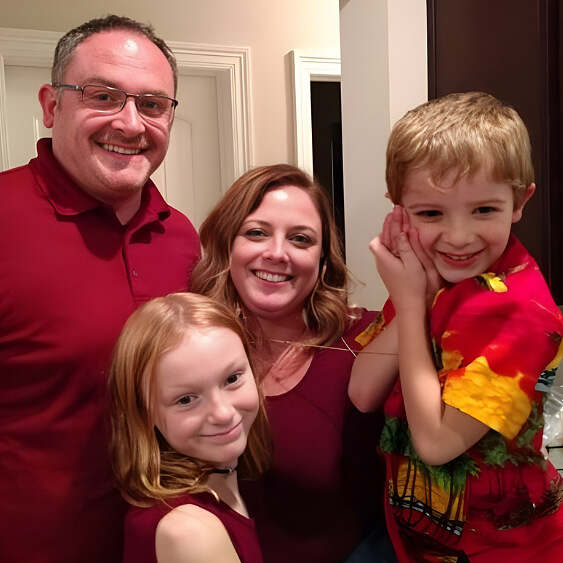
Jenn Wood is the research director at FITSNews, where she applies her background as a private investigator to complex, accountability-driven reporting. During Autism Acceptance Month, she is also writing from a more personal perspective — as the mother of a teenage son on the autism spectrum — offering insight into the realities families navigate and the importance of understanding neurodiversity in everyday life.
***
SOUND OFF…
Got something you’d like to say in response to one of our articles? Or an issue you’d like to address proactively? We have an open microphone policy! Submit your letter to the editor (or guest column) via email HERE. Got a tip for a story? CLICK HERE. Got a technical question or a glitch to report? CLICK HERE.

2 comments
Ok so… DDSN no longer exists and also they don’t manage the waivers, that’s a different government department.
1