

by JENN WOOD
***
By the summer of 1983, Tina Hunter Milford was trying to rebuild her life.
The 23-year-old Anderson County mother had recently separated from her husband and was raising her 18-month-old daughter, Crystal, while working at a Lil’ Cricket convenience store near Interstate 85. In the weeks leading up to her death, she had made a conscious decision to move away from overnight shifts — a change prompted in part by a robbery that had left her shaken.
But on June 23, she agreed to fill in.
That decision placed her back on the late shift — alone — in a store positioned along one of the busiest highway corridors in the Southeast.
Friends would later recall that Tina had developed habits to make those shifts feel safer. She sometimes removed her shoes while working, preferring to move quietly and comfortably inside the store. She also kept a flannel shirt nearby because the cooler made the overnight hours uncomfortably cold.
Those small, ordinary details would later take on a haunting significance…
***

Sometime between 1:15 a.m. and 3:00 a.m. on the morning of June 24, 1983, something happened inside that store — something no one saw, and no one has ever fully explained.
When a customer arrived in the early morning hours, the store was open but unattended.
At first glance, the scene suggested a robbery. The cash register had been emptied of a small amount of money — approximately $78.
But everything else told a different story.
Tina’s brown sandals were still inside the store. Her purse and makeup had been left behind. There were no signs of a struggle — no disruption that would indicate a violent confrontation had unfolded in plain view.
For investigators, that contradiction became central: if this was a robbery, why were her personal belongings untouched? And if it wasn’t, why was money taken at all?
The absence of chaos suggested control – that whomever encountered Tina was able to remove her from the store quickly and without drawing attention.

***
FROM MISSING TO MURDER
Less than a day later, the case shifted from a missing persons search to a homicide investigation.
Milford’s body was discovered in a field off Eirod Road, a rural area not far from the Interstate 85 corridor. At the time, investigators described the location as a secluded dirt road — a place known locally but removed enough to offer privacy.
She had been shot once in the head with a .25-caliber handgun.
The placement of her body — left along a path in an area accessible yet isolated — suggested the person responsible had at least some familiarity with the surroundings, or enough confidence to move through them without drawing attention. At the same time, the proximity to the interstate left open another possibility: that the killer used the highway as a means of entry and escape, passing through the area with little connection to it.
Early autopsy findings introduced an additional layer of uncertainty. Investigators indicated Milford may have been sexually assaulted – although they were unable to confirm that conclusively.
This ambiguity would persist — another unanswered question in a case defined by uncertainty.
***

RELATED | UNSOLVED CAROLINAS: MICHAEL AKEY’S LAST RIDE
***
A NARROW WINDOW
Investigators were able to establish a tight sequence of events.
Tina was last known to be working during the overnight shift, and a customer later reported seeing her inside the store around 1:15 a.m. EDT At approximately 3:00 a.m. EDT, the Lil’ Cricket was discovered unattended — the lights on, the store open, but no clerk behind the counter. By late morning, her body had been located miles away, leaving investigators to reconstruct what happened within that narrow and critical window of time.
During the one hour and forty-five minutes between the witness observing her and the store being found unattended, someone abducted her, transported her from the store, killed her, and disposed of her body — all without being definitively seen or identified.
That timeline pointed to efficiency. Intent. And possibly experience.
At the same time, the store’s proximity to Interstate 85 introduced a complicating factor that investigators could never eliminate: the possibility that the killer was transient.
Authorities acknowledged early on that Tina could have encountered someone who exited the interstate, committed the crime, and left the area within minutes — effectively vanishing into traffic.
***
LEADS — AND DEAD ENDS
In the days following the murder, investigators canvassed the area extensively, searching for anyone who may have seen suspicious activity near the store or along nearby roads. They collected evidence from both the store and the location where Milford’s body was found – but much of that evidence was never publicly detailed, a deliberate decision aimed at preserving the integrity of the case.
Authorities also developed at least one early suspect description based on information gathered during the initial investigation: a white male, approximately 5′ 7″ tall, weighin around 180 pounds, with long brown hair and a beard, reportedly wearing jeans and a black Harley-Davidson shirt.
Despite that lead — and others pursued in the years that followed — no arrest was ever made.
***
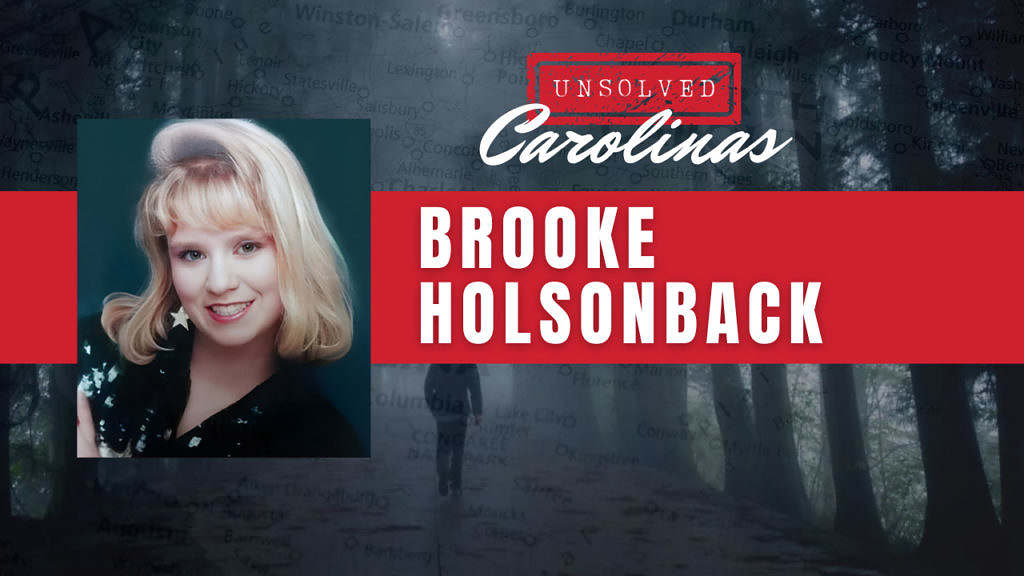
RELATED | UNSOLVED CAROLINAS: THE MURDER OF STACEY BROOK HOLSONBACK
***
THE LIFE LEFT BEHIND
In the years since her death, a clearer picture has emerged of Tina’s life in the weeks leading up to that night has emerged. She had recently separated from her husband, Tony Dale Milford, and was beginning to reconnect with friends while focusing on raising her young daughter.
She had also taken steps to change her routine, moving away from overnight shifts at the Lil’ Cricket after a prior robbery left her uneasy about working alone at night.
That separation drew early attention from investigators, as those closest to the victim are routinely among the first scrutinized in cases involving violent crime. However, despite that initial focus — and later reporting documenting Tony Milford’s unrelated criminal history in the years followingTina’s death — he was never identified as a suspect in connection with her murder.
For Tina’s family, the details of her life during that period have only reinforced their belief about what happened. They have long maintained that she would not have willingly left the store with a stranger, pointing instead to the likelihood of force, coercion, or some level of familiarity between Tina and the person responsible. Even now, their focus has never rested on a single individual, but on the broader uncertainty surrounding that night — and the unanswered question of who ultimately took her from them.
***
LEADS, LOSSES — AND TIME
At the time of Tina’s murder, the crime did not unfold in isolation. It came amid a broader pattern of violence targeting convenience store clerks — particularly those working overnight shifts in locations just off major highways. The same Lil’ Cricket where Tina worked had already been the site of another deadly incident, and similar crimes were being reported across the region, heightening concerns about the vulnerability of late-night retail workers. In the days that followed her killing, those concerns turned into renewed calls for stronger safety measures, including increased patrols and physical barriers between clerks and customers — changes that, for Tina, came too late.
Despite the initial leads and suspect desciption, the investigation gradually lost momentum. Over time, various suspects were considered and ruled out, including individuals later linked to other violent crimes.
None could be conclusively connected to Tina’s murder.
Decades later, the case was reshaped by advances in forensic technology. Investigators have acknowledged that DNA evidence recovered from Tina’s clothing could prove critical — a development that introduced a new avenue for answers long after traditional leads had been exhausted. By 2018, authorities indicated that such evidence existed and might identify her killer if a match could be made.
For Tina’s family, that possibility has offered a measure of cautious hope, even as it underscores a difficult reality: the answer may already exist, preserved in evidence, waiting for the moment when science — or someone’s decision to come forward — finally brings it to light.
***
A FAMILY STILL WAITING…
More than forty years later, time has not resolved the case of Tina Hunter Milford — it has only reshaped it. Her daughter grew up without her. Her parents spent decades searching for answers. Her sisters continue to speak publicly about the loss, carrying not just grief, but the weight of unanswered questions that have never gone away.
“We all have too many unanswered questions,” one family member said years later. “There are too many what ifs.”
That uncertainty has become part of the case itself — woven into its history just as much as the evidence collected in 1983.
At its core, the central question has never changed: what happened inside that store in the early hours of June 24, 1983 — and who was responsible for what followed? Was Tina targeted by someone who knew her routine, or was she simply vulnerable in a moment that turned fatal? Did her killer come from the surrounding community, or pass through along Interstate 85, disappearing as quickly as he arrived?
For investigators, those questions remain open. For her family, they remain urgent.
Anyone with information about the murder of Tina Hunter Milford is urged to contact the Anderson County Sheriff’s Office (ACSO) or Anderson Area Crime Stoppers at 1-888-CRIME-SC (274-6372). Because cases like this are rarely solved by time alone — they are solved when someone decides to come forward.
And after all these years, that decision still matters.
***

***
ABOUT THE AUTHOR …

As a private investigator turned journalist, Jenn Wood brings a unique skill set to FITSNews as its research director. Known for her meticulous sourcing and victim-centered approach, she helps shape the newsroom’s most complex investigative stories while producing the FITSFiles and Cheer Incorporated podcasts. Jenn lives in South Carolina with her family, where her work continues to spotlight truth, accountability, and justice.
***
SOUND OFF…
Got something you’d like to say in response to one of our articles? Or an issue you’d like to address proactively? We have an open microphone policy! Submit your letter to the editor (or guest column) via email HERE. Got a tip for a story? CLICK HERE. Got a technical question or a glitch to report? CLICK HERE.
