
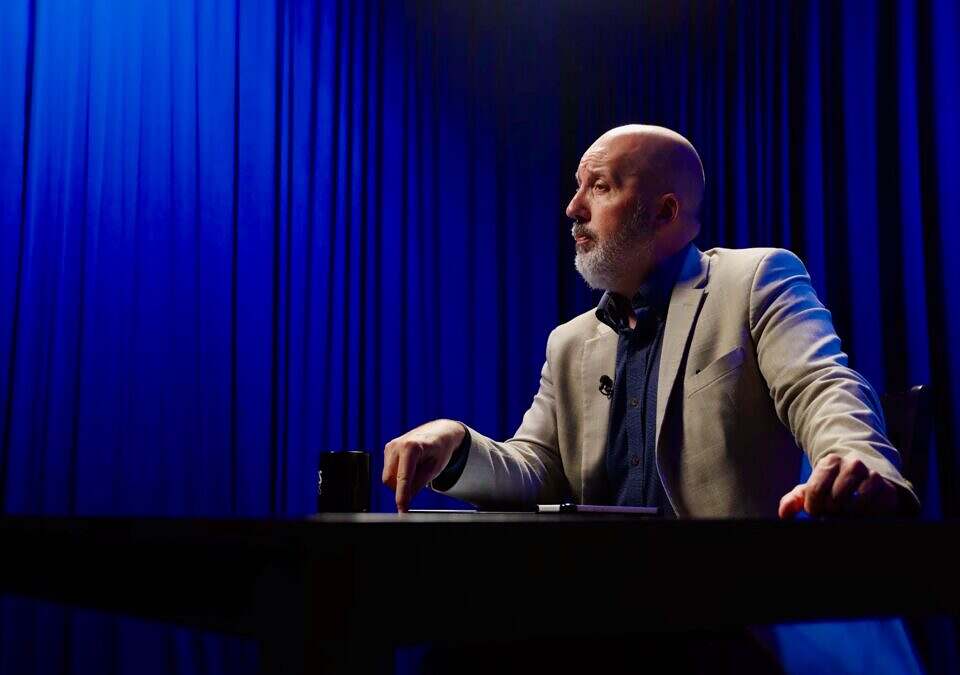
by WILL FOLKS
***
South Carolina’s 2026 election cycle made history – with Democrats winning their first statewide race in twenty years and capturing their first U.S. Senate victory since 1998. The Palmetto State’s perpetual minority party also flipped a congressional district – and ten seats in the S.C. House of Representatives.
All of a sudden, South Carolina is home to competitive elections… and the ruling GOP has a situation on its hands.
In our opening segment, founding editor Will Folks assesses the electoral upheaval – most notably the stunning upset of interim U.S. senator Darline Graham Nordone by Democrat Annie Andrews.
Will also discussed narrower-than-expected Republican wins in multiple statewide offices – including governor-elect Alan Wilson’s victory over Democrat Jermaine Johnson. Wilson’s upcoming agenda is also in the spotlight as he begins his transition to the Palmetto State’s chief executive office.

***
In our second segment, research director Jenn Wood joined us to discuss the aftermath of an aborted plea hearing in the case of Logan Federico – a 22-year-old student who was brutally murdered by a career criminal in Columbia, S.C. during the spring of 2025. Federico’s father, Stephen Federico, has become one of the most important figures in the fight to fix South Carolina’s badly broken “justice system” – which, as of this publication, continues to fail him and his family.
Finally, Jenn and Will briefly previewed next week’s status conference in the retrial of accused killer Alex Murdaugh – a hearing which will focus on his attorneys’ bid to throw out the original murder indictments issued against him. That effort caught a voluminous response from state prosecutors this week, which Jenn covered in extensive detail.
Thanks once again to everyone who watches and shares our show – and extra special thanks to everyone who subscribes to our media outlet. Your subscriptions empower everything we do at FITSNews: the lights, the camera, the accountability… all of it is thanks to your support.
If you value truth and accountability – please subscribe today! And if you’re already a subscriber, please consider gifting a subscription to a friend… or purchasing some of our cool merch!
Catch you next week…
***
ABOUT THE AUTHOR…
Will Folks is the founding editor of the news outlet you are currently reading. Prior to founding FITSNews, he served as press secretary to the governor of South Carolina. He lives in the Midlands region of the state with his wife and eight children.
***
SOUND OFF…
Got something you’d like to say in response to one of our articles? Or an issue you’d like to address proactively? We have an open microphone policy! Submit your letter to the editor (or guest column) via email HERE. Got a tip for a story? CLICK HERE. Got a technical question or a glitch to report? CLICK HERE.

1 comment
STATE OF SOUTH CAROLINA COURT OF GENERAL SES-SIONS
COUNTY OF COLLETON FOURTEENTH JUDICIAL CIRCUIT
State of South Carolina, Indictment Nos. 2022-GS-15-00592, 593, 594, and -595
v. RESPONSE IN OPPOSITION TO DEFENSE MOTION TO
Richard Alexander Murdaugh, Defendant. DISMISS THE INDICTMENTS
On July 14, 2022, a Colleton County Grand Jury returned true-billed indictments against Defendant for the murders of Margaret “Maggie” Kennedy Branstetter Murdaugh and Paul Terry Murdaugh (2022-GS-15-00592 and 593), along with two counts of possession of a weapon during the commission of a violent crime (2022-GS-15-00594 and 595). Defendant now moves to dismiss the indictments for alleged misconduct during the presentment of the case to the Colleton County Grand Jury in July of 2022, asserting the State fabricated ev-idence about blood spatter on Defendant’s T-shirt and mixed shotgun loads found on the property. The State did not fabricate or falsify any testimony. Regardless, there was more than ample probable cause regardless of whether that evidence is considered or not. This extraordinary and rare relief of dismissal is unsupported under the facts and the law and thus should be denied.
A. The State did not present false or fabricated evidence to the Colleton County Grand Jury regarding blood spatter on Defendant’s T-shirt.
The defense is simply incorrect in its assertions that a SLED agent presented false blood spatter evidence — much less “fabricated” evidence — to the Colleton County Grand Jury that indicted Defendant Alex Mur-daugh for the murders of his wife and child. The [Page 1 of 22] [NOV 6 2026 PM3:16 COLLETON CO GS,GARY HALE] defense asserts that SLED and an outside expert fabricated an opinion that blood spatter was found on Defendant’s T-shirt, and bases this in part on the fact that a SLED lab report showing no blood present was inadvertently missed and initially not provided by SLED to the expert. These are not new issues, and all of this was litigated prior to and during the previous trial. Regardless, as will be seen, the resulting opinion was not fabricated much less even false, and it represented but one part of what the investigation had uncovered when the agent related the opinion to the Colleton County Grand Jury.
1. Facts
In the early morning hours of June 8th, 2021, SS/A David Owen collected and secured the clothing Alex Mur-daugh had been wearing when law enforcement arrived at the scene, and this included his white T-Shirt {Ex. A, Tr. 3613, (item 19)}. On June 25, 2021, a SLED lab report was issued indicating a presumptive pos-itive for blood on a cutting from the bottom of the shirt. {Ex. B, Tr. 3208-3209, S460}. On July 21, 2021, following discussion among the agents, SLED Lab processed item 19 with a LeuroCrystal Violet (LCV) test. This presumptively indicated the presence of blood, as well as spatter and transfer stains on the shirt. {Ex. B, Tr. 3208-3209, S460}. Further, on July 25, 2021, the SLED lab issued a DNA report finding Maggie or Paul were contributors on certain cuttings taken from the shirt. {Ex. C, 7/25/2021 DNA Report}.
Given these findings, and given that SLED does not perform conclusive blood spatter analysis, SLED re-searched four experts in the field and ultimately engaged Bevel, Gardner, and Associates (BGA) in late 2021. SLED investigative materials were sent to BGA on January 4, 2022. {Ex. D, 1/4/2022 Email}. One month later, on February 4, 2022, BGA sent a draft report to SLED, which did not indicate the presence of blood spatter. {Ex. E, 2/4/2022 Email}. A Zoom call was held a few days later to discuss this and other crime scene findings. On February 15, 2026, SLED sent a picture of the T-shirt to Bevel, who indicated “it doesn’t look promising but if I testify at trial I would prefer to say I saw [the shirt] in person”. {Ex. F, 2/15/2022 — 2/16/2022 Emails}.
On 3/9/2022, SS/A Owen and Lt. Wallace flew to Oklahoma to meet with Bevel, taking item 19 for his exam-ination, along with “raw” photographs of the shirt taken prior to its processing with LCV. {Ex. G, 2/19/2022 — 3/1/2022 Emails}. On 3/29/2022, Bevel transmitted his final report to SLED. Reviewing the higher quality images taken prior to LCV processing, and having enhanced the image in Photoshop, BGA concluded there were over 100+ spatter stains on Defendant’s T-shirt. {Ex. H, 3/29/2022 Email, 3/29/2022 Bevel Report}.
The State did not seek indictment until long after additional evidence was obtained, including the discovery and assessment of the kennel video, completion of the FBI telemetry analysis, and further development of motive evidence. SS/A Owen presented the murder case to the Colleton County Grand Jury in July of 2022. The SLED agents prepared an outline for this testimony, which ultimately was provided to the defense in dis-covery prior to the first trial. This outline contained the following passage regarding blood spatter evidence:
Clothing worn by Alex taken and analyzed by lab and BS experts: DNA/blood spatter (mist) on shirt (Bevel Gardner conclusion) (Shooter in doorway – Paul)
On November 23, 2022, the defense filed a motion in which it demanded production of all Bevel related doc-umentation, and sought to suppress his opinion concerning Murdaugh’s shirt. Attached to the motion was a SLED HematTrace report dated November 10, 2021, that was in the SLED lab case file provided to the de-fense. It indicated “no human blood identified” on samples from the T-shirt. This report unfortunately had been inadvertently missed by the agent and had not been previously provided in the normal discovery pro-cess to the Attorney General’s Office or the expert. The report was uploaded on November 30, 2022, and provided to the defense on December 2, 2022.
The missing November 2021 SLED lab report was also provided to the expert Bevel on December 1, 2022, who reviewed it and conducted additional analysis and experimentation. Bevel ultimately concluded that treatment with LCV could in fact cause a false negative result of “no blood identified” from HemaTrace, and issued a supplement to his report in which he confirmed his prior opinion that blood spatter was present on Defendant’s T-shirt. {Ex. I, Bevel Report Addendum 12-18-22}.
The prosecution ultimately elected not to present Bevel’s expert opinion at the first trial. SS/A Owen, how-ever, was cross-examined at the first trial about the spatter evidence and the outline of his presentation to the Colleton County Grand Jury. He noted he related the opinion to the grand jury, and that he had not seen the November 2021 HematTrace lab report until the error was discovered in November of 2022. {Ex. J, Tr. 3684-85; 3689}. On redirect he related some of all the other substantial evidence he presented to the Colle-ton grand jury. {Ex. K, Tr. 3722-27}. [Page 4 of 22]
2. Law
The right to presentment is secured by the state constitution and statute. State v. Baker, 411 S.C. 583, 588, 769 S.E.2d 860, 863 (2015) (citing S.C. Const. art. 1, § 11); S.C. Code Ann. § 17-19-10 (2014). The regularity of grand jury proceedings is presumed absent clear evidence to the contrary, and the burden is on the defendant to prove facts upon which a challenge to the legality of the grand jury is predicated. Evans v. State, 363 S.C. 495, 514, 611 S.E.2d 510, 520 (2005).
While certain procedural or structural challenges can be made to a grand jury proceedings, see Evans, supra, South Carolina courts have generally rejected any inquiry into the adequacy or substance of the evidence presented to the grand jury.
In State v. Thrift, 312 S.C. 282, 440 S.E.2d 341 (1994), the court recognized that while “ordinarily we do not inquire into the nature or sufficiency of the evidence before a grand jury”, an exception would exist for a col-orable claim of prosecutorial misconduct. Thrift was a 1994 SGJ case in which there was a transcript, unlike the Colleton County matter here, and in which the prosecutor repeatedly elicited from a target — who was ultimately indicted — that he had refused to take a polygraph. The prosecutor also called the polygrapher before the state grand jury to testify that the target repeatedly refused to take a polygraph, after the polygra-pher told the target he should not take one if he was going to lie. Id. at 301, 440
Thrift stated dismissal for “prosecutorial misconduct” was only appropriate if the “violation substantially in-fluenced the grand jury’s decision to indict, or there is grave doubt that the decision to indict was free from substantial influence of such violations”. ld. at 303-04, 440 S.E.2d at 353. Polygraphs are of course exceedingly prejudicial and strongly rejected as credible evidence by our state supreme court, so it is not surprising Thrift ultimately found dismissal was warranted. Id. The court did so noting the “extensive testimony elicited about the polygraph refusal, especially without any instruction to the State Grand Jury, coupled with the State’s ac-knowledgment of the weakness in its case against Gilreath”. Id.
3. Discussion
Here, the record thus establishes that no fabricated evidence was presented to the Colleton County Grand Jury. To summarize, SLED sprayed the shirt with LCV in July of 2021 to check for blood spatter, and con-cluded it was presumptive for blood and possible blood spatter. Since SLED needed an external expert to actually complete a blood spatter analysis, they hired a national expert who was qualified in that field. Follow-ing discussion in February of 2022 with the expert following his draft findings, the expert indicated he would rather have seen the shirt in person if he might be testifying. He also indicated he wanted raw images of the shirt prior to treatment with LCV. Since the Attorney General’s Office had made it clear to SLED that no evi-dence in this case would be transported by mail or commercial carrier for fear of it being lost, damaged, or complicating chain issues [Page 6 of 22] at trial, two SLED agents physically took the shirt to Bevel in early March of 2022. Inspection of the shirt did not assist the expert in his ultimate findings, but the images he reviewed did, and he issued a report on March 29, 2022, opining the presence of stains consistent with blood spatter. After the defense motion caused the agent in November 2022 to locate the missing SLED lab report from November 2021, it was delivered to Bevel and Associates. Bevel did further analysis and experimenta-tion as to whether LCV application could have precluded a positive HemaTrace result. Concluding it could cause a false negative, Bevel issued a subsequent report in which he said the recently discovered SLED lab report did not change his opinion. He continued to conclude that Defendant’s shirt had stains that came from a “disruptive force consistent with a back spatter event such as the discharge of a firearm”. {Ex. I, Bevel Report Addendum 12-18-22}.
Therefore, the agent’s presentation of the opinion to the Colleton County Grand Jury was not false or even just mistaken. After the missing SLED lab report was discovered in November of 2022, Bevel’s addendum stated: “I stand by this opinion”, and “The original opinion based on the information at the time was cor-rect”. {Ex. I, Bevel Report Addendum 12-18-22}. The opinion remains viable. Therefore, nothing false was presented to the Colleton County Grand Jury.
Moreover, nothing establishes this evidence was fabricated. The defense’s editorializing of a purported nefar-ious purpose every step of the way during SLED’s process is an unsupported supposition. A single mistake is not bad faith, and the record of the process between SLED and Bevel actually weighs against any conclusion of a purported nefarious conspiracy as to one opinion about piece of evidence. When the [Page 7 of 22] agent testified as to the opinion before the Colleton County Grand Jury, it was simply relevant evidence form the investigation known to him at the time — and of course a grand jury is exactly that — an investigative process. The fact the State subsequently decided not to use this opinion at the first trial is not a concession that anything was false or fabricated — it was simply a strategic prosecutorial decision based on the strength and persuasiveness of all the other powerful evidence against Defendant Murdaugh. This is akin to classic “weight not admissibility”.
Therefore, there is no evidence of misrepresentation or intentional fabrication, much less even presentation of false evidence. Further, even if this evidence was excluded from the presentation, there was ample other evidence to support probable cause in the matter, and the high burden for dismissal from Nova Scotia as adopted by Thrift is not met.
B. The SLED agent did not fabricate evidence about the shotgun loads before the Colleton County Grand Jury that considered the murder indictments.
In their motion, the defense contends SLED misrepresented information about the how certain shotguns were loaded to the grand jury, and attributes some bad faith to the police in this regard. Again, not only is this not an issue, but the defense contention is incorrect. Even if the agent did have a misunderstanding about what he was told regarding other shotshell loads recovered when he testified before the State Grand Jury in November of 2021, there was in fact evidence of mixed loads in recovered Murdaugh shotguns — in-cluding another shotgun with a buckshot and a birdshot load. Thus, the testimony before the Colleton Coun-ty Grand Jury was certainly not fabricated, and regardless, even if it is excised there was ample evidence for probable cause.
1. Facts
Paul was struck by two shotgun shells — first, a 12-gauge Federal Premium Double-ought Buck 3 inch round {Ex. L, Tr. 1907, 1932, 1948, S34, S400 (Item 9)}, and second, the fatal shot, a 12 gauge Winchester Drylok Number 2 shotshell {Ex. L, Tr. 4907, 1932, 1948, S33, S400 (item 10)}. The steelshot Drylok shell contains a heavier shot primarily used for hunting larger waterfowl.
Of course, prior to the first trial, the defense had transcripts of the State Grand Jury. Because county grand jury proceedings are not generally transcribed, there is no transcript of that, but the defense was provided draft documents that the SLED agent had prepared for his testimony in presenting the indictments to the Colleton grand jury. At the first trial, during SLED SS/A Owen’s cross-examination, he testified that he was not a hunter but knew the difference between big pellets and small pellets, that he was told at first by other officers a turkey load was one of the rounds that were found in the feed room, and that he used a permissi-ble “investigative tool” in discussing the issue of mixed loads in his final interview with Defendant. He added:
Q: But you also testified under oath in front of the State Grand Jury. You said basically the same thing, that there were four shotguns on the Moselle property and they were loaded with buckshot and turkey load.
A: Yes.
Q: Now, were you mistaken then or were you trying to trick the State Grand Jury?
A: No. I was not trying to trick the State — or trick the State Grand Jury.
Q You were mistaken.
A: No.
Q: Well, did you not — [Page 9 of 22]
A: The shotguns that were recovered from the house had two different loads in them. They weren’t Winchester-Winchester, or Federal-Federal. They had different loads in them. So, when I tell the State Grand Jury there’s different loads in the shotguns, there were different loads in the shotgun.
Q: So, you’re saying you weren’t telling them it was buckshot and turkey key load, but you were telling them it was just different brand names of the — of something.
A: I may have used buckshot and turkey load or birdshot, but they were two different loads.
Q: Well, I think we’ve established that you did not find — SLED did not find any weapons at the house with buckshot and turkey load loaded in them, right?
A: That is correct.
Q: I’m going to show you page 48, line 7 through 14 of your Statewide Grand Jury testimony. Agent Owen, do you recognized that to be a copy of your State Grand Jury testimony?
A: Yes, I do.
Q: And what date was that given?
A: Tuesday, November 16, 2021.
Q: All right, and if you’ll go to the page | had open, and I tell you I’m going to read the ques-tions. If you’ll read the response. It says at line 7: “All right, and were all of them to your recol-lection loaded that — like that? And your answer was?”
A: They were — they were loaded in a similar fashion, yes.
Q: Question: In a similar fashion?
A: Yes, sir.
Q: Question: With on turkey load and one buckshot load.
A: Response: Yes, sir.
Q. All right. Thank you. And that was not accurate, correct?
A: Correct. [Page 10 of 22]
Q: And people make mistakes, do they not?
A: Yes, they do make mistakes.
{Ex. M, Tr. 3693-97}.
Defendant’s August 11, 2021 interview with SS/A Owen was introduced and played for the jury, in which Owen — who ultimately confronted Defendant on “another concern [that] I’ve got [because] the same load as the shot shells in multiple guns and 300 blackout … match ones found on your property”, asked Defendant:
OWEN: The reason I’m askin’ about that … the shot shells that were recovered that night, one was a turkey load and one was a buck shot.
MURDAUGH: I understood that.
OWEN: The shotgun that you had with you that night — there was a bird shot and a buck shot (Mr. Murdaugh shakes head in the affirmative) um when Jeff went back the next day um I’m not sure which attorney it was pointed out that there had been a shotgun layin’ on the pool table that he had put away and pointed out that ammunition that was with that and it was a buck shot and a bird shot and then the shotgun that we took um for potential compari-son, it was loaded with a bird shot and a buck shot, so I have all of these consistent loads along with what’s that? in the feed room — I call it the feed room at the kennels, is that what you call it?
{8/11/21 Interview 10:22:22 AM; 10:28:20}.
Provided to the defense in discovery prior to the first trial was a working document attached to an email be-tween SLED agents that was prepared for the investigator’s testimony. The document, which was named “SGJ Presentation” but had been then edited to be entitled “Colleton County Grand Jury Presentation”, has a metadata reflecting it was created in October of 2021 but was being edited in July of 2022. In it, there were the following references consistent with Owen’s testimony about the State Grand Jury presentation in No-vember 2021:
“The shotgun located in Alex’s possession the night of June 7, as well as shotguns located in the Moselle property were found to be loaded in the [Page 11 of 22] same manner (buckshot shell and one turkey/bird load shot shell) as those that were used in the murder of Paul.”
“Two different shot shells, one turkey/bird shot load and one buck shot load were found near Paul’s body were found to be a consistent load found in the 12-gauge shotgun found in Alex’s possession the night of the homicides as well as two other shotguns found in the Murdaugh residence.”
{Ex. N, Owen Email to Ghent 7/7/22}. However, the defense was also provided in discovery prior to the first trial the outline that SLED agents had prepared in July of 2022 for presentation of the murders to the Colleton County Grand Jury in July 2022. That outline contained the following:
-Weapons inventoried in home, explanation of shotshell loadings (Waterfowl load/buckshot), 300 Blackout rifles
-Family had [a]t least 2 Blackout rifles — Paul and his brother Buster’s.
– Blackout casings near Maggie matched to those found near house and elsewhere on proper-ty
-Shotshells of similar make and load found on property, types of loads consistent in invento-ried weapons
{Ex. O, Ghent Email to Owen 7/12/22}.
Ultimately, shotshells of the exact make, model, and size as the 12 gauge Federal Premium buckshot that struck Paul were found in the “hangar” at the kennel area of the property, and shotshells of the exact make, model, and size of the 12 gauge Winchester Dry-Lok steel shot that killed him were found in the “gun room” of the main house. {Ex. P, Tr. 828-30, S143 – S150}. A family-owned Benelli 12-gauge shotgun could not be accounted for. More importantly, firearms examiners found the 300 Blackout casings that surrounded Mag-gie’s body had been loaded into, extracted, and ejected through same [Page 12 of 22] weapon as the weath-ered 300 Blackout casings found outside the gun room of the main house and at the family shooting range across the street. {Ex. Q, Tr. 1996, S400}.
The forensic evidence established the following about the four 12-gauge shotguns recovered from the Mur-daugh property:
(1) The camo Benelli Super Black Eagle 3, which Defendant stated on the 911 call he left the murder scene and obtained from the main house, was loaded with: (a) a Federal 12 gauge 00 buckshot shotshell and a (b) Winchester 16 gauge Super X Game #8 birdshot shotshell. {Ex. R, Tr. 762-63, 1909, S4, S400 (Item 22)}.
(2) The Mossberg shotgun from the main house was loaded with a single shell -a Browning TSS 31/2 Magnum” #7 and #9 blend turkey load. {Ex. S, Tr. 1010, 1917, S89, S400 (Item 30)}.
(3) The Browning Auto-5 shotgun found in the main house was unloaded. {Ex. T, Tr. 1916, S90, S400 (Item 31)}.
(4) The Benelli Super Black Eagle 2 found in the main house was loaded with: (a) Federal Premium Heavyweight TSS 31/2 length #7 shot, and a (b) Winchester 3” Longbeard XR Shot — a turkey load. {Ex. U, Tr. 940-41, 1917, 1934, 1977, S91, S400 (Item 32)}.
Therefore, the evidence shows: (1) there was in fact a Benelli shotgun Defendant had from the main house that did have a mixed buckshot and birdshot load, and (2) the other Benelli shotgun recovered from the main house had mixed loads of differing length and shot sizes. Also, one of Defendant’s law partners testified that he went in the gun room just hours after the murders, and saw three shotguns and “some shells and stuff” on the pool table that had been apparently put up by the time he returned the next afternoon (before SLED’s firearms search). {Ex. V, Tr. 4421-22}. Further, in multiple locations on the property there were boxes or crates containing mixed shotgun shells together of various makes, gauges, and shot. {Ex. W, Tr. 824-25, S119, S122}. [Page 13 of 22]
2. Discussion
While there may have been some confusion and imprecise language early on as to what the investigator re-membered he was told about the variation of loads found in the various shotguns on the Murdaugh property by other officers, there is simply no evidence of an effort to intentionally mislead the Colleton County Grand Jury that considered the murder indictments in July 2022. The outline for use with the Colleton County Grand Jury did accurately correct from “turkey loads” the rounds used the shoot Paul (“Waterfowl load/buckshot”). The outline correctly stated that “[s]hotshells of similar make and load found on property” — actually the exact make and load were found, and the outline appropriately discussed “types of loads con-sistent in inventoried weapons.” In fact, two other shotguns did in fact have mixed loads, including one that had a buckshot and a birdshot loaded just as the murder weapon did. And, of course, boxes of casually mixed shells were found within the property.
Thus, there is no indication of an intentional fabrication of false evidence before the Colleton County Grand Jury, on what is really a very minor circumstantial point anyway. It simply makes no sense to contend the agents would go to the trouble to intentionally fabricate on this point of all things — particularly given all of the significant other evidence presented in the case and reflected on the outline. Ultimately, the presentation was consistent with the evidence recovered, but even if there was some misunderstanding in how the mixed shotshell issue was precisely related, the evidence at the scene still reflected mixed loads in other shotguns and elsewhere throughout the property. Therefore, there is no evidence of misrepresentation or intentional fabrication. [Page 14 of 22]
Further, even if this evidence was excluded from the presentation, there was ample other evidence to sup-port probable cause in the matter.
C. Even when considered together, the presentation of the spatter opinion and the shotgun evi-dence provides no basis for the extraordinary remedy of dismissal without prejudice of an indict-ment.
Collectively or individually, neither the Bevel opinion nor the shotgun evidence warrant the extraordinary remedy of dismissal of an indictment. As set forth before, there is absolutely no evidence of prosecutorial misconduct in the presentation of this information by the SLED agent. Of course, prosecutors were not pre-sent in the county grand jury room. Nor is there evidence of police misconduct in the presentation. The rec-ord is simply devoid of any evidence showing intentional fabrication, and bare speculation of improper mo-tive is insufficient. See generally State v. Needs, 333 S.C. 134, 146, 508 S.E.2d 857, 863 (1998) (refusing to impute misconduct where the prosecutor indicted an accomplice but later dismissed the charges). Thus, the first prong of the Thrift analysis is not triggered.
Indeed, it absolutely strains credulity to contend that the State decided to engage in a conspiracy on these just two pieces of evidence months later at a July 2022 indictment presentation — when they were but a few lines in an outline on probable cause that covered, among other things: the motive evidence (including the Satterfield case, the confrontation that morning about the missing $792,000, the boat case hearing to expose his finances, and the fact the murders put all of this at bay), the blue raincoat (that Defendant suspiciously brought to Almeda that tested off the charts for GSR on the inside), the roadside shooting (which like the murders briefly took the heat off Defendant when accountability was at his door), the missing Blackout rifle, the match of the Blackout casings around Maggie’s body with casings found throughout the property, and more importantly, the timeline — which showed Defendant was at the scene, with the victims, just moments before they died, and had been lying to everyone about it, from law enforcement to his family, friends, and law partners. It makes no sense to impute an improper and intentional motive as to a couple of pieces of evi-dence where to do so would be completely unnecessary. State v. Thompson, 305 S.C. 496, 409 S.E.2d 420 (Ct.App.1991), held that, “[s]peculation about ‘potential’ abuse of grand jury proceedings cannot substitute for evidence of actual abuse as grounds for quashing an otherwise lawful indictment.
For the reasons above, Defendant simply cannot meet the second prong of the Thrift test in establishing any error “substantially influenced the grand jury’s decision to indict, or there is grave doubt that the decision to indict was free from substantial influence of such violations”. The spatter opinion is not even false. The shot-gun testimony is not either — even if maybe it was not precisely expressed by the time of Colleton grand ju-ry. [Page 16 of 22] It was still a ball fairly put in play given the evidence of other mixed loads in two other shotguns and bins on the property. Both represented the agent’s best understanding of the investigation at the time. Even if there was a mistake, mere mistakes are rarely sufficient for the Defendant’s desire remedy where there is ample other evidence. United States v. Moore, 184 F.3d 790, 794 (8th Cir. 1999) (‘these state-ments were made based on [the agent’s] belief at the time, and misstatements or mistakes alone do not justi-fy the dismissal of an otherwise valid charge” … “As long as there is some other competent evidence to sus-tain the charge, the charge should not be dismissed’”).
And neither issue overcomes all the other evidence, set forth above, that was more than sufficient to estab-lish probable cause many times over. There is no “grave doubt” under Thrift’s text. This is not a case like Thrift where something exceptionally prejudicial like a polygraph was harped upon, and there was hardly any-thing else to the rest of the case. Indeed, this case survived directed verdict (and got a jury verdict) without presentation of these supposed errors.
Finally, Defendant has also arguably failed to raise the issue in a timely fashion — none of his allegations are new. In fact, Defendant made the same complaints at the first trial and even questioned witnesses about the Bevel opinion, the “hematrace test,” and Agent Owens’s testimony to the grand jury regarding the shirt and the shotguns. Though this is a retrial, that does not require a new indictment anymore than it requires a new arrest warrant. Where defendant intentionally did not move to dismiss before, it is difficult to resolve that prejudice has increased from an unchanged set of facts fully available before the first trial. The claim is at best stale.
“[A] trial court generally has no power to dismiss a properly drawn indictment issued by a properly consti-tuted grand jury before trial unless a statute grants that power to the court.” State v. Needs, 333 S.C. 134, 146, 508 S.E.2d 857, 863 (1998). Here, the claim lacks merit under the very rare Thrift exception to that general rule.
D. Claims of impermissible recent use of the State Grand Jury are irrelevant.
Defendant also claims the State is violating State Grand Jury procedures to investigate an already indicted case, and argues that the State was using the State Grand Jury to investigate matters outside of its jurisdic-tional purview. The is completely irrelevant, but regardless the defense is entirely incorrect.
A few points here are necessary, First, Defendant is discussing a supposed recent investigation into a com-pletely separate matter from spatter or mixed shotgun loads. It is thus completely irrelevant to the matter be-fore the Court — which is a motion to dismiss based on the specifics of what an agent presented to the Colleton County Grand Jury over four years ago.
The defense motion, publicly filed, breathlessly details allegations involving supposed disposal of weapons by Greg Alexander. Defendant quotes a purported conversation between Joe McCulloch and the undersigned, and attaches a copy of a supposed subpoena to the State Grand Jury for Mr. McCulloch’s client, while re-counting in a public filing the nature of the supposed State Grand Jury inquiry. The State was thus [Page 18 of 22] compelled to respond in a public motion, but did not talk about the specifics of any testimony that might be before the State Grand Jury. It just commented that it would – as it always would do – assess the allegations the defense breathlessly trumpeted in their very public filings and put squarely in play, whether they prove to be nothing, inculpatory, or exculpatory.
Third, some general discussion of the procedure and grand jury law is warranted. The State Grand Jury is one of limited jurisdiction over particular crimes, and in this case began indicting in November 2021 various financial crimes against Defendant Murdaugh, ultimately totaling 101 total charges in indictments that con-tinued with new or superseding charges against Defendant and others through April 2023 (2021-GS-47-27, -28, -29, -30, -31, -32, -33, -34, -35, -36, -37, and -38; 2022-GS-47-01, -02, -03, -10, -23, -24, and -34; 2023-GS-47-03; 2022-GS-15-00592, -593, -594, and -595). The grants of jurisdiction to the State Grand Jury for which these indictments against Defendant were obtained are listed on each count, and include: (1) money laundering, under S.C. Code § 14-7-1630 (A)(14) (a crime involving money laundering or related to money laundering); (2) computer crime S.C, Code § 14-7-1630 (A)(5); and (3) crimes involving narcotics, dangerous drugs, or con-trolled substances under S.C. Code § 14-7-1630 (A)(1).
While a grand jury cannot be used with the “sole or dominant purpose” of preparing for trial on existing in-dictments, a grand jury may be used to explore new or superseding conduct against existing defendants, or conduct against as yet unindicted subjects or targets. See, e.g. United States v. Flemmi, 245 F.3d 24, 28 (1st Cir, 2001) (“if a grand jury’s continuing [investigation] results in the indictment of parties not previously charged, [or] “when the grand jury’s investigation leads to the filing of additional charges against [Page 19 of 22] previ-ously indicted defendants.”); United States v. Moss, 756 F.2d 329, 332 (4th Cir. 1985) (“Once a defendant has been indicted, the government is precluded from using the grand jury for the “sole or dominant purpose” of obtaining additional evidence against him.”).
Thus, a “good faith inquiry into other charges [not included in the indictment] … is not prohibited even if it uncovers further evidence against an indicted person.’ United States v. Moss, 756 F.2d 329, 332 (4th Cir. 1985). See also Flemmi, 245 F.3d 24, 28 (“After all, superseding indictments setting forth new charges or adding new defendants are familiar fare.”). See also U.S. Dep’t of Justice, Justice Manual § 9-2.120 (2026) (“After indict-ment, the grand jury may be used if its investigation is related to a superseding indictment of additional de-fendants or additional crimes by an indicted defendant, citing In re Grand Jury Subpoena Duces Tecum, Dated January 2, 1985, 767 F.2d 26, 29-30 (2d Cir. 1985); In re Grand Jury Proceedings, 586 F.2d 724 (9th Cir. 1978)):; 1 Charles Alan Wright, Federal Practice and Procedure (Criminal) § 111.1 (3d ed. 1999) ([I]f a grand jury is making a bona fide investigation of a possible crime, the fact that testimony thus obtained might be useful in a pend-ing criminal action does not show an abuse of the grand jury process”).
As a general rule, “[t}he nature of questioning for a grand jury investigating obstruction of justice or witness tampering will necessarily require some inquiry into the facts of the underlying, ongoing case”. United States v. Alvarado, 840 F.3d 184, 193 (4th Cir. 2016). And, “[i]t follows logically that, as a general rule, “evidence ob-tained pursuant to [an ongoing grand jury] investigation may be offered at the trial on the initial charges.” United States v. Flemmi, 245 F.3d 24, 28 (1st Cir. 2001). [Page 20 of 22]
Moreover, the South Carolina State Grand Jury Act specifically authorizes the state grand jury — by court order — to provide information it uncovers during an investigation within its jurisdictional grant to “[assist] local, state, other state or federal law enforcement or investigating agencies, including another grand jury, in investigating crimes under their investigative jurisdiction”. See S.C. Code § 14-7-1720 (A)(3) (emphasis added).
Crimes are so often intertwined with each other. Thus, the rules do not require an artificial separation as long as the specific investigation for the entity is authorized. It should also be noted as a general matter here that the South Carolina State Grand Jury Act specifically authorizes inquiry into allegations of public corrup-tion. See S.C. Code §14-7-1630 (A)(3) (“a crime, statutory, common law or other, involving public corruption as defined in Section 14-7-1615, a crime, statutory, common jaw or other, arising out of or in connection with a crime involving public corruption as defined in Section 14-7-1615, and any attempt, aiding, abetting, solici-tation, or conspiracy to commit a crime, statutory, common law or other, involving public corruption as de-fined in Section 14-7-1615). Just because allegations are made, or reported, or even investigated, does not mean they will amount to anything, or eventually be exculpatory or incriminating.
CONCLUSION
The Defendant was indicted by the Colleton County Grand Jury in July of 2022 for the murder of his wife and son. Based upon arguments set forth previously, the indictment was supported by a sufficient showing of probable cause considering SS/A Owen’s outline of the presentation to the grand jury. The Defendant has not shown that the challenged statements would have “affected” the indictment determination, which cannot be [Page 21 of 22] reasonably concluded based on the evidence Defendant offers for the reasons previously stated above.
For all these reasons, the motion to dismiss the indictment without prejudice, should be denied.
Respectfully submitted, ALAN WILSON – ATTORNEY GENERAL – STATE OF SOUTH CAROLINA – By: S. Creighton Waters – Sr. Assistant Deputy Attorney General – Columbia, South Carolina – November 6, 2026 [NOV 6 2026 PM 3:16] [COLLETON CO GS, GARY HALE] [Page 22 of 22]