
by JENN WOOD
***
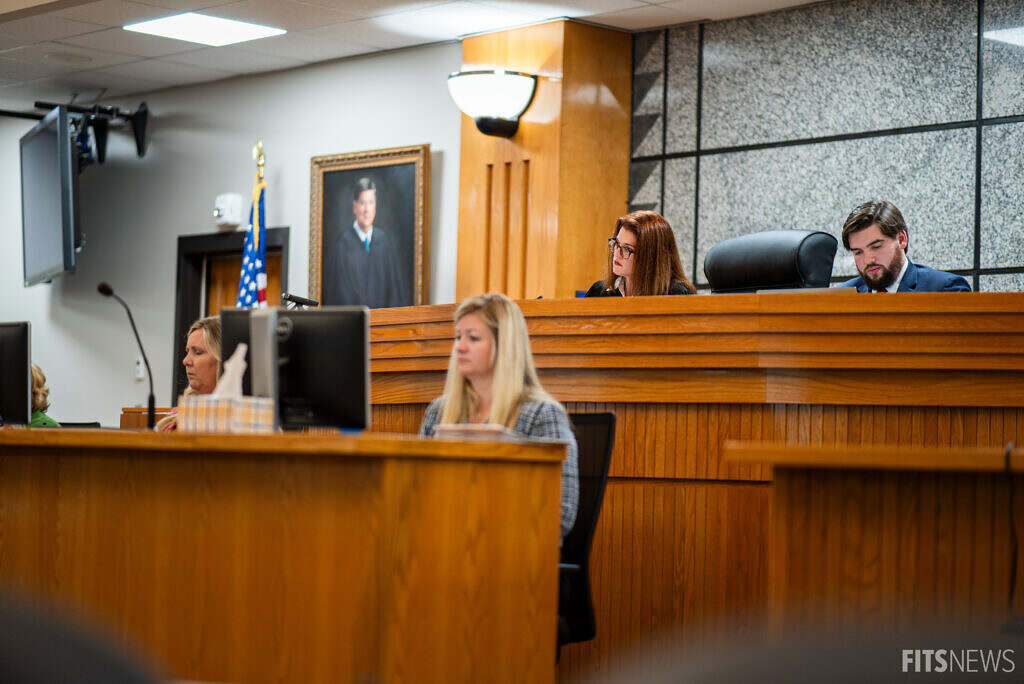
Nearly three months before accused killer Rosmore “Ross” Vilardi is scheduled to stand trial for the 2015 murders of four members of his wife’s family, prosecutors and defense attorneys are engaged in a pitched battle over the rules that could ultimately define the case jurors hear in October.
Rather than focusing on guilt or innocence, the opening day of a two-day pretrial hearing centered on what evidence should be admissible, whether prosecutors should continue developing evidence in an eleven-year-old investigation and the means of choosing an impartial jury after Vilardi’s wife was already convicted of the same crimes earlier this year.
By the end of the morning session on Monday (July 27, 2026), S.C. circuit court judge Jane Merrill signaled she was receptive to modifying jury selection procedures because of the extraordinary publicity surrounding the case – while also warning prosecutors against creating new evidence through additional testing before trial. At the same time, she acknowledged the state’s continuing ethical obligation to disclose newly discovered information if it emerges organically.
The hearing marked the first opportunity for prosecutors to publicly respond to a series of sweeping defense motions filed earlier this month seeking dismissal of the prosecution or exclusion of significant portions of their evidence.
Vilardi is accused of participating in the Halloween 2015 killings of Cathy Scott, Mike Scott, Violet Taylor and Barbara Scott inside the family’s Refuge Road home near Pendleton, S.C. His wife, Amy Vilardi, was convicted in February on four counts of murder and sentenced to four consecutive life terms.
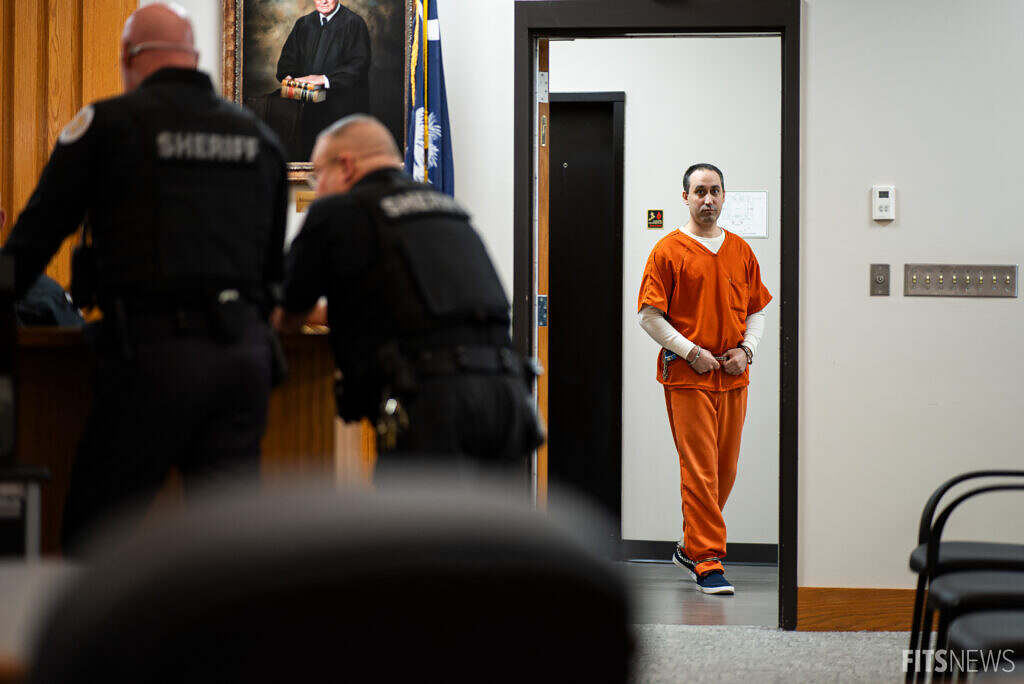
Ross Vilardi will be tried separately beginning October 13, 2026 before a new Anderson County jury.

***
DISCOVERY BATTLE TAKES CENTER STAGE
One of Monday morning’s longest exchanges involved the defense’s request to limit additional investigative work before trial.
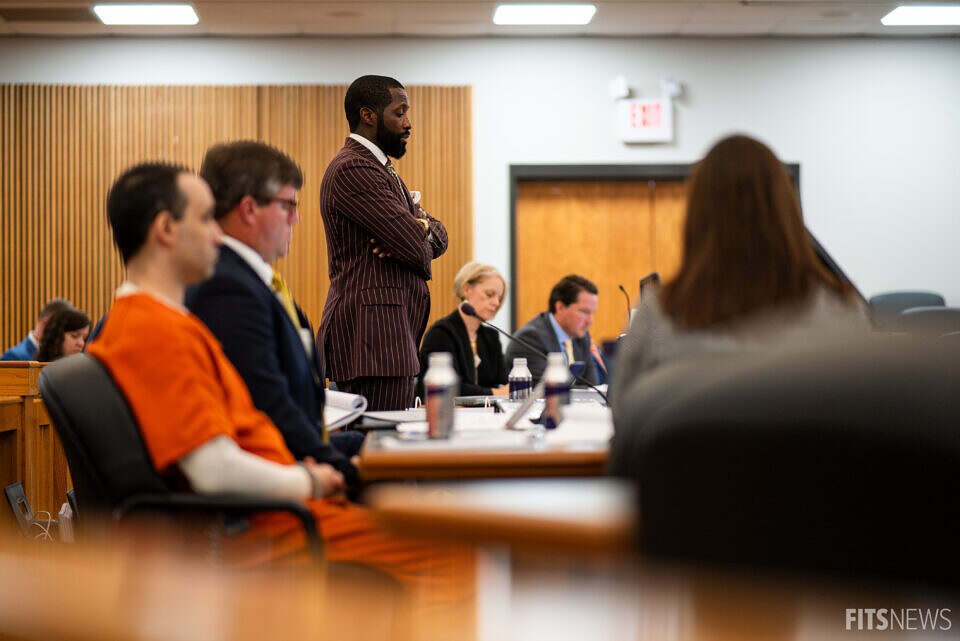
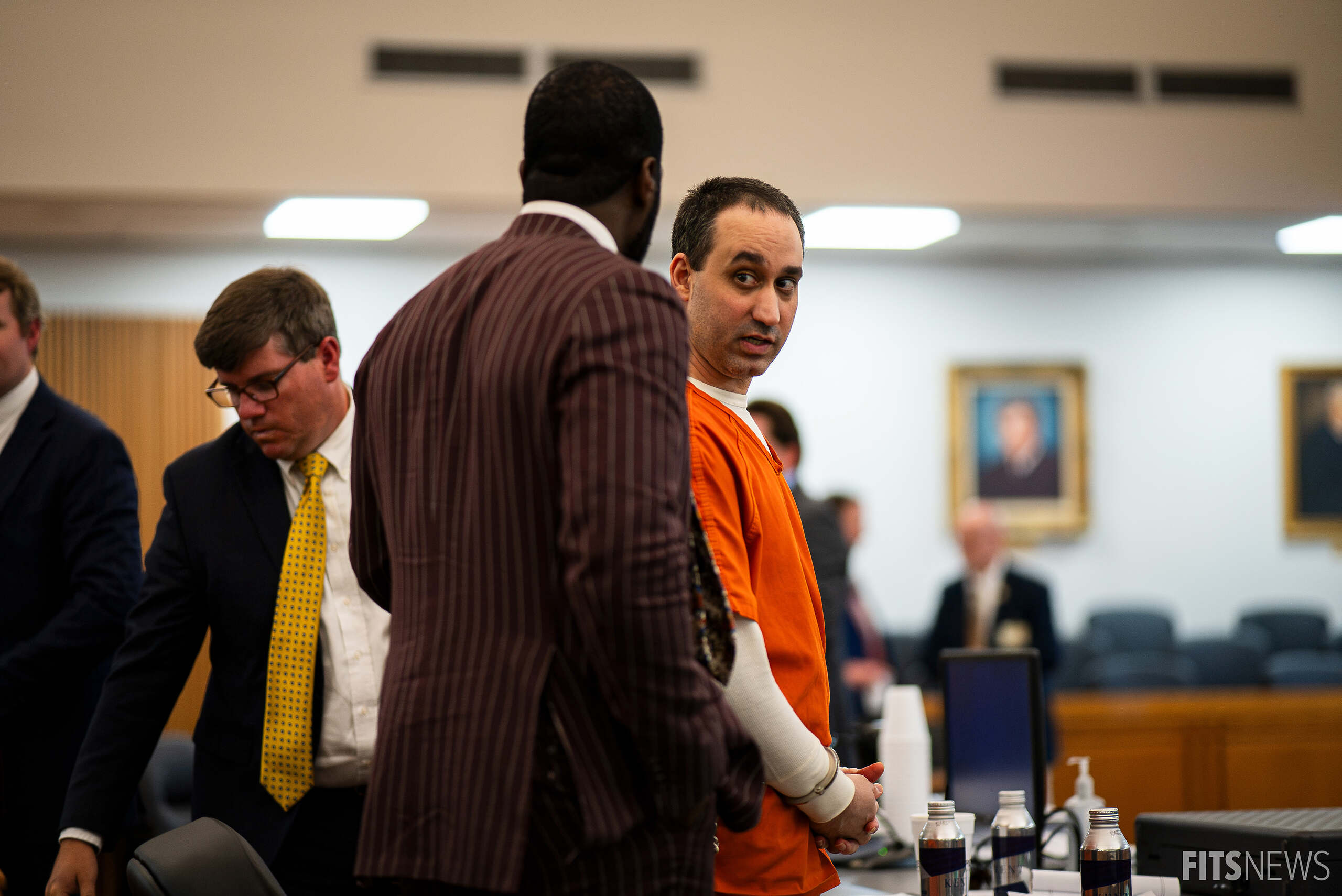
Defense attorney Shaun Kent argued the state should not be permitted to continue developing evidence after forcing the defense to reveal its legal strategy through detailed pretrial motions.
Kent told the court it creates an unfair dynamic in which prosecutors can identify perceived weaknesses in the defense’s arguments, then seek additional testing or investigative follow-up designed to blunt those arguments before trial.
The issue, Kent argued, is particularly significant because Amy Vilardi’s case was severed shortly before trial, leaving Ross Vilardi litigating pretrial motions months before his own jury is selected.
Prosecutors disagreed.
***
***
Senior assistant attorney general Heather Weiss argued the state is ethically obligated to disclose any newly discovered evidence and maintained prosecutors were not attempting to manufacture new evidence in response to defense filings. Instead, she said investigators had merely sought clarification regarding evidence already collected during the original investigation, including questions surrounding FBI footwear analysis that arose during Amy Vilardi’s trial.
Judge Merrill attempted to strike a middle ground.
While emphasizing prosecutors cannot ignore newly discovered evidence, Merrill indicated she does not believe it would be appropriate for investigators to conduct new testing or intentionally generate additional evidence in an investigation that will be nearly eleven years old by the time Ross Vilardi’s trial begins.
Instead, Merrill said any information that naturally comes to light before October can be addressed through additional hearings to determine whether it will ultimately be admissible.
***
MODIFIED VOIR DIRE UNDER CONSIDERATION
Kent also renewed his request for attorney-conducted voir dire, arguing Vilardi faces an unusual circumstance because his wife has already been convicted of the same murders.
Although acknowledging attorney-conducted voir dire is uncommon in South Carolina, Kent suggested prospective jurors should at least be questioned in small groups rather than in open court to encourage candid answers about pretrial publicity.
Weiss told the court the State shares many of the defense’s concerns regarding publicity and expressed support for questioning jurors in smaller groups if the court determines it appropriate.
Judge Merrill indicated she is considering that approach and plans to discuss logistics with court staff before making a final decision.
***
MONEY, MOTIVE AND THE CIVIL SETTLEMENT
***
One of Monday’s most closely watched arguments centered on prosecutors’ theory that the Vilardis’ financial troubles supplied a motive for the murders.
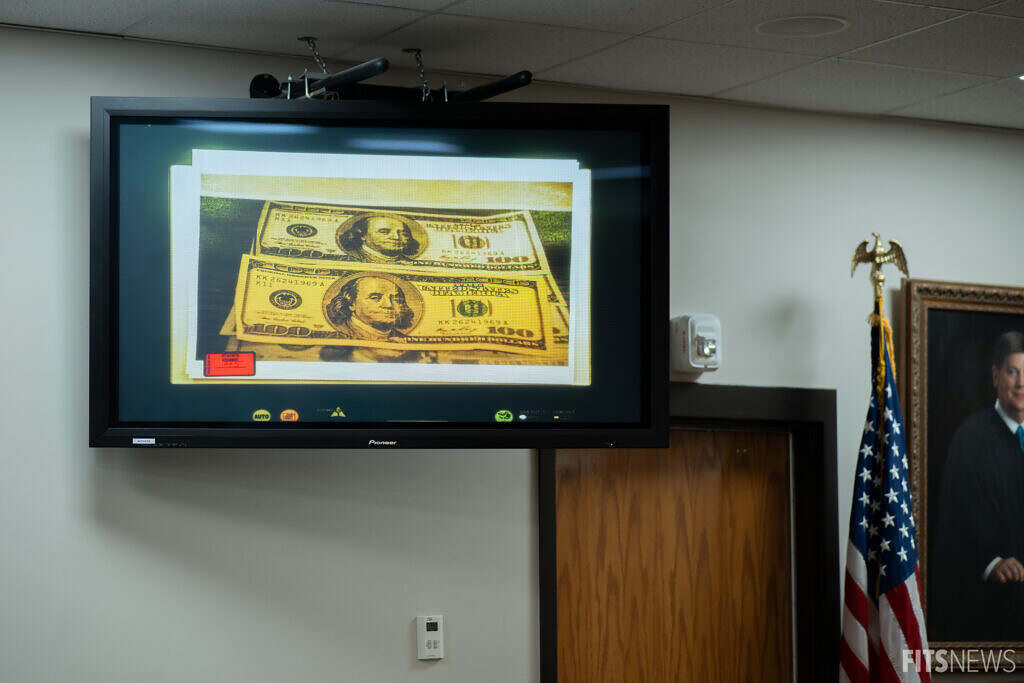
During Amy Vilardi’s trial, prosecutors presented evidence that the couple was under mounting financial pressure before the killings before suddenly paying debts with cash immediately afterward. Jurors also heard testimony that investigators recovered substantial amounts of cash from both the Vilardis’ residence and the victims’ home — evidence the State argued supported its theory that financial desperation motivated the killings.
The defense argued Monday that prosecutors have never charged his client with stealing money from the Scott family and therefore cannot ask jurors to infer he committed an uncharged theft without first proving that allegation by clear and convincing evidence under South Carolina law.
Prosecutors rejected that characterization.
Arguing on behalf of prosecutors, Joel Kozak maintained the alleged theft is not a separate “prior bad act” at all, but rather part of the murders themselves.
“We’re saying this bad act happens at the exact same time,” Kozak argued. “The murder and the theft … would have happened at the same time.”
According to Kozak, the state is not offering the financial evidence to portray Vilardi as a bad person, but to establish the circumstances surrounding the murders and explain the alleged motive. He also pointed to text messages exchanged between Ross and Amy Vilardi before the killings discussing their financial struggles, arguing the couple lacked money for rent until immediately after the murders, when their financial situation abruptly changed.
That dispute carried over into a second motion involving a civil settlement between the Vilardis and the Anderson County Sheriff’s Office over cash seized during the homicide investigation.
As FITSNews previously reported, prosecutors have asked Judge Merrill to prevent the defense from referencing the settlement, arguing it cannot be used to establish that the seized money rightfully belonged to the Vilardis. They contend the agreement expressly resolved disputed claims without any admission of liability and could improperly mislead jurors into believing law enforcement acknowledged the money was legitimate.
Kent responded that the defense has no intention of introducing the settlement unless prosecutors first argue the seized cash represented money stolen from the Scott family. If the state opens that door, he argued, the settlement becomes relevant to rebutting the prosecution’s theory that the money constituted stolen proceeds.
Judge Merrill took the matter under advisement, leaving unresolved one of the central evidentiary disputes likely to shape the financial motive case presented to jurors this October.
***
RELATED | Ross Vilardi Launches Sweeping Challenge to Evidence
***
DEFENSE CHALLENGES LATE-STAGE DIGITAL FORENSICS
The afternoon session turned to one of the defense’s broader attacks on the state’s investigation — whether prosecutors should be allowed to rely on a fresh forensic review of electronic devices nearly eight years after they were originally seized.
Kent argued investigators lawfully collected cell phones, computers and other digital devices in 2015, but said a subsequent examination performed in 2023 by Texas law enforcement investigator Eric Devlin amounted to a new search that required independent legal authority.
According to Kent, Devlin did not simply review existing reports prepared by Anderson County investigators. Instead, he conducted new forensic extractions using updated technology, creating what the defense characterizes as a separate search occurring years after the original warrants were executed. Kent argued allowing that testimony would effectively permit law enforcement to revisit digital evidence indefinitely without obtaining new judicial authorization.
Prosecutor Heather Weiss disagreed, likening the devices to physical evidence lawfully collected and preserved in an evidence room.
Once investigators legally seized the devices, she argued, subsequent forensic analysis merely represented advances in technology rather than a new constitutional search. Weiss compared the process to retesting DNA or reexamining other physical evidence years later as investigative techniques improve, arguing law enforcement should not be prohibited from applying newer methods to evidence already in its possession.
Throughout the lengthy argument, Judge Merrill repeatedly questioned both sides, testing whether a renewed forensic extraction should be viewed as a new search or simply a later analysis of lawfully seized evidence. She compared the issue to delayed laboratory testing of narcotics and advances in DNA technology, noting she was unaware of South Carolina appellate authority squarely addressing the question in the context of modern digital forensics.
Merrill took the motion under advisement without issuing an immediate ruling.
***
FOOTWEAR EVIDENCE ALSO DRAWS SCRUTINY
***
The defense also asked Merrill to exclude testimony concerning bloody footwear impressions recovered from the Scott home, arguing the evidence is too speculative to be presented to jurors.
Defense counsel argued investigators never recovered Ross Vilardi’s actual shoes despite interviewing him multiple times over the years. Instead, after reviewing photographs and video showing Vilardi wearing red ASICS shoes months before the murders, investigators purchased similar shoes for testing and ultimately concluded only that the crime scene impressions could have been made by that model of shoe.
The defense argued that conclusion invites jurors to make an unsupported leap — from a generic shoe model to Ross Vilardi himself — despite the absence of the actual footwear and despite the FBI’s earlier inability to identify a specific brand or model from the impressions.
Weiss countered that prosecutors do not intend to argue the impressions definitively belonged to Vilardi. Rather, she said the footwear evidence represents one piece of the State’s circumstantial case when considered alongside surveillance footage, cellphone videos showing Vilardi wearing similar red ASICS shoes and other evidence gathered during the investigation.
The discussion ultimately shifted from the conclusions reached by the State’s footwear expert to the methodology underlying those conclusions.
Citing South Carolina’s standards governing expert testimony, Merrill questioned whether the court had sufficient information to determine the reliability of the forensic methods employed, particularly because the expert acknowledged that the “gold standard” comparison would involve examining a suspect’s actual shoes — evidence unavailable in this case. The judge emphasized that her role is not to determine whether the expert’s conclusions are correct, but whether the methods used satisfy the reliability requirements necessary for the testimony to be presented to a jury.
Rather than rule from the bench, Merrill directed prosecutors to provide additional testimony and information concerning the expert’s methodology before she decides whether the footwear evidence will be admitted at trial.
***
RELATED | Prosecutors Seek to Narrow Defense’s Options
***
THIRD-PARTY GUILT FIGHT POSTPONED UNTIL TRIAL
The final major issue addressed Monday centered on how — and when — Ross Vilardi’s attorneys may present evidence suggesting law enforcement failed to adequately investigate other potential suspects.
Rather than asking Judge Merrill to determine whether any specific third-party evidence would ultimately be admissible, prosecutors sought a procedural ruling requiring the defense to first alert the court before attempting to implicate another individual during trial. The State argued such a process would prevent jurors from hearing potentially inadmissible evidence before the court has an opportunity to evaluate it under South Carolina’s third-party guilt standard.
Kent agreed he would not accuse another individual of committing the murders during opening statements without first raising the issue with the court. He maintained, however, that the defense must remain free to cross-examine investigators regarding what he characterized as an incomplete investigation, including whether law enforcement prematurely focused on Vilardi while failing to fully pursue other leads.
Merrill declined to issue a blanket pretrial ruling, instead concluding that any questions or evidence directly suggesting a third party committed the murders would be addressed outside the jury’s presence as they arise during trial. At the same time, she indicated the defense would generally be permitted to question investigators about the scope and direction of the investigation itself, leaving specific admissibility decisions for real-time objections.
Before adjourning, Merrill also declined to issue an advance ruling on a separate State motion seeking to exclude references to prior prosecutorial decisions in the case, finding any dispute over those issues would depend on how the evidence develops during trial.
With the day’s arguments complete, Merrill announced there would be no need to reconvene Tuesday as originally scheduled. Instead, she said she will issue written orders on the motions that were fully argued Monday while scheduling a limited future hearing to receive additional testimony from the State’s footwear expert before deciding whether that evidence will be presented to jurors.
***
ABOUT THE AUTHOR …
As a private investigator turned journalist, Jenn Wood brings a unique skill set to FITSNews as its research director. Known for her meticulous sourcing and victim-centered approach, she helps shape the newsroom’s most complex investigative stories while producing the FITSFiles and Cheer Incorporated podcasts. Jenn lives in South Carolina with her family, where her work continues to spotlight truth, accountability, and justice.
***
SOUND OFF…
Got something you’d like to say in response to one of our articles? Or an issue you’d like to address proactively? We have an open microphone policy! Submit your letter to the editor (or guest column) via email HERE. Got a tip for a story? CLICK HERE. Got a technical question or a glitch to report? CLICK HERE.

2 comments
Judge sounds like she is in over her head. She’s been on the bench for only a minute and can’t even make simple rulings. Take under advisement means she has to call another judge and ask them what she should do. As for Kent he looks like an extra in who framed Roger rabbit with that 30s suit
Defense attorney Shaun Kent argued the state should not be permitted to continue developing evidence after forcing the defense to reveal its legal strategy through detailed pretrial motions.
What a stupid argument. Kent would be the first to ask for post-conviction relief if new evidence turned up after the trial. What if the state develops exculpatory evidence? Are you really unable to come up with some more obfuscatory bovine excreta to try to sway the jury with?
Dude you client’s wife (and literal partner in crime) is already serving her 4 life sentences, your boy is going to jail.