

by JENN WOOD
***
A South Carolina circuit court judge has upheld a unanimous zoning board decision which held that solar panel manufacturing was not a permitted use in the light-industrial district where Silfab Solar constructed its controversial Fort Mill facility.
In a sweeping order (.pdf) filed on Tuesday (July 21, 2026), S.C. circuit court judge William A. McKinnon affirmed the York County Board of Zoning Appeals’ May 2024 decision “in all respects” — rejecting arguments advanced by Silfab Solar and the property’s owner, Exeter 7149 Logistics, L.P.
The ruling represents a significant victory for neighboring property owner Walter Buchanan and other residents who have spent years arguing that York County improperly allowed Silfab’s chemically intensive manufacturing operation to be constructed near homes and two public schools.
“The BZA’s alternative legal conclusion that solar panel manufacturing is prohibited in the Light Industrial district under § 155.270(G) is not influenced by any error of law,” McKinnon concluded.
Silfab and Exeter’s petition for appeal was denied.
The ruling does not, by itself, order the Fort Mill facility to close or halt its operations. It resolves Silfab’s appeal of the zoning board’s decision — and specifically addresses the county’s effort to classify solar panel manufacturing as “Computer and Electronic Products Manufacturing.”
McKinnon also emphasized that his ruling does not prevent Silfab from asking the county zoning administrator to classify its operation under a different use category.
Still, the decision could have major consequences for Silfab’s legal footing — and for related litigation that has remained on hold while the zoning appeal worked its way through court.

***
A UNANIMOUS ZONING DECISION
Silfab is the tenant of a manufacturing facility located at 7149 Logistics Lane in Fort Mill, South Carolina. Exeter owns the underlying property, which is zoned Light Industrial.
The Canadian-based company announced plans to invest approximately $150 million in the York County operation, which it said would create as many as 800 jobs. County officials supported the project through a fee-in-lieu-of-taxes agreement.
The facility’s location has generated intense opposition, however, particularly because of its proximity to Flint Hill Elementary School and Flint Hill Middle School.
In February 2024, Buchanan — who owns property immediately adjacent to the Silfab site — formally asked York County’s zoning administrator to interpret whether solar panel manufacturing was permitted in the Light Industrial district.
The administrator concluded the operation could be classified as “Computer and Electronic Products Manufacturing,” relying primarily upon the federal North American Industry Classification System — commonly known as NAICS.
Buchanan appealed that interpretation.
Following a public hearing, the York County Board of Zoning Appeals voted 5-0 to reverse the administrator’s decision. The board found solar panel manufacturing was not expressly listed as a permitted use in the district and was therefore prohibited under a county ordinance stating that any use not included in the applicable zoning table is prohibited.
Silfab and Exeter appealed the board’s decision to circuit court.
After hearing arguments in May, McKinnon concluded the zoning board had evidence supporting its findings and had properly applied the county’s ordinance.
“The Code’s defined uses control,” McKinnon wrote. “The BZA was correct to so hold.”
***

RELATED | York County Wins Silfab Solar Legal Battle
***
SOLAR PANELS ARE NOT COMPUTERS
A central issue in the appeal was whether Silfab’s operation could reasonably fit within York County’s definition of “Computer and Electronic Products Manufacturing.”
The county ordinance defines that category as establishments manufacturing computers, computer peripherals, communications equipment, similar electronic products and components for those products.
McKinnon determined solar panels do not fit that definition.
“Solar photovoltaic panels do not process or transmit signals; they convert sunlight to electric current,” he wrote.
Silfab and Exeter argued the zoning administrator was entitled to use NAICS classifications to determine where the operation belonged. The zoning board found, however, that the county’s ordinance did not incorporate NAICS as the controlling authority.
McKinnon agreed.
The judge noted that the administrator’s interpretation relied “almost entirely” upon NAICS and that county officials presented insufficient evidence of any independent analysis connecting solar panel production to the computer and electronic products category.
Silfab and Exeter also conceded solar cell and panel manufacturing was not expressly listed in the county’s zoning use table.
That mattered because York County’s ordinance states in unambiguous terms that “[a]ny use not listed for an applicable zoning district in the Use Table is prohibited.”
***

RELATED | Silfab Solar Shut Down After Another Chemical Spill
***
CHEMICAL RISKS SUPPORTED THE BOARD’S DECISION
McKinnon also concluded the record contained evidence that Silfab’s proposed manufacturing process was “qualitatively distinct” from the types of operations listed as computer and electronic product manufacturing — and more consistent with heavy industrial activity.
York County’s ordinance describes light industrial activity as operations that ordinarily do not create smoke, fumes, odors or health and safety hazards outside the building or property. It also expressly excludes certain hazardous-material treatment and storage facilities.
The record before the zoning board included portions of Silfab’s construction air permit application detailing its planned use of hydrofluoric acid, hydrochloric acid, potassium hydroxide and silane.
It also included information about projected hydrogen fluoride emissions and Silfab’s decision to increase the planned height of an acid-scrubber stack from 19.7 feet to 70 feet.
“When you have a production facility … that has a rather lengthy pollution scrubber … I begin to question whether or not it’s truly a light industrial use,” the zoning board’s chairman said during deliberations, according to the order.
McKinnon found those concerns — along with evidence describing the potential hazards associated with hydrogen fluoride and silane — provided more than enough support for the board’s decision under the narrow standard governing zoning appeals.
“The evidence in support of the BZA’s findings well exceeds that threshold,” he wrote.
Those findings take on additional significance following two chemical releases at the Silfab facility in March 2026.
The first involved water containing potassium hydroxide released from a faulty wet acid scrubber. Silfab disputed early reports about the amount released and maintained that the diluted solution presented no danger to the public.
A second incident involved hydrogen fluoride leaking from a recently delivered container. Flint Hill Elementary School closed as a precaution, and the S.C. Department of Environmental Services (SCDEC) ordered Silfab to pause operations while state and federal regulators investigated.
Silfab subsequently received permission to resume its less chemically intensive solar panel assembly operations, while manufacturing operations remained paused pending compliance with conditions imposed by regulators.
Prior to those incidents, Silfab had repeatedly maintained its containment systems and safety measures adequately protected its employees, neighboring communities and nearby schools.
***
EARLIER COUNTY LETTER DOES NOT CONTROL
Silfab and Exeter also pointed to a December 2022 zoning verification letter that classified photovoltaic cell and module manufacturing as “Electrical Equipment, Appliance, and Component Manufacturing.”
McKinnon found that letter did not control the current appeal.
The document was issued by a county zoning technician rather than the zoning administrator, was not produced through the county’s formal interpretation process and expressly stated it did not constitute a permit.
It also was never appealed to the zoning board.
McKinnon concluded the board properly limited its review to the February 2024 interpretation actually before it — which classified Silfab solely under the computer and electronic products category.
The judge stressed, however, that the ruling does not prevent Silfab from requesting a separate formal interpretation based upon another defined use.
“The Court rules today only on the appeal actually before it,” McKinnon wrote.
In other words, the court rejected the specific zoning justification York County used in February 2024 without definitively determining whether Silfab could qualify under another category.
***
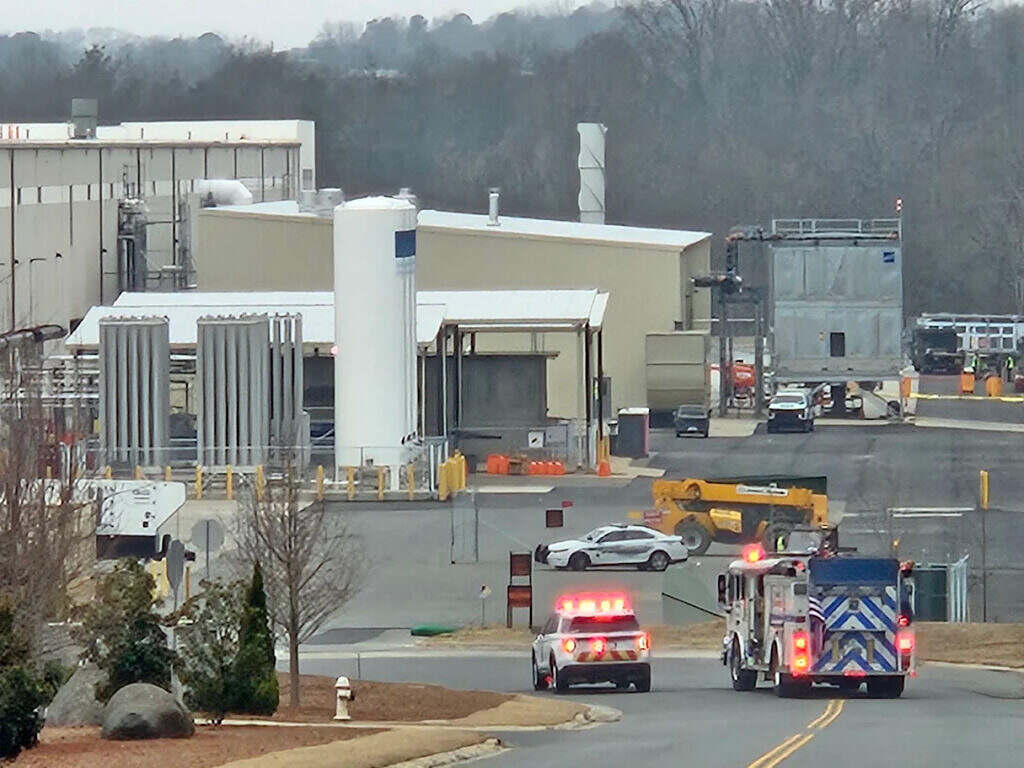
RELATED | EPA Visits Silfab Solar After Chemical Spills
***
FILOT DEAL DID NOT AMEND ZONING
The court also rejected the companies’ argument that York County Council effectively ratified the project’s zoning status when it approved Silfab’s tax-incentive agreement.
Silfab and Exeter argued the county’s fee-in-lieu-of-taxes ordinance ratified prior actions associated with the project and therefore prevented the zoning board from reaching a contrary conclusion.
McKinnon ruled that tax incentives and zoning approvals are separate legal matters.
“A fee-in-lieu agreement and its enabling ordinance are tax-incentive instruments,” he wrote. “They do not amend the Zoning Code.”
Accepting Silfab’s argument, McKinnon concluded, would allow the county council to bypass the public notice and planning commission review required to amend a zoning ordinance — effectively permitting prohibited contract zoning through a side agreement.
***
NEIGHBOR HAD STANDING TO CHALLENGE PROJECT
Silfab and Exeter further challenged Buchanan’s right to appeal the zoning administrator’s interpretation.
The court rejected that argument, finding Buchanan’s ownership of immediately adjacent property gave him a substantial interest in what activities could lawfully occur at the Silfab site.
McKinnon cited evidence of potential off-site impacts, including projected toxic air emissions and construction of the acid-scrubber stack.
“The classification has a direct and material effect on Mr. Buchanan’s neighborhood,” he wrote.
The court also rejected the companies’ contention that the zoning administrator’s February 2024 interpretation was merely an advisory opinion that could not be appealed.
McKinnon found it was a formal administrative determination issued through the county’s established zoning interpretation process — and noted the document itself advised Buchanan of his right to appeal.
***
WHAT COMES NEXT?
The immediate operational consequences of McKinnon’s ruling remain unclear.
The order affirms that solar panel manufacturing does not fit within the particular light-industrial use category invoked by the zoning administrator. It does not contain an injunction, revoke Silfab’s permits or expressly order the company to cease operations.
Silfab and Exeter may seek appellate review of McKinnon’s ruling. The companies also may pursue a new zoning interpretation under another category, as the order expressly permits.
The decision could also clear the way for additional litigation that was stayed pending resolution of Silfab’s zoning appeal.
The Citizens Alliance for Government Integrity — a nonprofit formed by Fort Mill residents opposing the facility’s location — previously sued Silfab, Exeter and York County over alleged zoning violations. That case was stayed while the zoning appeal remained unresolved, and an earlier attempt at mediation ended without an agreement.
Other litigation tied to the project remains pending, including a challenge to state environmental permitting decisions and a lawsuit filed by former Silfab employee Jason Rhodes, who alleges he was fired after raising concerns about safety and work allegedly performed without an occupancy permit. Silfab unsuccessfully sought dismissal of Rhodes’ lawsuit.
McKinnon’s order is also distinct from a February 2026 ruling dismissing a separate lawsuit filed by neighboring property owner Dennis Floyd Bivins. That case was dismissed largely on procedural grounds, including the failure to timely appeal particular permits or approvals issued to Silfab. Bivins indicated he intended to appeal.
The latest decision addresses the merits of Silfab’s own appeal from the zoning board — and leaves the board’s unanimous determination intact.
Count on FITSNews to continue tracking the regulatory and legal battles surrounding Silfab Solar’s Fort Mill facility.
***
THE ORDER
Subscriber-only document
This PDF is available to FITSNews subscribers. Get full access and be able to view documents like this one.
Subscribe for accessAlready a subscriber? Log in here
***
ABOUT THE AUTHOR …

As a private investigator turned journalist, Jenn Wood brings a unique skill set to FITSNews as its research director. Known for her meticulous sourcing and victim-centered approach, she helps shape the newsroom’s most complex investigative stories while producing the FITSFiles and Cheer Incorporated podcasts. Jenn lives in South Carolina with her family, where her work continues to spotlight truth, accountability, and justice.
***
SOUND OFF…
Got something you’d like to say in response to one of our articles? Or an issue you’d like to address proactively? We have an open microphone policy! Submit your letter to the editor (or guest column) via email HERE. Got a tip for a story? CLICK HERE. Got a technical question or a glitch to report? CLICK HERE.
