

by JENN WOOD
***
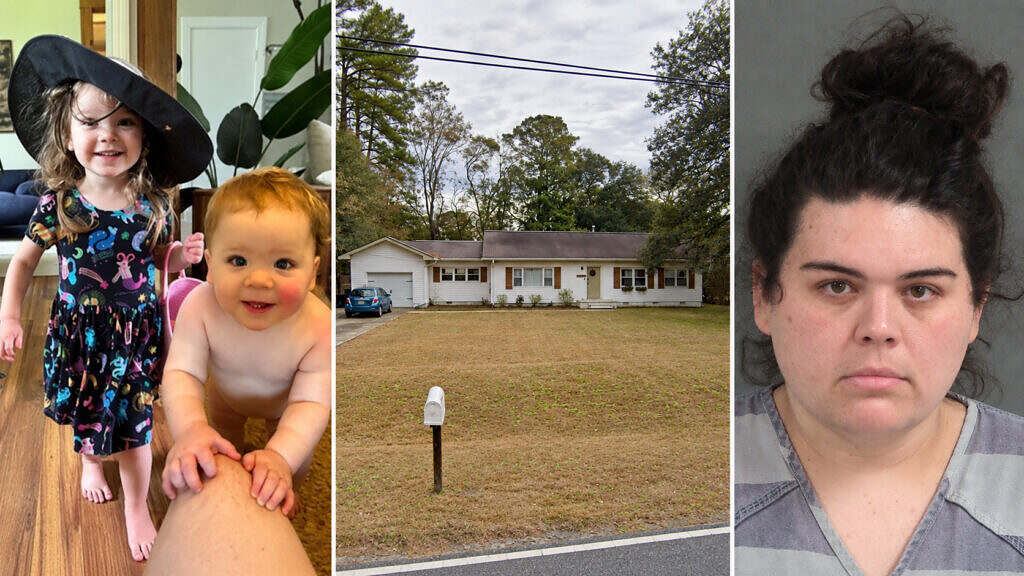
Newly released police body-worn camera footage shows South Carolina mother Justine Marie May interacting appropriately with responding law enforcement officers during their visits to her Ladson, S.C. residence – just days before her two daughters were discovered dead inside the home.
The footage also depicted the two girls appearing healthy and well cared for – seemingly supporting a controversial decision to discontinue visits to the home one week before they were found dead.
Charleston County sheriff Carl Ritchie has cited the recordings in defending his deputies’ earlier assessments about May, her children and the residence in which they were living. Their release also sharpened a question at the center of the case: what happened after those reassuring observations, and how did authorities evaluate subsequent requests for help?
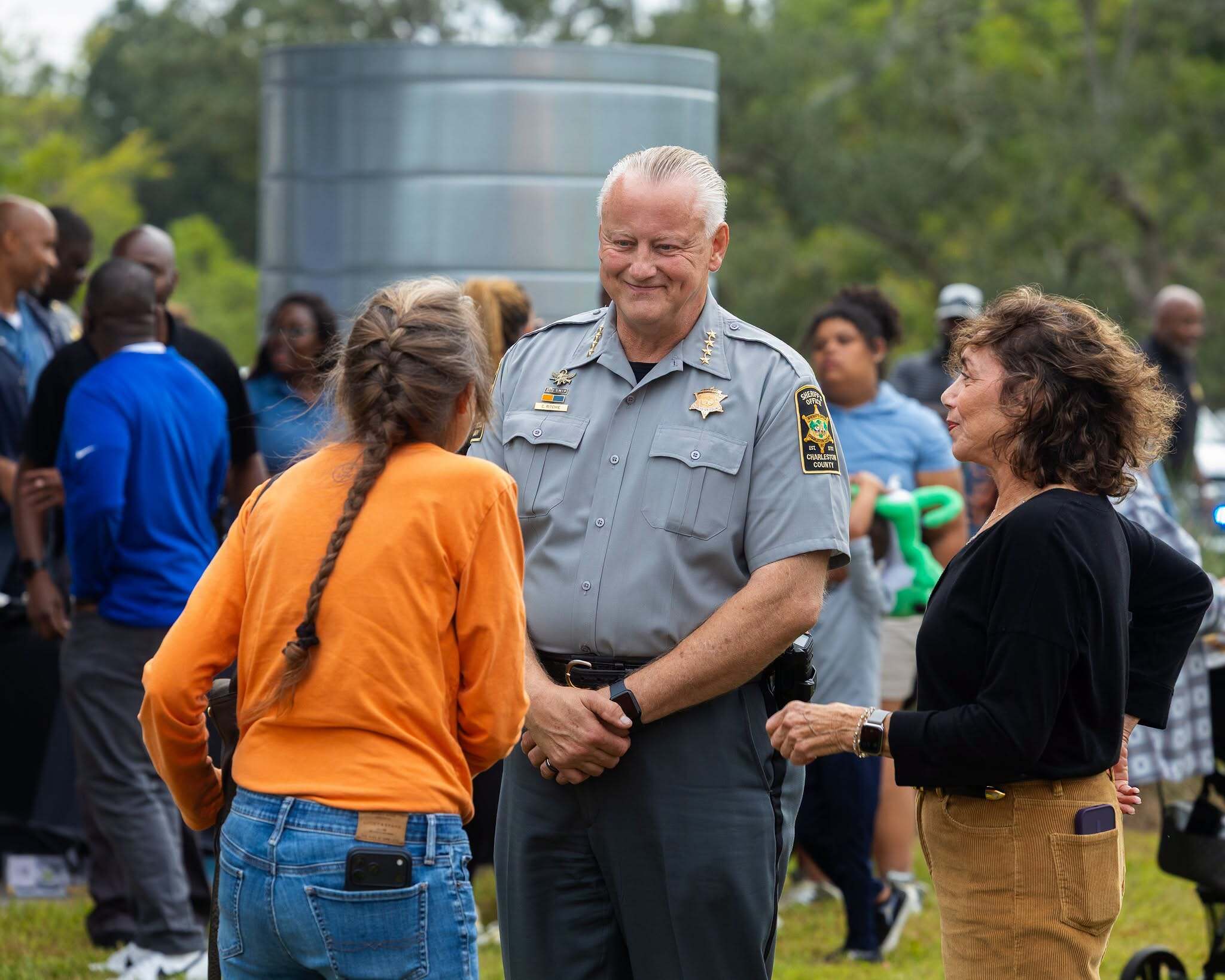
At a news conference on Friday (October 9, 2026), Ritchie outlined the Charleston County Sheriff’s Office’s (CCSO) contacts with the household, promised additional records and said his review would examine the decision to discontinue welfare checks.
***
***
Ritchie also provided new details about the last documented in-person contact with May prior to deputies discovering the bodies of two-year-old Emory Rose Deacon and fifteen-month-old Harlow Paige Deacon in the home on September 29, 2026.
During that final visit, May declined entry and said the children were sleeping, according to CCSO. The agency’s account did not describe deputies seeing either girl.
Two days later, an on-duty supervisor decided to discontinue additional welfare checks.
May, 31, faces two counts of homicide by child abuse. Charleston County coroner Bobbi Jo O’Neal determined the girls died from starvation and dehydration due to neglect and estimated they had been dead for three to five days prior to their discovery.

***
WHAT THE VIDEO SHOWS
CCSO released recordings from an August 30, 2026 visit involving the South Carolina Department of Social Services (SCDSS) and from a September 12, 2026 visit involving Mobile Crisis personnel.
The footage depicted May interacting appropriately with responding personnel, including a SCDSS worker – and both girls appearing healthy. Those observations are relevant to assessing what deputies and other personnel encountered during the visits.
They do not establish the children’s condition in the days that followed.
Ritchie said body-camera records established that deputies observed the children with May on six dates: August 25, August 26, August 30, September 8, September 11 and September 12. The recordings also documented two encounters with May without the children present — one on August 27 and another on September 8, according to CCSO.
CCSO previously reported nine visits between August 25 and September 20. Its latest account clarifies that deputies saw the girls during some of those visits and spoke only with May during others.
Ritchie said responding personnel had encountered children and a mother who did not appear to be in distress, and a home whose condition did not indicate a need for immediate law-enforcement intervention. He said deputies’ ability to enter a home or remove children was constrained by legal requirements, including whether emergency circumstances existed.
CCSO said additional relevant footage would be released following legal review and redaction.
***
***
THE LAST VISIT — AND THE DECISION TO STOP CHECKING
According to CCSO, May’s father requested the September 20 welfare check. A deputy responded and spoke with May in her driveway. She declined entry into the home, saying the children were sleeping. She also declined Mobile Crisis assistance and denied having an urge to harm herself, according to the agency.
The latest date on CCSO’s list of confirmed observations of the children is September 12 — eight days before that encounter and 17 days before their bodies were discovered.
The September 20 account therefore leaves an important question: how did personnel assess the girls’ welfare when May declined to let them inside?
Ritchie attributed the September 22 decision to discontinue checks to previous visits, SCDSS and Mobile Crisis involvement and an absence of new actionable information indicating an immediate threat to May or her children. At his press conference, he added that May had complained of harassment by family members amid ongoing domestic issues. He described the possibility of people using law enforcement against one another as context for the supervisor’s decision.
That explanation makes the handling of competing accounts particularly relevant: how were allegations of harassment weighed against relatives’ concerns about two children who depended entirely on their caregiver?
Ritchie said his review would examine whether and when welfare checks should be discontinued, and whether that process needed improvement. He did not identify the supervisor during the transcribed remarks.
***
CALLS AFTER THE LAST CONTACT
Ritchie said CCSO was reviewing communications associated with September 22, 23, 24, 28 and 29 to establish what information the office received and what action followed.
His preliminary account included an anonymous caller who said she had not heard from a friend and requested a welfare check. He said records reflected three unanswered attempts to return a call. His remarks did not clearly assign that request or those attempts to a particular date.
Ritchie also said a September 23 call from the girls’ paternal grandmother concerned whether she had an outstanding warrant. Deputies checked and told her she did not, he said.
Those descriptions do not settle the full sequence of requests for help. Attorney Gedney M. Howe IV – who represents the girls’ father, Zachary Edward “Zack” Deacon – previously disputed the agency’s account of communications during the period before the discovery.
Ritchie said dispatch recordings, computer-aided dispatch records and correspondence between family members and CCSO’s Office of Professional Standards would be released after review and redaction. He said that correspondence included information about potential judicial remedies for the family.
The records should help distinguish calls requesting intervention from other communications and establish how each was handled after the September 22 decision.
***
RELATED | Lowcountry Tragedy: Family Says ‘No One Listened’
***
AN INTERNAL REVIEW — AND THE FAMILY’S REQUEST
Howe has sought an independent South Carolina Law Enforcement Division (SLED) investigation of CCSO’s handling of the family, including Deacon’s arrest, the decision to stop welfare checks and coordination among responding agencies.
Previously released reports included repeated welfare complaints among the circumstances a deputy cited in pursuing a second-degree harassment warrant against Deacon. The reports also described alleged unwanted communications and drive-bys. Deacon was arrested September 12.
Ritchie emphasized Friday that SLED had been involved in the investigation of the children’s deaths since September 29 and had interviewed family members.
The sheriff did not announce such a review Friday. He said he would request a SLED investigation if allegations of criminal activity by deputies arose during the process.
Ritchie also said he was personally reviewing CCSO’s policies, procedures, communications and responses to determine whether additional steps could have been taken.
“If our review identifies shortcomings, we’ll absolutely acknowledge them,” he said.
***
***
Ritchie said the review must also examine the circumstances leading up to the girls’ deaths and identify lessons that could prevent another tragedy.
“This investigation is about two young lives that were lost, a family that deserves answers, and a community that deserves confidence in the institution entrusted in protecting it,” he said.
Speaking as a father and grandfather, Ritchie said he took that responsibility personally.
“We cannot change what happened, but we can ensure that our response is guided by truth, accountability, compassion, and our sworn commitment to justice,” he said.
For Emory and Harlow’s family, the footage now preserves something more than evidence: images of the girls alive before the tragedy. Their family remembered Emory’s love of music, dancing and Bluey, and Harlow’s affectionate little kisses.
The recordings help explain why personnel reported reassuring observations during earlier visits. The remaining records must help explain how later concerns were assessed — and whether the response could have changed the outcome for two children whose lives were still beginning.
***
ABOUT THE AUTHOR …
As a private investigator turned journalist, Jenn Wood brings a unique skill set to FITSNews as its research director. Known for her meticulous sourcing and victim-centered approach, she helps shape the newsroom’s most complex investigative stories while producing the FITSFiles and Cheer Incorporated podcasts. Jenn lives in South Carolina with her family, where her work continues to spotlight truth, accountability, and justice.
***
SOUND OFF…
Got something you’d like to say in response to one of our articles? Or an issue you’d like to address proactively? We have an open microphone policy! Submit your letter to the editor (or guest column) via email HERE. Got a tip for a story? CLICK HERE. Got a technical question or a glitch to report? CLICK HERE.
