
by JENN WOOD
***
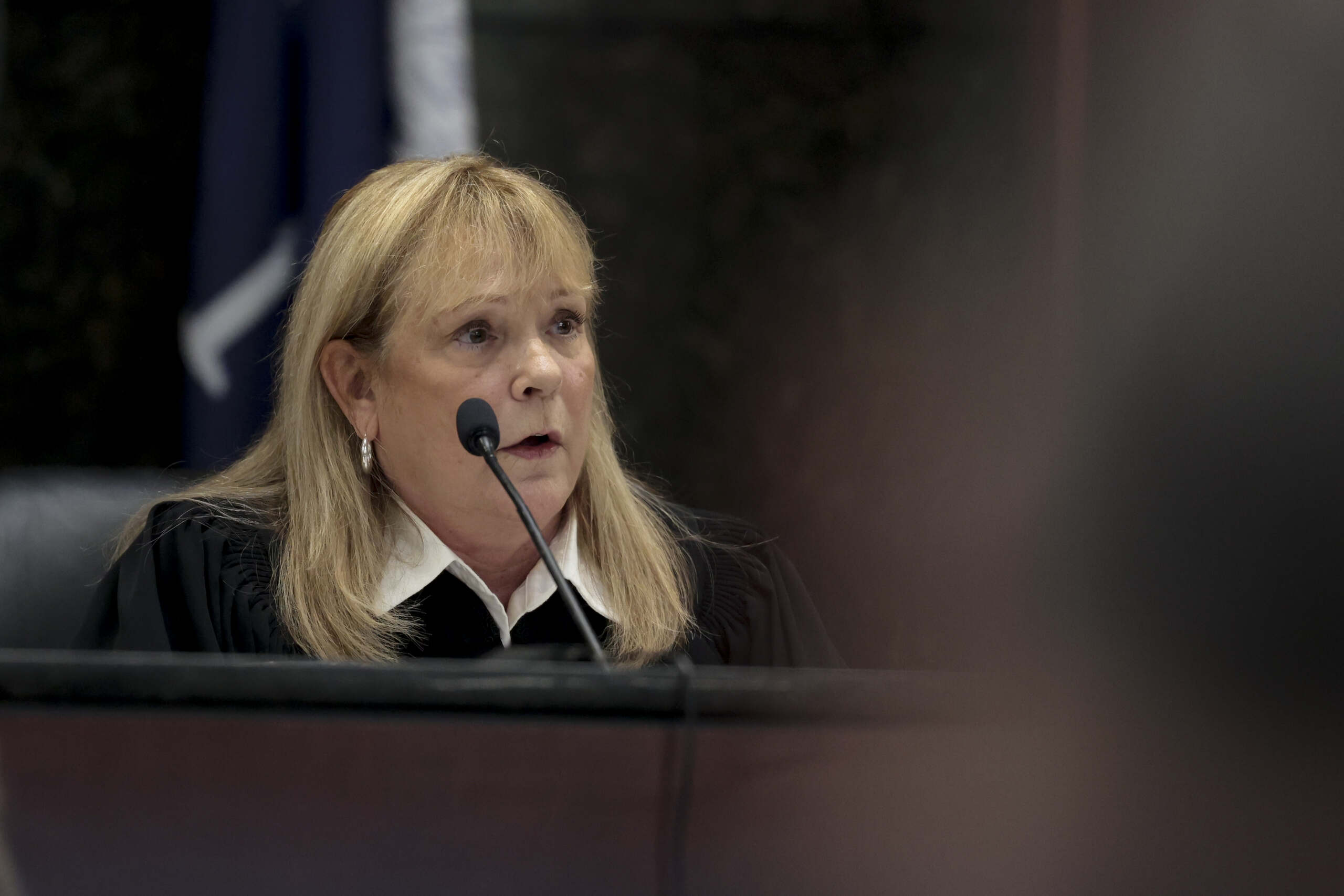
Accused killer Alex Murdaugh‘s long-awaited double murder retrial is tentatively scheduled to begin on April 5, 2027 – just nine months from now – with newly assigned South Carolina circuit court judge Debra McCaslin making clear that she intends to move the case forward without unnecessary delay.
“This case became the oldest case on my docket,” McCaslin told attorneys during a status conference held Monday morning (June 29 ,2026) in Lexington County. “Anybody who knows me knows that I will move an old case, and I intend to do that with this one.”
The status conference – which lasted just over an hour — did not address the merits of the case but instead focused on scheduling, discovery, pending motions and the logistics of preparing for what will be one of South Carolina’s most closely watched criminal trials.
McCaslin repeatedly emphasized that she expected the parties to resolve as many issues as possible before jury selection begins.
“When I set a trial date, I don’t do continuances,” she said. “That’d be a really good reason.”

***
NEW JUDGE, NEW TIMELINE
Monday marked McCaslin’s first public hearing since being assigned the retrial following the South Carolina Supreme Court’s decision overturning Murdaugh’s 2023 murder convictions because of jury tampering by former Colleton County clerk Becky Hill.
Unlike judge Clifton Newman, who presided over the original six-week trial, McCaslin made clear she is approaching the case with fresh eyes.
“I don’t know anything about the first trial,” she told attorneys early in the hearing. “When you tell me something, please be complete… don’t assume that I know, because I don’t.”
The judge questioned both sides extensively about discovery, expert witnesses, DNA testing, digital evidence and scheduling before proposing the April 5 trial date.
The next pretrial conference was set for August 14, 2026 with all motions due a week ahead of that date.
***
***
DISCOVERY DISPUTE CONTINUES
Although prosecutors insisted the defense already possessed virtually every piece of evidence collected during the investigation, Murdaugh’s attorneys argued they cannot yet say with confidence that discovery is complete.
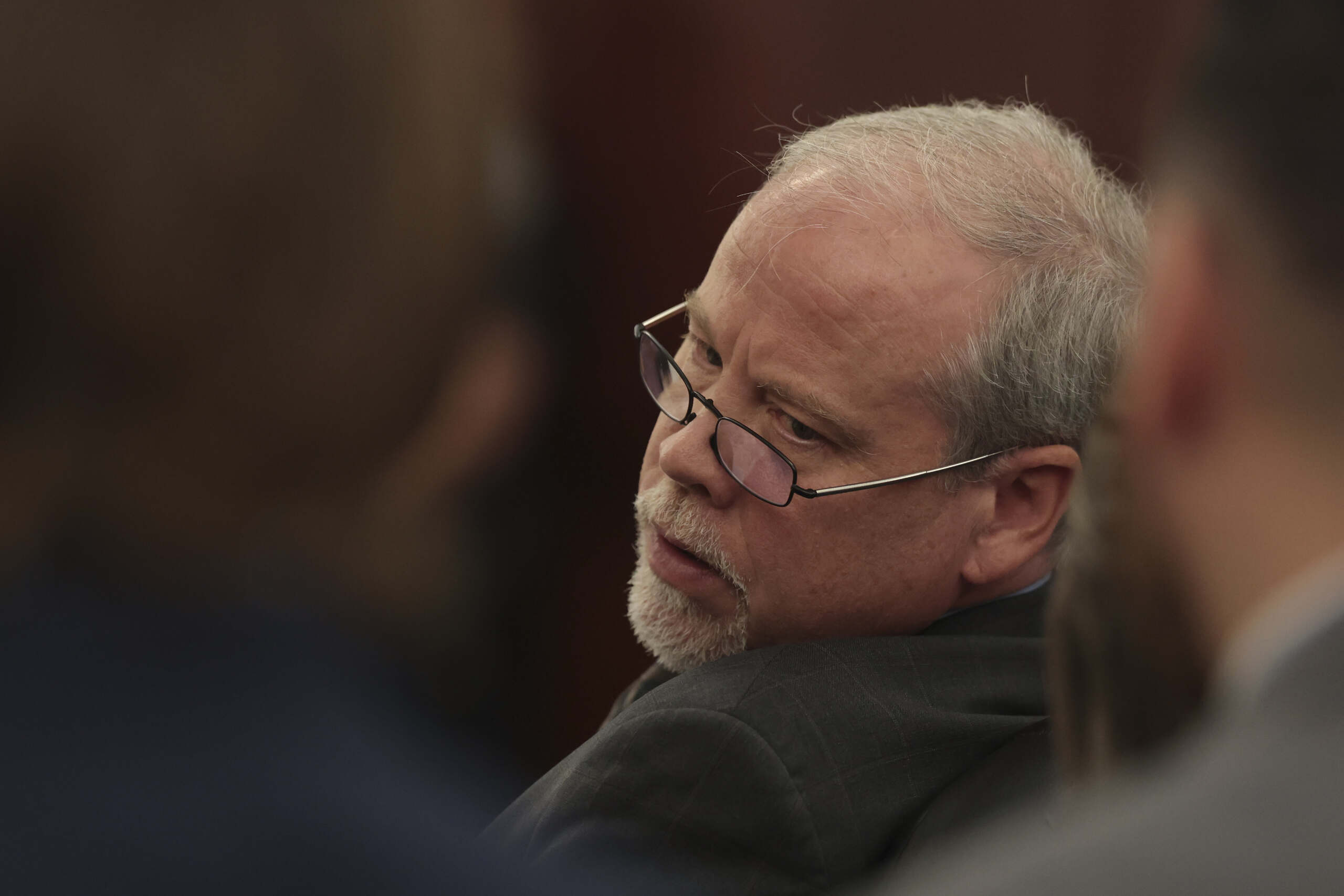
“We don’t know what we don’t know,” defense attorney Dick Harpootlian told the court.
Harpootlian pointed to statements made by former Colleton County Sheriff Office (CCSO) personnel following the murders that he contends differ from testimony presented at trial, arguing those discrepancies justify another exhaustive review of investigative materials.
He also noted that OnStar vehicle data was not produced until midway through the original trial after General Motors located additional information, saying the defense now wants experts to revisit that evidence.
Lead prosecutor Creighton Waters rejected any suggestion that discoverable evidence had been withheld.
“I know what my obligations are,” Waters said. “If I have knowledge of something that’s discoverable, then it’s been disclosed.”
Waters added that prosecutors have continued auditing their files and remained willing to resolve any discovery disputes that might arise before trial.
***
DNA TESTING COULD SHAPE THE SCHEDULE
One of the more substantive discussions centered on the defense’s request for advanced DNA testing on genetic material recovered from beneath Maggie Murdaugh’s fingernails.
Defense attorney Jim Griffin said technology has advanced dramatically since the murders occurred in 2021 and identified Houston-based Othram as the laboratory the defense hopes to use.
According to Griffin, the laboratory specializes in forensic genetic genealogy and helped identify the suspect in the University of Idaho murders.
Griffin argued the DNA profile recovered from Maggie Murdaugh’s fingernails excluded Alex Murdaugh and other known individuals tested during the investigation, making additional analysis worthwhile.
Waters characterized the request as potentially “a bit of a red herring,” noting there was no evidence Maggie Murdaugh engaged in a physical struggle with her attacker and emphasizing how easily touch DNA can be transferred.
Still, prosecutors agreed to facilitate discussions between scientists from the S.C. State Law Enforcement Division (SLED) and the defense’s experts to determine whether additional testing is feasible.
McCaslin declined to rule on the request Monday, instead directing both sides to determine whether a viable sample remains and how long any additional testing would require before the issue is revisited at the August hearing.
***

***
***
PRETRIAL ISSUES REMAIN UNRESOLVED
Several procedural issues also remained unresolved as the retrial moves toward its newly proposed spring 2027 start date.
One of the more significant disputes involves how Murdaugh will be able to review the massive volume of digital discovery while incarcerated. Defense attorneys argued that traveling to prison to review hundreds of thousands of pages of documents with their client is extraordinarily burdensome and asked the court to allow Murdaugh access to a dedicated laptop with no internet or communication capabilities.
McCaslin said she personally contacted the prison warden before Monday’s hearing and was told the S.C. Department of Corrections (SCDC) will not allow an inmate to possess a laptop. Instead, prison officials agreed to make a conference room available where attorneys, paralegals or law clerks can spend unlimited time reviewing digital evidence with Murdaugh using their own computers. The judge also said she would inquire whether discovery could be loaded onto the prison’s legal research tablets but declined to authorize a laptop at this stage.
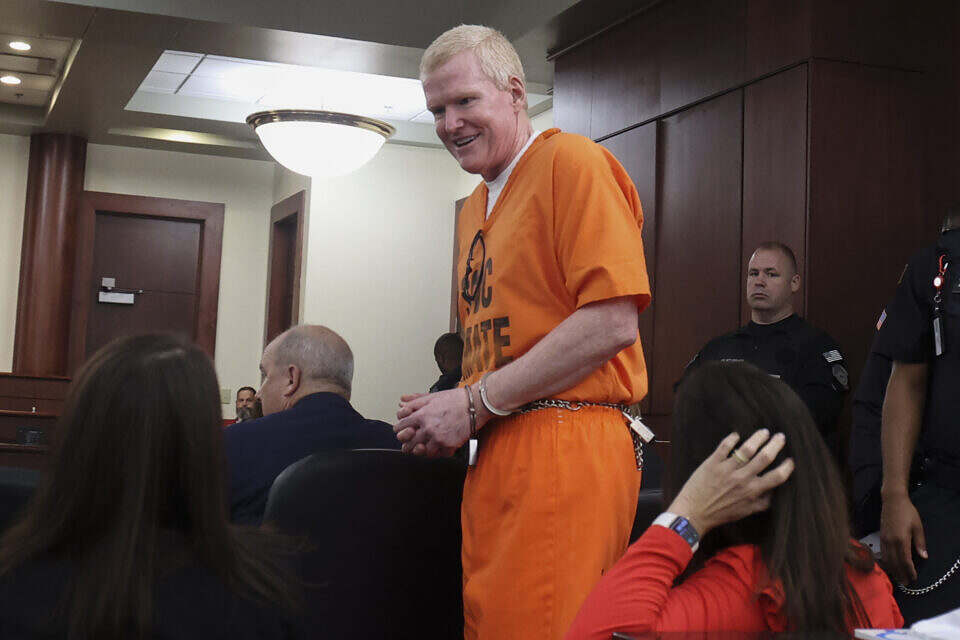
The defense also renewed its request for Murdaugh to appear in civilian clothes and without shackles during future court proceedings, arguing that widespread media coverage could prejudice potential jurors if they repeatedly see him restrained in a prison jumpsuit. Prosecutors countered that Murdaugh remains a convicted inmate serving lengthy prison sentences and that SCDC security policies – not any effort to prejudice a future jury — govern how he is transported and presented in court. McCaslin took the issue under advisement and said she would issue a written ruling later.
Meanwhile, the defense’s motion to move the retrial out of Colleton County also remains pending. McCaslin gave prosecutors additional time to respond and encouraged both sides to determine whether they could agree on an alternate venue before the next pretrial conference. If no agreement is reached, she said, the court will decide where the retrial will be held.
In the meantime, McCaslin ruled that all preliminary hearings for the case would be heard in Lexington County.
While none of the disputes affects the substance of the murder case itself, each could shape how the retrial is conducted—and how jurors ultimately experience one of South Carolina’s most closely watched criminal proceedings.
***
***
FINANCIAL CRIMES FIGHT LOOMS
Before the hearing concluded, Griffin previewed what is expected to become one of the retrial’s most consequential legal battles.
He reminded the court that the South Carolina supreme court not only overturned Murdaugh’s convictions because of jury tampering but also sharply criticized the extensive financial crimes evidence admitted during the original trial.
Griffin told McCaslin the defense intends to litigate whether any of that evidence should be admitted during the retrial — a decision that could dramatically affect both the scope and length of the proceedings.
McCaslin made clear she intends to resolve those questions well before jurors are sworn.
“I like to address all pretrial matters beforehand,” she said. “When I say April the fifth, we’re picking a jury and going forward.”
With an April trial date now on the calendar, the next several months will likely determine not only where Murdaugh is retried, but what evidence jurors ultimately hear — and how different the second murder trial looks from the first.
***
ABOUT THE AUTHOR …
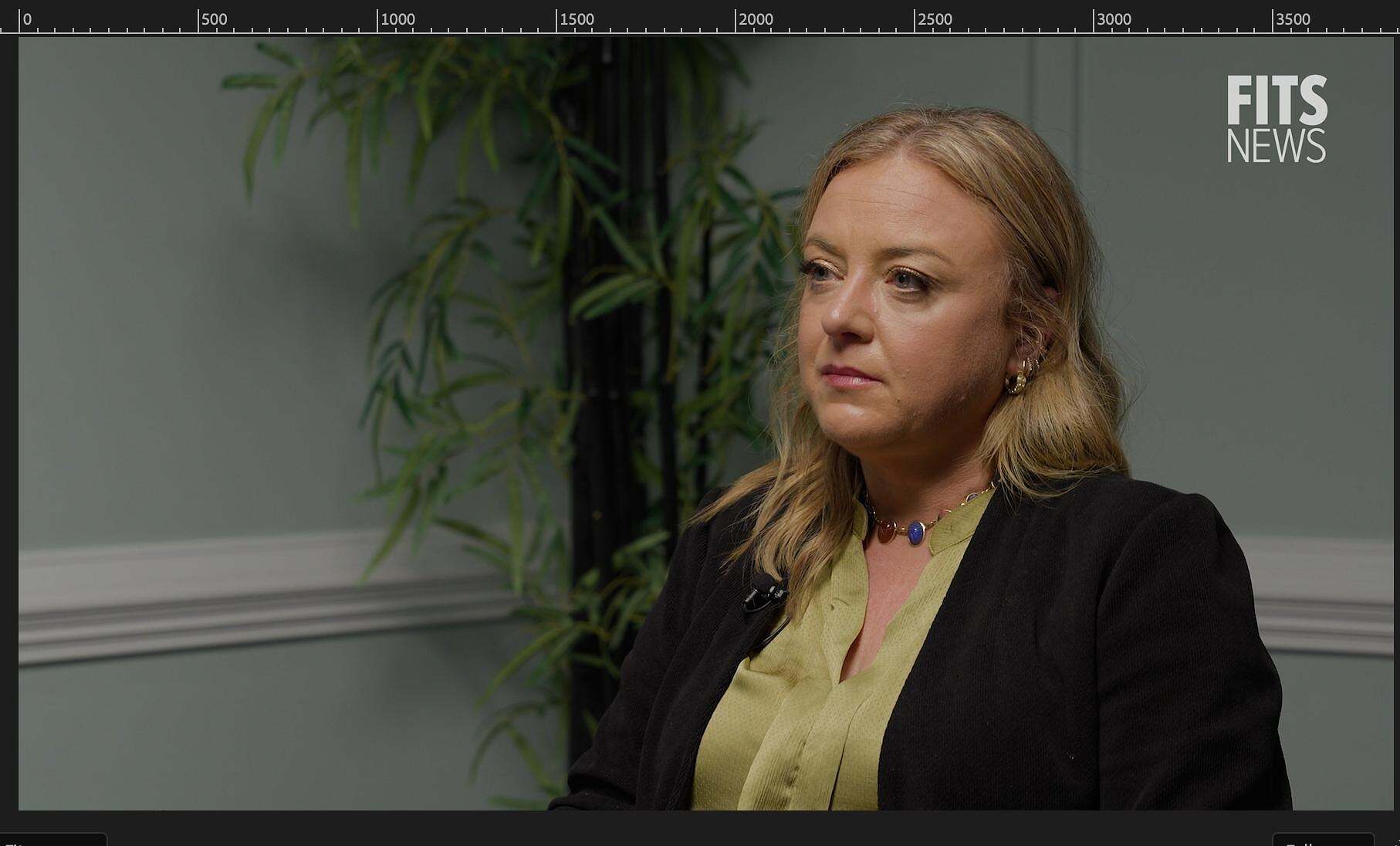
As a private investigator turned journalist, Jenn Wood brings a unique skill set to FITSNews as its research director. Known for her meticulous sourcing and victim-centered approach, she helps shape the newsroom’s most complex investigative stories while producing the FITSFiles and Cheer Incorporated podcasts. Jenn lives in South Carolina with her family, where her work continues to spotlight truth, accountability, and justice.
***
SOUND OFF…
Got something you’d like to say in response to one of our articles? Or an issue you’d like to address proactively? We have an open microphone policy! Submit your letter to the editor (or guest column) via email HERE. Got a tip for a story? CLICK HERE. Got a technical question or a glitch to report? CLICK HERE.

8 comments
First motion hearing now behind us, God willing and FITS permitting, I shall keep pasting here my most relevant replies to comments on FITSTube and YouTube. Here is one from this morning:
@ritaeichler2066 , relax and listen!
I did not write that Alex saw the video ITSELF.
I wrote that Alex must have SEEN PAUL MAKING THE VIDEO. The threesome, who had just had dinner together, were in the narrow confines of the kennels.
If Paul and Maggie could see Bubba-the-dog closely enough to debate whether what its jaws held was a chicken or a guinea, and for Alex to summon Bubba-the-dog and extract the bird from its jaws and later see that chicken died, then Alex MUST HAVE BEEN close enough to SEE PAUL MAKING THE VIDEO then put Paul’s own phone back in Paul’s own pocket.
Had Alex been the real shooter, or had he known that some shooters would show up at the kennels and confront Paul and Maggie, Alex WOULD NECESSARILY HAVE KNOWN that video on Paul’s phone would cast suspicion on Alex; and Alex would have taken the phone from a lifeless Paul’s pocket and disposed of it along with the shooting weapons.
“by 8:49” Paul and Maggie were NOT “dead.”
There is ABSOLUTELY no support for the assumption that they were.
And for the nth time: the food in their stomachs AT AUTOPSY was too little and too digested for their lives to have ended ONLY 19 MINUTES after their KNOWN large and relatively fatty last meal.
These are NOT false facts. These are long known MEDICAL facts about human digestion.
I understand that some people’s ideas are cemented. But I can no more accept that than accept, for example, a man being can be executed for saying the earth is round while most people had a fixed idea that the earth is flat.
I am NOT an Alex troll. I am one who had been FALSELY accused of crimes but, thank God and WITHOUT A LAWYER, ultimately COMPLETELY exonerated myself beginning with a 22-26 February 2010 jury trial in the court of none other than Judge Clifton Newman.
Please respect that or hold your peace.
The ONLY, repeat ONLY, so-called “evidence” the Prosecution EVER had or can have is the time of last use of Paul’s and Maggie’s phones which coincides with the zero-ing of the charges on those cell phones.
Somehow, the Prosecution convinced 11 jurors and most of the world that zero battery charge equals end of life of the phone(s)’ owner(s).
But you can’t fool all the people all the time.
I always knew, and wrote everywhere I could, that the the food in Paul’s and Maggie’s stomachs AT AUTOPSY was too little and too digested for their lives to have ended ONLY 19 minutes after their KNOWN large and relatively fatty last meal.
I also often wrote that Maggie’s phone must have been taken from her BEFORE she was shot to prevent her from calling for help against the shooting cabal which descended on the kennels as soon as Alex left for Almeda.
Those who had a pre-cemented belief in Alex’s guilt filtered even exculpatory evidence through that belief and used “logic” more twisted than a DNA helix to make it inculpatory.
Through the filter of the MEDICALLY CORRECT time of end of victims’ lives, even that kennels video is exculpatory. And I’ll tell you how so if you ask and want to listen with open minds.
Judge McCaslin a work horse and a breath of fresh air!
Please, do tell SubZeroIQ!
David Roady, Top fan, you asked and you shall be given, God so willing and FITS permitting.
At the threshold, I want to establish in all readers’ minds that range of time of death from stomach contents at autopsy has been established and used for over a century. The oldest I know of in the U.S. is the Leo Frank 1913 case which went to the U.S. Supreme Court on other issues but the narrative of facts indicates the time of death of the rape-murder 13 year-old victim was determined by the contents of her stomach.
The most recent case I know of in the U.S. was the Dutch Brothers Coffee armed robbery case. It proves that 19 minutes or so after death, the contents of the deceased’s stomach at autopsy are normally still so undigested that it was possible to tell, not only what the deceased had eaten, but also where he had eaten it.
I quote the most detailed media report on that case to emphasize that the pathologist’s description and measurements of the contents of Paul and Maggie’s stomachs at autopsy makes it virtually impossible for them to have died only 19 minutes after their known large, and relatively fatty, last meal.
After quoting that story, I shall, God willing, pause for questions.
When a European girl is desirous about someone romantically, she won’t ever attempt to make things harder for him, so that you shouldn’t fear about whether or not or not you can actually please her. Dating them in your country is probably probably the greatest things you would ever dream of. Yes, dating our ladies in your nation saves you a number of time and money, when you don’t should undergo from long-distance relationships and journey so many miles to see her for your first date. So, if you happen to don’t need to meet an American-like Russian lady in your nation, choose a lady who came to it lately and is still keen to search out a very good man. Some you shared their experience with dating Russian women in America with us and confessed that the man is the one who pays the courting payments. A number of girls come to the US because they marry an American man. It is not any shock contemplating most of them come from families with decent lifestyles. Natalia’s mates appeared to be all married at the moment, all had households. All her associates who stayed in Ukraine have been already someone’s wives and mothers. She was the one considered one of her pals who have been nonetheless single.
Do Single Ukrainian Ladies Love Western Men? But the truth that she was nonetheless single shows that long life within the States modified her Ukrainian nature a bit. Although they already got used that your dating tradition is a bit different, they still need some chivalry when courting. Eastern European culture has conditioned women from that region otherwise than ladies from the West. The actual fact they moved to the United States doesn’t mean these ladies forgot their origin and relationship culture and etiquette. We also do not guarantee that we are going to deliver you a woman wrapped in reward wrap, but we do guarantee that it is possible for you to so far actual Russian ladies. First of all, she is a great instance of a Russian woman transferring to the USA and creating there a really profitable life and career, she even owned her business there. After graduation, she stayed within the USA and bought an excellent job of a Senior Risk Analyst in one of many leading finance companies in Virginia. By the best way, for those who browse one of the best-Matchmaking gallery of international brides, you’ll notice that we also have some Russian girls living in the USA. Everything seems to be excellent in terms of dating Russian women within the US, however now we have one factor to let you know.
Don’t anticipate a lady who got here to the States to have an important life and profession to be a very good Slavic housewife. Don’t even hope to share it along with her. On this case, you don’t must arrange it while your girlfriend is already in your nation. When dating a Ukrainian lady you meet whereas touring, it’s necessary to strategy the scenario with respect and genuine interest. While trendy influences are current, traditional values still hold strong. They’re nonetheless the identical Slavic women; they have the same values and expectations. So, guys, you have to be prepared that if a lady spends a lion share of her life within the States, she becomes extra American than Ukrainian. Guys who have a Ukrainian companion, together with [url=http://www.chnlovecomplaints.com/is-charmdate-scam-real-find-out-the-truth/]is charmdate.com legit[/url] my mates, will not let me lie. They prefer men who message with intention, not generic strains. Maybe even consider ladies who arrived in your country for marriage however for some cause divorced.
Some ladies just come there to work in some worldwide corporations. But pay attention to the ladies who got here there not so long ago. However, there are girls who stay in America and mix to your society absolutely. Especially with those that grow up in the States. These women from Ukraine, Russia, and different post-USSR nations come to the States because they’ve to check or work. So now, there is no such thing as a want to come back to Ukraine or Russia to fulfill them. So plenty of Ukrainian, Russian, and even Belarussian ladies come to your nation to review there. It is very tempting for a matchmaking company to offer in to ease and work with out companion companies established in the nations of origin of women from Eastern Europe, by recruiting Russian or Ukrainian girls through direct advertisements on the web, but the speed of false or scam profiles then significantly larger. After all, the most direct method to satisfy Ukrainian women is by touring to Ukraine. Whether you need to satisfy a Ukrainian woman on-line free from Kyiv’s fast-paced life-style, Lviv’s creative charm, or Odesa’s coastal warmth, each area presents its personal distinctive vibe.
FITS, the comment from johnsonmpt comes close to human trafficking and should be removed.
With FULL attribution to the source listed at the end, the moral of the story is that stomach contents at autopsy DO tell a lot.
It was 10 p.m. when the two men held up a blue Dutch Brothers coffee kiosk in Eugene, Oregon. They were wearing dark clothing and had covered their faces with handkerchiefs. The first man told the lone barista to turn around with his hands on the back of his head and close his eyes. They likely hoped that the second man could grab the cash while the other watched the barista. But the plan went wrong. The barista got out his gun and shot and killed the first man. The second man tried to get in a few shots, but soon ran away on foot.
The kiosk’s surveillance cameras were out of order, and nearby cameras did not capture the two men on video. The case might have reached a dead end there if not for the criminal’s autopsy and, specifically, the identification of what the dead man ate for dinner that night.
As a forensic analyst for the Eugene Police Department, Lisa Pope doesn’t perform autopsies, but she is sometimes in the room to help tie up any forensic loose ends. Pope was there, in 2010, for the autopsy.
“[The Medical Examiner] was examining the stomach contents, which is a part I don’t like because it doesn’t smell good,” Pope recalls. “But I started paying attention—he was pulling out food that wasn’t well-digested.”
Thanks to the process of chewing combined with caustic stomach acids, it’s typically difficult to identify foods from a deceased’s stomach contents. “But he’s pulling out chunks of hamburger about the size of my index finger, a piece of cheese, then a piece of bacon about a half inch long,” Pope says. “Then he pulls out half a French fry.”
Pope recognized it at once. It was a thick cut fry with the skin still attached—a signature of Wendy’s fries. Even better, Pope knew there was a Wendy’s restaurant just a few blocks from the Dutch Brothers kiosk. She called the lead detective, and when they asked Wendy’s for surveillance footage from that night, they found clear video of the deceased suspect and his partner ordering food, eating their meal, and then trying on their masks before walking out the door. The detectives couldn’t believe it. “If it weren’t for the stomach contents, we might not have gotten that video,” Pope says.
An autopsy from the early 20th century. Wellcome Images, London CC BY 3.0
The first forensic autopsy used to determine whether foul play was involved in a victim’s death took place in the early 1300s. Yet these autopsies were performed sparingly, and they usually aimed to simply determine whether a victim died from heart attack or poison, knife wounds or a gunshot. If a man died of a coughing fit, the autopsy may have only looked at the throat and chest—ignoring the rest of the body. Physicians only saw what they looked for, and it wasn’t until the mid-1800s that people started championing more comprehensive autopsies that looked at every organ of the body and documented each one according to a set standard.
The Dutch Brothers Kiosk is a rare example of an old-school form of stomach analysis (using only what can be detected with the eye) working. Yet a closer look at stomach contents could lead to these almost unbelievable successes happening more often. Today most autopsies only look at stomach contents to get a vague idea of how long it’s been since a victim’s last meal. It’s rare that the deceased was such a terrible chewer that foods can be identified with the naked eye. But forensic botanists and co-authors of the book Forensic Plant Science, Jane Bock and David Norris, have proven that looking at stomach contents under a microscope can be an important tool in solving a crime—even if it is only just starting to catch on.
Bock and Norris were normal, American academics—she a botanist and he an animal ecologist—until 1982, when they got a call from an Assistant Coroner in Denver. A young woman had been murdered. The investigators knew she had eaten with her boyfriend the day before at a McDonald’s. As anyone who has seen a detective show knows, the significant other is always a primary suspect. Yet some of the deceased’s stomach contents didn’t seem to match their last meal together.
The stomach stops working after death, creating a gastronomic time capsule of the victim’s last moments. Though digestion varies from person to person, a meal is typically fully digested (and the stomach empty) six hours after eating. To determine time of death, examiners commonly look at body temperature and rigor mortis (for more recently killed victims) or decomposition and insect activity (for bodies found later). They rarely rely on stomach contents.
A 17th-century illustration of a human stomach. Wellcome Images, London/ CC BY 3.0
Yet many common models are subject to external factors such as temperature. A body found in a scorching desert will actually heat up, and a body found in a snowbank will cool more rapidly. Even rigor mortis, which can also be sped up or slowed based on the weather, relies on subjective assessments of a body’s stiffness.
While most investigators take these factors into consideration, Norris says that stomach contents are very useful, too, and can sometimes provide a more accurate timeline of the victim’s last hours. If you know about a person’s last meal and can see the volume of material left in the stomach, you can determine (if the stomach is nearly empty) that a victim was killed six hours after eating or (if full) closer to one hour after a last meal.
“This determined who the suspects were and who they weren’t,” Norris says, referring to cases where a suspect had an alibi for, say, the later possible time of death range but not the earlier one. “A lot of methods are used to determine time of death, but they all have a fairly large plus or minus factor.” In other words, stomach contents are equally or more reliable than other commonly used methods when you know the time of a victim’s last meal and can identify the meal under a microscope.
For Bock and Norris’s first case, the Denver coroner sent stomach contents swabbed onto slides. Bock, a botanist unused to dealing with dead animal material, had refused to look at them otherwise. When they examined the slides, they discovered that not only was there no trace of hamburger, but the victim’s last meal had actually been a salad—under a microscope they detected remnants of cabbage, green peppers, and kidney beans. Her last meal had been at a Wendy’s, which, in the 1980s, was one of the few fast food restaurants to have a salad bar. (Unlike the would-be Dutch Brothers robber, this woman chewed her food before swallowing, which meant fries or salad remnants couldn’t be identified by sight alone.) The boyfriend had an alibi for the evening and was no longer considered a suspect. Norris says that years later, serial killer Henry Lee Lucas confessed to her murder. (Take it with a grain of salt: Lucas has variously confessed to committing 60 to 3,000 unsolved murders.)
An image of a pinto bean under a microscope from Forensic Plant Science. Courtesy of Dr. David O. Norris
In another of Bock and Norris’ famous cases, a woman named Jill Coit was suspected of killing her estranged husband, Gerry Boggs. Boggs had been her ninth husband (she was married 11 times to nine different men), and they’d separated acrimoniously. Boggs was one of those men who start every morning the same way: He got up and ordered coffee, hash browns, toast, and eggs at a local diner. Then he opened the store that he ran with his brother Doug. But one morning when Doug got to work, the store was still closed. He called, but got no answer. When checked on Gerry after work, Doug discovered his brother’s body. He had been hit with a shovel, burned with a stun gun, and shot three times.
Coit was an obvious suspect—she had a pattern of marrying men for their money, and a previous husband had been killed under suspicious circumstances. She had an alibi for the later half of the day when Boggs was murdered, but not for that morning. His stomach contents were sent to Bock and Norris, who found potato and onion consistent with the contents of his last meal—breakfast. Based on that information, authorities obtained a search warrant for Coit’s home where they found the murder weapons. Jill Coit is currently serving a life sentence without possibility of parole.
Despite their early successes (and having a few of their famous cases dramatized for the television show Forensic Files), Bock and Norris have found that getting a new form of forensic science accepted by investigators is sometimes an uphill battle.
“If you pick up most textbooks on forensic science, they don’t cover botanic material at all,” Norris says. That’s one of the reasons why he and Bock wrote a textbook about forensic botany. Changing the standards for forensic science may require an overhaul of the whole system.
Yet in the 30 years he and Bock have been solving cases with botany, the number of cases they get asked to work on has gone down while the number of workshops they’ve been brought in to teach keeps increasing. They were recently invited to a regional FBI lab. “We feel that it may be a reflection that we are getting the word out.”
Over their three decade career, investigators throughout the Unites States have sent stomach contents to Bock and Norris. “Some of them would come FedEx,” Norris says. “They typically put absorbent material in with it in case the container broke, but it would be shipped like any other liquid.” Often, agents drove or flew into Colorado and delivered the contents directly to the forensic botanists. Norris says that most people are familiar with what stomach contents look like: “It looks like vomit.”
As long as the food in the sample had a cell wall—think plants rather than meat, cheese, or processed foods, which turn to “goosh,” as Norris calls it, soon after mingling with stomach acids—they can tell exactly what it was. Even when meat is relatively intact, Norris explains, since all skeletal muscle looks alike, it’s impossible to tell steak from grasshopper meat. In other words, there’s now another (admittedly macabre) reason to eat vegetables at every meal.
Gastro Obscura covers the world’s most wondrous food and drink.
© 2026 Atlas Obscura. All rights reserved.