
by JENN WOOD
***
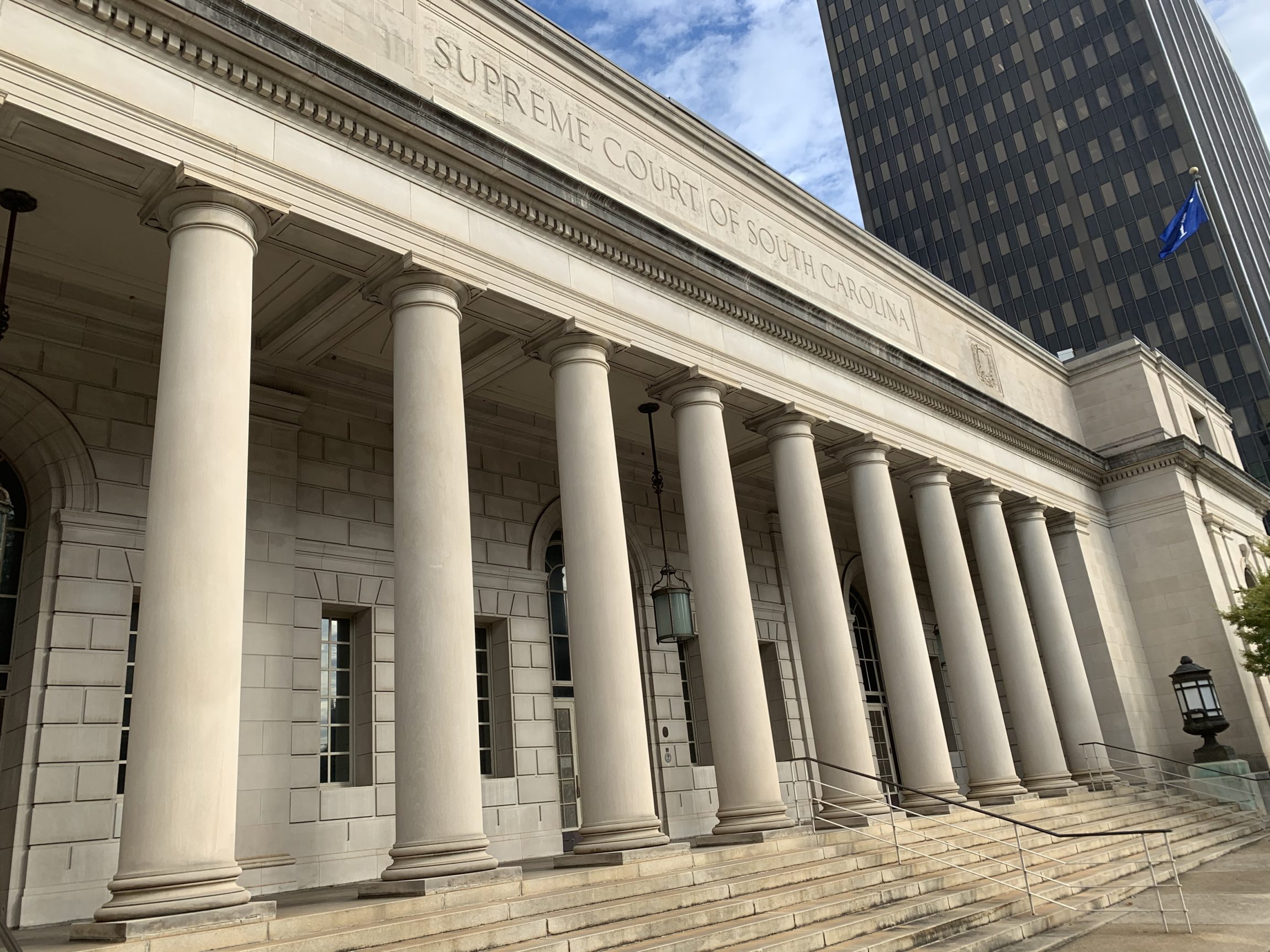
Less than two weeks after the South Carolina Supreme Court issued a sweeping decision preserving the controversial underpinnings of the Palmetto State’s insular asbestos docket, corporate defendants are asking the court to take another look.
In separate petitions for rehearing filed on Thursday (June 11, 2026), attorneys representing two defendants – Altrad Investment Authority SAS and Charter Consolidated Ltd. – argued the high court overlooked key constitutional, jurisdictional and procedural issues in upholding the receivership structure surrounding Cape Intermediate Holdings Limited (CIHL).
At stake is the future of a legal framework allowing court-appointed receiver Peter Protopapas – a powerful, politically connected trial lawyer – to pursue insurance assets and affiliated corporate entities on behalf of dormant asbestos defendants. Critics say Protopapas’ framework is a “racket” which has expanded far beyond the traditional boundaries of receivership law.
The petitions marked the first response to the supreme court’s May 27, 2026 opinion in Tibbs v. Asbestos Corporation Limited, a ruling (.pdf) which largely validated the asbestos docket’s increasingly aggressive use of pre-judgment receiverships.
Now defendants are warning this decision could place South Carolina courts on a collision course with federal constitutional law, foreign courts and even a recent federal appellate ruling involving the very same receiver.

***
A CONSTITUTIONAL COLLISION?
The centerpiece of the Altrad petition (.pdf) is a claim that the supreme court failed to consider a recent decision from the U.S. third circuit court of appeals involving Protopapas.
According to the filing, the third circuit concluded that constitutional limitations prevented a South Carolina receiver from exercising corporate decision-making authority over companies organized outside South Carolina – at least not without approval from the courts where these companies were actually incorporated.
Altrad’s attorneys argued the South Carolina opinion improperly allowed Palmetto State courts to exercise control over an English company before personal jurisdiction had ever been established.
“The opinion now authorizes a South Carolina court to reach beyond the state’s jurisdictional boundaries to exercise coercive control over an active English company,” the petition stated.
Attorneys further argued the ruling effectively permitted a receiver to make corporate decisions, waive jurisdictional defenses and initiate litigation on behalf of a foreign corporation despite objections from that company’s own leadership – and despite rulings from English courts rejecting the receiver’s authority.
***

***
The petition characterized the issue not as a dispute over South Carolina receivership law, but as a fundamental due process question involving the limits of state judicial power.
The filings also revived the international dispute that featured prominently in the underlying appeal. As FITSNews previously reported, English courts have rejected efforts by Protopapas to act on behalf of CIHL and related entities.
The rehearing petition argued the supreme court minimized the significance of these federal and international rulings. According to the defendants, the court failed to adequately address what defendants described as a direct conflict between South Carolina courts and the courts of England — the jurisdiction where CIHL is organized and governed.
According to the filing, English courts have already determined Protopapas lacks authority to act on behalf of the company – and have prohibited him from doing so. That conflict, defendants argued, creates an irreconcilable situation in which South Carolina orders the receiver to act while English courts say he cannot.
***
RELATED | ASBESTOS RECEIVERSHIP SYSTEM UPHELD
***
CHALLENGING THE FOUNDATION
Meanwhile, the Charter petition (.pdf) attacked a different aspect of the opinion.
Those defendants argued the supreme court misunderstood the underlying record when it concluded CIHL was the proper entity at issue in the litigation.
According to the filing, the trial court never actually substituted CIHL as a defendant in the Tibbs litigation – and never cured what the supreme court characterized as a mere naming issue. Instead, Charter argued plaintiffs intentionally pursued a different corporate entity and that the distinction is legally significant.
The filing also contended the court overlooked longstanding South Carolina precedent requiring specific statutory safeguards before a prejudgment receiver may be appointed.
Among other things, Charter argued the supreme court improperly treated mandatory statutory requirements as discretionary and misapplied earlier South Carolina case law governing receiverships.
***
WHAT HAPPENS NEXT?
Rehearing petitions are rarely granted by appellate courts. Still, the filings underscored the high stakes surrounding South Carolina’s asbestos docket – and the increasingly aggressive legal battle over the authority of court-appointed receivers.
The supreme court’s original ruling preserved a system that critics argue has become one of the most powerful and least understood components of South Carolina’s civil justice landscape.
Whether the justices revisit their decision remains to be seen.
What is clear is that the fight over the asbestos docket is far from over – and the next battleground may not be in a South Carolina courtroom at all.
If defendants are correct that the ruling conflicts with federal constitutional principles and recent federal appellate precedent, the ultimate resolution could eventually come from a court well beyond South Carolina’s borders.
***
ABOUT THE AUTHOR …

As a private investigator turned journalist, Jenn Wood brings a unique skill set to FITSNews as its research director. Known for her meticulous sourcing and victim-centered approach, she helps shape the newsroom’s most complex investigative stories while producing the FITSFiles and Cheer Incorporated podcasts. Jenn lives in South Carolina with her family, where her work continues to spotlight truth, accountability, and justice.
***
SOUND OFF…
Got something you’d like to say in response to one of our articles? Or an issue you’d like to address proactively? We have an open microphone policy! Submit your letter to the editor (or guest column) via email HERE. Got a tip for a story? CLICK HERE. Got a technical question or a glitch to report? CLICK HERE.
