

by WILL FOLKS
***
Last summer, U.S. congressman Ralph Norman and members of the South Carolina Freedom Caucus began challenging “Republican” leaders in Columbia to redraw the Palmetto State’s political maps – eager to turn the current 6–1 GOP majority into a 7–0 Republican sweep.
“Let’s get seven Republicans,” Norman said at the time, urging GOP lawmakers to do away with the heavily gerrymandered sixth congressional district, held since 1992 by Democrat Jim Clyburn.
As FITSNews has meticulously documented over the years, the sixth district was drawn deliberately to ensure representation by a black Democrat. Not only that, Clyburn has worked cooperatively with GOP leaders for decades to ensure that the black, voting age population of the sixth district always remained above a certain level – guaranteeing his election in perpetuity.
While Norman and the Freedom Caucus have been pushing legislation (H. 4717) for months to end this arrangement once and for all… Republican leaders did nothing.
Until last week, that is…
***

RELATED | TRUMP PUSHES ‘REPUBLICANS’ TO REDISTRICT
***
Late last month, the U.S. supreme court ruled in Louisiana v. Callais (.pdf) that drawing congressional boundaries based on race is unconstitutional – a decision the administration of Donald Trump has interpreted as a mandate to eliminate South Carolina’s sixth district.
With Trump driving the train, Palmetto State Republicans are now looking to completely redraw South Carolina’s congressional boundaries – upending the state’s election schedule in the process – less than a month before the June 9, 2026 partisan primary elections are supposed to be held.
Is Trump’s read of the recent supreme court ruling correct, though?
The Callais decision, it’s worth pointing out, was issued less than two years after the high court decided Alexander v. NAACP (.pdf) – a failed bid to challenge the constitutionality of South Carolina’s existing congressional maps. In Alexander, the court determined the Palmetto State’s congressional districts had been drawn on the basis of partisanship – not race – and were therefore constitutional.
In fact, Alexander was repeatedly (and approvingly) cited by the justices in their Louisiana ruling – making it clear the Palmetto State is under no obligation to redraw its current lines.

***
While I’m not endorsing the distinction between race and partisanship, South Carolina’s sixth congressional district is technically not a “majority-minority” district (like the ones the court struck down in Louisiana). At last count, its percentage of black voters – 46.8% – was a plurality, not a majority.
There are, however, multiple majority-minority districts in the S.C. House of Representatives and State Senate that were absolutely drawn on the basis of race.
That raises an interesting conundrum: are South Carolina lawmakers representing definitionally unconstitutional State House and Senate districts really going to redraw congressional boundaries that the highest court in America has deemed constitutional?
Looks like we’re about to find out…
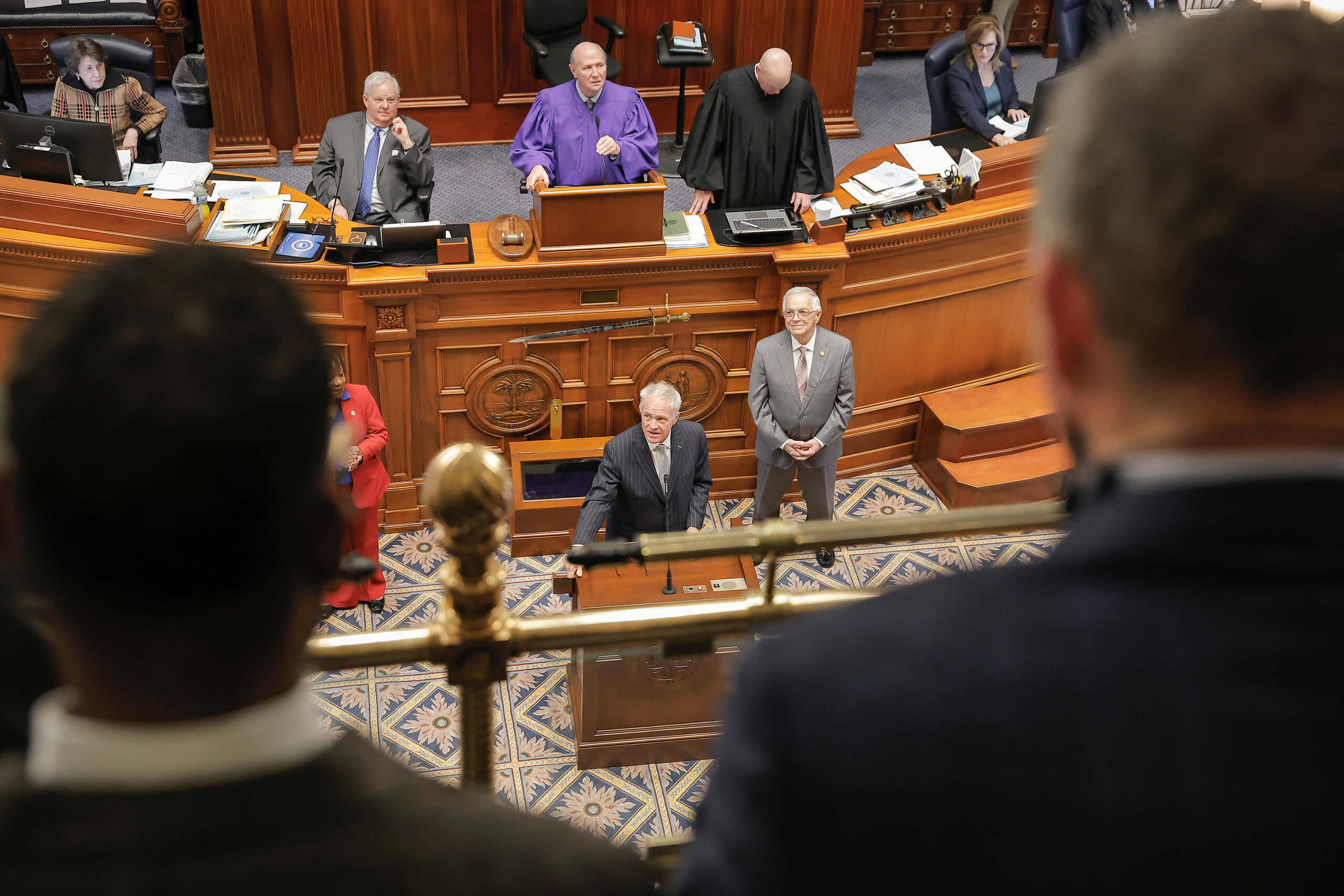
Last week, South Carolina’s House of Representatives took the first step down that path by voting overwhelmingly to amend S. 833 – the bill governing which issues lawmakers are allowed to address after they adjourn for the year on May 14, 2026. Per the text of the amendment, lawmakers would be able to come back to Columbia to consider “bills and joint resolutions affecting redistricting for the seven seats of the U.S. House of Representatives… and any other related matters including, but not limited to, the 2026 election calendar.”
***
***
This amendment cleared the House by an 87–25 party line vote last Wednesday (May 6, 2026) and is scheduled to be taken up by the Senate this week. For redistricting to move forward in any capacity, this amendment will need to receive the support of two-thirds of senators present and voting when it reaches the floor of that chamber.
Assuming this procedural hurdle is cleared, lawmakers would next need to put forward legislation redrawing the maps – and changing the Palmetto State’s current election calendar.
This part of the calculus is exceedingly tricky considering the S.C. Election Commission (SCVotes) has already mailed nearly 7,000 absentee ballots – and nearly 300 South Carolinians have already voted based on the existing maps. This could create all sorts of legal headaches in the event those votes wind up being invalidated.
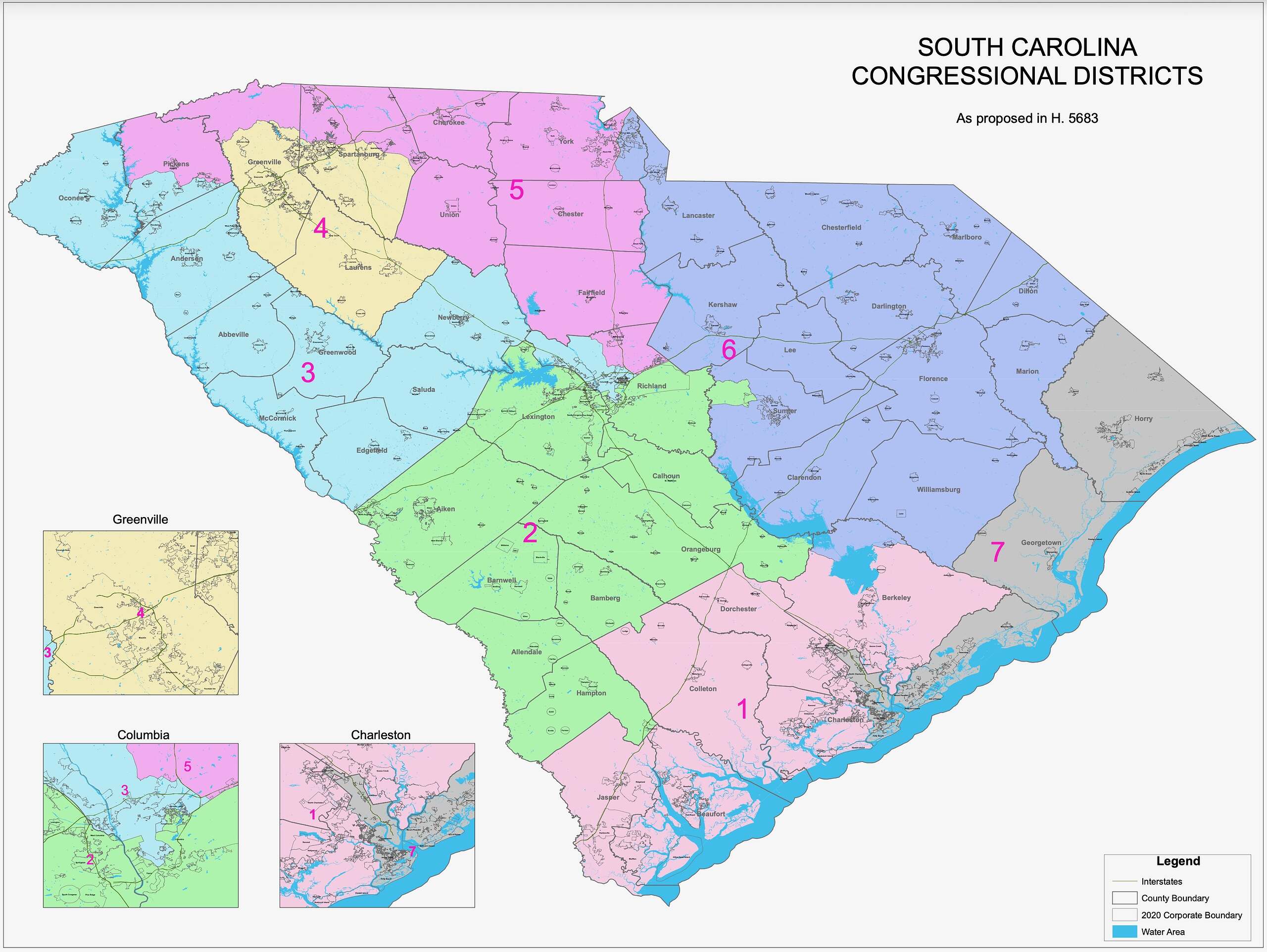
Nonetheless, two bills were introduced in the House last Thursday (May 7, 2026) which would redraw the state’s congressional lines (H. 5683) and bump the partisan primary elections for these redrawn districts to August 11, 2026 (H. 5684).
Oh, and there’s an accompanying map…
***
***
According to our sources, word has come down from on high (i.e., the White House) that no changes are to be made to this map – and no changes are to be made to the state’s election calendar (aside from the two-month delay for congressional primary elections).
The White House has also made it clear to legislative leaders no “poison pills” are to be tolerated in either bill – including proposals to move primary election dates for other offices or require the S.C. House and State Senate to redraw their own boundaries to remove any unconstitutional majority-minority districts as they redraw the congressional maps.
So… can Trump pull it off? On an incredibly tight timeline? Surviving all potential legal challenges? While his support in South Carolina is at its nadir?
And, assuming he does get his proposed map pushed through, is there any guarantee it will work? That the new congressional districts will yield the 7–0 GOP margin he so covets? Many politicos believe the redrawn districts open up doors of opportunity for Democrats, who are already showing signs of becoming more competitive in South Carolina.
FITSNews has been covering this issue for years – and we’ve been covering the recent push to redistrict for months. Needless to say, you can count on us to track this most recent bid closely… and provide our audience with the best, most up-to-date analysis of the situation.
***
ABOUT THE AUTHOR…

Will Folks is the founding editor of the news outlet you are currently reading. Prior to founding FITSNews, he served as press secretary to the governor of South Carolina. He lives in the Midlands region of the state with his wife and eight children.
***
SOUND OFF…
Got something you’d like to say in response to one of our articles? Or an issue you’d like to address proactively? We have an open microphone policy! Submit your letter to the editor (or guest column) via email HERE. Got a tip for a story? CLICK HERE. Got a technical question or a glitch to report? CLICK HERE.

3 comments
Next he will ask for their daughters, and they will turn them over.
It never should have been redrawn just to suit Clyburn. THAT is wrong We need normal districts by counties.
Based on the proposed map Timmons can say bye bye to congress. Laurens voters won’t go for his bratty rich kid act