
by JENN WOOD
***
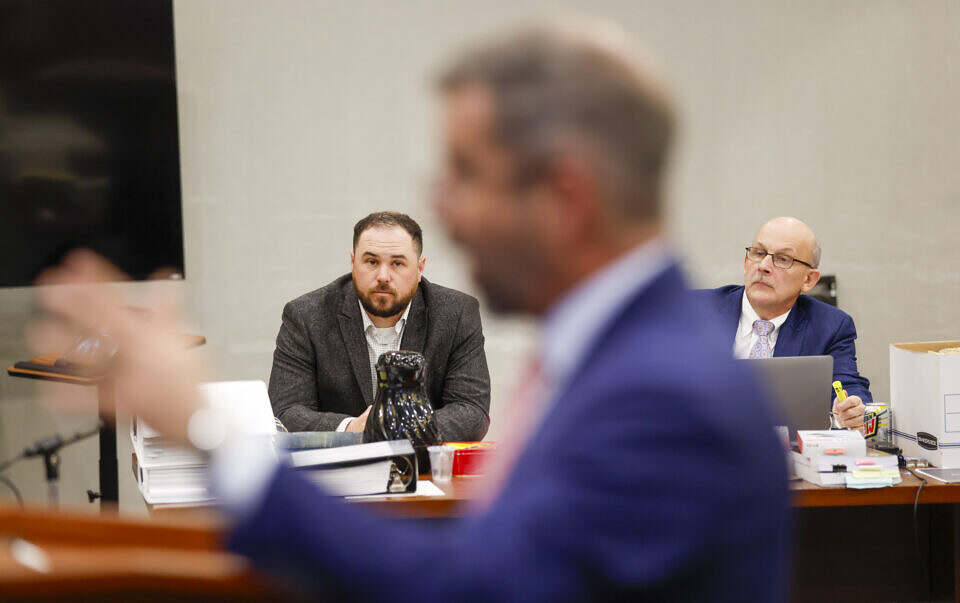
Forensic experts took center stage this week in the high-stakes ‘Stand Your Ground’ immunity hearing tied to the September 2023 shooting death of 33-year-old Scott Spivey — shifting the courtroom focus from shifting eyewitness perceptions to medical and scientific analysis.
The hearing stems from a fatal roadside confrontation on Camp Swamp Road in rural Horry County, just south of the North Carolina border. There, defendants Charles Weldon Boyd and Kenneth Bradley Williams have acknowledged firing the shots that killed Spivey – but they were not criminally charged after prosecutors concluded they acted within South Carolina’s Protection of Persons and Property Act (a.k.a. its ‘Stand Your Ground’ law).
Now, in a civil wrongful death lawsuit filed by Spivey’s estate, the two men are asking S.C. circuit court judge Eugene C. Griffith, Jr. to find they are likewise immune from liability. If immunity is granted, the wrongful death case against them ends without a jury trial.
Under South Carolina law, immunity is unavailable if a defendant was the aggressor or engaged in unlawful conduct at the time force was used. That makes the sequence of events in this case — including who escalated the confrontation, who fired first and whether the defendants reasonably feared imminent deadly harm — central to the court’s analysis.
On Wednesday, that analysis turned heavily toward expert testimony. A forensic pathologist detailed the trajectory of the fatal gunshot wound, while a toxicologist outlined Spivey’s blood alcohol concentration and what it could mean in terms of impairment — evidence both sides argue supports their competing narratives.

***
FORENSIC PATHOLOGIST TESTIFIES…
***
Dr. Angelina Phillips, a forensic pathologist with the Medical University of South Carolina, testified that she performed Spivey’s autopsy on September 12, 2023.
She determined the cause of death to have been a gunshot wound to the right side of Spivey’s back, near the axillary region — the area just behind the armpit. A second wound to the cheek was described as a graze injury and not fatal.
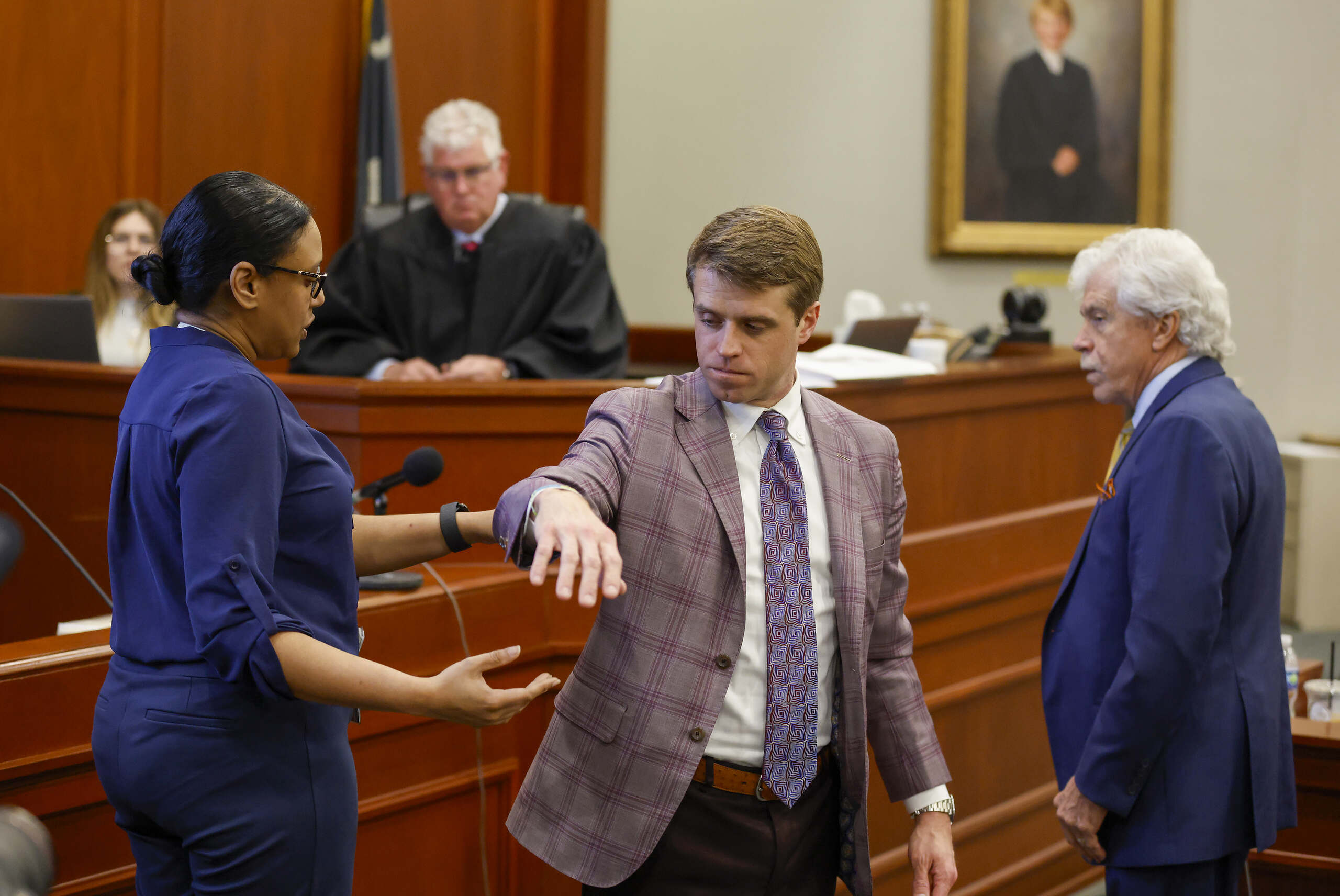
Using demonstrative positioning in court, Phillips explained that the fatal bullet entered near the right armpit crease and traveled from right to left, slightly frontward, across the chest cavity. Portions of the projectile were recovered from the diaphragm and the left pectoral muscle.
Critically, she testified that for the bullet to enter at that location and travel on that trajectory, Spivey’s right arm would likely have needed to be raised or positioned away from his torso. If his arm had been down against his body, she said, the bullet would likely have struck the tricep before entering the back.
Defense counsel used that testimony to suggest a scenario in which Spivey’s arm was elevated — potentially consistent with holding a firearm.
On cross-examination, plaintiff’s attorney Mark Tinsley walked through the same trajectory, asking Dr. Phillips to demonstrate how the bullet would have traveled relative to the shooter’s position. He also questioned her about the mechanics of blood loss, eliciting testimony that the wound would have caused rapid internal bleeding — potentially allowing for seconds to a minute of continued movement before death.
Dr. Phillips acknowledged that while Spivey could have had a brief window of activity after being shot, she could not testify to what actually occurred in those final moments.
***
TOXICOLOGY REPORT REVELATIONS…
***
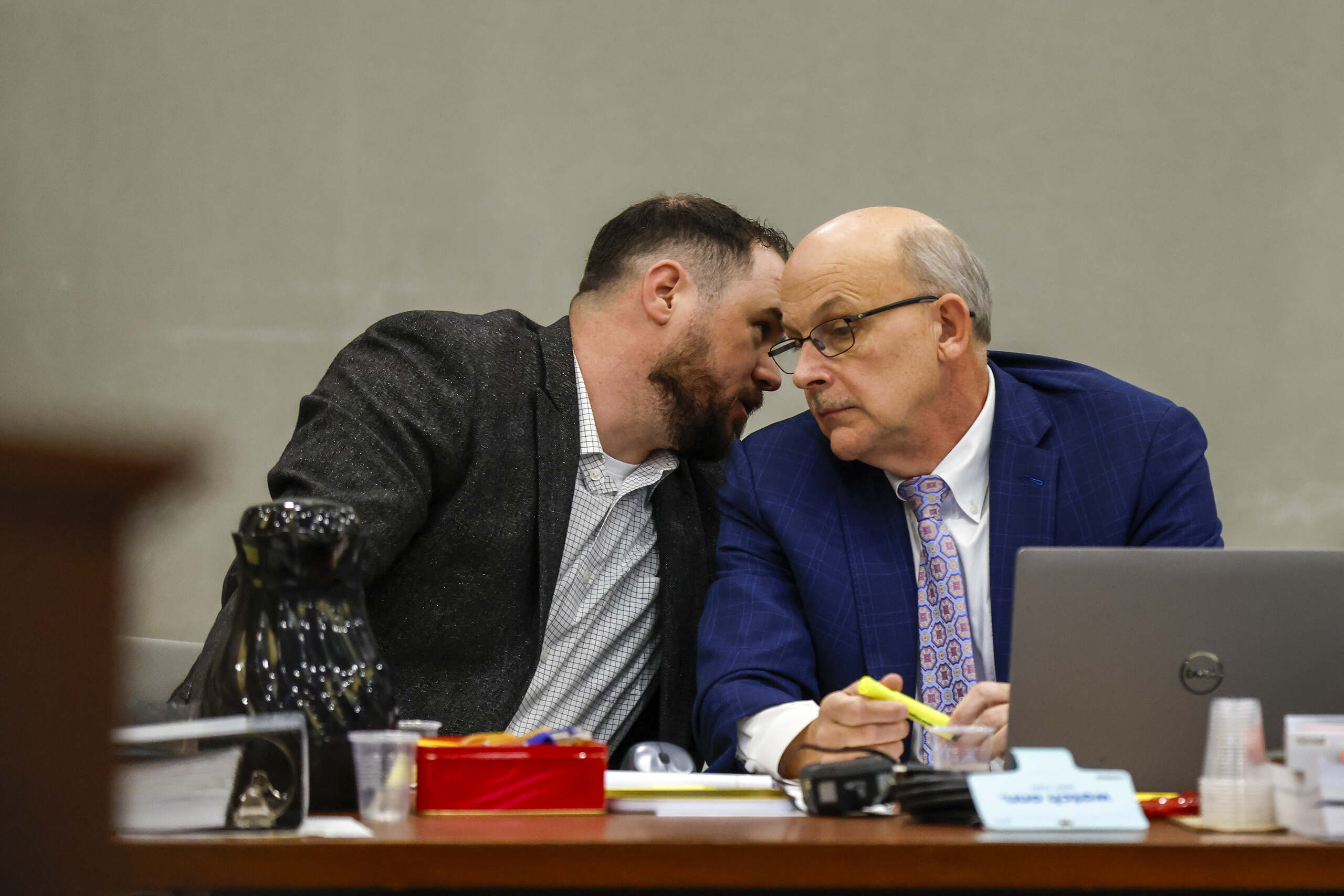
The defense next introduced the deposition of Dr. Justin Brower, a forensic toxicologist with NMS Labs, who reviewed and certified the toxicology testing in the case.
According to the final toxicology report, Spivey’s heart blood showed a blood alcohol concentration (BAC) of 0.13 percent – nearly twice the legal limit. Ethanol was also detected in vitreous fluid from the eye at a similar concentration.
Dr. Brower testified that an elevated BAC can impair executive function, decision-making and impulse control. He described possible effects including disorientation, aggression and diminished judgment, though he emphasized he could not state how alcohol affected Spivey specifically.
The toxicology screen did not detect illicit drugs or prescription narcotics. While testosterone was present in Spivey’s urine, Dr. Phillips testified it is a naturally occurring hormone – and that she could not determine whether it reflected supplementation or natural levels. She further stated that attributing Spivey’s moderate coronary artery plaque buildup to steroid use would be speculative.
Plaintiff’s counsel pressed Dr. Brower about the approximately 63-hour interval between Spivey’s death and the collection of blood samples during autopsy.
Spivey’s attorney questioned whether post-mortem changes — including time spent in a vehicle before transport — could have artificially affected ethanol levels.
Dr. Brower testified that while small amounts of alcohol can sometimes form in the body after death, those levels are usually minor and would not significantly affect such a high reading. He also explained that the nearly identical alcohol levels found in both heart blood and vitreous fluid — the fluid inside the eye — made it less likely the results were distorted after death.
Although peripheral blood is often preferred for certain drug testing, Brower said alcohol spreads fairly evenly throughout the body and is not prone to shifting or concentrating after death the way some prescription medications can.
***
RELATED | ‘STAND YOUR GROUND’ SHOWDOWN: KEY WITNESS ACCOUNTS SHIFT
***
COMPETING INTERPRETATIONS…
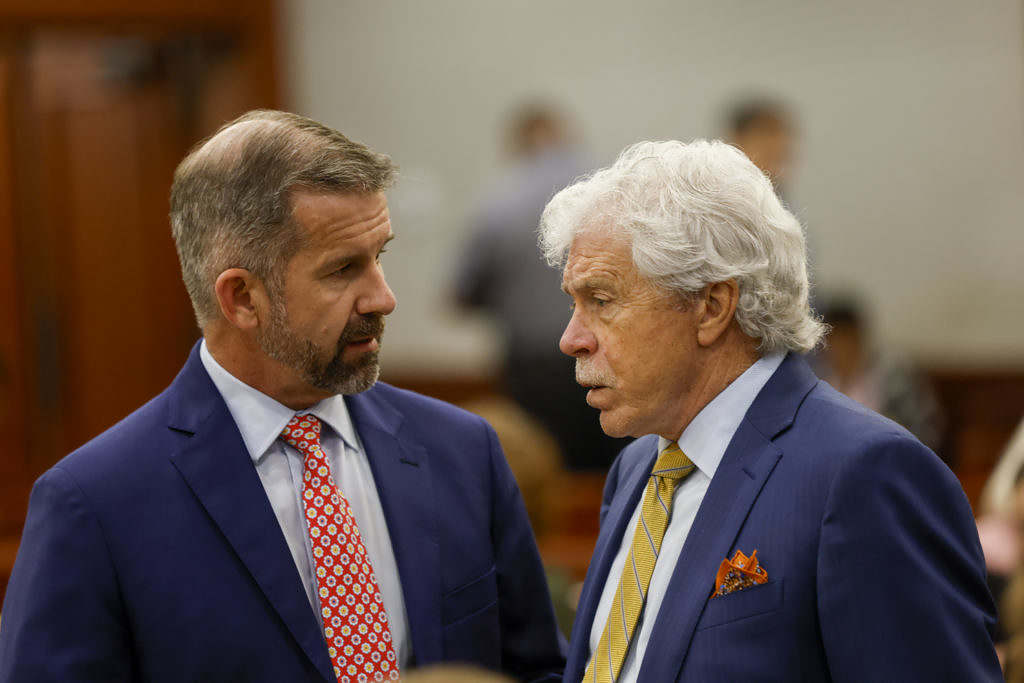
Throughout Wednesday’s testimony, both sides relied on the same scientific findings to advance sharply different narratives about what happened in the final moments of the confrontation on Camp Swamp Road. The defense highlighted the bullet trajectory, arguing it was consistent with Spivey’s arm being raised and exposing the armpit area, emphasized evidence of measurable intoxication and pointed to testimony that he could have remained mobile for a short period after being shot.
Plaintiff’s counsel, by contrast, focused on the rapid lethality of the wound, the pathologist’s inability to definitively determine Spivey’s exact arm position at the moment of impact, the absence of illicit drugs in his system and the limits of toxicology when it comes to predicting specific behavior.
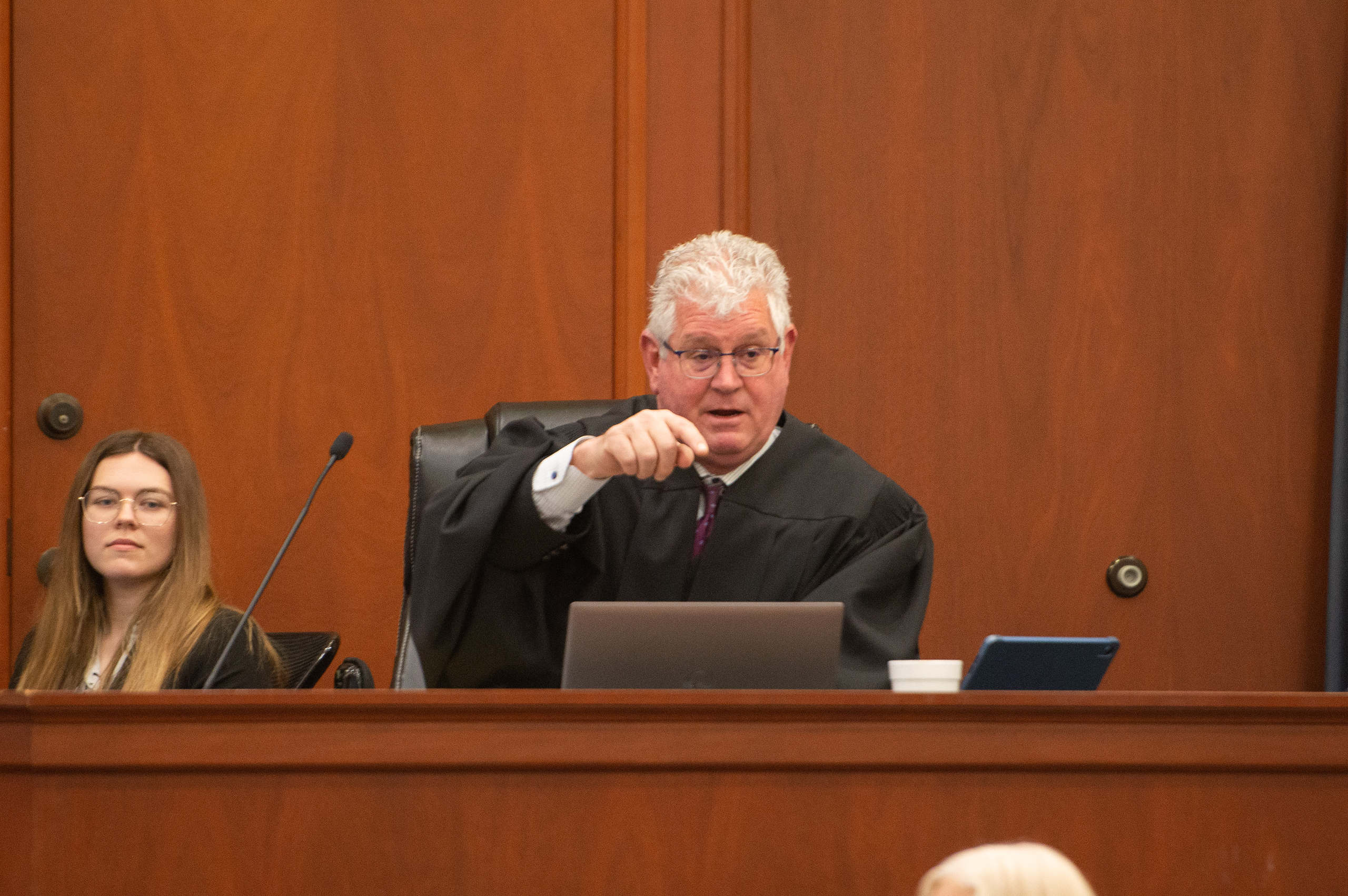
Judge Griffith asked few questions during the expert testimony but closely observed physical demonstrations and reviewed photographic exhibits as the competing interpretations of the same forensic evidence unfolded before him.
***
ASSESSING THE EVIDENCE, SHIFTING STATEMENTS…
***
Earlier in the hearing, testimony centered on eyewitness perception and shifting accounts. Wednesday’s proceedings introduced medical and toxicological evidence into the immunity analysis.
But even forensic science did not resolve the core legal question: who escalated the confrontation on Camp Swamp Road?
The pathologist could testify to a bullet’s path — not the intent of the individual firing it. The toxicologist could testify to alcohol levels — but not the decision-making of the individual under the influence.
Ultimately, the judge must decide whether the totality of the evidence — eyewitness accounts, physical findings and expert testimony — proves by a preponderance of the evidence that Boyd and Williams acted in lawful self-defense.
If they meet that burden, the wrongful death case ends here. If not, it proceeds to a trial before a jury.
Keep it tuned to FITSNews as we continue to provide coverage of these ongoing proceedings… and await judge Griffith’s determination.
***
ABOUT THE AUTHOR …
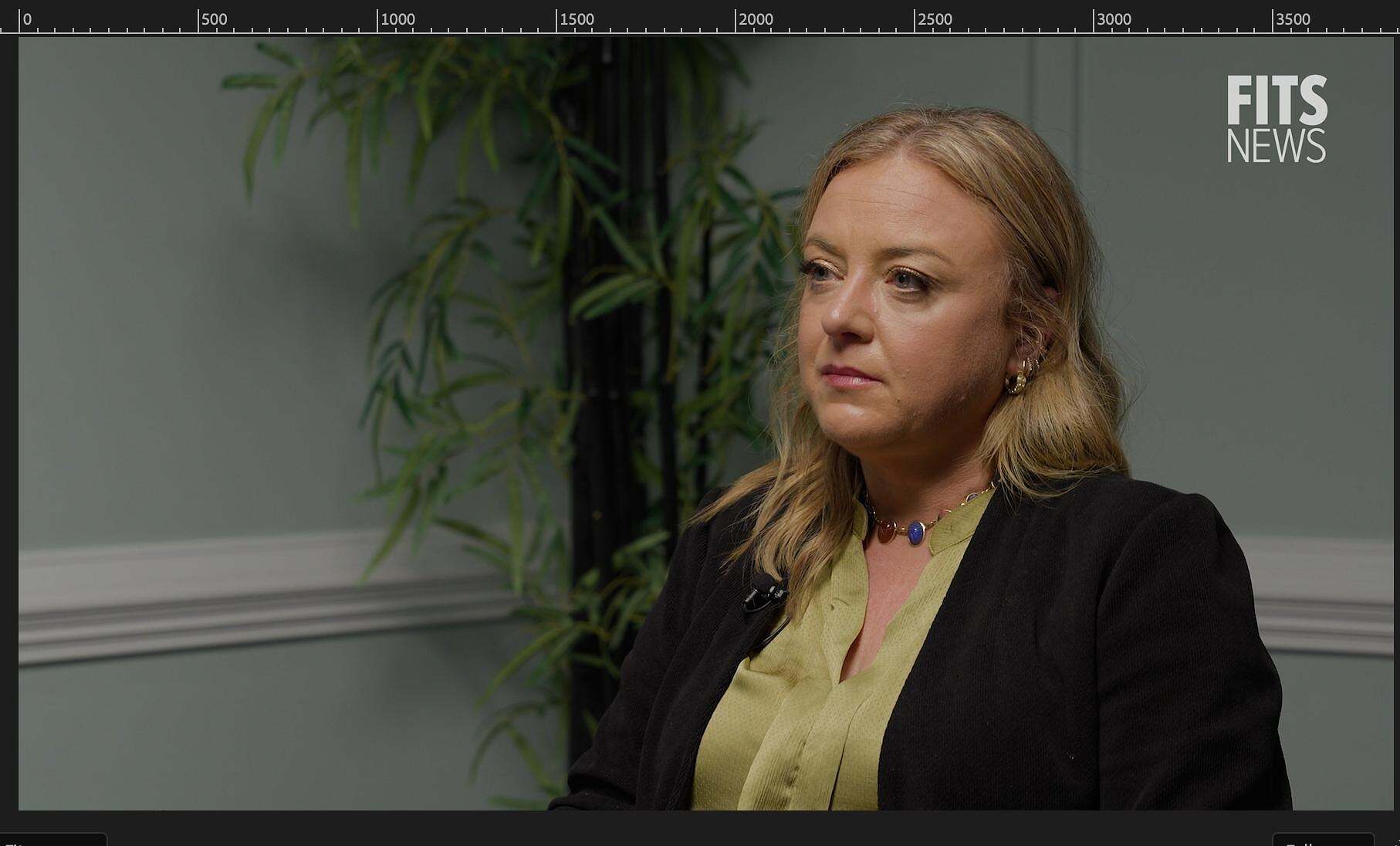
As a private investigator turned journalist, Jenn Wood brings a unique skill set to FITSNews as its research director. Known for her meticulous sourcing and victim-centered approach, she helps shape the newsroom’s most complex investigative stories while producing the FITSFiles and Cheer Incorporated podcasts. Jenn lives in South Carolina with her family, where her work continues to spotlight truth, accountability, and justice.
***
SOUND OFF…
Got something you’d like to say in response to one of our articles? Or an issue you’d like to address proactively? We have an open microphone policy! Submit your letter to the editor (or guest column) via email HERE. Got a tip for a story? CLICK HERE. Got a technical question or a glitch to report? CLICK HERE.

1 comment
The Spivey family needs to add the 911 system to the lawsuit for their failure to tell Boyd to back off.