

by WILL FOLKS
***
In recent weeks, FITSNews has devoted a modicum of investigative scrutiny toward various doings in the capital city of Columbia, South Carolina – a bureaucrat-heavy municipality which continues to languish in mediocrity and mundaneness as cities like Charleston and Greenville thrive and flourish.
Columbia just can’t seem to figure it out… nor do its leaders seem particularly interested in figuring it out (not as long as they are profiting from the dysfunction, anyway).
“This place has a special kind of falling apart,” Soundgarden’s late frontman Chris Cornell once crooned. “Like they put the whole thing together in the dark.”
That lyric, in a nutshell, describes South Carolina’s capital city… a hodgepodge of heavily subsidized developments competing with each other for supremacy amidst an exodus of business and an epidemic of homelessness.
Against this backdrop, FITSNews recently filed an exclusive report on a disastrous (and costly) court judgment entered against the city tied to its unconstitutional jihad against private property rights – a jihad that’s literally killing small businesses.

***
This multimillion-dollar verdict against the city is also costing its taxpayers $1,800 a day in interest – with no end in sight (and no evidence the city has learned its lesson).
More recently, we’ve exposed city leaders’ secretive dealings on a controversial downtown property sale – a shady offline agreement for a new hotel that’s likely to cost city taxpayers millions of dollars by the time it’s all said and done.
Needless to say, our coverage has not endeared us to the powers-that-be in the Palmetto State capital… something they continue to make abundantly clear. Last month, we sought to avail ourselves of the Freedom of Information Act (FOIA) in the hopes of gaining additional information on the hotel project – only to be greeted by stalling tactics.
This week, the mayor of Columbia went nuclear on our media outlet over an off-the-record quote inserted into an article about the city’s latest battle with the federal government. Mayor Daniel Rickenmann is adamant he was never told about the location of a new legal office for U.S. Immigration and Customs Enforcement (ICE). Honestly, that makes sense because ICE is leasing office space from a private provider – and was under no obligation to tell the city squat about its plans.
***

RELATED | SHADY HOTEL DEAL’S PROCEEDS AT RISK
***
Still, not everyone in city government is convinced its leaders were left completely in the dark… and a few said as much to our outlet. In addition to reporting extensively on the city’s position, our Erin Parrott referenced these expressions of skepticism – but the quote the mayor hyperbolically conflated into us filing a “false report” was provided to me by a city insider on condition of anonymity.
To me…
And everyone in this state knows exactly how serious I am about protecting sources – and how serious South Carolina’s courts are in protecting a reporter’s right to use them.
The mayor’s missive – which was picked up by local media – seems more about amplifying his virtue signal to the woke left as it rebukes the nation’s current immigration policy than upholding “public trust and accurate information” in the marketplace of ideas.
Having been out-flanked by city councilman Tyler Bailey in fomenting outrage over the feds’ alleged failure to notify the city of their plans – Rickenmann likely figures a high-profile fight with FITSNews will endear him to the legions of blue-haired liberal women over fifty lining up to protest this new facility.
It’s a curious hill to die on… but if it’s the one he’s chosen, so be it. Certainly, he’ll receive no quarter from us as we continue exposing his city’s rampant corruption and the costs it is imposing on citizens.
***
ABOUT THE AUTHOR…
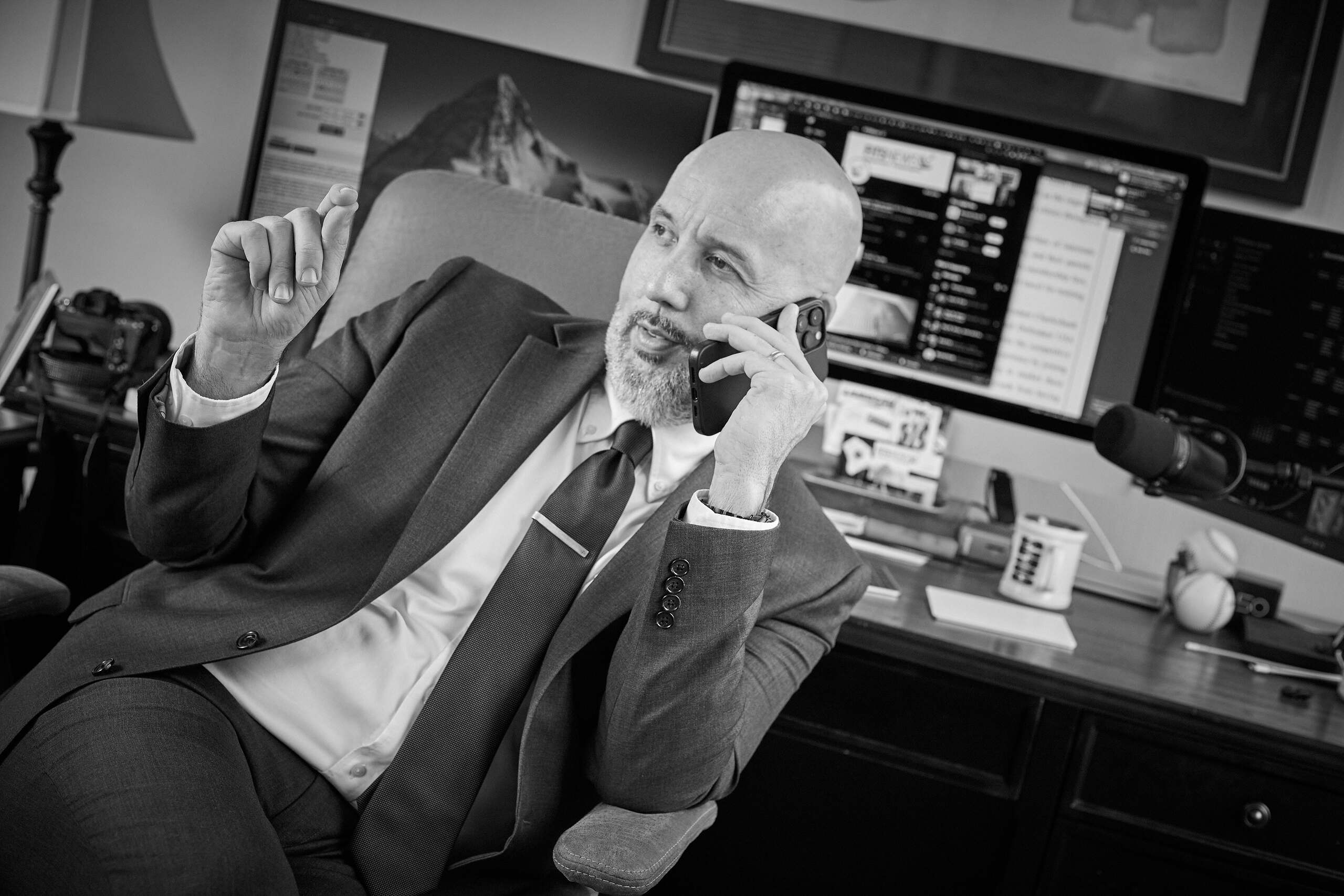
Will Folks is the founding editor of the news outlet you are currently reading. Prior to founding FITSNews, he served as press secretary to the governor of South Carolina. He lives in the Midlands region of the state with his wife and eight children.
***
SOUND OFF…
Got something you’d like to say in response to one of our articles? Or an issue you’d like to address proactively? We have an open microphone policy! Submit your letter to the editor (or guest column) via email HERE. Got a tip for a story? CLICK HERE. Got a technical question or a glitch to report? CLICK HERE.

10 comments
Rickenmann doth protest too much. The hit dog hollers.
Hypocrisy comes in all colors; and whatever Daniel Rickmann’s true or fake political color is, he is one of the biggest hypocrites around and CERTAINLY no advocate for immigrants.
I typed a long comment explaining why I label myself the most lawful immigrant in America and how and why Rickenmann at least assisted, or acquiesced to, those who tried to thwart a civil law suit of mine by FALSELY branding me an “illegal immigrant”; but I hit a wrong key and disappeared.
So, here is a summary of it; hopefully I can, God willing, finish it this time and FITS runs it without fear of being accused of allowing me to air an old grievance against Rickenmann to help FITS.
My grievance against Rickenmann is continuing and I should be allowed to air it whether it helps or hurts FITS.
In December 2010, the City of Columbia mounted a jury trial against me for, horror of horrors, having allegedly in 2007 parked my own car in the front yard of the residence I was then renting from one Sharon Bonner Koon, who later parked her own cars in that same front yard without a peep from the City of Columbia.
Daniel Rickenmann was among the jurors summoned for that trial but did not show up for the jury qualification or seek an excuse or anything else.
I had not initially noticed Rickenmann’s name on the jury list and, during the lunch break, took it to what then passed for my home and left it there.
Then Columbia Assistant City Attorney (“CACA”) David Amadeo Fernandez, who later “grew up” to become South Carolina Assistant Attorney General (“SCAAG”) and in that latter capacity collaborated with Becky Hill in faking a FaceBook story to throw Myra Catherine Crosby [“the egg juror”] off Alex Murdaugh’s case and procure an unconstitutional conviction, sensed that the jury list may embarrass then-councilor Rickenmann and demanded that I return at the end of the trial when I did not have it.
Immediately, CACA Fernandez pushed for ME to be held in contempt of court and kept hounding me with repeated contempt hearings with threats of further contempt if I did not show up. I was acquitted of THAT contempt allegation but Rickenmann was never questioned for his having ignored a jury summons from his own city. And of course, CACA Fernandez was never questioned on why he did not push for contempt against his then-boss Rickenmann for ignoring the jury summons.
In 2023, Mayor Rickenmann’s City of Columbia’s Police Department (“CPD”) STOLE that car I had allegedly front-yard parked in my rented residence in 2007. This time they stole it from the vacant lot of land Mother and I had bought it March 2009 to build on it but the City of Columbia refused to assist us in restoring that land’s buildability by rerouting illegal sewer lines away from it.
This is how Rickenmann’s City treats immigrants. His indignation over ICE renting an office there is the fakest of fakes.
Don’t worry Greenville , with it ultra liberal council, is well on its way to becoming just like Columbia. Its Police Department is derisively referred to as the South Asheville police department due to its lackadaisical attitude to enforcement. The PD also has an LGBTQ liaison officer and the city still has a DEI executive.
That’s what I am afraid of.
Rickenman you are mayor of a sh*thole city with may problems and corruption. Face it
Rickenmann loves a good undercover plan. As Sue Berkowitz pointed out in 2024, when he had the big event at the convention center to get the input of the public over a proposed homeless camp. The homeless were noticeably absent. That is because they were definitely not informed. Fortunately, some agencies and leaders were able to point out the obvious and show how impossible the idea was. One media outlet had a reporter outside of Transitions, asking the homeless what they thought while the event was underway. In short, it won’t work – the ACLU has already taken Columbia to court over this type of shelter. And the homeless can tell you, that until every avenue has been exhausted, there is no use in reinventing the wheel. A whole lot of money goes into supposedly helping them, as well as a whole lot of lip service. What actually gets done is far less, and quite dismal. But, Columbia, those are your tax dollars. Federal grants provide all of those funds that seem to vanish, leaving whoever literally on the curb. This needs to be THOUROUGHLY investigated.
And speaking of hypocrisy, I posted this comment on FITSTube’s fanfare and gloating about Senator Shane Massey’s attacke on Former Speaker Lucas’ candidacy for SC’s Supreme Court:
Blake Hewitt had no judicial experience when he was elected to South Carolina’s Court of Appeals either. What is the difference?
Nor did Jean Toal when elected directly from the General Assembly to South Carolina’s Supreme Court.
No one called her election corruption.
And Blake Hewitt’s entire legal experience before being elected to the bench was entirely appellate. No trial experience at all. And he was elected over Allison Renee Lee who had decades of presiding over trials and a several-months stint as an acting full-time SC Court of Appeals Judge. Why did Senator Massey NOT vote her Judge Lee then or even make such speech against Blake Hewitt’s lack of judicial experience?
I think I know the answer; but to ignore it is to ignore the hypocrisy of attacking a very decent and very capable man because he made “the mistake” of giving a decade of his life to service in South Carolina’s Legislature.
King Daniel Rickenmann of Columbia with his cheating police force and municipal court; King John Canon Few of South Carolina’s supreme court with his “rogue clerk of court” who is “not credible because she is a liar”; King Shane Massey, who arrogantly orates that an honorable public servant is “unqualified and undeserving”; and King Charles, who finally admitted the law should take its course against his brother; THE DIFFERENCE IS ONLY IN DEGREES OF HYPOCRISY.
Moments after the U.S. Supreme Court struck Trumps’ tariffs down, and as we wait to see if South Carolina’s supreme court will have the courage to strike down Alan Wilson’s improperly-obtained conviction of Richland Alexander Murdaugh (“RAM”), assisted by incompetent investigator and “a rogue clerk,” and because Shane Massey yesterday tried to intimidate his fellow legislators away from voting the decent, capable, and hard-working Jay Lucas into John Canon Few’s “throne” on SC’s Supreme Court, I paste here my comments from yesterday on FITSTube:
Is corruption now defined as election to an appellate court seat of a very decent and capable person lacking prior judicial experience?
Let’s see!
Blake Hewitt had no judicial experience when he was elected to South Carolina’s Court of Appeals either. What is the difference?
Nor did Jean Toal when elected directly from the General Assembly to South Carolina’s Supreme Court.
No one called her election corruption.
And Blake Hewitt’s entire legal experience before being elected to the bench was entirely appellate. No trial experience at all. And he was elected over Allison Renee Lee, who had decades of presiding over trials and a several-month stint as an acting full-time SC Court of Appeals Judge. Why did Senator Massey NOT vote for Judge Lee then or even make such speech against Blake Hewitt’s lack of judicial experience?
I think I know the answer; but to ignore it is to ignore the hypocrisy of attacking a very decent and very capable man because he made “the mistake” of giving a decade of his life to service in South Carolina’s Legislature.
What is abnormal is the long history of effectively-unchallenged retention of seats on South Carolina’s Supreme Court.
It has become royalty, not democracy, with the “heir” to the Chief Justice seat being the one with most seniority, just as the oldest prince inherits the king’s throne.
Whoever has the right to vote on any election should be free to vote his/her conscience or even whim or lust without being branded corrupt.
Ronald Reagan used to say that turn-over in the U.S. Congress is lower than in the-then-Soviet-Union’s Polit Bureau.
Well, turn over in South Carolina’s Supreme Court for other than ageing out is ZERO.
Voting a sitting Justice out of his/her seat is NOT corruption. It is democracy in action, for better or for worse.
Those who want to keep John Canon Few on his throne, PLEASE read this:
[Page 1] ORIGINAL
STATE OF SOUTH CAROLINA Before the Supreme Court of South Carolina
COUNTY OF RICHLAND TRANSCRIPT OF RECORD CORRECTED ORIGINAL
In the Matter of: Marie Assa’ad Faltas, Respondent. Appellate Case No. 2021-000815
A Hearing was held in the Courtroom of the Supreme Court of South Carolina beginning at 1:30 p.m., on Tuesday, February 22, 2022 to confirm the desire of the Respondent to proceed pro se in an upcom-ing Rule to Show Cause Contempt Action to be held on March 22, 2022.
The Court consisted of Justice John W. Kittredge; Justice Kaye G. Hearn; Justice John C. Few; Justice George C. James, Jr.; and Former Court of Appeals Chief Judge James E. Lockemy.
The Office of the Attorney General was represented by Donald J. Zelenka, Esquire.
The Respondent appeared, pro se.
Ms. K.A. Snelling, CVR-M Court Reporter for Office of Commission Counsel
[Page 2] INDEX TO EXAMINATION
Dr. Marie Assa’ad Faltas RECEIVED
Examination by Justice Few —————– 5 MAR 09 2022
Certificate of Reporter ———————– 22 S.C. SUPREME COURT
INDEX TO EXHIBITS
There were no Exhibits Submitted during this Hearing
[Page 3, lines 1-2] (Whereupon, the Hearing commenced at 1:35 p.m. on the 22nd day of February, 2022)
[3] CLERK OF COURT: All rise.
[4 to page 4, line 5] JUSTICE KITTREDGE: [4-9] Please be seated. Thank you. Good afternoon, we’re on the record in the South Carolina Supreme Court, this is In the Matter of Dr. Marie Faltas, who is present. Chief Justice Beatty is not sitting, and in his stead we’re pleased to have Judge Lockemy with us. Thank you, sir, for sitting with us here. [10-16] The proceeding today arises from a Rule to Show Cause Con-tempt Action against Dr. Marie Faltas. Dr. Faltas is present, as is Mr. Zelenka from the Attorney Gen-eral’s Office on behalf of the movant. The limited purpose of today’s hearing is to confirm what appears to be Dr. Faltas’ desire and decision to proceed pro se in this contempt proceeding. [17-23] And Dr. Falt-as, we thank you, ma’am, for being here today. We understand from your submissions that you wish to represent yourself, and we understand that and respect that. [24 to page 4, line 3] The law requires that a Court ensure that an accused is properly informed of her rights before waiving the right to legal counsel and granting a request to proceed pro se, in other words, self-representation. Dr. Faltas, you’re going to be asked questions from the Court, primarily, if not exclusively, from Justice Few. And it’s necessary for us to ensure that whatever decision you choose to make, you do so freely and voluntarily of your own free will. [4-5] I will tell those in the Courtroom if you wish to remove your mask, you’re free to do so at this time.
[6] DR. FALTAS: Judge —
[7-11] JUSTICE KITTREDGE: It’s also necessary that I place you under oath before we begin the ques-tions about your decision for legal representation or your desire to proceed pro se. So at this time, Dr. Faltas, I’d ask if you’d raise your right hand please, ma’am?
[12-17] DR. FALTAS: No, sir, I do not swear for religious reasons. And I also handed to the Clerk a motion for this hearing, and it includes documented that both my knees are fractured. So I need at least permission to address the Court from a seated position, unless this is going to be a torture Star Chamber.
[18-23] JUSTICE KITTREDGE: [18-21] No, ma’am, you can remain seated the whole time, there’s no rea-son for you to stand. And we will certainly review the motion that you have filed with the Court. [22-23] Do you affirm that the statements and testimony you give to the Court today will be truthful?
[24] DR. FALTAS: Yes, sir.
[5 to page 5, line 4] JUSTICE KITTREDGE: [5 to page 5, line 3] Thank you, ma’am. That is sufficient for the oath, so now the oath has been administered. At this time I’ll turn it over to Justice Few. [4] Justice Few?
[5] DR. FALTAS – EXAMINATION BY JUSTICE FEW:
[6 to page 7, line 12] Q: [6-13] Dr. Faltas, as you know, you have the right to be represented by an attorney. As you also know, you have the right to represent yourself. As Justice Kittredge mentioned, you have fairly clearly indicated that you wish to represent yourself in this contempt proceeding. To represent yourself however you must make a valid waiver of your right to have an attorney represent you. [14-21] Now I’m going to talk to you about some of the things that we need to talk about today, and I want you to be cooperative with me. Because if representing yourself is what you want, then the purpose of this hearing is to enable you to do that. I’m aware that you are very familiar with all of these things that we’re going to talk about because you’ve been through these hearings before. [22 to page 6, line 3] But I’m going to talk to you about some of the things that I and the other members of this Court, first, must ask you in order to know after you’ve heard everything that I’m going to talk to you about do you still want to represent yourself? And second, if you want to represent yourself we need to know that you are mak-ing a valid waiver to your right to counsel. [4-18] So there are several subjects that are important to your waiver of your right to counsel, and I’m going to discuss those with you now. Your educational back-ground is important to this question. I am aware that you are highly educated. In fact, you have multiple degrees including a Master’s in Public Health from the University of North Carolina. You have a gradu-ate degree in medicine from a university in Cairo. You have, in fact, practiced medicine professionally, and you actually taught preventative medicine at the University of South Carolina School of Medicine. This educational background indicates that you are a highly intelligent woman. And I will note that you have listed that you are self-employed as a consultant in medical legal issues. And you have told the Court before that you speak four languages. [19 to page 7, line 3] Your understanding of legal principles and procedures is important to this question. We are aware that you have been involved in extensive litiga-tion over many years at all levels of Court here in South Carolina, both federal and state. From my re-view of those cases over the years, and from my review of the motions and the returns and the other doc-uments that you have filed in this case it is my impression that you have a broad and deep understanding of legal principles and procedures. [4-10] Your mental health is important to this question. In one of the cases that you have currently on appeal here at this Court you were interrogated by Judge Marion Han-na about whether you had ever been evaluated for mental illness. You told Judge Hanna on March the 28th, 2011 that you had been evaluated for mental health issues and you have no mental health issues. [11-12] Now Dr. Faltas, so far is there anything that I have said that you disagree with?
[13-14] A: Yes, Sir. You said that I have been through these hearings, in the plural, before.
[15] Q: Excuse me?
[16-18] JUSTICE KITTREDGE: Just one second. I want to make sure the Court Reporter can hear be-cause we’re on the record. Can you hear?
[19-20] JUDGE LOCKEMY: Probably need to move that microphone up.
[21-22] JUSTICE KITTREDGE: Which microphone is yours, Madam Court Reporter?
[23] COURT REPORTER: The silver one, if she could —
[24 to page 8, line 1] JUSTICE KITTREDGE: All right, let’s try to move both of them closer. And if you need assistance in doing that we’ll certainly accommodate you, Dr. Faltas.
[2] JUSTICE FEW: Let’s move the other one up too.
[3-5] JUSTICE KITTREDGE: Madam Clerk, let’s see if we can move the other one closer to Dr. Faltas? (Microphones moved closer to Dr. Faltas).
[6-7] Q: Okay. Now I didn’t hear what you said, so could you repeat?
[8-10] A: You’re asking me if there is something that needs correction. And I said yes, there are things that need correction.
[11] Q: Tell me what it is?
[12 to page 9, line 10] A: [12-19] Okay. First you said I have been through those hearings, in the plural, before. I have not. I have been through only one hearing where Judge then South Carolina Circuit Judge Barber gave me the Faretta inquiry. And I consider it a travesty, that he admitted that he agrees that I have a constitutional right to represent myself, but he said something to the effect that his hands are tied because of what you all ordered. [20 to page 9, line 3] I think judges take oath to the Constitution, not to the South Carolina Supreme Court. And I am indignant at what has been done to me. I think it is no better than Jim Crow when you have had at least 400 lawyers who either were suspended definitely, publicly reprimanded, indefinitely suspended, disbarred, debarred. And all 400 of them, including one who had consumed drugs or alcohol and killed somebody, and you did not take their rights to speak for themselves. [4-10] I consider it a violation of my human rights, basic human rights, forget about Faretta and all that stuff, it’s a basic human right to speak for oneself. And I consider what you’re doing to me Jim Crow revisited on lawful immigrants. And because my conscience requires me to tell the truth, that is part of the truth, so I’ve been only to one hearing where the Faretta —
[11-14] Q: So I used the plural when I described the Faretta Hearings that you had been through before, and you’ve corrected me that you’ve only been through Faretta one time?
[15] A: yes, sir.
[16] Q: Okay.
[17 to page 10, line 9] A: [17-23] The other thing is you said Marion Hanna questioned me. Marion Hanna is obsessed, ob-sessed with trying to get people to get mentally examined. And that’s why I made the motion for your Court to take possession of her two so-called novels which are easily the worst ever written in English language. Because that is morbid. [24 to page 10, line 5] And that is really another travesty that your Office of Disciplinary Counsel did something to her, but it was — you are supposed to protect the public from women like her. Just as you’re sup-posed to protect the public from incompetent and ineffective and selfish and treasonous lawyers. And I do not think you’re rising to this duty. [6-9] And you are wanting me to suppress my conscience, I will not do that. I will not suppress my conscience. Now the reason I told Marion Hanna that I, and that was –
[10-11] Q: Ma’am, the reason I brought up Judge Hanna was simply to —
[12] A: She’s not a judge, I’m sorry.
[13-15] Q: — simply to point out the context in which you made the statement that you had been evaluated and you didn’t have any mental health issues.
[16] A: The reason —
[17-23] Q: Let me follow up on that if you don’t mind? I’m going to ask you three questions right here, these are yes or no questions. Depending on your answers an explanation might be warranted. But I would like if you don’t mind, would you give me a yes or no answer to these questions. And then we’ll see whether an explanation is necessary.
[24] A: Yes; Sir.
[25 to page 11, line 1] Q: Have you taken any alcohol, medication, or drugs in the last 24 hours?
[2-3] A: Sir, I take, every day I need to take a replacement thyroid hormone.
[4] Q: So medication. And it’s by prescription?
[5] A: Yes, sir.
[6-8] Q: And when you take that medication have you taken it consistent with the prescription that was given to you by the doctor who prescribed it?
[9-11] A: I have had that condition for 42 years now. And it is just, it’s almost equivalent of insulin for diabetics.
[12-16] Q: But let me repeat my question, and I want to remind you this is a yes or no question. When you’ve taken this medication that you just referred to over the last few weeks, have you taken it accord-ing to the prescription that the doctor gave you?
[17] A: Yes, sir, every day.
[18-19] Q: Okay. Now how about alcohol or any illegal drugs?
[20] A: (Moves head from side to side).
[21] Q: I understand. You’re shaking your head no.
[22] A: No, no.
[23-24] Q: Okay. So are you under the influence today of any drugs or medication or alcohol?
[25] A: No; sir.
[Page 12, lines 1-4] Q: Have you been evaluated for your mental health since that incident that I referred to where you told — you mentioned that you’d been evaluated before, have you been evaluated since?
[5] A: Yes, sir:
[6-7] Q: Did those evaluations as far as you know reveal any mental health concerns?
[8] A: At different times I was very depressed.
[9] Q: Depressed?
[10-17] A: Depressed, yes. And the depression happens even classically in people who have been wrongly incarcer-ated. And once they are released there is a euphoria of the release, but after that when you look back on how much of your life is lost you do get depressed. To the day, to the day, on 22 February, 2010 I started the five-day jury trial before Judge Clifton Newman.
[18-21] Q: Ma’am, let’s stay focused, okay? And we’ll try to get through this as simply and easily as we can. I’m asking, my question for you is since March of 2011 have you been evaluated for your mental health?
[22] A: I have been depressed since then.
[23] Q: Okay. But —
[24 to page 13, line 7] A: But it doesn’t affect my ability to understand things. And most importantly, sir, one of the cures for depression is creativity. And one of the things, and I tell the joke which is true, that I got admitted to medical school in Egypt at age 17 is because I proved I was superbly qualified to be an engineer. So one of the things that cure my depression are the engineering inventions that I work on on my own and that this farce is taking me away from.
[8-12] Q: So I think what you said a second ago is that the depression that you just mentioned is not af-fecting your ability to understand. Are there any other mental issues right now that are affecting your ability to understand?
[13-14] A: I don’t think they affect my ability. But I’m very afraid of you all, I really am.
[15] Q: But you do have the ability to understand?
[16] A: Absolutely.
[17 to page 16, line 5] Q: [17-21] Okay. Now what I’m going to do, it’s also important to a valid waiver of counsel that you be aware of the dangers of representing yourself, and that you understand how and in what way a lawyer can help you on many of these issues. [22 to page 14, line 4] On February 17th of this year in a document that you called Respondent’s Emergency Response to this Court’s February 22nd or-der, which is the order — I’m sorry, February 15th order, which is the order setting this hearing, you wrote “Dr. Assa’ad Faltas reiterates that she heard the dangers of self-representation previously recited and understands what the judges mean by them.” [5-12] I have no doubt that you understand the dangers of representing yourself, but I’m still going to go over some of them now. And at the end I’m going to ask you if you understand all those dangers. There are jurisdictional issues at stake here, and you have raised some of these jurisdictional issues already. A lawyer could help you to better understand those jurisdic-tional issues. [13-15] You have raised recusal issues, there may be other issues that you want to raise re-garding recusal. And a lawyer could help you to better understand those issues. [16-19] In every proceed-ing, certainly this one, there are going to be procedural issues, and you have already raised a few of the procedural issues. A lawyer could help you to better understand those procedural issues. [20-24] We have to operate in this Courtroom by rules of Court, they bind us, they bind Mr. Zelenka, and they will bind you. A lawyer could help you better to understand those rules of court and what conduct is permitted and what conduct is not permitted according to those rules. [25 to page 15, line 3] In every proceeding such as the one we’re going to have there are going to be evidentiary issues. A lawyer could help you to better understand those evidentiary issues. [4-11] There are substantive issues regarding contempt, and those re-late particularly to what the state would have to prove and what this Court would have to find in order for you to be found in contempt of court. There may be defenses that you could assert to the contempt charge. A lawyer could help you to understand better all of the substantive issues, including whether or not there are any defenses to the charge of contempt. [12-18] There are constitutional issues that might be at stake. In fact, you have already raised constitutional issues and you’ve done it here today. And I just want to make sure you understand that there are many times when even the judges on this Court don’t understand the constitutional issues, so a lawyer could certainly help you to better understand those con-stitutional issues. [19 to page 16, line 2] And if you are found guilty of contempt, there could, there are going to be punishment issues. And as you are aware, if the Court finds you guilty of Contempt of Court the Court may choose to fine you, may choose to place other restrictions on you, and even imprison you for a term of up to six months. A lawyer could help you to understand the potential consequences of a find-ing of contempt and help you to mitigate or perhaps even eliminate those consequences. [3-5] Now is there anything that I just explained to you in the way of the dangers of self-representation that you do not un-derstand?
[6-16] A: What I do not understand is whether you’re talking about a hypothetical, rarified, romanticized lawyer who maybe graduated top of her class from Yale, or the average lawyer that is likely to be imposed on me, who works against me, who sometimes some lawyers have been described, at least one by U.S. District Judge Gergel as ex-hibiting stunning ignorance of the law. So I do not understand whether you mean that all lawyers have the same ability or you agree that there is a range of, number one, competence, and number two, devotion to the client?
[17 to page 17, line 4] Q: [17 to page 17, line 1] As far as I know to answer your question, as far as I know there’s really been no discussion about who the lawyer would be if you chose to be represented by a lawyer. And as you point out, there is a spectrum of quality of lawyering. We would certainly hope that we would find someone who could do what I just talked to you about, which is to help you to better un-derstand all of the issues that I discussed which are what I was referring to generally as the dangers of self- representation. [2-4] Now setting the quality of the lawyer aside, do you understand all of the dangers of self-representation that I just went over with you?
[5-6] A: I even understand some that you have not mentioned.
[7-8] Q: So I understand your answer to be yes, and I understand more than what you were telling me?
[9] A: Yes.
[10-12] Q: Okay, good. Now do you have any questions for me about your right to counsel or your right to represent yourself?
[13-23] A: [13-21] I wanted to tell you that I also understand that the judges’ perception that the lawyer is better or smarter or whatever than the pro se person is itself an advantage — a disadvantage and a risk of self-representation. And to that extent, the same brilliant legal argument could come from a lawyer and you would say oh, that’s brilliant, that’s new, that gives us food for thought. But it would come from me and you would say it’s frivolous and say no more than that. [22-23] And I’ve had a natural experiment. Do you know what a natural exper-iment is?
[24 to page 18, line 2] Q: Well ma’am, I’m going to want us to — we’re almost done, and you’re doing great. But I want to make sure we stay focused. Do you have any other questions that you want to ask me?
[3-7] A: Yes. Do you promise to be as receptive to my pro se advocacy as you would be to a lawyer considering that my objective record so far is better than a lawyer? For one thing, for one thing I pro se, thank God, won a PCR case which withstood the state’s —
[8-15] Q: So let me answer your question. It’s really not my role to make promises here. But I will remind you, as I’m sure you know, that it is our duty to do what you just said. It’s actually part of the oath that we all take as judges to listen fairly to every person who comes in here to raise a position. So that’s my answer to your question. Are there any other questions that you have?
[16-19] A: Yes. In this proceeding you are my accusers. Do I have the right to confront you? And I have a suspicion that you want to impose a lawyer on me because you want that lawyer to force me to give up that choice.
[20-25] Q: My answer to your question is that that is one of the procedural and constitutional issues that could be raised at the trial of these contempt charges, and a lawyer could help you to better understand those procedural issues. Are there any other questions that you have?
[Page 19, lines 1-2] A: I’m sorry, sir, you have not answered my question.
[3-5] Q: Ma’am, you might not be satisfied with my answer, but I gave you my answer. Now I’m going to ask you again, are there any other questions that you have?
[6-7] A: Yes. If you could please look at the motion that I just served?
[8-10] Q: As Justice Kittredge indicated at the beginning of the hearing, we will look at the motion. Yes, ma’am. Are there any other questions?
[11-14] A: Will I be allowed to require discovery from Mr. Zelenka, and will you promise to ensure that he responds to discovery within the limited time that I have? I mean what I’m trying to —
[15-19] Q: I can answer that question by telling you again that’s one of the procedural issues that could be raised. And it is our duty to rule according to the law, and so we will follow that duty. So are there any other questions?
[20-21] A: No, thank you. And thank you for being pleasant today.
[22] Q: All right, ma’am.
[23 to page 20, line 5] A: I really was afraid that if I smiled you’d say you’re taking the procedure as a joke, you’re in con-tempt. If I didn’t smile you would say she has a hostile look on her face, she’s in contempt. Because this is exactly, exactly what Marion Hanna did to me. And for 12 years you all failed your duty to protect the public £from that. So I was afraid of you. .But I want. To thank you for being pleasant.
[6-8] Q: So having heard everything that I had to say to you, do you want this Court to appoint a lawyer for you or do you want to represent yourself?
[9-15] A: I God willing want to represent myself more than ever. However, having reviewed Faretta, the Court does have the right to appoint standby counsel over my objection. So if you want to appoint standby counsel you could do that, it would be over my objection. But I just was, you know, wanting you to have your heart at ease about having done everything possible.
[16-17] Q: So to be clear, in response to what you just said, you would object to standby counsel?
[18-19] A: But Faretta says the Court has the right to do standby counsel over —
[20-21] Q: But let me make sure I have this, you object to it though, right?
[22] A: Yes.
[23 to page 21, line 2] Q: Okay. Now I want to ask you one more question. Has any person or any other circumstance put pressure on you or forced you in any way to make the decision to represent yourself, or in your mind can you tell me that you are doing this freely and voluntarily?
[3] A: Freely and voluntarily.
[4] JUSTICE FEW: Okay. Thank you, ma’am.
[5] DR. FALTAS: Thank you.
[6-7] JUSTICE KITTREDGE: [6] Thank you, Justice Few. [7] And Dr. Faltas, thank you, ma’am.
[8] DR. FALTAS: Thank you.
[9-17] JUSTICE KITTREDGE: [9-13] I will on behalf of the entire Court echo what Justice Few said about our duty to treat all litigants, represented and unrepresented fairly, equally, and in accordance with the law, both procedurally and substantively. [14-17] Are there any questions from other members of the Court? (No response). Hearing none, that concludes this matter. Thank you all for being here today. We’ll issue an order in accordance with our ruling.
[18-19] (Whereupon, the hearing concluded at 2:01 p.m. on the 22nd day of February, 2022)
RECEIVED
MAR 09 2022
S.C. SUPREME COURT
[Page 23] CERTIFICATE OF REPORTER
I, the undersigned K.A. Snelling, Official Court Reporter for the Office of Commission Counsel and No-tary Public for the State of South Carolina, do hereby certify:
That the foregoing is a true, accurate, and complete transcript of record of all the proceedings had and any evidence introduced in the captioned matter on the 22nd day of February, 2022.
I do further certify that I am neither related to nor counsel for, nor interest to any party hereto.
IN WITNESS WHEREOF, I have hereunto affixed my hand this 23rd day of February, 2022.
[s/] Kathy A. Snelling CVR-M
Certified rt Reporter
Notary Public for South Carolina
My Commission Expires: May 16, 2028
Their pattern and practice is to retaliate against me for this; and surely many of my supposed FaceBook friends with ongoing interests before current South Carolina’s Associate Justice John Cannon Few will unfriend me. But courage is not the absence of fear; it is the overcoming of fear to do what is right to be done at the right moment. And in my judgment, courage is to say the following:
John Cannon Few’s last-minute withdrawal is an act of cowardice, selfishness, arrogance, and for a former Duke mascot, total lack of sportsmanship. Yes, it is customary for the lowest-vote-pledge-getting candidate to withdraw; BUT that is for open seats when the screening had already been done for an open seat and the withdrawal of the unfavored candidate does NOT halt the election. The rules are different when the incumbent is a candidate and withdraws at the last minute. The other candidates have to be re-screened and the election rescheduled, perhaps to a date AFTER Few’s current term expires. Thus, he plans to continue on the bench UNELECTED beyond his elected term. Few should have stood up like a man in the election and let the world see how few, if any, votes he had earned. Instead, like an unruly child, he took the football and went home. Or, like the Biblical Samson, Few brought the temple down on himself and his competitors. Ironically, Few boasts an article of his titled “The Courage of a Lawyer.” What Few did is the OPPOSITE of courage. Few talks the talk but does NOT walk the walk. That alone suffices to explain why few, if any, electors in South Carolina’s General Assembly liked Few for a second term on SC’s supreme court. A man’s character matters when he wants to continue as a judge. And character is revealed, not by a man’s word, but by a man’s instinctual acts in a crunch. Instead of graciously acknowledging the competitor who bested Few in vote pledges, Few threw a temper tantrum and delayed the likely-successful candidate’s election, perhaps indefinitely.