

by JENN WOOD
***
The South Carolina Supreme Court has scheduled oral arguments for Wednesday, February 25, 2026, in a closely watched appeal that could determine the future of the state’s controversial asbestos receivership system — a judicial framework that has drawn mounting scrutiny from federal courts, foreign tribunals, and now South Carolina’s highest court.
According to the court’s scheduling order, the justices will consider five core questions arising out of the sprawling Tibbs v. 3M litigation – and controversial third-party claims brought by court-appointed receiver Peter Protopapas on behalf of Cape PLC, a foreign asbestos company with no current operations in South Carolina.
At stake in these multi-million dollar deliberations is whether the “toxic” receivership model that has anchored South Carolina’s asbestos docket for more than a decade can legally stand.

***
In unusually direct language, the Supreme Court made clear the scope of what it intends to examine at oral argument.
The justices said they will consider whether the receiver’s appointment conforms with South Carolina law; whether a decision from the United Kingdom bars the receiver from pursuing certain legal actions on behalf of Cape PLC; whether the British ruling impacts South Carolina’s exercise of personal jurisdiction over Cape PLC and its subsidiaries, affiliates, and successors; whether the appellants have waived their personal jurisdiction defense; and whether the appellants’ prior “release” of claims renders the current case non-justiciable.
Each of those questions strikes at a different structural pillar of the receivership. Taken together, they signal that the Court is no longer reviewing isolated trial-court rulings, but is instead examining whether this entire judicial enterprise was lawfully constructed.
***
THE RECEIVERSHIP UNDER THE MICROSCOPE
The appeal stems from former chief justice Jean Hoefer Toal‘s decision, acting as an administrative circuit judge, to appoint Protopapas as receiver over Cape PLC and empower him to pursue claims against a wide constellation of foreign parent companies, subsidiaries, insurers, and corporate successors.
The appellants — including Charter Consolidated, Altrad, and other foreign entities — argue that:
- Protopapas was appointed without a live claim or jurisdictional foundation;
- South Carolina courts lack personal jurisdiction over the foreign defendants;
- English courts have already rejected the alter-ego theory now being advanced in South Carolina; and
- Prior releases and settlements extinguished the claims entirely.
They contend that allowing the receivership to continue would place South Carolina courts in direct conflict with rulings from courts in the United Kingdom, Canada, France, and the federal system.
***

RELATED | TOXIC JUSTICE: INSIDE THE SOUTH CAROLINA ASBESTOS RACKET
***
CAN A COURT CREATE JURISDICTION AFTER THE FACT?
A central fight before the Supreme Court turns on a threshold question: whether South Carolina courts ever had the authority to haul Cape PLC and its related foreign companies into this litigation in the first place — and, if not, whether anything the companies did later can fix that defect.
The justices will examine the impact of a landmark U.K. ruling, Adams v. Cape Industries plc [1990] Ch. 433 – which explicitly rejected the alter-ego and corporate-amalgamation theories Protopapas is using to justify his control over Cape and its affiliates. If Adams applies, it could bar the receiver from collapsing a global corporate family into a single defendant — and undercut South Carolina’s assertion of personal jurisdiction over companies that never operated in the state.
At the same time, the Court will consider whether the companies somehow gave up their right to challenge jurisdiction by how they participated in earlier stages of the litigation — an argument pushed by the receiver — or whether prior releases signed in related proceedings already resolved these claims altogether. In practical terms, the justices are asking whether a lack of jurisdiction can be cured by participation or whether a court that never had power over the defendants in the first place can acquire it after the fact.
If the Court concludes the British judgment blocks the receiver’s theory, that jurisdiction was never properly established, or that prior releases bar the claims, the case could be dismissed outright — without reaching the broader constitutional and structural questions looming over South Carolina’s asbestos docket.
***

RELATED | TOXIC JUSTICE: S.C. SUPREME COURT STEPS IN
***
WHAT’S AT STAKE
What happens next in this case will reverberate far beyond a single asbestos lawsuit. At its core, the dispute now before the Supreme Court tests whether South Carolina’s courts can continue operating a receivership system that concentrates extraordinary power in the hands of a single judge and a single receiver — even when foreign courts, federal courts, and international tribunals have rejected the same legal theories being used to justify it.
A ruling that reins in the receivership could upend years of sealed settlements, fee arrangements, and jurisdiction-expanding orders that have defined the asbestos docket. A ruling that allows it to continue, by contrast, would effectively bless a model critics say places expediency and profit above jurisdictional limits and due process.
The timing makes the stakes even higher. As asbestos cases begin to thin, PFAS litigation is already rising — and lawmakers have quietly written state law to ensure those cases can follow the same path. The Supreme Court’s decision will therefore determine not only the fate of the asbestos docket, but whether South Carolina becomes a national magnet for the next wave of mass-tort litigation built on the same framework of receiverships, secrecy, and political insulation.
Oral arguments are now set for February 25, 2026. When the justices take the bench, they will not simply be reviewing a single case — they will be deciding whether the system itself survives, or whether the era of unchecked judicial power on South Carolina’s mass-tort docket is finally coming to an end.
***
ABOUT THE AUTHOR …
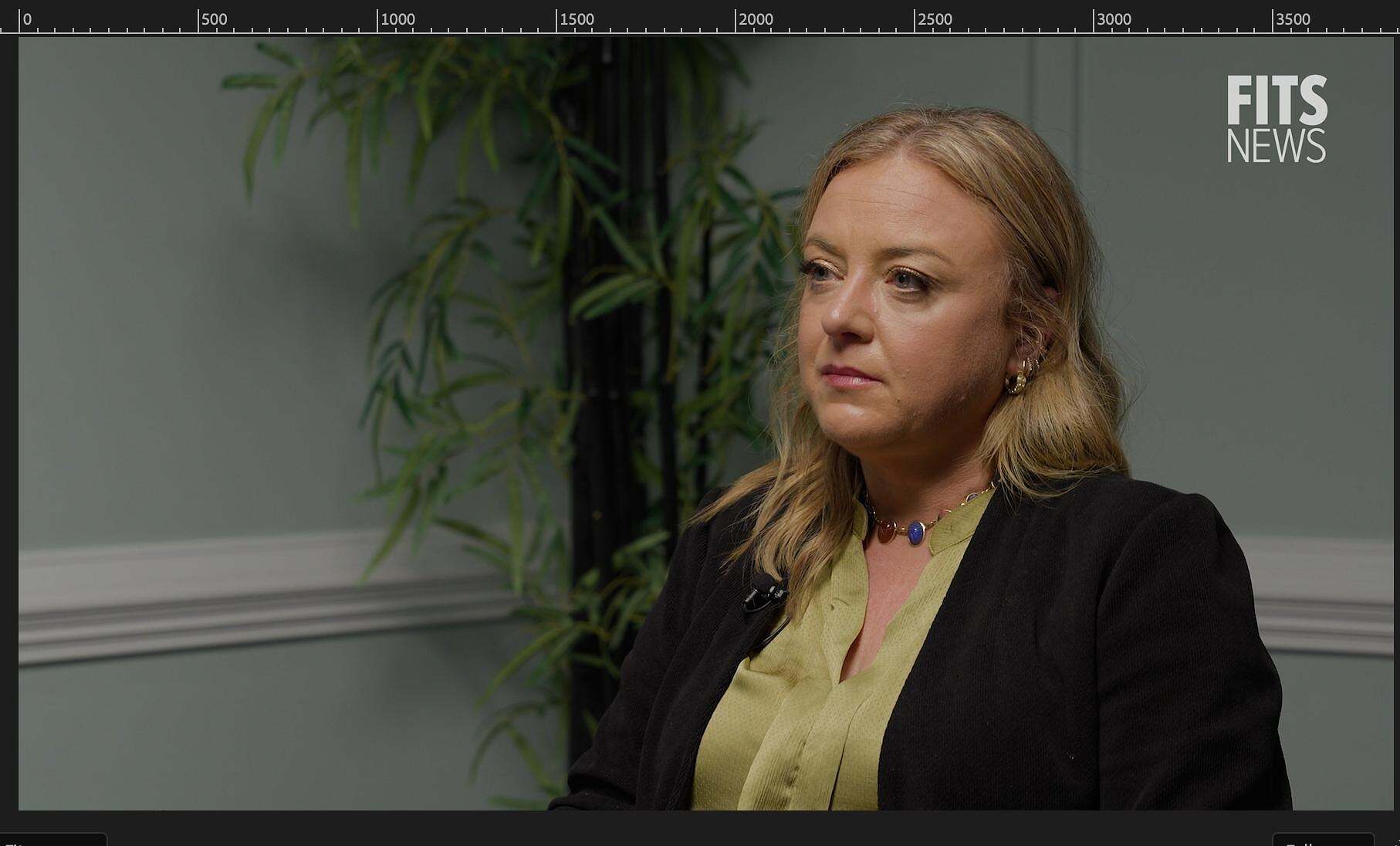
As a private investigator turned journalist, Jenn Wood brings a unique skill set to FITSNews as its research director. Known for her meticulous sourcing and victim-centered approach, she helps shape the newsroom’s most complex investigative stories while producing the FITSFiles and Cheer Incorporated podcasts. Jenn lives in South Carolina with her family, where her work continues to spotlight truth, accountability, and justice.
***
SOUND OFF…
Got something you’d like to say in response to one of our articles? Or an issue you’d like to address proactively? We have an open microphone policy! Submit your letter to the editor (or guest column) via email HERE. Got a tip for a story? CLICK HERE. Got a technical question or a glitch to report? CLICK HERE.
