

by WILL FOLKS
***
South Carolina circuit court judge Eugene C. Griffith, Jr. has issued a significant preliminary order clarifying how he intends to handle two critical pieces of evidence at the center of a high-profile wrongful death case in Horry County.
Griffith’s order in connection with the Scott Spivey wrongful death case means he will consider as evidence 911 calls placed by the only eyewitnesses to this fatal September 2023 confrontation. Filed on November 21, 2025, the order (.pdf) offers the clearest guidance yet on a still-unfolding evidentiary battle that dominated a contentious hearing in Conway, S.C. last month.
While the ruling is not a final decision on admissibility, it signals both recordings will likely be allowed — a development that could materially shape the factual foundation of the upcoming ‘Stand Your Ground’ immunity hearing.
The Scott Spivey case has become one of the most polarizing legal battles in South Carolina — marking the violent collision of self-defense claims and police misconduct allegations. To recap: Spivey, a 33-year-old North Carolina insurance adjuster, was shot and killed on Camp Swamp Road in rural Horry County following a chaotic, miles-long encounter involving two pickup trucks. The shooters — Myrtle Beach restaurant owner Charles Weldon Boyd and his passenger, Kenneth Bradley Williams — admitted firing the fatal rounds, but insist they acted in lawful self-defense after Spivey allegedly waved a gun, drove erratically and fired at them first.

***
Spivey’s family has disputed that account, accusing the men of engaging in an enraged pursuit that culminated in a “premeditated” ambush. The S.C. Attorney General’s Office initially declined to prosecute either Boyd or Williams criminally, concluding the shooters were immune under the state’s ‘Protection of Persons and Property Act,’ commonly known as its “Stand Your Ground” law.
What followed, though, was an unraveling of public trust in the original investigation. Civil discovery revealed missing or mislabeled body-camera footage, chain-of-custody concerns and the apparent coaching of Boyd at the crime scene by Horry County Police Department (HCPD) officials — revelations severe enough to trigger a corruption probe led by the S.C. State Law Enforcement Division (SLED) and the resignation or termination of key officers. At the same time, the Spivey family filed a wrongful death lawsuit seeking accountability that the criminal justice system did not deliver.
As the civil case has progressed, it has intersected with allegations of attorney misconduct, claims of witness harassment, and — most recently — the attorney general’s extraordinary decision to request an outside solicitor to independently review both the shooting and the police’s alleged mishandling of it. Every new filing carries implications far beyond the courtroom, making the upcoming ‘Stand Your Ground’ hearing one of the most consequential self-defense determinations in South Carolina history.
***

RELATED | ‘STAND YOUR GROUND’ EVIDENCE BATTLE
***
THE RULING
At last month’s hearing, defense attorneys urged the court to admit the 911 calls, police interview recordings and written statements from eyewitnesses Blaize Ward and Frank McMurrough — both of whom have since “gone silent” and refused to appear in court.
Attorneys Morgan Martin and Kenneth Moss argued the recordings fell within classic hearsay exceptions, including present-sense impressions and excited utterances – and that the case cannot stall out waiting for unwilling witnesses.
Plaintiffs’ attorney Mark Tinsley countered that transcripts alone cannot establish credibility, emphasizing State v. Dennis and warning against allowing “a shortcut that blesses untested statements without live testimony.”
Judge Griffith’s written order (.pdf) resolves the immediate dispute: the recordings themselves may be considered.
According to the court’s written ruling, the recordings of the two 911 calls:
- Likely qualify as admissible under Rules 803(1) and 803(2) — the hearsay exceptions for present-sense impressions and excited utterances.
- Convey information beyond a transcript, including tone, inflection, cadence and the caller’s emotional state — all features the judge says carry “much potential information for a factfinder to consider and evaluate credibility.”
- Do not violate the concerns raised in State v. Dennis, because the court will be evaluating the actual audio — not merely a paper transcript.
Importantly, the judge stated the 911 calls capture “the actual voice description of events as the caller observed,” making them valuable evidence at a Stand Your Ground hearing where credibility assessments are central.
Still, the court stressed it was issuing guidance, not a final ruling.
“This order is to provide guidance to the parties… and is not a final ruling by the court of the admissibility of the recordings,” the judge wrote. He emphasized the ruling “does not preclude” future objections to specific portions of the recordings — especially segments that include comments “not observed by the declarants.”
Tinsley argued that under Dennis, the court cannot adequately assess credibility without live testimony. Griffith’s order carefully distinguishes the issue, finding that the Dennis prohibition precluded relying exclusively on transcripts. According to him, audio recordings are different because they provide the “voice, cadence, timbre, tone, [and] inflections” necessary for a credibility assessment.
That legal distinction appears likely to shape how evidence is handled throughout the Stand Your Ground proceeding.
***

RELATED | THE ROADSIDE SHOOTING OF SCOTT SPIVEY
***
A WIN FOR THE DEFENSE – WITH LIMITS
The preliminary ruling gives defense attorneys part of what they sought: acknowledgment that the 911 recordings are likely admissible. This represents a meaningful development because both Ward and McMurrough provided real-time accounts that defense lawyers say corroborate their self-defense theory.
Still, the ruling is far from the sweeping endorsement the defense requested in court. It does not admit police interviews, written statements, or any other category of hearsay. It does not resolve objections to portions of the recordings that may involve speculation or second-hand information. And it expressly reserves the court’s ability to exclude any segment during the full Stand Your Ground hearing. In other words, the order shores up a key evidentiary pillar for the defense — but does not guarantee the broader universe of out-of-court statements they hope to introduce.
This ruling directly affects the contours of the upcoming Stand Your Ground immunity hearing, where Boyd and Williams will argue they lawfully shot Spivey in self-defense during the chaotic roadside confrontation.
The judge’s order clarifies:
- He will consider the 911 calls, with proper foundation.
- He is not willing to make blanket evidentiary rulings in advance.
- He expects — and still prefers — live testimony, despite the witnesses’ current non-cooperation.
- The credibility assessments required under South Carolina law can be satisfied through the audio recordings.
This last point is crucial: Griffith’s earlier remarks from the bench emphasized that judges in Stand Your Ground hearings may consider both admissible and inadmissible evidence — and then disregard anything improper in making findings of fact. The written order effectively formalizes that framework.
Judge Griffith has not yet set a date for the Stand Your Ground hearing, but his prior comments — and now this written order — signal that he intends to move the case forward quickly. As he put it this week: “It’s a big machine… a lot of moving parts.”
FITSNews will continue tracking every development as this case moves toward what is poised to be one of South Carolina’s most consequential Stand Your Ground decisions in recent memory.
***
THE ORDER
Subscriber-only document
This PDF is available to FITSNews subscribers. Get full access and be able to view documents like this one.
Subscribe for accessAlready a subscriber? Log in here
***
ABOUT THE AUTHOR …
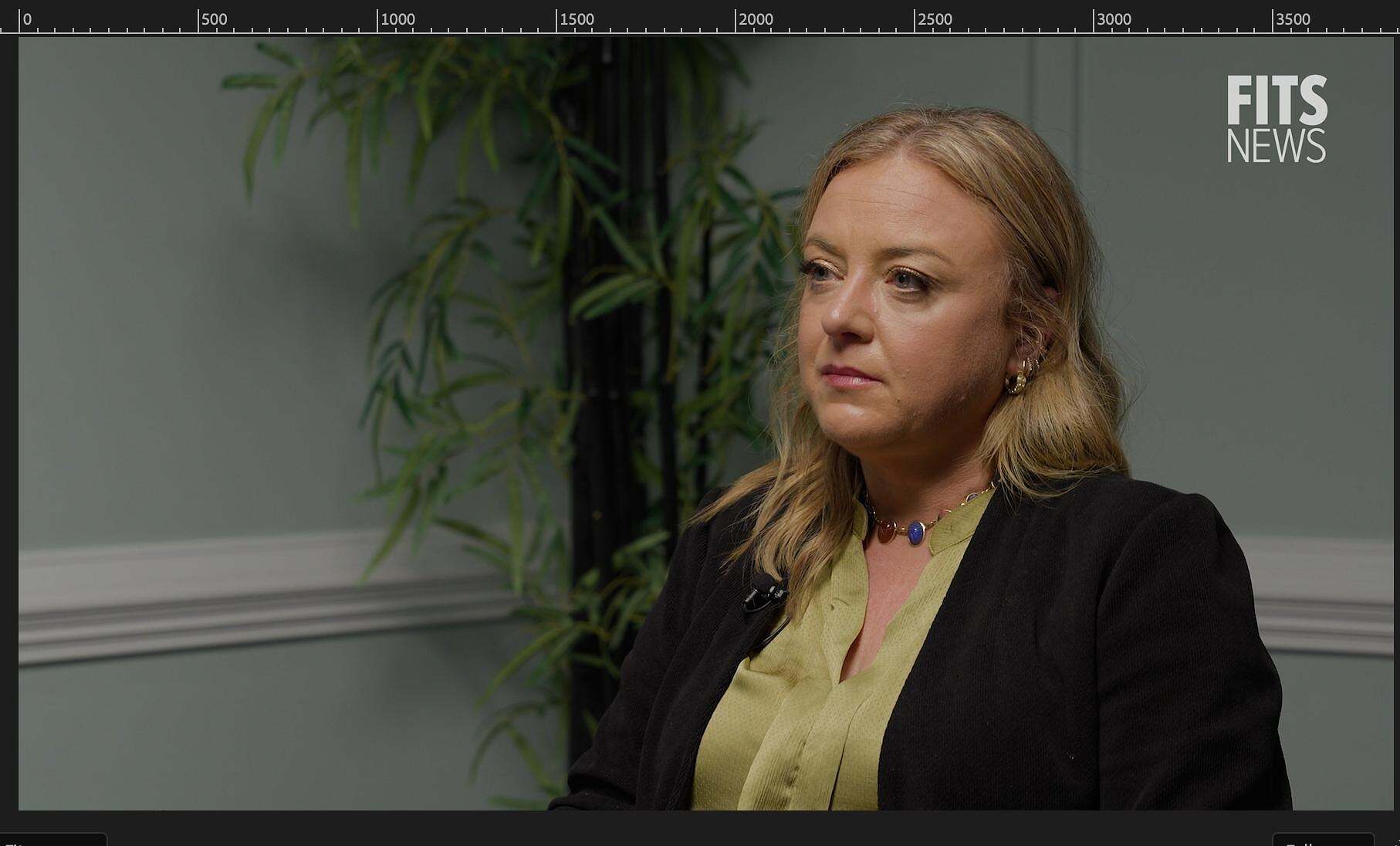
As a private investigator turned journalist, Jenn Wood brings a unique skill set to FITSNews as its research director. Known for her meticulous sourcing and victim-centered approach, she helps shape the newsroom’s most complex investigative stories while producing the FITSFiles and Cheer Incorporated podcasts. Jenn lives in South Carolina with her family, where her work continues to spotlight truth, accountability, and justice.
***
SOUND OFF…
Got something you’d like to say in response to one of our articles? Or an issue you’d like to address proactively? We have an open microphone policy! Submit your letter to the editor (or guest column) via email HERE. Got a tip for a story? CLICK HERE. Got a technical question or a glitch to report? CLICK HERE.
