

by JENN WOOD
***
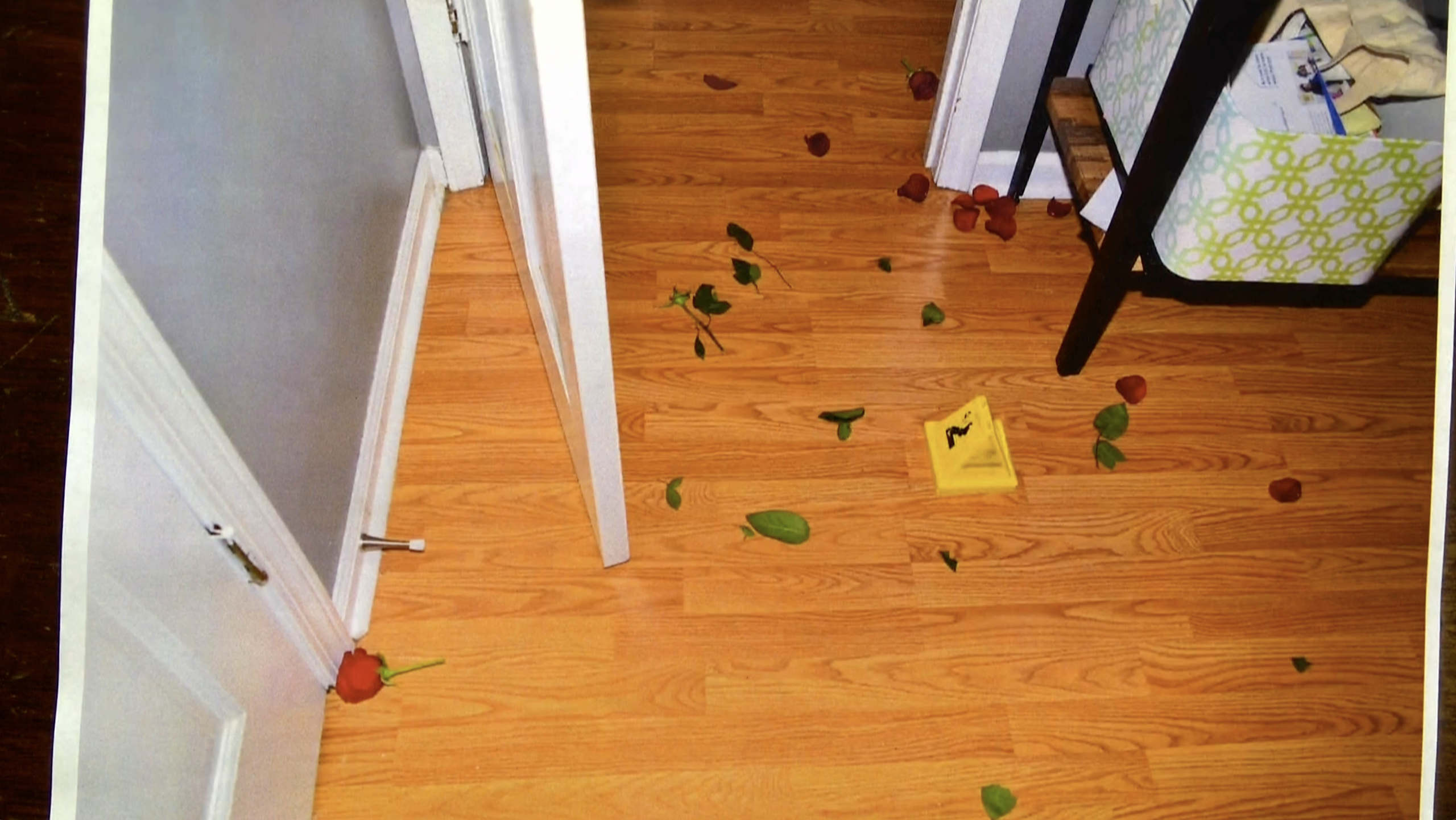
A former South Carolina prosecutor’s account of graphic evidence he reviewed nearly a year before Zachary David Hughes was convicted of murder has added a layer of intrigue to the increasingly contentious legal battle surrounding the ‘Rose Petal Murder’ case.
According to a new filing in Hughes’ appeal of his controversial 2025 conviction, the former assistant solicitor stated in March of 2024 he personally reviewed sexually explicit images and videos allegedly produced by murder victim Christina Parcell starring her and her young daughter — and subsequently discussed his findings with the S.C. thirteenth circuit solicitor’s office.
The former prosecutor also reportedly acknowledged that his review of the material changed his opinion of Parcell – and that he believed prosecutors’ subsequent representations concerning her alleged involvement in the production of child sexual abuse material (CSAM) were untrue.
Those assertions are detailed in Hughes’ latest status report (.pdf), filed Wednesday (October 21, 2026) with the S.C. court of appeals, alongside a formal motion asking the trial court to grant Hughes a new trial. The developments mark a significant escalation in the defense’s ongoing investigation into what prosecutors knew about the disputed evidence prior to Hughes’ 2025 murder trial — and whether they misrepresented that evidence while successfully arguing to keep it from the jury.
Hughes’ attorneys, Andrew Moorman and Mark Moyer, now accuse the state of engaging in what they described as a coordinated effort to conceal evidence they contend was critical to their client’s defense.

***
A MURDER CASE WITH TWO CRIMINAL INVESTIGATIONS
Hughes is serving life without parole for the October 13, 2021 murder of 41-year-old Christina Parcell, who was found brutally stabbed inside her sister’s Greer home.
Prosecutors alleged Hughes — who had no known personal relationship with Parcell — carried out the killing after becoming involved with John Mello, Parcell’s former boyfriend and the father of her young daughter.
At the time, Mello and Parcell were embroiled in a contentious custody dispute.
Hughes never disputed killing Parcell. Instead, he maintained he believed her daughter was being sexually abused and that he acted in an effort to protect the child. The homicide investigation also uncovered evidence leading to CSAM charges against Bradly Post, Parcell’s fiancé and one of the state’s key witnesses against Hughes.
Post was arrested six days after Parcell’s murder after investigators located images and videos involving children on his electronic devices.For years, the murder prosecution and the child exploitation investigation proceeded on separate legal tracks, despite the substantial overlap in evidence and witnesses.
Throughout Hughes’ prosecution, his attorneys argued evidence uncovered during the Post investigation was critical to explaining Hughes’ belief that Parcell’s daughter was in danger. Prosecutors, however, repeatedly characterized allegations concerning Parcell’s participation in creating the material as speculative, unsupported or irrelevant.
***

***
S.C. circuit court judge Patrick C. Fant III ultimately prevented much of that evidence from reaching the jury.
Hughes was convicted in February 2025.
Thirteen months later, Post pleaded guilty.
During his March 2026 plea hearing, assistant attorney general Camille Guthrie told the court investigators had recovered hundreds of images and videos depicting Parcell and her daughter nude or in lingerie.
“In many of these videos,” Guthrie said, “it is clear that Mrs. Parcell is setting up a video camera to film herself and her daughter doing nude exercises and posing.”
Post agreed under oath that prosecutors’ factual summary was “substantially true and correct.”
Those admissions became the foundation of Hughes’ request to suspend his appeal and pursue a new trial based on after-discovered evidence. On July 21, 2026, the appeals court granted that request, sending the case back to Greenville County while requiring the defense to provide regular updates on its progress.
As FITSNews reported in August, Hughes’ attorneys subsequently retained a former federal special agent and began interviewing prosecutors and investigators to determine what information was available before trial.
The latest filing provides the most detailed account yet of those efforts.
***

RELATED | ‘Rose Petal Murder:’ Appeal Takes Aim at Prosecutors
***
A FORMER PROSECUTOR’S ACCOUNT
On September 24, Hughes’ attorneys and their retained investigator interviewed a former assistant solicitor who had worked as a prosecutor for more than two decades, including nearly fifteen years with the thirteenth circuit – the office which prosecuted the murder.
The former prosecutor was not a member of the team that tried Hughes.
Instead, he prosecuted John Mello in a separate criminal case involving allegations that Mello interfered with Parcell’s custodial rights concerning their daughter. That case went to trial in the spring of 2024 and ended in an acquittal.
According to the status report, the former prosecutor also reviewed evidence connected to Parcell’s murder while investigating whether Mello had played any role in her death. In March 2024, he and Mello’s attorney traveled to the Greenville County Sheriff’s Office’s Internet Crimes Against Children (ICAC) unit to review evidence collected from Bradly Post’s electronic devices.
At the time, Mello’s attorney was reportedly preparing a necessity defense — arguing Mello had taken his daughter away from Parcell to protect the child from alleged abuse involving Parcell and Post.
***

***
The former prosecutor initially doubted such a defense was viable. According to Hughes’ filing, he agreed to review the material because he believed it might help the State defeat Mello’s argument.
Two sheriff’s deputies met the prosecutor and Mello’s attorney at ICAC, where they spent approximately one hour reviewing images and videos recovered from Post’s devices.
What the former prosecutor reportedly saw changed his assessment.
According to the defense, he described reviewing numerous images and videos depicting Parcell and her daughter nude or in sexually explicit poses. The filing stated the former prosecutor could not “unsee” the material and believed there was “nothing innocent” about it.
His opinion of Parcell, he reportedly told Hughes’ defense team, had completely changed.
The former prosecutor also allegedly concluded the images and videos demonstrated Parcell’s involvement in their production.
That account is particularly significant because it places a prosecutor within the solicitor’s office in direct contact with the disputed evidence approximately eleven months before Hughes’ murder trial.
***
RELATED | ‘Rose Petal Murder’ Plea Deal
***
WHAT DID THE SOLICITOR KNOW?
The former prosecutor’s account did not end with his review of the images. According to the filing, approximately four days after visiting ICAC, he met with the solicitor and described the evidence he had seen.
During that meeting, he reportedly explained that both he and the two sheriff’s deputies believed Parcell had been involved in producing the material involving her daughter. The filing also stated the solicitor made a comment concerning Parcell’s physical characteristics that led him to believe the solicitor might have already seen – or heard of – some of the images.
The former prosecutor also reportedly facilitated the uploading of sanitized images from Post’s devices, along with other evidence from Mello’s prosecution, to the Prosecutor Case Management System (PCMS) — the network used by the thirteenth circuit to store discovery.
According to the defense, this made the material accessible to members of Hughes’ prosecution team.
The filing does not independently establish which prosecutors subsequently accessed those particular files or when they did so. Nevertheless, the defense contends the former prosecutor’s account directly challenges the state’s repeated characterization of allegations concerning Parcell as unsupported.
The former prosecutor reportedly followed Hughes’ prosecution through media coverage and court filings. Based on his own review of the material and his experience prosecuting Mello, he told Hughes’ attorneys he believed the State’s representations concerning the evidence and Parcell’s alleged involvement were untrue.
His account also adds to information disclosed in the defense’s August status report.
At that time, Hughes’ attorneys said an assistant solicitor who actually participated in Hughes’ murder trial acknowledged that he and his co-counsel had viewed images depicting Parcell and her child nude as early as August or September 2024.
That prosecutor reportedly maintained the State’s characterization of the defense’s allegations was justified because the full context of the images could not be established without questioning Parcell, who was deceased.
The distinction remains central to the dispute: acknowledging that images existed is not necessarily the same as conceding the defense’s allegations about their creation, context or legal significance.
Hughes’ attorneys, however, argue prosecutors went well beyond disputing those interpretations and instead made representations that misled the court about the underlying evidence itself.
***

RELATED | ‘Rose Petal Murder’ SeNT Back To Trial Court
***
DEFENSE FORMALLY SEEKS NEW TRIAL
The investigation has now produced a formal motion for a new trial (.pdf), filed in Greenville County on October 21 and attached to the appellate status report.
In that motion, Hughes’ attorneys accuse the State of conducting what they describe as a “win-at-all-cost” campaign to exclude evidence they maintain could have supported Hughes’ claim that he acted in defense of another person.
They allege prosecutors deliberately misled the trial court about the evidence, suppressed exculpatory material and attempted to prevent defense attorneys from publicly discussing it.
The motion also alleges prosecutors sought to silence defense counsel by threatening contempt proceedings over public statements concerning the evidence.
These are allegations advanced by Hughes’ attorneys, not findings of prosecutorial misconduct.
The filing cites federal decisions addressing prosecutorial misrepresentations and suppression of evidence, as well as South Carolina precedent involving after-discovered evidence.
Rather than laying out the entire evidentiary record in the three-page motion, the defense says it intends to submit a separate memorandum incorporating evidence elicited during the anticipated hearing.
The motion’s central argument is that the State’s conduct affected the fairness of Hughes’ trial and that a new trial is necessary to remedy the alleged violations.
The former prosecutor’s account could become an important part of that argument, particularly if the defense can establish that prosecutors possessed evidence they later characterized as unsupported.
***
WHAT HAPPENS NEXT?
Under South Carolina law, obtaining a new trial based on after-discovered evidence requires satisfying a five-part test.
Hughes must establish that the evidence was discovered after trial, could not have been discovered earlier through reasonable diligence, is material, is not merely cumulative or impeachment evidence and would probably change the outcome if a new trial were granted.
The defense’s allegations of prosecutorial misconduct raise additional constitutional questions, but those allegations must also be established through the applicable legal standards.
The Court of Appeals has not overturned Hughes’ conviction or determined that prosecutors acted improperly. Its July order merely allowed the trial court to consider the new-trial request while Hughes’ appeal remains on hold.
According to Wednesday’s status report, Hughes’ attorneys anticipate a hearing date will be established before their next required update to the appellate court, although no date was provided.
The defense also reported receiving information from the Solicitor’s Office in response to Freedom of Information Act requests on September 23 and October 5, and serving a supplemental request on September 28. The filing does not describe the substance of those records.
For now, Hughes remains convicted of murdering Christina Parcell and continues serving his life sentence.
But the latest filings have brought the dispute over the State’s handling of the child exploitation evidence into sharper focus.
What began as an appeal challenging Judge Fant’s decision to exclude evidence has developed into an investigation of the prosecutors who argued for that exclusion — including whether information available within their own office contradicted representations made to the court.
The forthcoming hearing could provide the first opportunity for those competing accounts to be examined through testimony and evidence, rather than competing descriptions in court filings.
At the center of that examination will be a question Hughes’ attorneys have been asking for months: What did prosecutors know about the evidence involving Parcell and her daughter before Hughes went to trial — and what did they tell the court?
***
THE STATUS REPORT AND MOTION FOR A NEW TRIAL…
Subscriber-only document
This PDF is available to FITSNews subscribers. Get full access and be able to view documents like this one.
Subscribe for accessAlready a subscriber? Log in here
***
ABOUT THE AUTHOR …
As a private investigator turned journalist, Jenn Wood brings a unique skill set to FITSNews as its research director. Known for her meticulous sourcing and victim-centered approach, she helps shape the newsroom’s most complex investigative stories while producing the FITSFiles and Cheer Incorporated podcasts. Jenn lives in South Carolina with her family, where her work continues to spotlight truth, accountability, and justice.
***
SOUND OFF…
Got something you’d like to say in response to one of our articles? Or an issue you’d like to address proactively? We have an open microphone policy! Submit your letter to the editor (or guest column) via email HERE. Got a tip for a story? CLICK HERE. Got a technical question or a glitch to report? CLICK HERE.

1 comment
Regardless of the depravity of Ms Parcell, Hughes had no right to deprive her of her life. He admitted murdering Parcell. There is no doubt he did it – everything else is just so much eyewash and smoke and mirrors.