

by WILL FOLKS
***
In an election cycle dominated by negative attacks and wealthy self-funders – candidates capable of plowing limitless personal resources into their aspirations for higher office – the Democrat nominee for attorney general of South Carolina is taking a different tack.
Charleston attorney Richard Hricik (it’s pronounced “riss-ick,” in case you were wondering) says he’s going another route, offering the citizens of the Palmetto State “a very unique opportunity to do politics in a very different way.”
How different? According to Hricik, he’s not merely refusing political contributions of any kind – he’s not putting any of his own money into the race, either.
“I’m running without taking a dime from anyone,” Hricik told us. “No donations, no PACs, no special interests, and I’m not self-funding it either. Beholden to no one. That’s my firewall against all corruption: when you owe no one, you can fight for everyone.”
It’s a nifty idea, but how does a candidate committed to not spending any money get his message in front of South Carolina’s estimated 3.33 million registered voters?
One by one, Hricik says – which he insists is where “the best marketing occurs.”

***
“I recognize it’s very unconventional – and very unusual – but that’s exactly what I’m doing,” Hricik said of his cash-free candidacy. “If you want less money in politics, I’m your guy. If you want somebody to come into the office corruption-free, who’s not bought and paid for, I’m your guy.”
Hricik said he spent $200 of his own money on a GoDaddy website and email – for a campaign website he designed himself. Other than web costs and his filing fee, Hricik said that’s the only money he’s going to put into his candidacy.
“That’s it,” he said.
According to Hricik, voters are sick of all the political messaging anyway.
“Is there anybody who sits at home and says, you know what, I really want? I want to get texted, I want to get a postcard in the mail. I want another TV advertisement that’s telling me about a politician, and when I get on the internet, what I really want is an over-the-top ad or a banner ad about our campaign,” Hricik told me. “Nobody wants that. Nobody wants to get the email that says, ‘you know my opponent – he’s the devil, and if you don’t do this, the house is gonna burn down, so you better send me 10 bucks.’ Nobody needs that.”
***
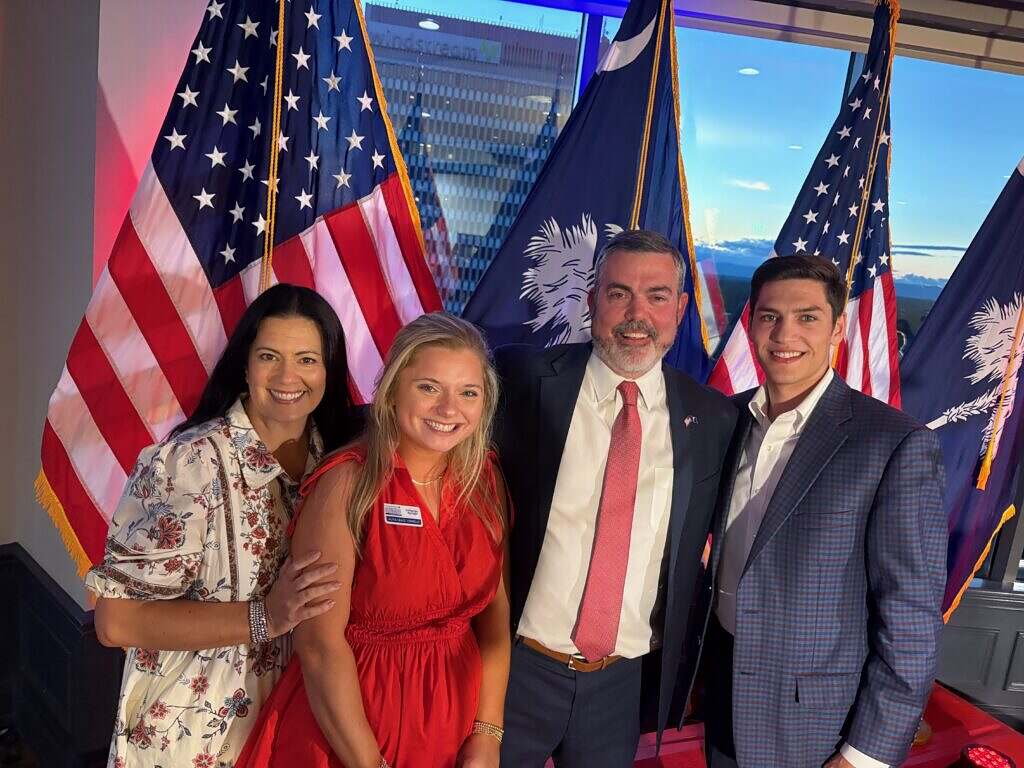
RELATED | DAVID STUMBO CLAIMS GOP NOMINATION
***
Hricik is facing Republican David Stumbo, South Carolina’s eighth circuit solicitor, in the November general election. Stumbo, 50, of Greenwood, S.C., emerged victorious over a three-person GOP field that included Democrat-turned-Republican prosecutor David Pascoe – the Palmetto State’s first circuit solicitor who was initially seen as one of the perpetual minority party’s best bets to contend at the statewide level.
In a year in which Democrats appear to possibly have some wind in their sails, though, Pascoe decided to go another route.
The lifelong Democrat is widely believed to have switched parties on the advice of his strategist, Wesley Donehue, given that a Democrat hasn’t won a statewide office in 20 years – and hasn’t won an election for attorney general since 1990.
“Everybody makes their own choices,” Hricik said of Pascoe’s decision to run as a Republican. “I think David explained himself, and that’s what he did. I understand the ‘D’ at the end of my name is going to turn off a lot of people and that’s okay.”
According to Hricik, the race is going to boil down to candidate qualifications – not party labels. While crediting Stumbo for being “a good prosecutor,” he said the job of attorney general is much bigger and more complex.
***

***
“This is a vast law firm that must do many, many things,” Hricik said. “This is not a criminal prosecution law firm. They must do all kinds of federal litigation – including defending statutes, representing the state and handling federal appellate litigation, up to and including before the U.S. supreme court.”
Managing such complex cases requires “intimate knowledge of constitutional rights, and not just constitutional rights of individuals, but those of the state and states’ rights.”
Hricik said his extensive experience in complex litigation – dating back three decades – and his many years managing a thriving law practice better equip him to handle the broad duties of the attorney general’s office than Stumbo.
“It is also about representing and protecting the states,” Hricik said, criticizing the current attorney general – GOP gubernatorial nominee Alan Wilson – for his alleged failure to step up on environmental issues.
“The attorney general’s office is responsible for defending the natural resources of the state, and you know what? Right now, we have plastic nurdles in the river and in the harbor of Charleston, and the attorney general has not participated in any environmental litigation that I can see,” he said.
One case Hricik declined to criticize Wilson on, however, was the prosecution of notorious accused killer and confessed fraudster Alex Murdaugh, which is currently headed to a retrial after the S.C. supreme court reversed the convictions Wilson’s office originally secured against
***
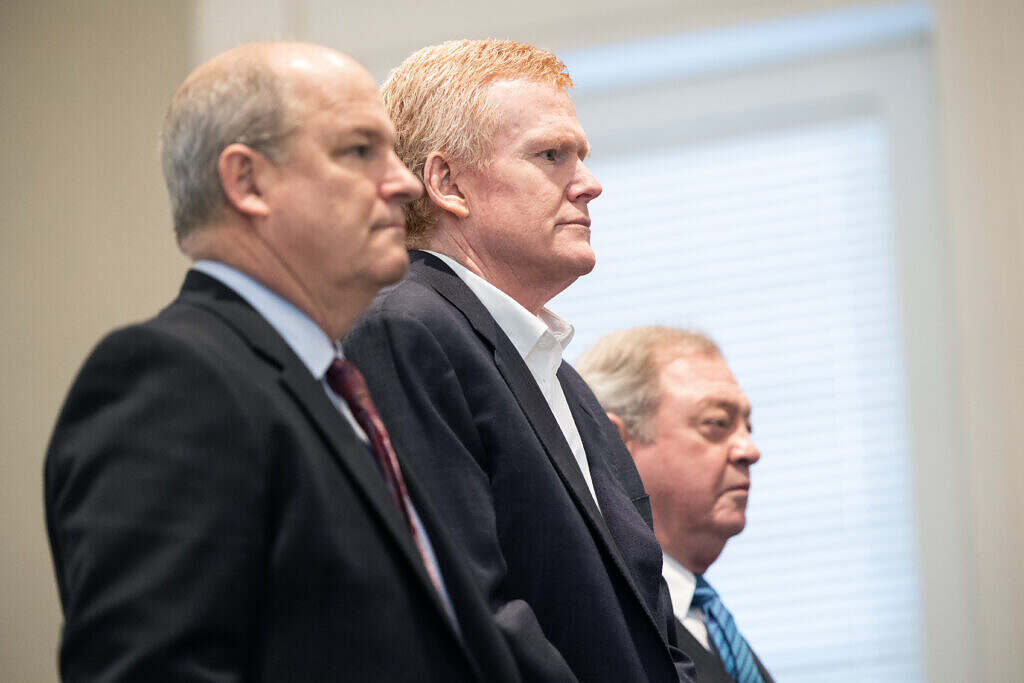
RELATED | FLURRY OF NEW MURDAUGH MOTIONS FILED
***
Hricik previously spoke with us about the Murdaugh case – joining his GOP counterparts in committing to retry it in the event he were elected attorney general. In our most recent conversation, Hricik elaborated on those comments – saying he would entrust lead prosecutor Creighton Waters and his team to continue handling the prosecution.
“Those are people I would see no reason not to entrust with the retrial of the case,” he said. “It’s always easy to judge a case from afar. I read the supreme court order, I’m familiar with what they held, and all I will say is, you know, I am going to trust the people who are involved. Decisions get made with complete information. There’s been a new piece of information with the supreme court decision, and if that is going to change some admissibility of something or other, that would be discussed obviously with the prosecutorial team, and I trust them to make good decisions as well.”
Ultimately, Hricik told us decisions need to be made based on the rule of law – not politics.
“The divisions that have occurred amongst us as a people, the one thing that unites us is the rule of law, and it’s ordinary people believing in the rule of law,” he said. “The moment we infect into the law that justice is red or blue, it is going to cost us this entire thing. And I’ll also tell you this: it’s an economic argument, too. Do you know why America was so successful economically? Because our courts enforced our agreements. People knew there was certainty in doing business in the United States, that court judgments meant something, and that contracts could be honored, and you could go to court, and the rule of law would be upheld. If suddenly business contracts are based on whether or not they’re a blue contract or a red contract, the whole thing falls down.”
Can Hricik’s earnest, apolitical approach succeed in a state dominated by increasingly toxic partisanship? Especially if he’s declining conventional means of mass communication to convey his message to voters?
***
ABOUT THE AUTHOR…
Will Folks is the founding editor of the news outlet you are currently reading. Prior to founding FITSNews, he served as press secretary to the governor of South Carolina. He lives in the Midlands region of the state with his wife and eight children.
***
SOUND OFF…
Got something you’d like to say in response to one of our articles? Or an issue you’d like to address proactively? We have an open microphone policy! Submit your letter to the editor (or guest column) via email HERE. Got a tip for a story? CLICK HERE. Got a technical question or a glitch to report? CLICK HERE.

2 comments
Since no one else commented, I might as well educate the Democrat SCAG, all God so willing and Fits permitting.
SCIENTIFICALLY, Alex Murdaugh is already-proven ACTUALLY innocent because the shootings did NOT happen as early as the Prosecution pretended.
The food in Paul and Maggie’s stomachs AT AUTOPSY was too little and too digested for their lives to have ended ONLY 19 or 22 MINUTES after their KNOWN large, and relatively fatty, last meal ended at 8:30 pm on 7 June 2021, just as the sun BEGAN SETTING on that Low Country day so close to the summer solstice.
Those who took the time to attend the hearings and/or go the now-reversed trial, should take the time to read this TRUE CRIME story from Oregon as told in Atlas Obscura:
How a Victim’s Last Meal Can Identify a Killer
To solve crimes, two botanists identify half-digested potatoes, tomatoes, and lettuce under a microscope.
by Tove DanovichDecember 12, 2017
It was 10 p.m. when the two men held up a blue Dutch Brothers coffee kiosk in Eugene, Oregon. They were wearing dark clothing and had covered their faces with handkerchiefs. The first man told the lone barista to turn around with his hands on the back of his head and close his eyes. They likely hoped that the second man could grab the cash while the other watched the barista. But the plan went wrong. The barista got out his gun and shot and killed the first man. The second man tried to get in a few shots, but soon ran away on foot.
The kiosk’s surveillance cameras were out of order, and nearby cameras did not capture the two men on video. The case might have reached a dead end there if not for the criminal’s autopsy and, specifically, the identification of what the dead man ate for dinner that night.
As a forensic analyst for the Eugene Police Department, Lisa Pope doesn’t perform autopsies, but she is sometimes in the room to help tie up any forensic loose ends. Pope was there, in 2010, for the autopsy.
“[The Medical Examiner] was examining the stomach contents, which is a part I don’t like because it doesn’t smell good,” Pope recalls. “But I started paying attention—he was pulling out food that wasn’t well-digested.”
Thanks to the process of chewing combined with caustic stomach acids, it’s typically difficult to identify foods from a deceased’s stomach contents. “But he’s pulling out chunks of hamburger about the size of my index finger, a piece of cheese, then a piece of bacon about a half inch long,” Pope says. “Then he pulls out half a French fry.”
Pope recognized it at once. It was a thick cut fry with the skin still attached—a signature of Wendy’s fries. Even better, Pope knew there was a Wendy’s restaurant just a few blocks from the Dutch Brothers kiosk. She called the lead detective, and when they asked Wendy’s for surveillance footage from that night, they found clear video of the deceased suspect and his partner ordering food, eating their meal, and then trying on their masks before walking out the door. The detectives couldn’t believe it. “If it weren’t for the stomach contents, we might not have gotten that video,” Pope says.
The first forensic autopsy used to determine whether foul play was involved in a victim’s death took place in the early 1300s. Yet these autopsies were performed sparingly, and they usually aimed to simply determine whether a victim died from heart attack or poison, knife wounds or a gunshot. If a man died of a coughing fit, the autopsy may have only looked at the throat and chest—ignoring the rest of the body. Physicians only saw what they looked for, and it wasn’t until the mid-1800s that people started championing more comprehensive autopsies that looked at every organ of the body and documented each one according to a set standard.
The Dutch Brothers Kiosk is a rare example of an old-school form of stomach analysis (using only what can be detected with the eye) working. Yet a closer look at stomach contents could lead to these almost unbelievable successes happening more often. Today most autopsies only look at stomach contents to get a vague idea of how long it’s been since a victim’s last meal. It’s rare that the deceased was such a terrible chewer that foods can be identified with the naked eye. But forensic botanists and co-authors of the book Forensic Plant Science, Jane Bock and David Norris, have proven that looking at stomach contents under a microscope can be an important tool in solving a crime—even if it is only just starting to catch on.
Bock and Norris were normal, American academics—she a botanist and he an animal ecologist—until 1982, when they got a call from an Assistant Coroner in Denver. A young woman had been murdered. The investigators knew she had eaten with her boyfriend the day before at a McDonald’s. As anyone who has seen a detective show knows, the significant other is always a primary suspect. Yet some of the deceased’s stomach contents didn’t seem to match their last meal together.
The stomach stops working after death, creating a gastronomic time capsule of the victim’s last moments. Though digestion varies from person to person, a meal is typically fully digested (and the stomach empty) six hours after eating. To determine time of death, examiners commonly look at body temperature and rigor mortis (for more recently killed victims) or decomposition and insect activity (for bodies found later). They rarely rely on stomach contents.
Yet many common models are subject to external factors such as temperature. A body found in a scorching desert will actually heat up, and a body found in a snowbank will cool more rapidly. Even rigor mortis, which can also be sped up or slowed based on the weather, relies on subjective assessments of a body’s stiffness.
While most investigators take these factors into consideration, Norris says that stomach contents are very useful, too, and can sometimes provide a more accurate timeline of the victim’s last hours. If you know about a person’s last meal and can see the volume of material left in the stomach, you can determine (if the stomach is nearly empty) that a victim was killed six hours after eating or (if full) closer to one hour after a last meal.
“This determined who the suspects were and who they weren’t,” Norris says, referring to cases where a suspect had an alibi for, say, the later possible time of death range but not the earlier one. “A lot of methods are used to determine time of death, but they all have a fairly large plus or minus factor.” In other words, stomach contents are equally or more reliable than other commonly used methods when you know the time of a victim’s last meal and can identify the meal under a microscope.
For Bock and Norris’s first case, the Denver coroner sent stomach contents swabbed onto slides. Bock, a botanist unused to dealing with dead animal material, had refused to look at them otherwise. When they examined the slides, they discovered that not only was there no trace of hamburger, but the victim’s last meal had actually been a salad—under a microscope they detected remnants of cabbage, green peppers, and kidney beans. Her last meal had been at a Wendy’s, which, in the 1980s, was one of the few fast food restaurants to have a salad bar. (Unlike the would-be Dutch Brothers robber, this woman chewed her food before swallowing, which meant fries or salad remnants couldn’t be identified by sight alone.) The boyfriend had an alibi for the evening and was no longer considered a suspect. Norris says that years later, serial killer Henry Lee Lucas confessed to her murder. (Take it with a grain of salt: Lucas has variously confessed to committing 60 to 3,000 unsolved murders.)
In another of Bock and Norris’ famous cases, a woman named Jill Coit was suspected of killing her estranged husband, Gerry Boggs. Boggs had been her ninth husband (she was married 11 times to nine different men), and they’d separated acrimoniously. Boggs was one of those men who start every morning the same way: He got up and ordered coffee, hash browns, toast, and eggs at a local diner. Then he opened the store that he ran with his brother Doug. But one morning when Doug got to work, the store was still closed. He called, but got no answer. When checked on Gerry after work, Doug discovered his brother’s body. He had been hit with a shovel, burned with a stun gun, and shot three times.
Coit was an obvious suspect—she had a pattern of marrying men for their money, and a previous husband had been killed under suspicious circumstances. She had an alibi for the later half of the day when Boggs was murdered, but not for that morning. His stomach contents were sent to Bock and Norris, who found potato and onion consistent with the contents of his last meal—breakfast. Based on that information, authorities obtained a search warrant for Coit’s home where they found the murder weapons. Jill Coit is currently serving a life sentence without possibility of parole.
Despite their early successes (and having a few of their famous cases dramatized for the television show Forensic Files), Bock and Norris have found that getting a new form of forensic science accepted by investigators is sometimes an uphill battle.
“If you pick up most textbooks on forensic science, they don’t cover botanic material at all,” Norris says. That’s one of the reasons why he and Bock wrote a textbook about forensic botany. Changing the standards for forensic science may require an overhaul of the whole system.
Yet in the 30 years he and Bock have been solving cases with botany, the number of cases they get asked to work on has gone down while the number of workshops they’ve been brought in to teach keeps increasing. They were recently invited to a regional FBI lab. “We feel that it may be a reflection that we are getting the word out.”
Over their three decade career, investigators throughout the Unites States have sent stomach contents to Bock and Norris. “Some of them would come FedEx,” Norris says. “They typically put absorbent material in with it in case the container broke, but it would be shipped like any other liquid.” Often, agents drove or flew into Colorado and delivered the contents directly to the forensic botanists. Norris says that most people are familiar with what stomach contents look like: “It looks like vomit.”
As long as the food in the sample had a cell wall—think plants rather than meat, cheese, or processed foods, which turn to “goosh,” as Norris calls it, soon after mingling with stomach acids—they can tell exactly what it was. Even when meat is relatively intact, Norris explains, since all skeletal muscle looks alike, it’s impossible to tell steak from grasshopper meat. In other words, there’s now another (admittedly macabre) reason to eat vegetables at every meal.
Gastro Obscura covers the world’s most wondrous food and drink.
© 2026 Atlas Obscura. All rights reserved.
More edification for the Democrat SCAG candidate, and for the nth’s time, Paul’s kennels video did NOT and CANNOT “prove[ Alex] did it.” It only proved Alex was at at the kennels with Paul and Maggie ONLY 13 minutes before Alex left for Almeda and ONLY 19 minutes after the threesome had A LARGE and relatively fatty dinner TOGETHER at the Moselle house a walking distance away from the kennels. the kennels with Paul and Maggie ONLY 13 minutes before Alex left for Almeda and ONLY 19 minutes after the threesome had A LARGE and relatively fatty dinner TOGETHER at the Moselle house a walking distance away from the kennels.
at the kennels with Paul and Maggie ONLY 13 minutes before Alex left for Almeda and ONLY 19 minutes after the threesome had A LARGE and relatively fatty dinner TOGETHER at the Moselle house a walking distance away from the kennels.
What DISPROVES Alex “did it” is the REAL time of the shootings, which SCIENTIFICALLY is circa 9:30 pm when Alex was holding his ailing and about-to-be-widowed mother’s hand in Alex’s parents’ home in Almeda.
Also, had Alex been the real shooter, he would have spent the night in his terminally-hospitalized father’s empty bed in the Almeda house and left the bodies to be discovered in the morning by the first Moselle farm/kennel workers to arrive there.
Moreover, if you look closely at the photo of Maggie’s phone on the grass, you must conclude it was hand-placed there, not thrown from a moving car’s window. The fragile twigs above it are intact and would have been broken by, or bent under, a heavier-than-themselves object with the momentum of being thrown from a car window.
That phone was either pilfered or wrestled from Maggie’s left hand by a member of the shooting cabal BEFORE THE SHOOTING to prevent Maggie from calling for help. That member of the shooting cabal had to dispose of the phone far enough from Maggie’s reach but close enough for that member to return to the crime scene and rejoin the shooting cabal to “clean” the scene and get away.
All other explanations of the OBJECTIVE undeniable observations are Alex-haters’ “logic” more twisted than the DNA double helix.
Any more questions?