

by JENN WOOD
***
A Union County man with a lengthy criminal history — including a prior federal drug conviction — is now facing new charges in New York after prosecutors say he trafficked firearms across state lines and into one of the nation’s most heavily policed gun markets.
Federal authorities unsealed an indictment this week charging 51-year-old Daryl Rutherford with multiple firearms offenses tied to an alleged pipeline that moved weapons from South Carolina to New York City.
According to prosecutors in the Southern District of New York, Rutherford is accused of trafficking firearms, dealing firearms without a license, transporting weapons across state lines, and illegally possessing firearms as a convicted felon. If convicted, he faces up to 15 years in prison on the most serious counts.

***
The indictment (.pdf) alleged Rutherford operated his trafficking operation between December 2025 and February 2026 — repeatedly transporting weapons from the Palmetto State to the Big Apple and selling them for profit.
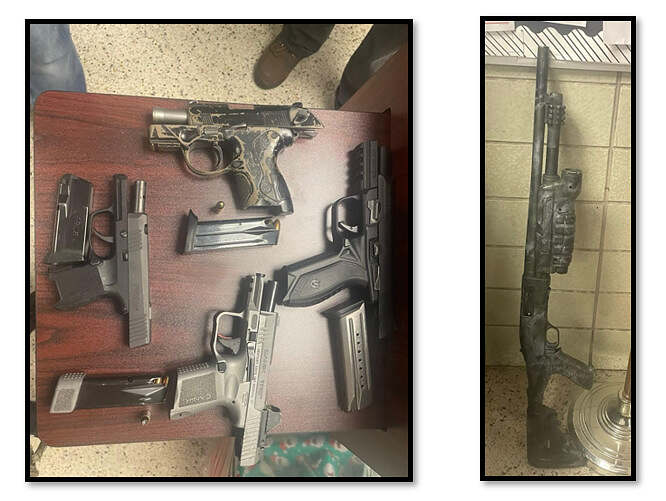
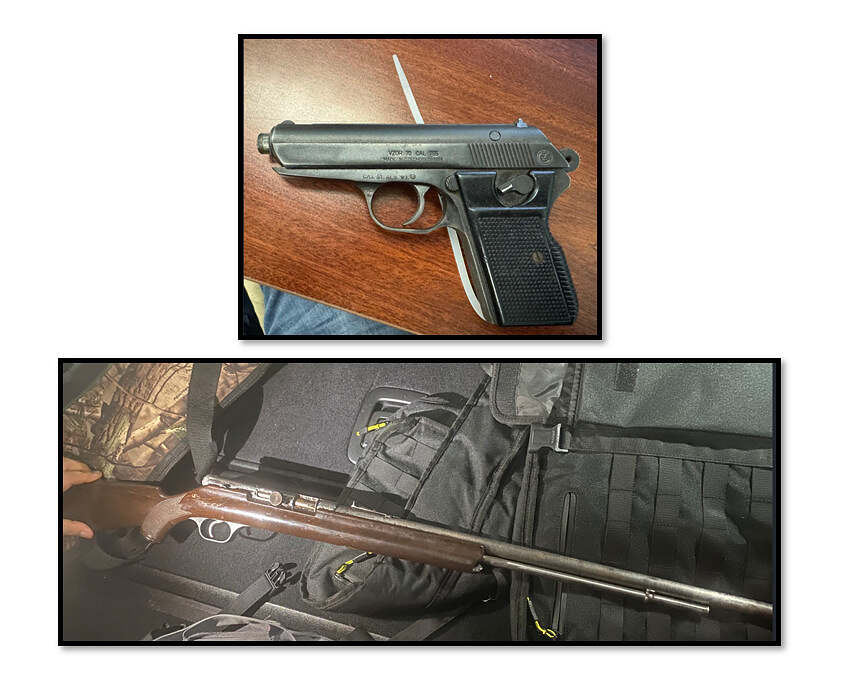
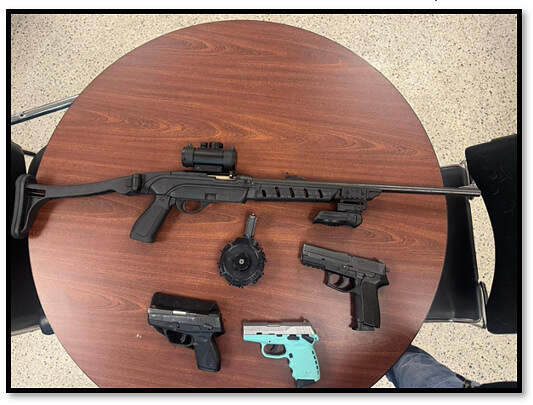
In four separate transactions, Rutherford allegedly sold 14 firearms to an undercover law enforcement agent posing as a prohibited buyer.
Those weapons included:
- Semiautomatic pistols
- Semiautomatic rifles
- A shotgun
- A firearm equipped with a high-capacity drum magazine
Prosecutors say Rutherford understood the buyer was both legally prohibited from possessing firearms and intended to resell them — key elements underpinning the trafficking charge.
These transactions took place across multiple dates, including December 12 and 18, 2025, and February 17 and 24, 2026. Rutherford was arrested in South Carolina on April 29, 2026, and made an initial appearance in federal court in Greenville the following day.
During that proceeding, he waived bond and was ordered detained pending transfer to New York, where the charges were filed.
***

***
A LONG CRIMINAL HISTORY…
The new charges against Rutherford land against the backdrop of a decades-long criminal record — one that traces back to the early unraveling of what once appeared to be a promising athletic career.
In 2003, Rutherford was sentenced in federal court to 180 months (15 years) in prison after pleading guilty to a cocaine trafficking conspiracy involving crack cocaine and powder cocaine. That conviction stemmed from a broader federal case filed in 2002 in the District of South Carolina, where he was one of numerous defendants charged in a multi-person drug distribution network.
After serving his sentence, Rutherford was released under federal supervision in 2015. But his time on supervised release was again marked by serious allegations.
In 2018, he was arrested in Greenville County (.pdf) on a series of violent charges — including attempted murder, kidnapping, domestic violence of a high and aggravated nature, and possession of a weapon during a violent crime.
Court records show those charges ultimately resulted in a mixed outcome.
Rutherford pleaded guilty in February 2020 to first degree domestic violence and possession of a weapon while committing a violent crime. Several more severe charges — including attempted murder and kidnapping — were dismissed as part of the plea resolution. That outcome significantly narrowed his criminal exposure, even as it confirmed his involvement in a violent incident tied to the original arrest.
What makes Rutherford’s trajectory notable, however, is how sharply it diverges from his early life. A 1994 report in The State newspaper described him as a standout multi-sport athlete at Union High School, but it was baseball — particularly his ability as a pitcher — that drew the most attention. He was known locally for his arm strength and velocity, with the kind of raw talent that placed him on the radar for college programs and, potentially, professional scouts.
At one point, Rutherford was viewed as having a legitimate path forward in the sport — the type of player whose development hinged more on opportunity and discipline than ability.
But that trajectory began to fracture early. Legal trouble in his late teens interrupted his playing career, cutting short what had been a promising run and effectively removing him from the structured pipeline that might have carried him into collegiate or professional baseball.
From there, the pattern that followed was not one of recovery, but repetition — a progression from early charges to federal drug trafficking, to violent felony allegations, and now to a federal firearms trafficking indictment.
Decades later, the contrast remains stark: a once-promising athlete whose path diverged early — and whose name has continued to surface in increasingly serious criminal cases.
***

RELATED | FEDS BUST $30 MILLION MONEY LAUNDERING SCHEME
***
WHAT COMES NEXT…
Federal authorities are framing the case against Rutherford as part of a broader effort to disrupt interstate gun trafficking networks that continue to funnel firearms into New York City.
Prosecutors and investigators pointed specifically to so-called “iron pipeline” routes — channels through which firearms are sourced in southern states and transported north — as a persistent driver of gun violence in urban areas.
“This alleged reckless behavior arms criminals, endangers families, and fuels violence,” Homeland Security Investigations (HSI) officials said in announcing the charges.
Against that backdrop, Rutherford’s case is about more than a single defendant. It is part of an ongoing enforcement strategy aimed at identifying and dismantling the supply chains that move illegal weapons across state lines.
Rutherford is expected to be transferred to the Southern District of New York, where the case will proceed in federal court. As with all criminal defendants, he is presumed innocent unless and until proven guilty.
But given his prior felony conviction — and the allegation that he knowingly sold firearms to a prohibited buyer — the stakes are significant.
For prosecutors, the outcome will serve as another measure of their ability to interrupt the flow of illegal guns into major metropolitan markets — a pipeline they argue continues to fuel violent crime far beyond the states where those weapons originate.
***
ABOUT THE AUTHOR …

As a private investigator turned journalist, Jenn Wood brings a unique skill set to FITSNews as its research director. Known for her meticulous sourcing and victim-centered approach, she helps shape the newsroom’s most complex investigative stories while producing the FITSFiles and Cheer Incorporated podcasts. Jenn lives in South Carolina with her family, where her work continues to spotlight truth, accountability, and justice.
***
SOUND OFF…
Got something you’d like to say in response to one of our articles? Or an issue you’d like to address proactively? We have an open microphone policy! Submit your letter to the editor (or guest column) via email HERE. Got a tip for a story? CLICK HERE. Got a technical question or a glitch to report? CLICK HERE.
