
by JENN WOOD
***
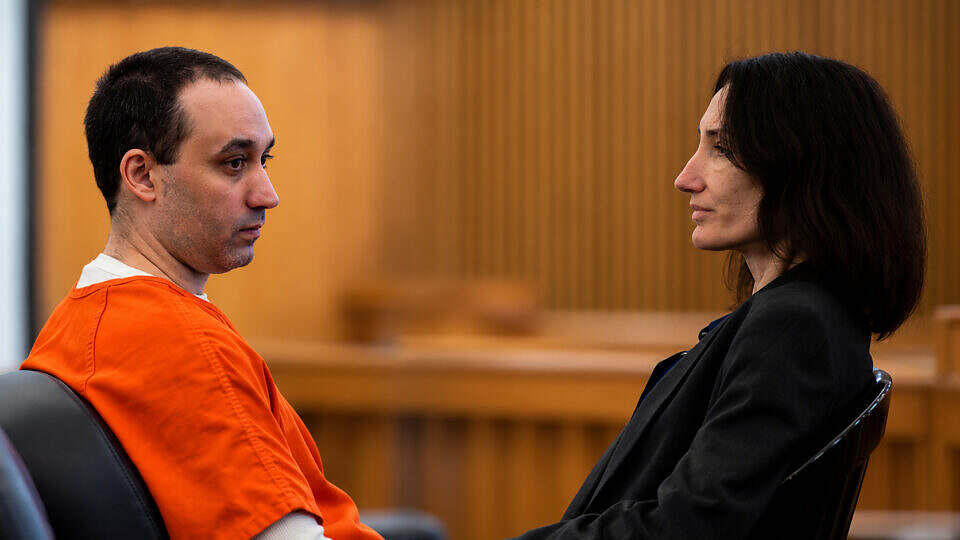
A recent evidence admissibility ruling that stopped Rosmore “Ross” Vilardi’s quadruple-murder trial dead in its tracks could reach beyond his case — potentially impacting the pending appeal of his wife, Amy Vilardi, who is serving four consecutive life sentences for the same killings.
The connection is already in her court filings.
Two weeks before S.C. circuit court judge Jane Merrill suppressed evidence in Ross’s case, Amy’s appellate attorney filed a brief arguing the same warrants that authorized searches of the couple’s mobile home lacked probable cause. The September 25, 2026 submission (.pdf) asked the S.C. court of appeals to overturn the trial court’s decision allowing that evidence – and to send her case back to the circuit court level for a new trial.
Amy Vilardi was found guilty in February of the murders of her mother, 60-year-old Cathy Scott; her stepfather, 58-year-old Terry Michael “Mike” Scott; her grandmother, 82-year-old Violet Taylor; and her step-grandmother, 80-year-old Barbara Scott.
Their bodies were discovered in a doublewide on Refuge Road near Pendleton, S.C. on November 2, 2015. Barbara Scott, Taylor, and Terry Scott had their throats slit prior to being shot postmortem in the living room of the doublewide. Cathy Scott was shot twice in the head and then stabbed in a bedroom.
Amy and Ross were arrested in December 2023 and charged with the murders.
Merrill’s October 9, 2026 ruling tossing the warrants out ahead of her husband’s impending trial does not undo Amy’s convictions. But it places a successful challenge to the searches alongside an argument Amy had already presented to the appellate court — with prosecutors now defending the warrants in two separate appeals.

***
THE SEARCH THAT CONNECTS BOTH CASES
As FITSNews reported Friday, Merrill granted a suppression motion brought by Ross’s defense team, led by attorney Shaun Kent.
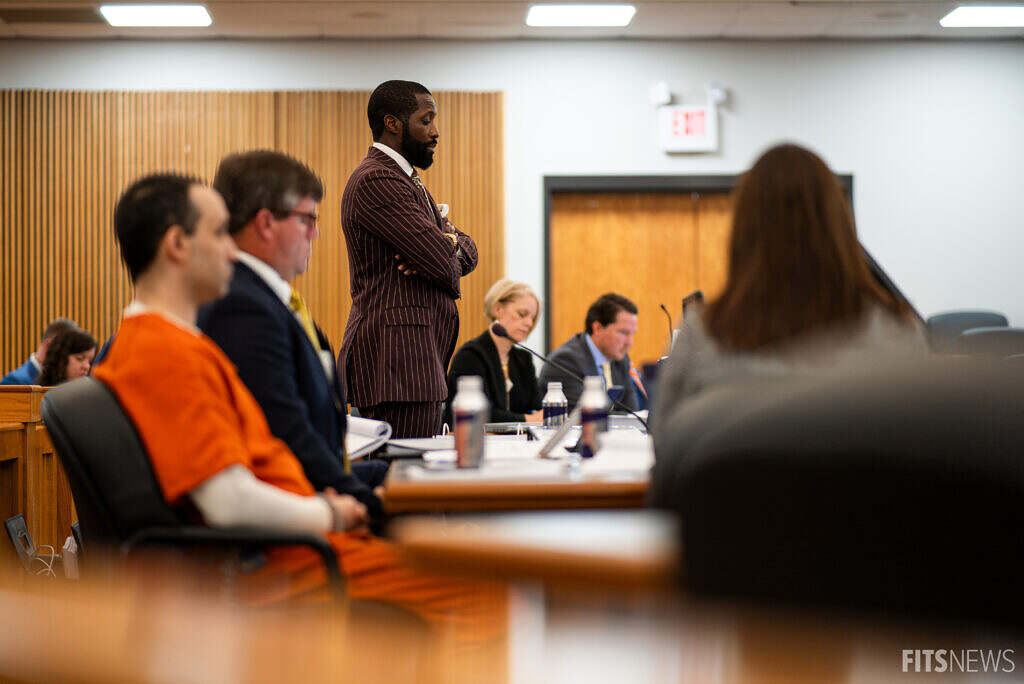
The decision excluded cash recovered from the couple’s residence, financial text messages and cellphone photographs related to the prosecution’s footwear evidence. Prosecutors said they could not proceed without the evidence and immediately appealed, halting Ross’s trial proceedings.
Amy’s appeal addressed the same home searches. In her brief, appellate defender W. Chandler Norville argued that investigators obtained authorization to search Amy’s home based on her proximity to the victims’ residence, her entry into that residence and her call to 911.
“The police were authorized to perform a maximally intrusive search of appellant’s home merely because of her proximity to decedents’ home and the fact that she had called 911,” the brief stated.
The property at 2217 Refuge Road, near Pendleton, contained two separate residences. The four victims were found inside a double-wide mobile home. Amy and Ross lived in a single-wide on the same property.
The warrants described the discovery of the bodies and identified the person who reported the deaths as a resident of the single-wide. A second warrant added that Terry Michael “Mike” Scott was known to deal in large amounts of cash.
Norville argued those facts did not establish a reason to believe evidence of the murders would be found inside Amy’s home. That is the central overlap with Kent’s successful challenge: whether investigators supplied sufficient facts connecting the separate residence to the killings prior to searching it.
***
RELATED | Ross Vilardi Murder Trial Halted
***
AN ARGUMENT ALREADY IN HER APPEAL
Amy challenged the search warrants before S.C. circuit court judge R. Scott Sprouse, who presided over her trial and rejected her argument. She then asked the court of appeals to review his decision allowing the evidence. In other words, this issue was already part of Amy’s appeal before her husband won his motion to suppress it in his case.
Merrill’s ruling gives Amy’s argument added support, but it does not require the appeals court to reach the same conclusion. The appellate judges must review what happened in Amy’s proceedings and then decide whether Sprouse was wrong to allow the evidence into her trial.
A decision upholding Merrill’s ruling could carry greater weight — particularly if the appeals court finds that the same warrant language failed to establish probable cause. How much that helps Amy would depend on the reasons for the decision and any differences between the two cases.
Prosecutors’ appeal could also cut the other way, though. If they successfully overturn Merrill’s ruling, the appeals court’s reasoning could weaken Amy’s challenge.
Both appeals remain unresolved.
***
WHY THE MONEY MATTERS
The significance of the searches is tied to how prosecutors presented the killings to Amy’s jury.
As FITSNews reported after her February conviction, prosecutors argued that money motivated the murders – pointing to the couple’s financial circumstances and cash payments following the deaths.
Amy’s appeal separately challenged a photograph of currency recovered from Mike Scott’s laptop. Prosecutors used the image to connect money found in the Vilardis’ home to Scott.
Norville argued that prosecutors failed to establish who took the photograph – or that the money depicted belonged to Scott. The brief also noted the photograph predated the murders by approximately a year.
That challenge concerned the foundation for admitting the photograph. The warrant challenged concerns whether police could lawfully obtain evidence from the Vilardis’ home in the first place.
Both arguments targeted evidence used to support the financial motive theory.
The brief contended the photograph’s admission was prejudicial because it helped portray Amy as having stolen the victims’ money. It asked for a new trial on that ground as well.
***
RELATED | Ross Vilardi’s Attorneys Challenge Key Evidence
***
WOULD THE VERDICT HAVE CHANGED?
Even if Amy Vilardi establishes that evidence should have been suppressed, the appellate court would still need to assess whether its admission requires reversal.
Appellate courts can uphold a conviction despite an evidentiary error when the applicable harmless-error standard is satisfied. For a constitutional error, the question is whether it was harmless beyond a reasonable doubt.
The importance of the challenged evidence to Amy’s trial would therefore be central.
The prosecution’s statement that it could not proceed against Ross without the suppressed evidence underscores its importance to the state. It does not, by itself, resolve whether the evidence affected Amy’s verdict. Her appeal must be evaluated against what her jury actually heard.
The shared financial motive theory makes that question consequential, however. If the appellate court finds that unlawfully obtained evidence contributed to her convictions and its admission was not harmless beyond a reasonable doubt, a new trial could follow.
Amy also sought an alternative remedy on the search issue: A hearing under Franks v. Delaware to examine allegedly material omissions from the warrant affidavits.
Her brief argued investigators failed to tell the issuing magistrate that the person who entered the victims’ home and called 911 was their relative. Norville contended that information supplied an innocent explanation for her presence and entry, and that the trial court rejected the omission argument without conducting the necessary evidentiary hearing.
FITSNews has covered the Vilardi proceedings from the beginning. Count on us to keep our audience apprised of any decisions as these two appeals advance through the Palmetto State’s court system.
***
THE BRIEF…
Subscriber-only document
This PDF is available to FITSNews subscribers. Get full access and be able to view documents like this one.
Subscribe for accessAlready a subscriber? Log in here
***
ABOUT THE AUTHOR …
As a private investigator turned journalist, Jenn Wood brings a unique skill set to FITSNews as its research director. Known for her meticulous sourcing and victim-centered approach, she helps shape the newsroom’s most complex investigative stories while producing the FITSFiles and Cheer Incorporated podcasts. Jenn lives in South Carolina with her family, where her work continues to spotlight truth, accountability, and justice.
***
SOUND OFF…
Got something you’d like to say in response to one of our articles? Or an issue you’d like to address proactively? We have an open microphone policy! Submit your letter to the editor (or guest column) via email HERE. Got a tip for a story? CLICK HERE. Got a technical question or a glitch to report? CLICK HERE.
