

by JENN WOOD
***
A local government body in the South Carolina Upstate took emergency steps on Wednesday evening (August 26, 2026) to preserve years of automated license plate reader records after the sheriff’s office sought to terminate its contract with Flock Safety — a move which would trigger the mass deletion of data.
The sheriff’s attempted termination of the Flock contract came just days after council members requested access to the system’s audit logs.
During a specially called meeting, members of Oconee County Council directed their attorney to demand the preservation of all data connected to the county’s account while local officials sought records showing how the surveillance system has been used.
Council also authorized a series of Freedom of Information Act (FOIA) requests seeking audit logs, contracts and payment records from the Oconee County Sheriff’s Office (OCSO) – and from municipalities across the county.
The unusual meeting was called after the county’s procurement office received an August 24, 2026 letter from chief OCSO deputy Kevin Davis requesting the immediate “termination for convenience” of the sheriff’s Flock contract.
The stated reason was Ordinance 2026-26 — council’s proposed Protection from Mass Surveillance Ordinance (.pdf).
***

RELATED | GREER SUSPENDS FLOCK SAFETY CAMERAS
***
There was one problem: The ordinance is not yet law – having passed just one of three required readings.
There was another problem: council had already voted to request the sheriff’s Flock audit logs – and officials feared terminating the account could delete data or make it inaccessible before that review occurred.
“Had they canceled that on the 24th or when that came out, what would have happened to that data?” councilman Tommy James asked. “Especially in light of the fact that we have an open request and [are] waiting on an attorney general opinion on exactly what data we can have access to.”
James said the speed of the termination request raised suspicions because the ordinance had not reached second or third reading.
Sheriff Mike Crenshaw denied any effort to withhold information, saying he believed council intended to approve the ordinance and wanted to avoid spending more taxpayer money on a system the county would soon prohibit.
“I’m not trying to deprive you of anything,” Crenshaw told James. “If you tell me what you’re looking for, I’ll be glad to try to get you there.”

***
CONTRACT CANCELLATION HALTED
County administrator Stewart Jones clarified that the sheriff’s office could not unilaterally terminate the contract because county procurement created the purchase order.
The termination request had been sent to procurement rather than directly to Flock, Jones said, and county officials were holding it while they worked to preserve the information council requested.
That distinction matters. The sheriff’s office asked that the agreement be canceled, but the available record does not establish that termination took effect – or that any data was actually deleted.
Crenshaw said the contract renewed in July and costs approximately $15,000 annually for the county’s five cameras. Because he expected the ordinance to pass, he said he hoped to limit charges for July and August and redirect any remaining money toward equipment such as game cameras for problem areas around boat ramps.
“I’m simply trying to honor council wishes and save taxpayers some money here,” Crenshaw said.
James said he understood that explanation, but questioned why the sheriff moved immediately when two votes remained and council’s records request was unresolved.
“If you were investigating me for something and then I turned around and did something that would possibly make that information harder to get, what would you think?” James asked. “It’s going to draw suspicion in the public eye.”
Crenshaw responded that he had been trying to honor council’s position that the technology presented constitutional concerns.
“You told me you believe this is unconstitutional,” he told James. “If you believe it’s unconstitutional, then it’s my job to honor your wishes and try to do away with it.”
***
***
PRESERVE FIRST, SORT OUT ACCESS LATER
The debate ended with council approving a multi-pronged plan to prevent the records from disappearing while the legal and disclosure questions are resolved.
Council directed the county attorney to send Flock a written preservation demand no later than August 27 covering the entire life of Oconee County’s account.
The demand is expected to include:
- Organizational and network audit logs.
- Data-sharing and network configuration histories.
- User and permission records.
- Hot-list and alert records.
- Information explaining Flock’s retention timeline following the August 24 termination request.
Council also asked Crenshaw to export and preserve those records before any termination or non-renewal takes effect – and confirm within three business days that the export was completed.
Separate FOIA requests will seek the sheriff’s complete organizational and network audit logs dating to January 1, 2021, along with monthly audit reports, the sheriff’s request for an attorney general’s opinion, invoices and records identifying how the service was funded.
Similar requests will be sent to Seneca, Walhalla, Westminster, West Union and Salem for records associated with any automated license plate reader systems operated by those municipalities or their police departments.
Council agreed that information tied to active investigations could be redacted. Councilman Don Mize successfully added a requirement that redacted entries be marked with an identifier, allowing officials to request them again after the corresponding cases close.
Council will also ask Oconee County’s legislative delegation to seek an attorney general’s opinion on whether license plate reader audit logs are exempt from disclosure under South Carolina law and whether public bodies must preserve them before ending a vendor agreement.
***
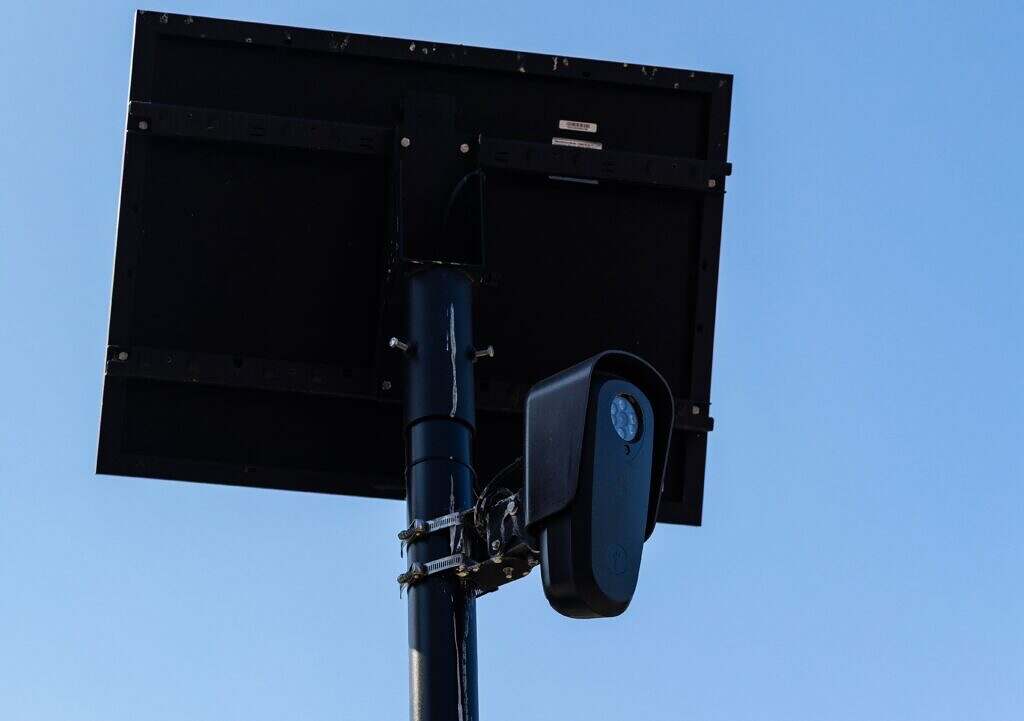
RELATED | ESCALATING Fight Over Flock Cameras
***
WHAT COUNCIL WANTS TO SEE
The conflict is not over every image captured by Oconee County’s five cameras. Council is seeking the audit trail showing when law enforcement personnel actively searched the system.
Those records can identify the officer or agency conducting a search, its date and time, the stated reason, a case number and the license plate or vehicle characteristics searched.
Crenshaw told council his office conducts approximately 250 to 300 searches each month. Reviewing five years of activity to determine which searches remain connected to open investigations could therefore take time.
The sheriff has maintained that releasing unredacted information tied to active sexual assault, juvenile, grand jury or other sensitive investigations could expose information that he is legally obligated to protect.
Council members said Wednesday they were not seeking to compromise those cases. Instead, they want unredacted logs for closed investigations and enough information to determine whether searches were legitimate.
The distinction narrowed what had appeared to be a broader standoff after council’s vote earlier this month to request unredacted records.
Crenshaw said his office retains the monthly audits it previously completed, although the searchable information available through the live Flock platform generally reaches back only 30 days. Jones also said Flock now offers a public transparency portal that may be capable of generating logs while automatically redacting open investigations.
Whether that feature can provide the historical information council wants remains unclear.
Council’s demand for outside review follows Crenshaw’s acknowledgment that an employee previously misused the system and faced discipline. The sheriff has not identified the employee, disclosed what was searched or explained what discipline was imposed. He has said the incident prompted him to strengthen the agency’s response, making future misuse grounds for immediate termination.
As FITSNews previously reported, the admission came amid a cascade of misuse cases elsewhere in South Carolina.
Officers in Greer and Mauldin were accused of using Flock to search for former romantic partners, a subordinate and private citizens. More recently, a Colleton County lieutenant was fired after an enhanced audit allegedly identified more than 2,700 unauthorized searches involving 14 people over approximately one year.
The cases have heightened skepticism toward safeguards that rely on officers entering a case number or selecting a stated justification before conducting a search.
Crenshaw has repeatedly defended Flock as a valuable investigative tool and pointed to cases in which alerts helped deputies locate dangerous suspects. He has also expressed support for stronger statewide guardrails, including potential warrant requirements and criminal penalties for misuse.
“I’ve got no objections” to public oversight, Crenshaw said Wednesday. His concern, he maintained, is releasing legally protected information from open investigations.
***
ORDINANCE STILL PENDING
The contract dispute unfolded one week after council voted 4-1 to advance its sweeping surveillance ordinance.
As FITSNews first reported, the proposal would prohibit county funds, property and other resources from supporting systems capable of compiling, analyzing or sharing searchable histories of people’s movements.
It would also make municipalities participating in prohibited surveillance networks ineligible for certain discretionary county grants, recreation funding and accommodations-tax awards.
The ordinance does not name Flock. Instead, it focuses on systems that add capabilities such as historical tracking, external network sharing, biometric recognition, artificial intelligence or access by outside agencies without individualized judicial authorization.
Basic license plate comparisons against a lawfully maintained hot list would not automatically be prohibited.
Councilman John Elliott, who cast the lone vote against first reading, argued Flock supports the council’s public-safety mission. The other four members concluded the technology’s investigative value did not outweigh the risks created by collecting and sharing the movements of people who are not suspected of crimes.
The ordinance is scheduled for second reading on September 1, 2026 – followed by a public hearing and final vote two weeks later, on September 15, 2026.
Until then, the county’s cameras remain in place, the contract has not been shown to be terminated and the fight has shifted to preserving the records before any final decision is made.
For council, that preservation is necessary to answer a question at the center of the entire debate: Before Oconee County decides whether Flock should continue watching its residents, who has been watching Flock?
***
ABOUT THE AUTHOR …
As a private investigator turned journalist, Jenn Wood brings a unique skill set to FITSNews as its research director. Known for her meticulous sourcing and victim-centered approach, she helps shape the newsroom’s most complex investigative stories while producing the FITSFiles and Cheer Incorporated podcasts. Jenn lives in South Carolina with her family, where her work continues to spotlight truth, accountability, and justice.
***
SOUND OFF…
Got something you’d like to say in response to one of our articles? Or an issue you’d like to address proactively? We have an open microphone policy! Submit your letter to the editor (or guest column) via email HERE. Got a tip for a story? CLICK HERE. Got a technical question or a glitch to report? CLICK HERE.

1 comment
Crenshaw needs to grow a pair, Council has absolutely no legal oversight authority over the elected Sheriff. He needs to tell them to blank off and get back to the business of law enforcement. Maybe he is doing something nefarious, maybe not, it’s not councils job to determine that, call SLED if you have evidence that something is going on if it’s just conjecture then stop trying to get publicity.