|
Getting your Trinity Audio player ready...
|
by JENN WOOD
***
With eyewitness accounts scrutinized, expert testimony dissected and competing narratives firmly established, a high-profile ‘Stand Your Ground’ immunity hearing in South Carolina entered a pivotal phase this week: with testimony from a key law enforcement investigator and one of the two defendants in the case.
The hearing stems from a wrongful death lawsuit filed in the aftermath of the September 2023 roadside shooting of 33-year-old North Carolina insurance adjuster Scott Spivey on Camp Swamp Road in rural Horry County. Defendants Charles Weldon Boyd and passenger Kenneth Bradley Williams acknowledged firing the fatal shots – but were never criminally charged after prosecutors concluded they were protected under South Carolina’s Protection of Persons and Property Act, also known as the state’s “Stand Your Ground” statute.
Now, in civil court, they are seeking the same protection.
Under South Carolina law, immunity bars civil liability if a defendant proves it is more likely than not that he acted in lawful self-defense – and was not the aggressor. That places the burden squarely on Boyd and Williams to persuade circuit court Judge Eugene C. Griffith, Jr. that the shooting of Spivey was justified.
By the time Horry County Police Department (HCPD) detective Shellneil Tamasir and Boyd took the stand, the court had already heard sharply conflicting eyewitness accounts and dueling interpretations of forensic evidence. Their testimony was not simply about what happened — it was about whether the physical evidence and Boyd’s own account aligned closely enough to meet the legal standard for immunity.
If they do, the wrongful death lawsuit ends here. If not, the case moves forward to trial.

***
SCENE RECONSTRUCTION AND EVIDENCE HANDLING

***
Detective Tamasir walked the court through key aspects of the investigation — including scene processing, firearm recovery and evidence collection.
She testified about how physical evidence was documented, how shell casings were located and how vehicles were positioned at the time law enforcement secured the scene. Her testimony helped establish the physical layout of the confrontation – and provided context for trajectory analysis and timing arguments raised earlier in the hearing.
Under questioning, Tamasir described the sequence of law enforcement response and the methods used to preserve and catalog evidence. She addressed firearm collection and the recovery of ballistic materials from the roadway.
During cross-examination, plaintiffs’ attorney Mark Tinsley focused on investigative gaps and assumptions — probing whether certain conclusions were drawn before all the data was fully analyzed and whether alternative interpretations of the scene were considered.
Tinsley pressed on issues such as:
- The positioning of vehicles relative to each other.
- Whether the physical evidence conclusively established who escalated the confrontation.
- Whether early investigative impressions shaped later conclusions.
While Tamasir did not concede investigative misconduct, the cross-examination underscored a recurring theme in Tinsley’s theory: that initial interpretations of the encounter may have favored a self-defense narrative before all facts were fully tested.
Because this is an immunity hearing — not a criminal trial — the physical evidence is being evaluated through a narrower lens: not whether a crime occurred beyond a reasonable doubt, but whether the defendants have shown it is more likely than not they were legally justified.
***
WELDON BOYD TAKES THE STAND

The most consequential testimony of the day came when Boyd took the stand in his own defense.
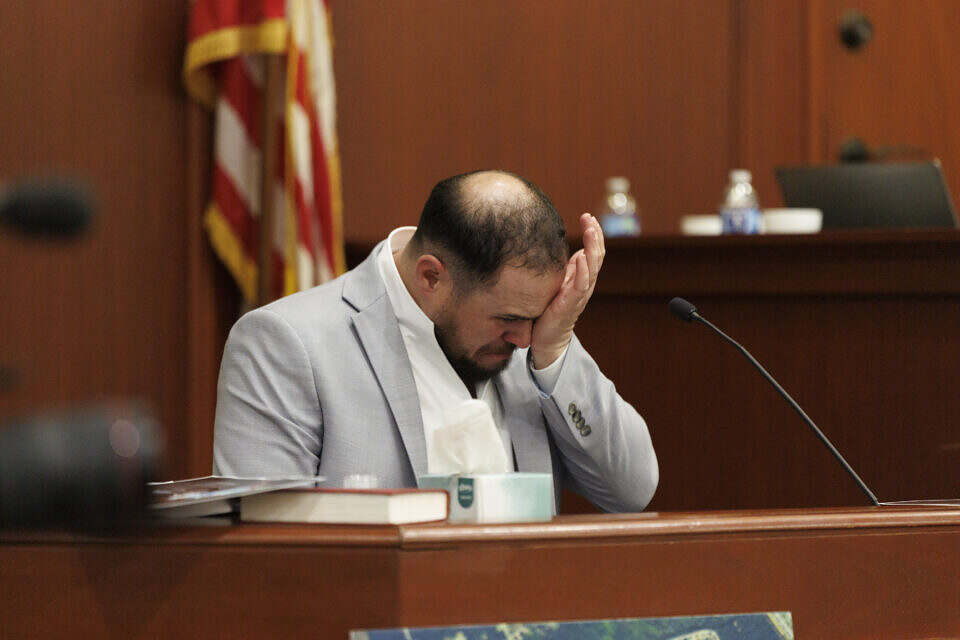
At several points during direct examination, Boyd broke down in tears as he described the events of September 2023. His voice wavered when recounting the moments leading up to the shooting, particularly when explaining what he claimed he perceived as an imminent threat to his life and the life of his passenger. The emotional testimony underscored the defense theme of fear and reaction rather than aggression.
Boyd described the Highway 9 encounter as a terrifying and escalating roadway confrontation. He denied initiating a chase and maintained he was attempting to disengage from what he perceived as erratic, dangerous and threatening behavior by Scott Spivey. He testified that Spivey drove aggressively, brake-checked his truck, swerved and displayed a firearm out of the driver’s window.
Boyd told the court he believed his life — and that of Williams — was in immediate danger when the vehicles ultimately stopped near Camp Swamp Road. According to Boyd, Spivey exited his vehicle armed, and Boyd fired only after perceiving an imminent deadly threat.
Throughout direct examination, Boyd consistently framed his actions as reactive and defensive — not retaliatory. He emphasized that he did not want a confrontation and that he was responding to what he believed was an immediate threat of deadly force.
***
CROSS-EXAMINATION: ESCALATION UNDER THE MICROSCOPE
***
On cross-examination, Tinsley shifted the focus from fear to choice. He methodically walked Boyd through the timeline along Highway 9, pressing him on distance, speed and decision points. At several moments, Boyd appeared boxed in by questions about whether he had opportunities to disengage.
Tinsley asked whether Boyd could have slowed down rather than continued following Spivey after the initial brake-checking incidents. Boyd acknowledged that at certain stretches of roadway there was space between the vehicles — but maintained he was simply trying to navigate traffic safely, not pursue.
Tinsley also confronted Boyd with statements made after the shooting in which Boyd used the word “chase.” When asked whether he had described the incident that way in recorded conversations, Boyd conceded he had used that term but insisted it did not reflect his intent — saying he used it loosely and did not view himself as the aggressor.
Another key exchange centered on timing. Tinsley pressed Boyd on how quickly events unfolded once the vehicles stopped and whether Boyd saw Spivey actually fire before he began shooting. Boyd maintained he perceived a deadly threat but acknowledged he could not describe every fraction of a second in sequence.
Tinsley’s questioning repeatedly returned to a central statutory issue: whether Boyd’s own conduct contributed to escalating the encounter. Under South Carolina law, immunity does not apply if the defendant was the aggressor or engaged in unlawful conduct.
Boyd consistently maintained he was reacting to danger — not pursuing conflict. But the cross-examination underscored the tension at the core of the case:
Was this an unavoidable act of self-defense? Or did Boyd make decisions along Highway 9 that helped bring about the final confrontation?
Judge Griffith — not a jury — will decide which interpretation is more persuasive under the civil standard.
***
WHY BOYD’S TESTIMONY MATTERS

***
In a bench immunity hearing, when a defendant takes the stand, credibility becomes decisive. Judge Griffith is not simply weighing physical evidence – he is assessing demeanor, consistency with prior statements and alignment with witness testimony and forensic findings.
Boyd’s version must be slightly more convincing than the plaintiff’s under the civil standard — meaning more likely than not.
If Griffith concludes Boyd reasonably feared imminent deadly harm and was not the aggressor, immunity applies. If he finds the evidence leaves meaningful doubt about escalation, the case proceeds.
FITSNews will continue providing updates as testimony resumes.
***
ABOUT THE AUTHOR …

As a private investigator turned journalist, Jenn Wood brings a unique skill set to FITSNews as its research director. Known for her meticulous sourcing and victim-centered approach, she helps shape the newsroom’s most complex investigative stories while producing the FITSFiles and Cheer Incorporated podcasts. Jenn lives in South Carolina with her family, where her work continues to spotlight truth, accountability, and justice.
***
WANNA SOUND OFF?
Got something you’d like to say in response to one of our articles? Or an issue you’d like to address proactively? We have an open microphone policy! Submit your letter to the editor (or guest column) via email HERE. Got a tip for a story? CLICK HERE. Got a technical question or a glitch to report? CLICK HERE.


7 comments
Great article. I think that we have seen the true Weldon Boyd for who he really is. I hope that those officers are all charged.
As I’ve pointed a number of times and the judge has now confirmed – this was a murder, not a justifiable case of stand your ground. Williams still may walk but I don’t think he will. If he doesn’t, before he is sued into oblivion, and hopefully jailed, he should kick Boyd’s ass up and down the Kings Highway.
Andy / Will – now it’s time to go after the dumbass 911 operators who failed to clearly tell Boyd to stop – as well as the clowns in the “Horry County” police department. Whorey County – the most aptly named county in the country!
Boyd and Williams removed a deadly threat from the highway that day. Justified!
Not justified at least according to the vote that counts. All Boyd had to do was pull over and let Spivey go. He isn’t a cop and wasn’t following the law. All of the speeding and craziness started AFTER he began pursuing Spivey
Colonel I totally agree.
And just you should be removed.