

by JENN WOOD
***
A high-stakes, high-profile ‘Stand Your Ground’ immunity hearing began this week in Horry County, South Carolina — with sharply conflicting narratives over whether the fatal roadside shooting of 33-year-old Scott Spivey was lawful self-defense or the premeditated, violent end of a prolonged pursuit.
S.C. circuit court judge Eugene C. Griffith, Jr. is presiding over this pretrial immunity proceeding – which will determine whether defendants Charles Weldon Boyd and Kenneth Bradley Williams are shielded from civil liability under South Carolina’s Protection of Persons and Property Act, a.k.a. the ‘Stand Your Ground’ law.
If immunity is granted, a wrongful death lawsuit filed by Spivey’s estate will be dismissed without a jury trial.
The lawsuit stems from the September 2023 shooting of Spivey on Camp Swamp Road in rural Horry County — just two miles south of the North Carolina border. Boyd and Williams have acknowledged firing the fatal shots – but neither man was criminally charged after prosecutors concluded they acted in self-defense. That decision ended the criminal case — but not the broader legal and factual dispute surrounding the encounter.
Spivey’s family has continued to pursue civil claims, arguing the shooting was not justified and that the original investigation was deeply flawed — allegations which triggered an ongoing S.C. State Law Enforcement Division (SLED) investigation and the departure of multiple Horry County Police Department (HCPD) officials.
That case is currently before the South Carolina state grand jury.
As for Boyd and Williams, because ‘Stand Your Ground’ immunity blocks civil liability as well as criminal prosecution, this week’s hearing functions as a gatekeeping proceeding. Judge Griffith — not a jury — will weigh the evidence, assess witness credibility and decide whether the defendants qualify for immunity. If he rules in their favor, the wrongful death case ends there.
***
DUELING NARRATIVES IN OPENING STATEMENTS

***
Opening statements highlighted the divide between the parties’ theories of the case. Defense counsel L. Morgan Martin and Morgan O’Bryan Martin, representing Williams, and attorney Kenneth Moss – representing Boyd – argued the shooting followed a dangerous road rage episode allegedly initiated by Spivey, not a coordinated chase by their clients. According to them, the evidence will show the two men acted lawfully when confronted by an armed and aggressive driver.
Martin described the case as “a clear case of standing your ground,” disputing widely circulated claims that Boyd and Williams chased Spivey for nine miles before the shooting. According to the defense, the actual interaction window was far shorter – and followed what they characterized as erratic and threatening behavior by Spivey toward multiple motorists.
This behavior includes allegations – supported by photographs and witness statements – that Spivey brandished a firearm at multiple drivers prior to the fatal encounter.
Defense counsel further emphasized Williams was a passenger in Boyd’s vehicle — not the driver — and made no decisions about speed, pursuit, or vehicle positioning during the incident. They told the court their evidence and witnesses will show Spivey exited his truck armed, confronted the defendants and fired — prompting return fire in self-defense.
***

***
Mark Tinsley, attorney for Spivey’s estate, offered a starkly different account. Tinsley argued the evidence will show a sustained and aggressive pursuit, not a defensive reaction, and told the court the case turns on fault and escalation. He maintained that ‘Stand Your Ground’ protections do not apply if a defendant is the aggressor or engaged in unlawful conduct at the time force is used.
Tinsley pointed to witness accounts, phone data and recorded statements he said would demonstrate Boyd pursued Spivey at high speed for miles — and later described his own actions as a “chase” in private phone calls. He argued that pursuit behavior — if proven — would defeat a claim of statutory immunity.
Judge Griffith reminded those in attendance that the proceeding is a bench hearing, not a jury trial, and instructed the packed courtroom to avoid reactions during testimony as the court conducted its evaluation under the preponderance-of–evidence standard required for immunity rulings.
***
DETECTIVES WALK COURT THROUGH EARLY EVIDENCE

***
Defense attorneys called multiple HCPD investigators to the stand to outline how early evidence — including surveillance footage, receipts and witness statements — was collected in the days following the shooting.
Detective John Sotile, who was assigned to assist with video canvassing after the incident, testified he did not respond to the scene the night of the shooting but was tasked during a follow-up investigative briefing with locating surveillance footage along the Highway 9 corridor. At the time, he was assigned to homicide investigations and is now part of the department’s cold case unit.
Sotile told the court he obtained security footage from multiple businesses, including Boardwalk Billy’s and a Minute Man convenience store on Highway 9. Video shown in court depicted Spivey inside the restaurant earlier that day and later captured vehicles matching those driven by Spivey and Weldon Boyd traveling along Highway 9.
He testified the Minute Man footage showed both trucks passing in sequence and appearing to move with the normal flow of traffic. Under cross-examination, Tinsley questioned Sotile about gaps in the amount of bar surveillance footage collected and whether investigators obtained the full multi-hour window of Spivey’s time there. Sotile acknowledged he relied on what was provided by the business and did not personally verify whether additional hours of footage existed beyond what was turned over.
Tinsley also questioned Sotile about later-produced phone and speed data generated through forensic analysis, pressing him on whether vehicle speeds reflected in that data would require trailing vehicles to match those speeds to remain in proximity. Sotile said he was not the analyst on that data and could not independently testify to speed calculations.
***

***
Detective Michael Quick, a homicide investigator who responded to the scene the night of the shooting, also testified about his role in the investigation. Quick said he arrived after being called to assist and helped interview witnesses, transport Boyd from the scene, and prepare a search warrant for Spivey’s vehicle that same night.
Quick conducted a recorded, body-camera interview with eyewitness Blaiz Ward at the scene and obtained a written voluntary statement from her. Portions of that recorded interview were played in court, with Ward describing erratic driving, repeated braking and lane movements by Spivey’s truck, and her belief that Spivey fired first — though she also acknowledged visibility limitations and moments of uncertainty during the encounter.
In subsequent investigative assignments, Quick testified to gathering additional surveillance footage from businesses along Highway 9, including Tractor Supply, Bell and Bell GMC, a Sunoco station and a fireworks retailer. Tractor Supply video and a corresponding receipt — timestamped shortly before the confrontation — showed Boyd and Kenneth Bradley Williams making purchases and exiting the store together. Other camera angles introduced by the defense showed Spivey’s truck traveling through multiple corridor points, in some clips without Boyd’s vehicle visible behind him.
Under cross-examination, Tinsley pressed Quick on discrepancies between Ward’s initial impressions and later forensic findings – as well as the limited scope of some early video reviews. Quick agreed that preliminary witness interviews are designed to capture immediate perceptions and may later be supplemented or clarified as additional evidence is analyzed.
***
WITNESSES: “CHAOTIC” DRIVING BEFORE SHOOTING

The first witnesses called to the stand described chaos along Highway 9 — but testified that the most aggressive behavior they observed came from the driver of the black truck, identified as Spivey.
Terry Wright, a Horry County resident who testified he was traveling with his wife that afternoon, told the court he first observed Boyd’s white truck and trailer traveling normally for several miles before any confrontation began. According to Wright, there was no chase in progress during the earlier stretch of roadway near the Wacammaw River corridor.
Wright testified that the black truck later identified as Spivey’s approached rapidly from behind at a high rate of speed, weaving through traffic and maneuvering between vehicles. He described what he characterized as brake-checking behavior and repeated blocking movements after Spivey’s truck moved ahead of Boyd’s vehicle.
At one point, Wright said Boyd’s truck and trailer were forced off the roadway into the median after a sudden stop ahead of him. Wright also testified that he observed Spivey with a handgun extended out of the window during the roadway confrontation. While he said he could not testify that he saw the weapon fired, he told the court he had “no doubt” a gun was present and being displayed in Boyd’s direction.

***
Wright said he did not witness the shooting itself – but arrived at Camp Swamp Road shortly after, observing the vehicles stopped and Boyd and Williams still inside their truck when he drove up. He later gave both recorded and written statements to law enforcement.
A second defense witness, Lorry Sarvis, testified to encountering the black truck earlier along Highway 9 – and described a series of aggressive and erratic driving maneuvers that drew her attention before any interaction with Boyd’s vehicle.
Sarvis told the court the black truck (driven by Spivey) cut sharply across lanes, drove onto the shoulder to bypass traffic and — in one incident — pointed a pistol toward an older couple in another vehicle, causing them to veer off the roadway. She said the behavior alarmed her enough that she attempted to follow the truck to obtain its license plate number and report it to authorities.
According to Sarvis, Boyd’s white truck did not stand out to her during that portion of the drive and appeared to be traveling normally with traffic. She testified she did not observe a chase involving Boyd in that earlier stretch and did not witness the shooting itself, arriving near Camp Swamp Road after the gunfire had already occurred. She told the court she saw the two men later identified as the defendants with their hands raised after law enforcement response began.
***

RELATED | STAND YOUR GROUND SHOWDOWN: NEW EVIDENCE FIGHT ERUPTS
***
EYEWITNESS DEPOSITION: BLAIZ WARD
The court also reviewed recorded deposition clips and earlier statements from eyewitness Blaiz Ward, who encountered the vehicles during the Highway 9 confrontation and later spoke with police at the scene before giving sworn deposition testimony in the civil case.
Griffith watched video from Ward’s body-camera interview recorded the night of the shooting. In that initial statement, Ward described aggressive driving, sudden braking and repeated lane changes between the trucks. She said at the time she believed Spivey fired first – while also explaining that her view was partially blocked at moments and that events happened very quickly.
In her later deposition, Ward was more cautious about some of those details. She testified with less certainty about the exact timing, vehicle positions and shot sequence – and acknowledged her early impressions were formed under stress and without a clear view of every movement during the final encounter. She agreed there were points where she could not see clearly and could not account for every action or shot.
Defense attorneys pointed to Ward’s first recorded statement as support for their self-defense timeline. Plaintiff’s attorney Mark Tinsley, however, focused on the parts of her deposition where she clarified limits in what she actually saw and where her certainty narrowed.
The difference between Ward’s immediate roadside statement and her later sworn testimony became a point of emphasis in court — highlighting how fast-moving events and limited vantage points can shape what a witness initially believes they saw versus what they can later say with confidence.
Ward did not see every moment of the final shooting sequence, according to the testimony presented, but her observations remain part of the evidence judge Griffith will weigh as he decides whether ‘Stand Your Ground’ immunity applies.
***
DEFENSE THEORY TAKING SHAPE
Through its first witnesses, the defense worked to establish a timeline in which Spivey — not Boyd or Williams — was the primary roadway aggressor, displaying a firearm and repeatedly engaging in dangerous driving behavior prior to the final encounter.
Cross-examination by Tinsley focused on timing gaps, distance estimates and how far apart the vehicles were at various points — pressing witnesses on how precisely they could place each maneuver along the Highway 9 corridor and how long after specific landmarks each event occurred.
By the end of the first day of testimony, the defense had called three witnesses, with additional testimony expected as the immunity hearing continues. Because this is a bench proceeding, Judge Griffith — not a jury — will determine witness credibility, weigh conflicting timelines and decide whether the defendants have met their burden to prove Stand Your Ground immunity by a preponderance of the evidence.
That ruling will determine whether Spivey’s wrongful death lawsuit proceeds to trial — or ends at the immunity stage.
FITSNews will continue providing updates as testimony resumes.
***
ABOUT THE AUTHOR …
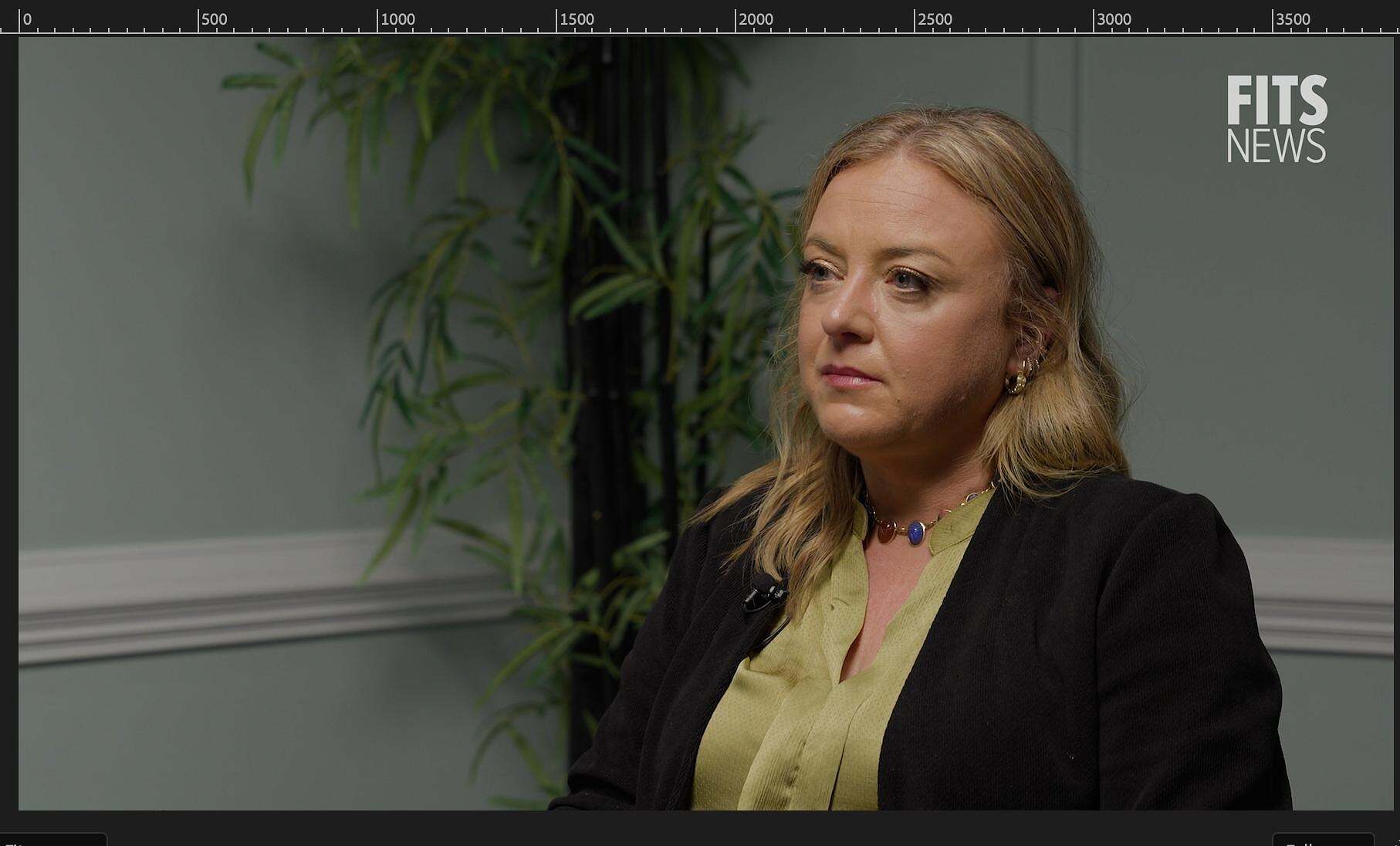
As a private investigator turned journalist, Jenn Wood brings a unique skill set to FITSNews as its research director. Known for her meticulous sourcing and victim-centered approach, she helps shape the newsroom’s most complex investigative stories while producing the FITSFiles and Cheer Incorporated podcasts. Jenn lives in South Carolina with her family, where her work continues to spotlight truth, accountability, and justice.
***
SOUND OFF…
Got something you’d like to say in response to one of our articles? Or an issue you’d like to address proactively? We have an open microphone policy! Submit your letter to the editor (or guest column) via email HERE. Got a tip for a story? CLICK HERE. Got a technical question or a glitch to report? CLICK HERE.

2 comments
Sounding more and more like a legitimate self defense/ stand your ground claim.
Yep! I think they did society a favor that day.