
by CJ WESTFALL
***
Most of us learned the Plymouth version in grade school: Pilgrims, a harvest, a shared meal in 1621. It’s a good story, and a true one. But it’s not the whole story.
The tradition of setting aside a day to give thanks to Almighty God is older than Plymouth. It runs through our own coastline, our own Lowcountry, and some of the most important men South Carolina ever sent to the founding of this country.
As we sit down with our families this week, I thought it was worth remembering where this holiday really comes from.
***
BEFORE PLYMOUTH: PRAYER ON THE CAROLINA COAST
***
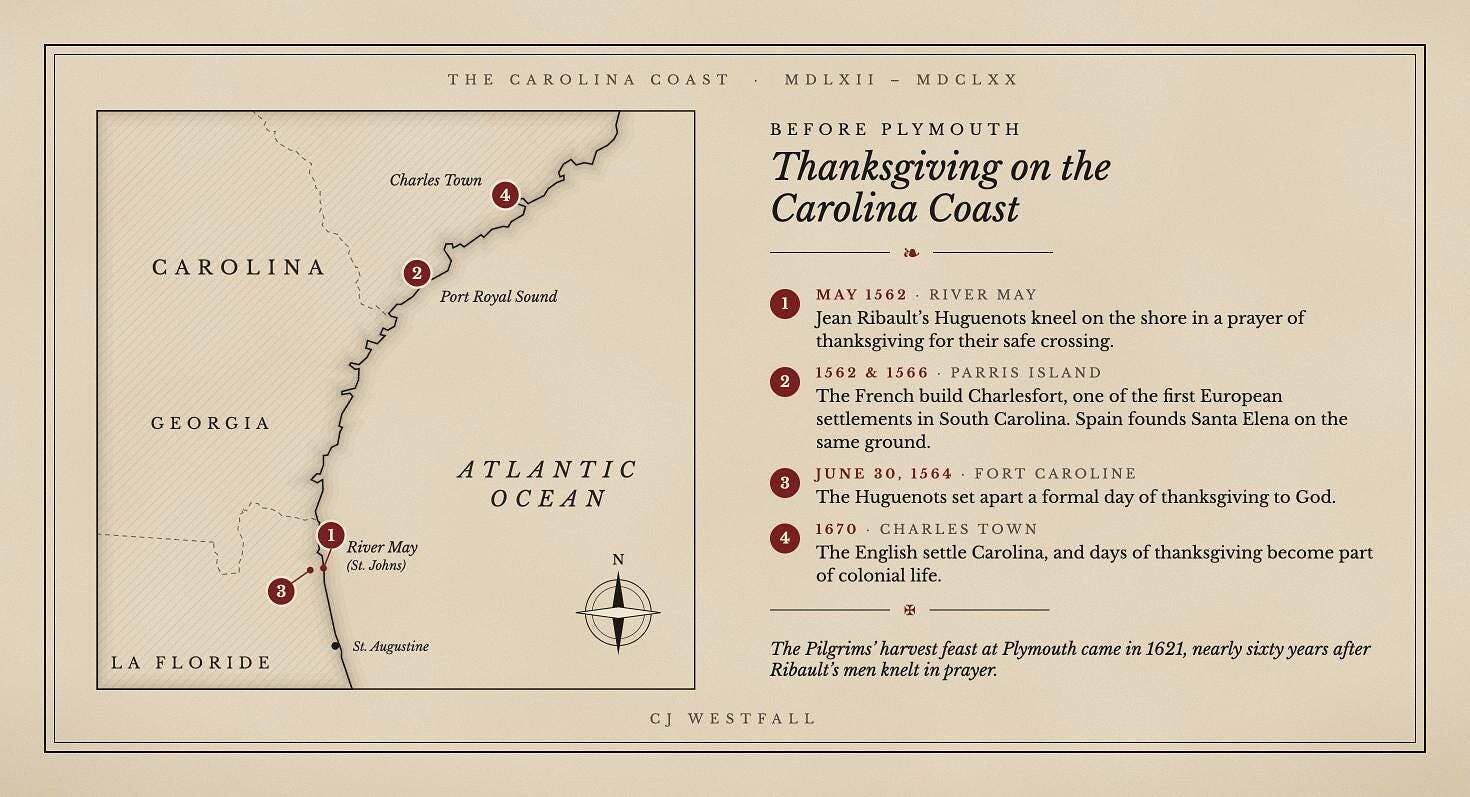
In 1562, nearly 60 years before the Mayflower, a French Protestant sea captain named Jean Ribault crossed the Atlantic looking for a place where Huguenots could live and worship freely. Back home in Catholic France, they were being persecuted for their faith.
When Ribault’s expedition first reached the coast near present-day Jacksonville, the men knelt and offered a prayer of thanksgiving for their safe journey. Historians count it among the first Protestant worship services in North America.
Ribault then sailed north to a harbor he called one of the fairest in the world. He named it Port Royal. On what is now Parris Island, his men built a small outpost called Charlesfort, one of the first European settlements in what would become South Carolina.
Charlesfort didn’t last. Supplies ran out, and Ribault was delayed in France by religious war. But his fellow Huguenots returned in 1564 and, on June 30 of that year, set aside a formal day of thanksgiving to God at their new colony of Fort Caroline. Two years later, Spain founded Santa Elena on the same Parris Island ground, and it served for a time as the capital of Spanish Florida.
So before there was a Plymouth Rock, there were Christians on the Carolina coast on their knees, thanking God for bringing them through.
***
CHARLESTON, A HUGUENOT PATRIOT AND AMERICA’S FIRST THANKSGIVING
***
The English settled Charles Town in 1670, and days of thanksgiving and days of fasting and prayer became part of colonial life here, proclaimed by our governors after victories, deliverances, and hard seasons.
The earliest one on record came in October 1706. A Spanish and French force from St. Augustine had invaded, and the Carolina militia drove them off. Charles Town set aside a day to thank God for the deliverance. A missionary who arrived the next morning, Rev. Francis Le Jau, wrote that the people had kept the day before holy as a thanksgiving to God.
Seventy years later, a Charlestonian would help give the whole nation its first Thanksgiving.
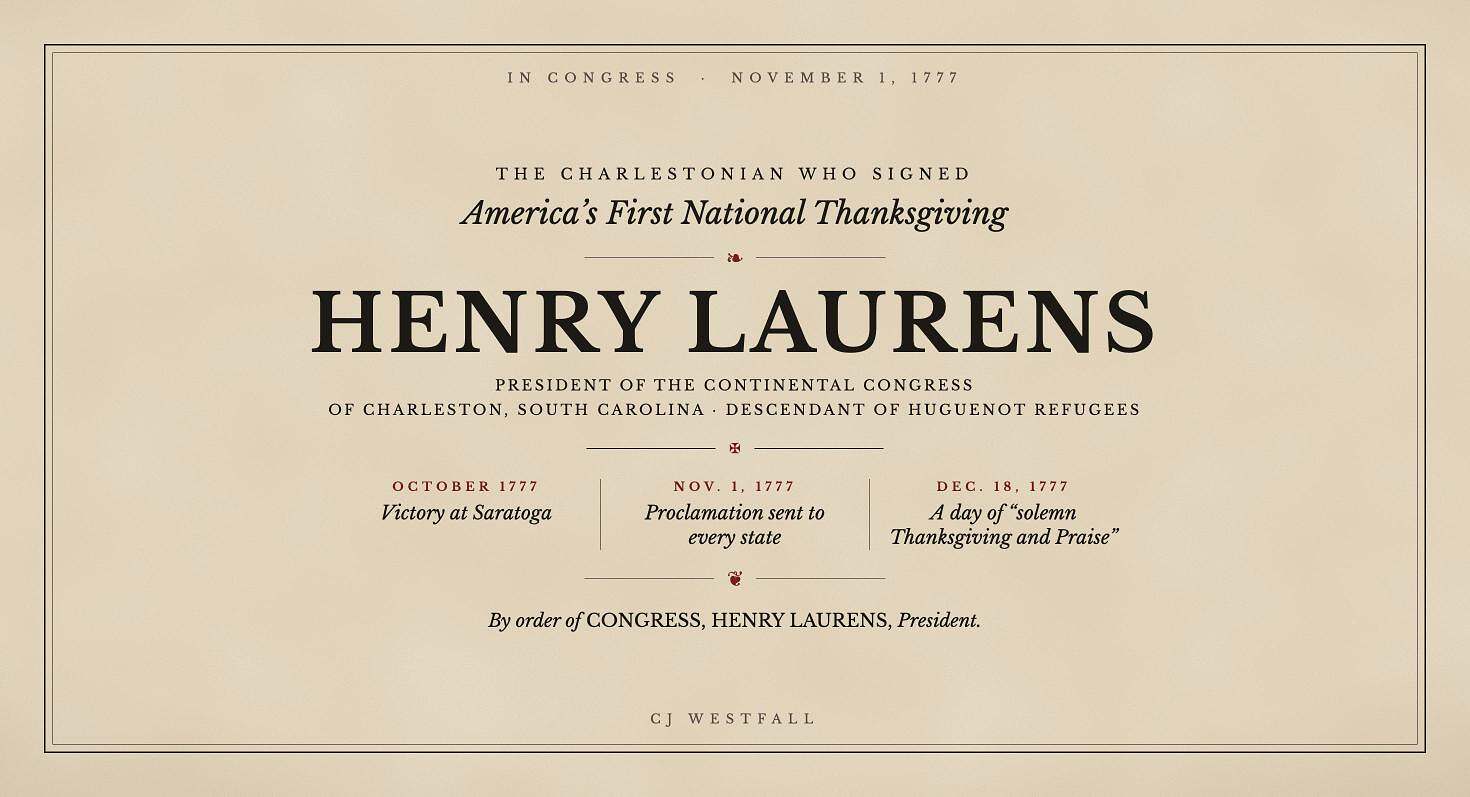
In the fall of 1777, the American cause was in danger. The British had taken Philadelphia, and Congress had fled to York, Pennsylvania. Then came word of the great victory at Saratoga. On November 1, 1777, Congress issued the first national proclamation of Thanksgiving, setting apart Thursday, December 18 for “solemn Thanksgiving and Praise.”
The proclamation went out over the signature of the newly elected President of the Continental Congress: Henry Laurens of Charleston, South Carolina, a descendant of the very Huguenots who had fled France for freedom of worship.
It was not a vague, generic call to “be grateful.” It asked Americans to confess their sins and pray that God, “through the Merits of JESUS CHRIST,” would forgive them, and to seek the kingdom that consists “in Righteousness, Peace and Joy in the Holy Ghost.”
That is the document a South Carolinian signed and sent to every state, and to General Washington and his army camped in the cold.
***
FROM WASHINGTON TO LINCOLN, AND SOUTH CAROLINA’S OWN ROAD
***
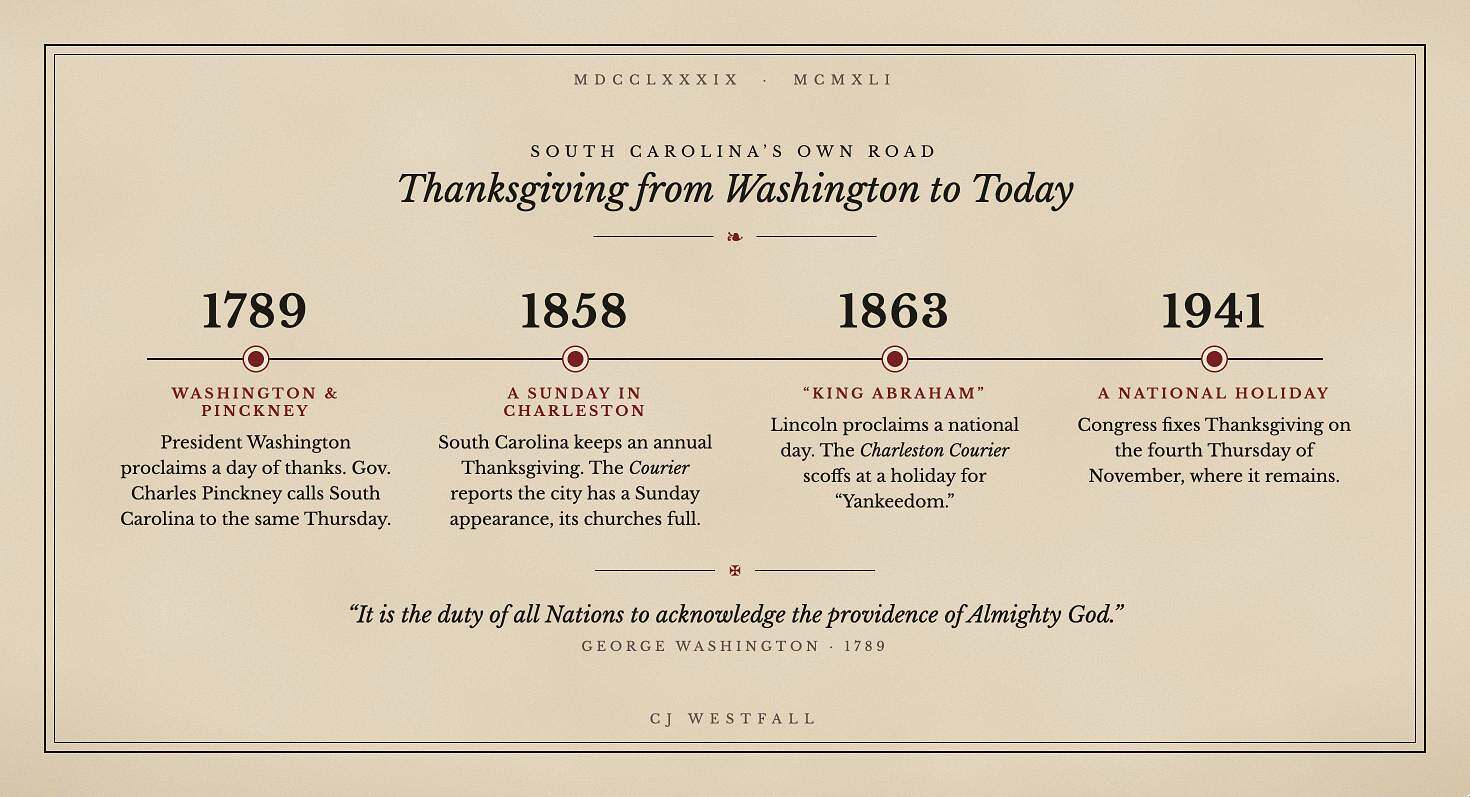
In 1789, President George Washington issued the first presidential Thanksgiving proclamation, declaring it “the duty of all Nations to acknowledge the providence of Almighty God.” He set the day for Thursday, November 26.
South Carolina answered. Governor Charles Pinckney, one of our framers of the Constitution, issued his own proclamation calling South Carolinians to a day of “public thanksgiving and prayer” on that same Thursday, and printed Washington’s proclamation alongside it.
For the next several decades, Thanksgiving in the South was proclaimed by governors when and how they saw fit, not on a fixed national date. By the 1850s, South Carolina joined many states in observing an annual day of thanksgiving in late November. In 1858, the Charleston Courier reported that the city took on a Sunday appearance: business stopped, and the churches filled.
Then came the war. When President Lincoln proclaimed a national Thanksgiving in 1863, the Charleston Courier mocked it as “King Abraham” declaring a holiday in “Yankeedom.” For years afterward, many Southerners saw the national holiday as a Northern import.
But the deeper tradition was never Northern or Southern. It belonged to every Christian people who had ever stopped to thank God. Over time, South Carolina embraced the national holiday as its own. In 1941, Congress fixed it permanently on the fourth Thursday of November, where it remains today.
***
WHY IT STILL MATTERS
What strikes me about this history is how consistent it is. Huguenots on Parris Island, colonists in Charles Town after an invasion, a Continental Congress on the run, a young republic under Washington: in good times and in dangerous ones, they stopped and gave thanks to God.
They didn’t treat gratitude as a feeling. They treated it as a duty, one owed by families, by communities, and by nations. And they were honest that every blessing they enjoyed came from Him, not from themselves.
That’s a lesson worth carrying into our own homes this week. Whatever happened in the last election, whatever fights are ahead of us, we still live in the freest and most blessed nation in the history of the world, in a state with a faith and a heritage worth fighting for.
This Thursday, my wife and I will be giving thanks for our family, our faith, and for all of you who give your time and energy to keeping South Carolina strong. I’m grateful for every one of you.
Happy Thanksgiving, and God bless South Carolina.
***
ABOUT THE AUTHOR…
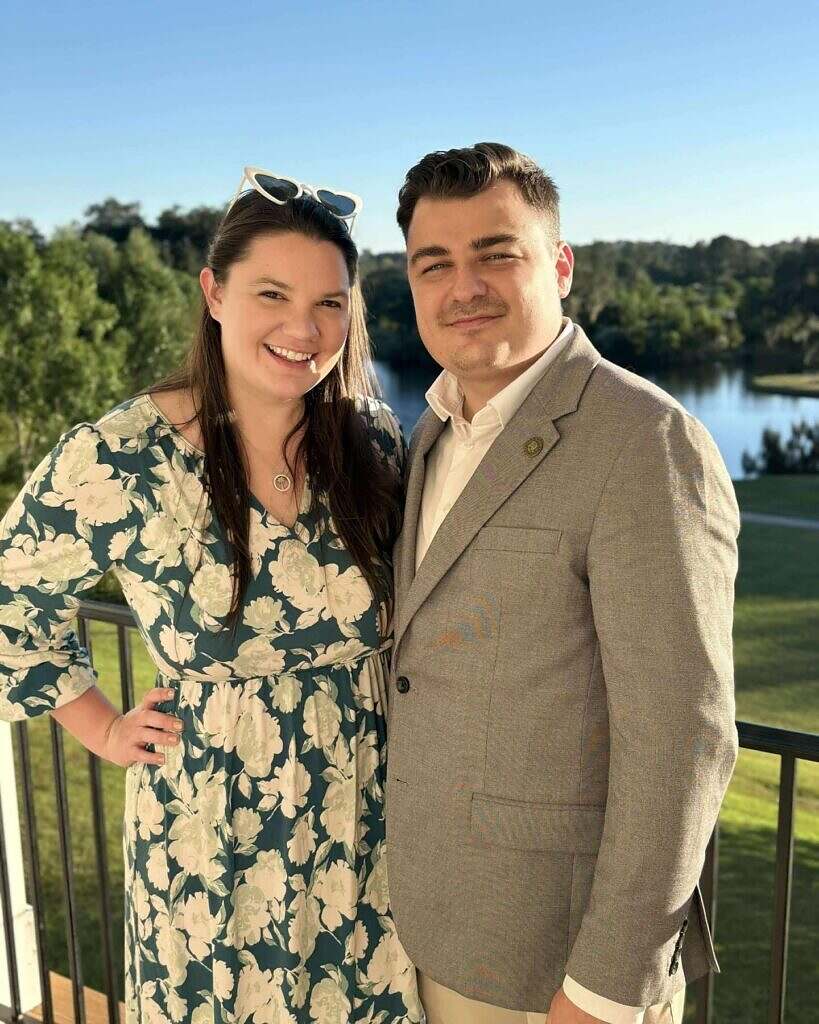
CJ Westfall is the chairman of the Dorchester County Republican Party
***
SOUND OFF…
Got something you’d like to say in response to one of our articles? Or an issue you’d like to address proactively? We have an open microphone policy! Submit your letter to the editor (or guest column) via email HERE. Got a tip for a story? CLICK HERE. Got a technical question or a glitch to report? CLICK HERE.
