

by MARK POWELL
***
They’re hitting the reset button all around Washington, D.C., these days. From Capitol Hill to the U.S. Supreme Court to the White House, conventional wisdom – rendered obsolete by last week’s midterm elections – is being tossed out. Political calculus is being reformatted to fit into new post-November 3 realities. That’s sparking several major changes – with one notable exception.
Let’s start on Capitol Hill, where the U.S. House and Senate gavels are about to pass from Republican to Democratic hands. But just whose hands will receive them is an open question at the moment.
Traditionally, the House and Senate minority leaders usually move up in each chamber when their party gets a majority. But as we’ve learned all too well by now, there’s nothing “usual” about 2026.
The House’s Hakeem Jeffries and the Senate’s Chuck Schumer face an influx of impatient left-of-center freshmen eager to break with the recent past. They include radical progressives and, in the House’s case, six new Bernie Sanders-aligned Democratic Socialists of America (DSA), bringing the total there to eight. While no DSA members were elected to the Senate, Minnesota’s Peggy Flanagan was endorsed by Sanders; Troy Jackson of Maine had received DSA endorsement in an earlier run; and Michigan’s Abdul El-Sayed has DSA-aligned views.
Although Jeffries and Schumer are perceived as liberals by Republicans – and some moderates and independents – they’re not liberal enough for the far left. Even South Carolina senator-elect Annie Andrews says she’s in the anti-Schumer camp, calling it “time for a generational change.”
***
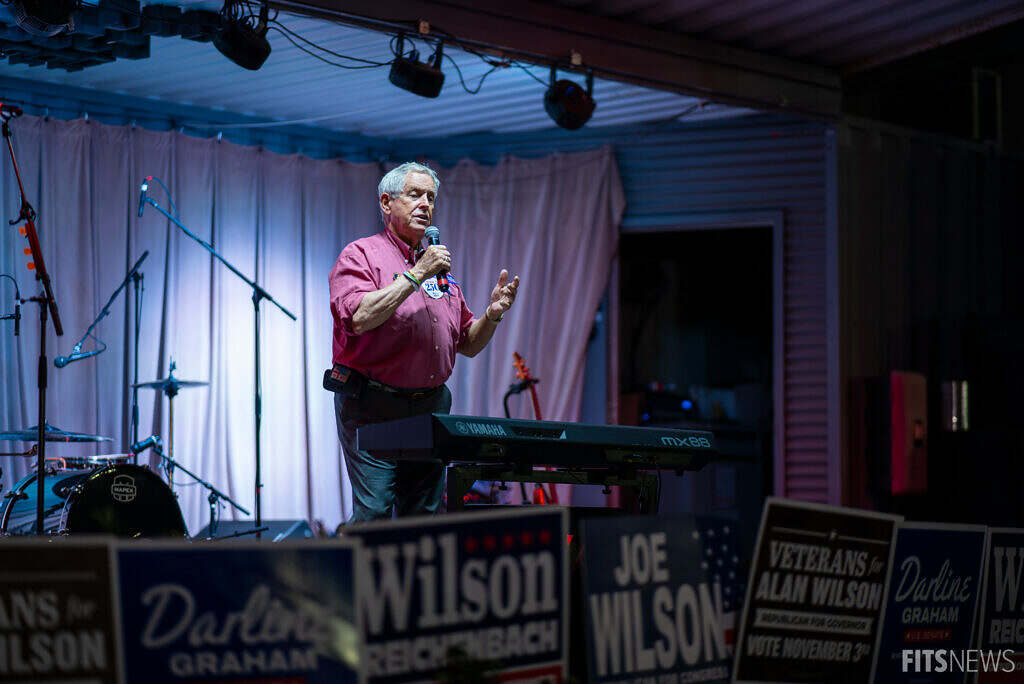
RELATED | RECOUNT LOOMS IN S.C. SECOND DISTRICT
***
That’s setting the stage for potential friction between a DSA-progressive alliance and traditional Democrats. House Democrats are expected to pick their party leaders in elections next Wednesday and Thursday (November 18-19, 2026), and while Jeffries is expected to prevail – the caucus meeting could be plenty tense.
Senate Democrats are allowing for more wiggle room with their leadership vote, which is expected by early December.
Unhappiness also reigns across the aisle in the significantly reduced Republican ranks. Outgoing House Speaker Mike Johnson – who was widely viewed as an all-too-willing enabler of President Donald Trump during his two terms on the dais – is stepping down from leadership, though he will retain his House seat. A Republican power struggle is also underway for minority leader between conservative favorites Steve Scalise of Louisiana and Jim Jordan of Ohio. A secret ballot on Tuesday (November 10, 2026) will determine the winner.
Tuesday will also see Republican senators voting in private as well. Outgoing majority leader John Thune of South Dakota faces no challenge for the reduced position of minority leader. However, there is intense grumbling among Republican loyalists that Thune bears responsibility for the large number of GOP Senate seats lost last week.

***
Across the street at the U.S. supreme court, recalibrations are also underway. There had been much speculation that conservative associate justices Clarence Thomas and/or Samuel Alito, ages 78 and 76, respectively, might call it quits next year if the GOP retained control of the Senate. But last Tuesday’s Blue Wave washed that talk away; neither is retiring, and there’s no word they plan to do so in the near future.
However, speculating about how the predictably unpredictable chief justice John Roberts will react to the new political landscape is a popular parlor game in Washington these days. Although liberals deride it as the “conservative Roberts Court,” many on the right are dismayed by his all-too-often (in their eyes) votes with the Democratic minority. In his 21 years as chief justice, Roberts has trimmed his sails to accommodate shifting prevailing winds. Could yet another course correction be in store?
That brings us to the place where many observers say last week’s electoral mess originated: the Oval Office. The old saying reminds us, “victory has a hundred fathers, but defeat is an orphan.” Trump wasted no time Tuesday taking a paternity test to place responsibility for the disastrous results everywhere but 1600 Pennsylvania Avenue – while simultaneously keeping the spotlight on himself.
“I wasn’t on the Ballot and if I was, we would have won IN A LANDSLIDE!” he posted on his Truth Social platform.
***

RELATED | THE DAY MAGA DIED
***
“You saw the people that were packed, thousands and thousands of people at every rally, and if I was on the ballot, we would have won,” Trump elaborated in a follow-up interview. “There was such love at those rallies; it was incredible. We weren’t able to transfer the love to candidates.”
But by Friday, a fall guy had been set up to take the rap for Tuesday’s defeat. Or in this case, a fall gal. Susie Wiles, the first woman to hold the powerful position of White House chief of staff, was forced to walk the plank. She was swiftly replaced by MAGA acolyte and Trump devotee Stephen Miller.
Miller’s ascension means Trump isn’t backing away from any positions, issues, or personal conduct that may have played a role in Tuesday’s GOP meltdown at the polls. In fact, he’s doubling down.
With all the change swirling around The Swamp these days, one constant remains: when Democrats formally take control of Congress on January 3, 2027, Trump impeachment 3.0 is now an almost ironclad certainty.
It is one crisis Trump already knows all too well how to navigate.
***
ABOUT THE AUTHOR…

J. Mark Powell is an award-winning former TV journalist, government communications veteran, and a political consultant. He is also an author and an avid Civil War enthusiast. Got a tip or a story idea for Mark? Email him at mark@fitsnews.com.
***
SOUND OFF…
Got something you’d like to say in response to one of our articles? Or an issue you’d like to address proactively? We have an open microphone policy! Submit your letter to the editor (or guest column) via email HERE. Got a tip for a story? CLICK HERE. Got a technical question or a glitch to report? CLICK HERE.
