
|
Getting your Trinity Audio player ready...
|
by WILL FOLKS
***
America’s latest ill-advised entanglement in the Middle East erupted anew on Sunday as U.S. military forces attacked a pair of rocket installations belonging to the Islamic Republic of Iran on Larak Island.
Larak Island is situated strategically at the narrowest point of the Strait of Hormuz – a key global energy artery which has been effectively shut down since the U.S. and Israeli military initiated hostilities against Iran in late February.
The shutdown of the strait has contributed to a spike in energy costs, which has placed increasing pressure on the administration of Donald Trump to resolve the conflict.
Trump has offered conflicting accounts regarding the objectives of his Iranian operation – and conflicting accounts regarding its progress – as the conflict has devolved into a costly stalemate over the past six months.
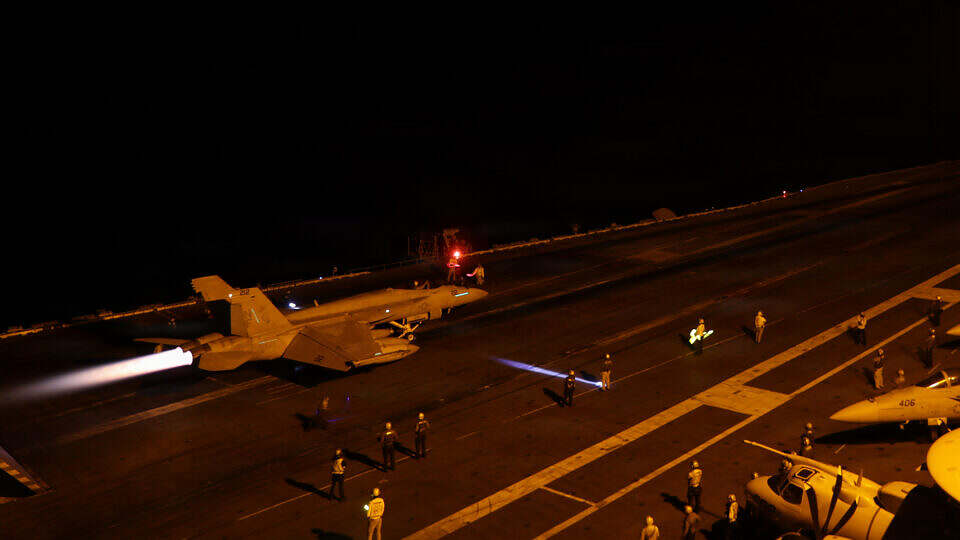
Trump’s latest gambit? An effort to essentially strangle the Iranian regime into submission by blockading it and crippling its economy. A naval blockade instituted on July 14, 2026 has reportedly resulted in the redirection of an estimated 83 vessels over the past six weeks, according to U.S. central command.
***
A U.S. Sailor directs an MH-60S Sea Hawk helicopter onto the flight deck of USS Delbert D. Black (DDG 119) while the ship sails in the Arabian Sea enforcing the U.S. blockade against Iran. As of Aug. 30, CENTCOM forces have redirected 83 commercial vessels, disabled 3 and boarded… pic.twitter.com/RDLoXFRXpJ
— U.S. Central Command (@CENTCOM) August 30, 2026
***
While both U.S. and Iranian leaders have claimed control over the strait, the reality is neither side has fully captured it. That’s why only approximately 6-10 million barrels of oil are currently traversing the waterway each day – down from approximately 20 million barrels per day before the conflict began.
The two Larak Island installations – operated by Iran’s Islamic Revolutionary Guard Corps (IRGC) – were reportedly preparing to launch rockets carrying sea mines into the Strait of Hormuz at the time of the U.S. attack. According to Iranian state media, the American drone attack – launched from Jordan – killed or injured several IRGC soldiers.
Shortly after the attack, Iran launched its own drone and missile counterattack against American military targets in Jordan.
***
Approximately 15 ballistic missiles were launched by Iran in this wave of retaliatory attacks on U.S. bases in Jordan, targeting King Hussein International Airport and Muwaffaq Salti Airbase.
— AMK Mapping ?? (@AMK_Mapping_) August 30, 2026
Most of the missiles were shot down by air defence, however some impacts were recorded… pic.twitter.com/M6L837guJv
***
“Aggression and crimes will not solve the enemy’s desperation in attempting to weaken the Islamic Republic’s control over the Strait of Hormuz, and every attack will be met with even more devastating responses,” a statement from Iran noted.
Several of the Iranian missiles were intercepted prior to reaching their intended targets, although it’s not immediately clear how many were shot down and how many successfully detonated.
Iran claimed its counterattack “destroyed technical infrastructure” and “disabled aircraft bases” at Muwaffaq Al-Salti air base near Azraq, Jordan and King Hussein International Airport in Aqaba, Jordan.
This is a developing situation… please check back for updates.
***
ABOUT THE AUTHOR…

Will Folks is the founding editor of the news outlet you are currently reading. Prior to founding FITSNews, he served as press secretary to the governor of South Carolina. He lives in the Midlands region of the state with his wife and eight children.
***
SOUND OFF…
Got something you’d like to say in response to one of our articles? Or an issue you’d like to address proactively? We have an open microphone policy! Submit your letter to the editor (or guest column) via email HERE. Got a tip for a story? CLICK HERE. Got a technical question or a glitch to report? CLICK HERE.
