

|
Getting your Trinity Audio player ready...
|
by JENN WOOD
***
Nearly eighteen months after he was convicted of murdering 41-year-old Christina Parcell in savage, ritualistic fashion, convicted killer Zachary David Hughes is asking South Carolina’s appellate court to suspend his appeal and send his case back to the trial court.
According to Hughes’ latest motion (.pdf), prosecutors’ own admissions have fundamentally reshaped one of the central disputes in this case.
Filed on Tuesday (June 30, 2026), Hughes’ motion represents a significant escalation of his ongoing efforts to overturn his conviction. Rather than asking the S.C. Court of Appeals to simply review alleged legal errors made during his 2025 trial, Hughes now wants the appeal paused – so he can pursue a new trial based on what his attorneys described as since-discovered evidence.
At the heart of that request is a separate criminal case that has increasingly become intertwined with the infamous ‘Rose Petal Murder.’
Hughes was convicted of fatally stabbing Parcell inside her Greer home in October 2021, but the homicide investigation also uncovered evidence leading to child sexual abuse material (CSAM) charges against Bradly Post — Parcell’s fiancé.

***
Post discovered Parcell’s body and was one of the state’s key witnesses against Hughes.
Charges stemming from the CSAM investigation ultimately resulted in Post pleading guilty earlier this year. During his plea hearing, prosecutors publicly described evidence that Hughes’ attorneys said mirrored evidence they spent years trying to present during the murder case — but which prosecutors repeatedly characterized as unsupported, irrelevant or inadmissible.
Post ultimately agreed under oath that the state’s factual summary of his crimes was “substantially true and correct.”
That apparent shift has become the foundation of Hughes’ latest filing, with his attorneys arguing prosecutors either uncovered new evidence after Hughes’ conviction that validated the defense’s longstanding position — or knowingly misrepresented the nature of the evidence while litigating the murder case. In either case, they contend, Hughes is entitled to a new trial.
The filing comes just weeks after FITSNews published the transcript (.pdf) of Post’s plea hearing, revealing for the first time the factual basis prosecutors presented to support his guilty plea. Hughes’ attorneys now contend these admissions fundamentally alter the legal landscape of his appeal.
***
INTERTWINED CASES…

***
For years, the murder prosecution and the child exploitation investigation proceeded on separate legal tracks — even though both stemmed from the same horrific incident.
Parcell was found stabbed to death inside her sister’s home on October 13, 2021. Investigators alleged Hughes — who had no known personal relationship with Parcell — carried out the killing after becoming involved with John Mello, 66, Parcell’s former boyfriend and the father of her young daughter. Prosecutors contended Hughes murdered Parcell as part of a conspiracy tied to Mello’s contentious custody dispute.
Hughes never disputed that he killed Parcell. Instead, he maintained he believed Parcell’s daughter was being sexually abused and that he acted in an effort to protect the child. Electronic devices seized during the homicide investigation uncovered evidence which led to a separate CSAM investigation involving Post. That investigation eventually resulted in numerous charges alleging Post possessed child sexual abuse material depicting Parcell’s daughter and other children.
Parcell herself was also implicated in the investigation.
Throughout Hughes’ murder prosecution, his attorneys argued evidence uncovered during that investigation was critical to explaining why Hughes believed the child was in danger. Prosecutors, however, repeatedly argued those allegations were speculative, unsupported or irrelevant to the murder case. S.C. circuit court judge Patrick C. Fant III agreed, and ultimately prevented much of that evidence from reaching the jury.
Hughes was convicted of murder in February 2025 and sentenced to life without parole. Thirteen months later, Post pleaded guilty to his crimes.
***
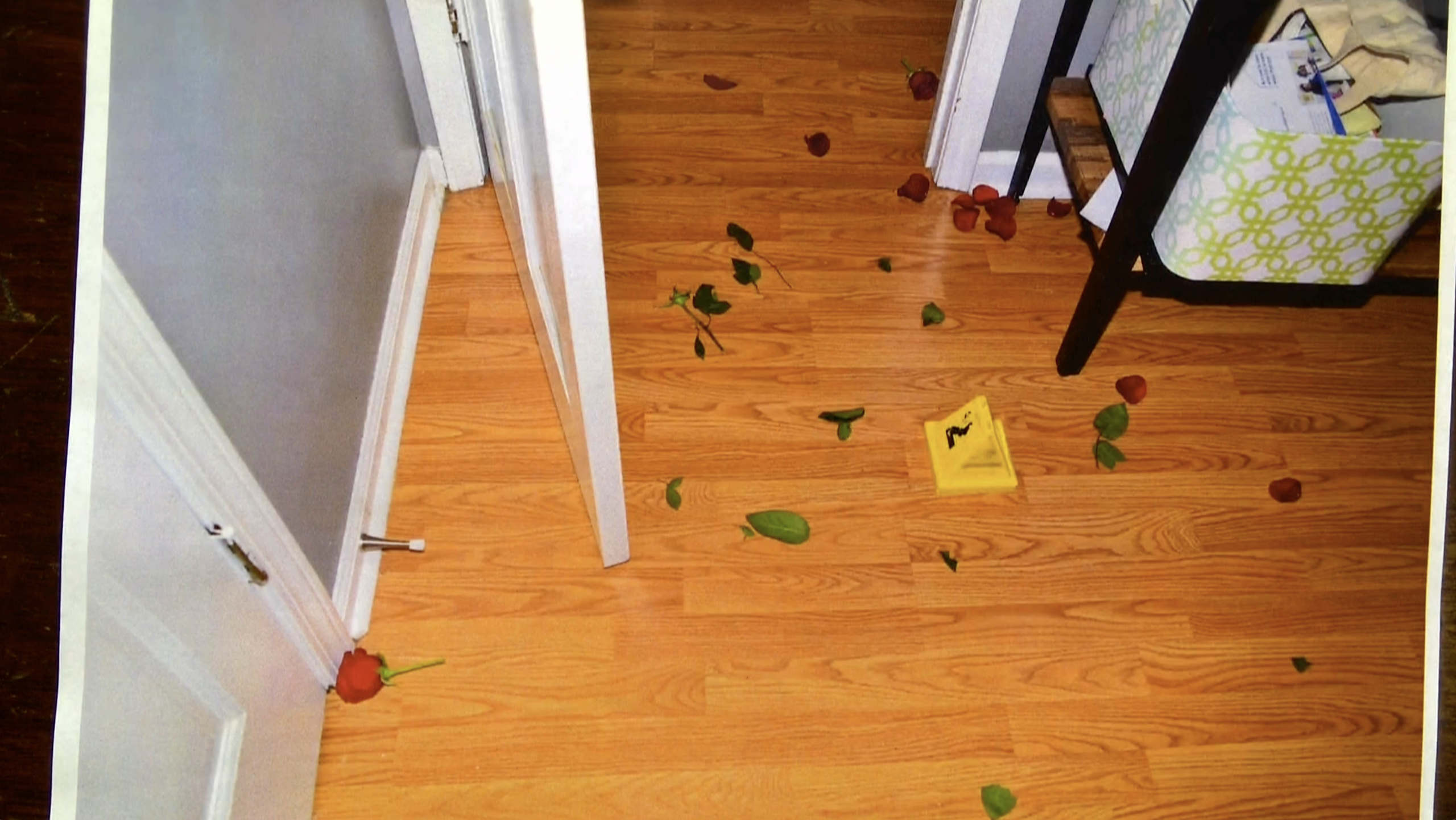
RELATED | New Dimension to ‘Rose Petal Murder’ Appeal
***
THE ARGUMENT FOR A NEW TRIAL
The latest filing marked a significant shift in Hughes’ legal strategy. Until now, his appeal has focused largely on whether judge Fant committed legal error by preventing jurors from hearing evidence related to the CSAM investigation.
Now, Hughes is asking the appellate court to move directly to a new trial.
Under South Carolina law, motions seeking a new trial based on after-discovered evidence must first be decided by the trial court. Hughes’ attorneys argue the appellate court should therefore suspend the appeal and send the case back to Greenville County so they can pursue that remedy.
The centerpiece of that request is the defense’s contention that prosecutors dramatically changed their position after Hughes was convicted.
According to the motion, prosecutors repeatedly argued before and during Hughes’ trial that allegations Christina Parcell had participated in creating child sexual abuse material involving her daughter were unsupported, unsubstantiated or incapable of being proven. During bond proceedings in late 2024, prosecutors argued Hughes’ allegations “should not be mentioned” because they were “not true, or alleged, or unsubstantiated.” They also filed motions describing the allegations as “wholly unsubstantiated” and warned that presenting them to the jury would amount to improper victim shaming.
Defense attorneys argued prosecutors’ position changed dramatically during Post’s March 2026 guilty plea.
***

***
As FITSNews previously reported, assistant attorney general Camille Guthrie told the court investigators recovered hundreds of images and videos depicting Parcell and her daughter posing nude and in lingerie.
“In many of these videos,” Guthrie said, “it is clear that Mrs. Parcell is setting up a video camera to film herself and her daughter doing nude exercises and posing.”
Prosecutors also acknowledged they believed evidence existed suggesting Post participated in manufacturing some of the images but dismissed those charges because they believed proving beyond a reasonable doubt that he — not Parcell — created much of the material would be difficult.
Hughes’ attorneys argued these sworn admissions cannot be reconciled with the position prosecutors took throughout his murder prosecution.
“The State’s position does a 180-degree turn thirteen months later,” the motion states.
According to the defense, there are only two possible explanations: either prosecutors uncovered new evidence after Hughes’ trial that validated what the defense had been arguing all along, or they knowingly misrepresented the evidence while asking Judge Fant to keep it from the jury.
“Why did the state change its position so drastically on the existence of exculpatory evidence only after it obtained convictions against the Appellant?” the motion rhetorically asked.
The filing took it a step further, arguing if prosecutors knowingly misrepresented the evidence, “due process also bars a prosecutor’s knowing presentation of false or misleading argument.”
Whether either argument ultimately prevails remains to be seen. Even if the Court of Appeals agrees to pause Hughes’ appeal, he would still have to convince the trial court that Post’s guilty plea and the factual admissions made during that hearing constitute legally sufficient after-discovered evidence warranting a new trial.
Whatever the appellate court decides, the filing has already reframed one of the central disputes in the ‘Rose Petal Murder’ case. What began as an appellate challenge to Judge Fant’s evidentiary rulings has evolved into a broader question of whether prosecutors’ later factual admissions can be reconciled with the arguments they used to keep that same evidence from the jury that convicted Hughes. How the courts answer that question could determine not only the future of Hughes’ appeal, but whether one of South Carolina’s most closely watched murder cases is ultimately tried a second time.
***
THE MOTION…
Subscriber-only document
This PDF is available to FITSNews subscribers. Get full access and be able to view documents like this one.
Subscribe for accessAlready a subscriber? Log in here
***
ABOUT THE AUTHOR …

As a private investigator turned journalist, Jenn Wood brings a unique skill set to FITSNews as its research director. Known for her meticulous sourcing and victim-centered approach, she helps shape the newsroom’s most complex investigative stories while producing the FITSFiles and Cheer Incorporated podcasts. Jenn lives in South Carolina with her family, where her work continues to spotlight truth, accountability, and justice.
***
SOUND OFF…
Got something you’d like to say in response to one of our articles? Or an issue you’d like to address proactively? We have an open microphone policy! Submit your letter to the editor (or guest column) via email HERE. Got a tip for a story? CLICK HERE. Got a technical question or a glitch to report? CLICK HERE.

1 comment
Why would we waste a dime on an appeal – he admitted multiple times in court that he did it as he tried to make an excuse for his actions.