
by WILL FOLKS
***
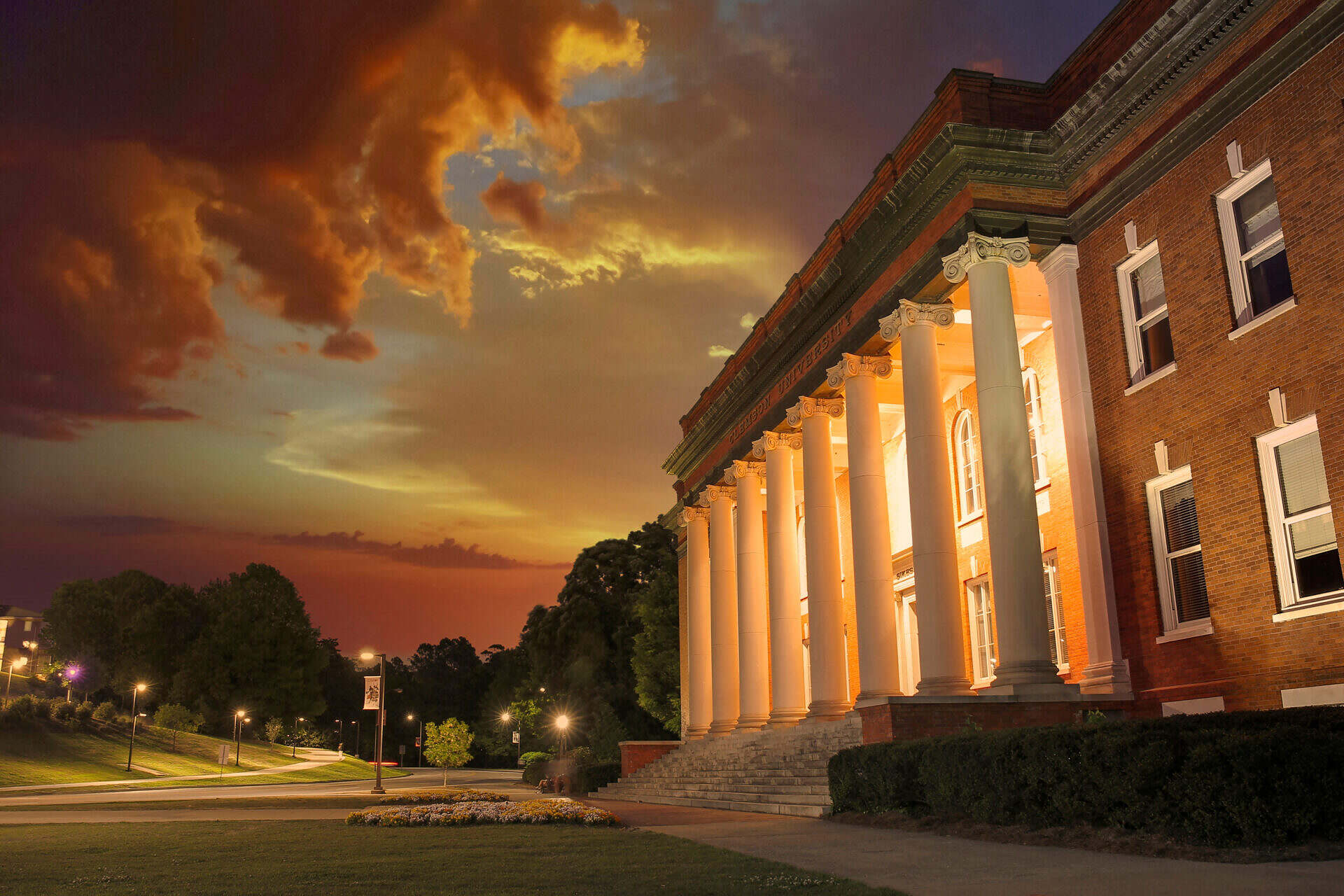
A year ago, our media outlet blew the whistle on the deteriorating financial situation at Clemson University, a state-supported institution of higher learning in the South Carolina Upstate.
Last month, Clemson’s board of trustees – governed by a majority of unconstitutional lifetime appointments – heard additional data attesting to the school’s increasingly perilous financial footing. A slide show was presented to the board by Clemson’s chief financial officer, Rick Petillo, which concluded the institution has yet to reconcile its red ink problem.
Specifically, Petillo’s powerpoint found that “expense growth is stabilizing but still outpacing revenues.” In other words, Clemson may have slowed the rate of its deficit spending – but the school is still spending money it doesn’t have.
Despite purportedly being focused on cost-cutting, Clemson’s budgeted operating expenses for the 2027 fiscal year are currently 8% higher than actual expenses for the current year. Which is math that doesn’t “math.”

***
“After several years of expense management, expense and revenue growth remain mismatched,” Petillo’s slideshow warned.
“Expense growth outpacing revenue growth is not sustainable,” he added.
Petillo blamed “unprecedented disruption” in the higher education marketplace for preventing the school from doing the two things it typically does when budget numbers don’t add up: add students or raise tuition.
“Main campus capacity and national demographics limit continued (enrollment) growth,” his slideshow noted, while added that “affordability pressures” were limiting the school’s ability to continue jacking tuition.
Petillo’s powerpoint also blamed the S.C. General Assembly for “abating” levels of recurring state funding, while lamenting “changes in (the) intercollegiate athletics business model.”
In other words, paying players… a model to which Clemson has struggled to adapt.
***

***
The board was understandably frustrated by the presentation – and the underlying financial difficulties exposed by it. They were even more frustrated Clemson’s apparent inability to address the problem.
“We need to have a significant expense reduction goal to kick off next year,” trustee Joe Swann said. “I just think we’re not doing enough to get our costs under control.”
Swann, who proposed a 10% expense reduction goal, lamented how it takes Clemson “forever” to identify waste and inefficiency in its operations.
“You know, when I ran a business, I always knew where somebody could reduce,” he said.
The board’s finance chairman, David Dukes, declined to endorse Swann’s 10% expense reduction target although he agreed cuts were necessary.
“We are working with the administration on that,” he said. “In June, our expectations will be that we have significant expense reductions working in a collaborative and cooperative way, but we’re having those conversations.”
Dukes later said the process “will not be easy,” and would “require difficult decisions, including reducing or reshaping programs and services across the enterprise.”
“Everything must be on the table,” he said.
The problem with this rhetoric? A year ago, Clemson claimed it was adopting a “revenue-based budgeting” model to “align budget authority with accountability and responsibility.” In fact, Petillo specifically stated that “moderating expense growth” would be a focus throughout 2025 and into 2026.
***
***
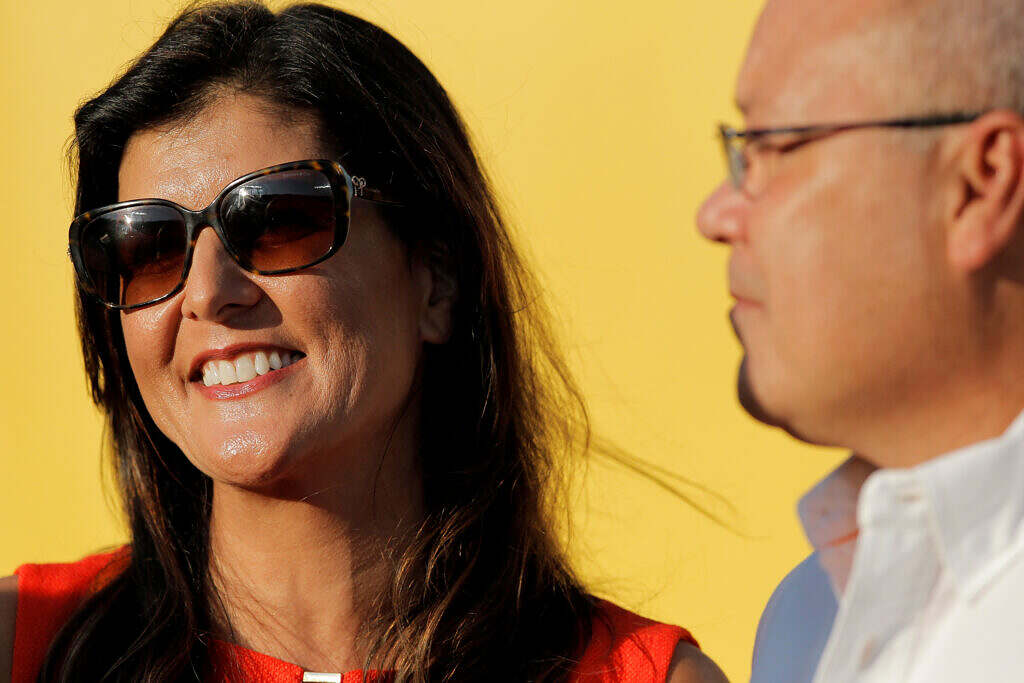
Former governor Nikki Haley, one of Clemson’s unconstitutional lifetime trustees, said she was “frustrated” by the lack of vision from the school’s financial team.
“How many more years do we do this?” Haley asked. “I mean, we’ve been saying over and over again, get in front of it, get in front of it, get in front of it.”
“We need real solutions, and it’s okay if we have to hurt for a little bit, because if you don’t hurt a little bit now, you’ll hurt a lot later,” Haley added. “This is going to require vision, but you can’t just come back to us and think that tuition and fees are going to fix everything, because we’ve done that over and over, and you see enrollment is going down across the board, across the country.”
Haley also challenged Swann’s proposed 10% expense reduction target, saying “cutting doesn’t solve the problem.”
“Reforms solve the problem, and making sure we’re more efficient with those reforms,” she said.
Haley also specifically instructed Petillo not to “come back next time” with unrealistic solutions – or additional suggestions to raise enrollment or fees.
“You’re putting us in a predicament that for years we just keep going through,” she said. “And it’s beyond frustrating.”
While Haley bemoaned the current situation, she declined to identify any specific reforms she believed the board should implement as a solution to its financial crisis.
***

RELATED | CLEMSON’S FINANCIAL POSITION IS GETTING WORSE
***
As Clemson’s administrators and trustees squabbled, the school’s red ink continued to climb. According to the institution’s most recent annual comprehensive financial report (.pdf), the school’s debt ticked up to $1.15 billion – or $38,882 for each one of its 29,545 students. Of that total obligation, $236.9 million is due within one year.
Clemson’s total long-term liabilities have also continued to expand. That total figure now stands at $2.65 billion – an increase of $231.9 million from last year. Of that total, $259.1 million is due within one year.
According to our sources, Clemson has been frantically attempting to move money around in its budgets to address shortfalls – but South Carolina lawmakers recently inserted a proviso into their proposed fiscal year 2026-2027 spending plan which would expressly limit the school’s ability to “rob Peter to pay Paul,” in the words of one lawmaker.
Specifically, funds appropriated by lawmakers toward Clemson’s Public Service and Agriculture (PSA) programs must now be “maintained, budgeted and accounted for in a separate and distinct fund.” The proviso also made it clear “no funds… shall be transferred loaned or otherwise moved” between the accounts.
For a more detailed story on the latest developments involving Clemson PSA, be on the lookout for a report soon from our intrepid research director Jenn Wood.
***
OUR TAKE…

***
As I noted in response to last year’s report, FITSNews has been outspoken for years in its view that “no taxpayer funding should go to institutions of higher learning – either in the form of direct appropriations, loan guarantees or student loans.”
Higher education is not – and never has been – a core function of government. In other words, unlike cops, courts, roads, bridges and a limited, market-driven social safety net… higher education is not “mission critical.”
Colleges and universities should compete for tuition and loans in the marketplace based on the programs they offer – and the same goes for students seeking degrees from those institutions.
“If you can get a bank to lend you the money to pursue a degree in transexual Sanskrit studies or how whale farts contribute to El Niño … knock yourself out,” I wrote recently “Just don’t expect the American taxpayer to foot the bill.”
Institutions of higher education have become epicenters of taxpayer-subsidized indoctrination – and lynchpins of all sorts of crony capitalism.
It’s time for that to stop… and for these schools to sink or swim on their own abilities (or lack thereof).
***
ABOUT THE AUTHOR…
Will Folks is the founding editor of the news outlet you are currently reading. Prior to founding FITSNews, he served as press secretary to the governor of South Carolina. He lives in the Midlands region of the state with his wife and eight children.
***
SOUND OFF…
Got something you’d like to say in response to one of our articles? Or an issue you’d like to address proactively? We have an open microphone policy! Submit your letter to the editor (or guest column) via email HERE. Got a tip for a story? CLICK HERE. Got a technical question or a glitch to report? CLICK HERE.

4 comments
Go. Gamecocks.
Clements left WVU in the same mess when he left for Clemson. Everyone knew all the building in the last 5-10 years was not sustainable. That’s why there are 30k students there now.
Same crap happened under Pastidies here at the Coop and under Holder back in the day. The boards don’t do what they’re supposed to do, and these university presidents believe they can build their fiefdoms unchecked.
Holder”man”