
by WILL FOLKS
***
South Carolina’s family court system is badly broken and in need of serious institutional reform. The stories that come to us from Palmetto State courtrooms are heartbreaking – often horrific.
There are also legitimate concerns about the extent to which the current system pits parents against each other – to the benefit of the state’s powerful trial lawyer lobby.
Last fall, the since-scuttled DOGE SC movement appeared to take a significant step toward substantive reform of this broken system. DOGE unveiled the Equal Parenting Act – which was thereafter introduced in the S.C. House of Representatives as H. 4622.
Sponsored by state representative Gil Gatch, the bill would establish equal custody as the “default option” in the South Carolina family court system unless a “preponderance of evidence” existed to compel a judge to decide otherwise.
Critics fired back that “what sounds good in theory will have massive implications once applied.”
“In normal, healthy, safe homes, absolutely — both parents should be involved,” prominent Palmetto State attorney Lauren Taylor said. “But unfortunately, many homes are not safe or stable.”

***
In keeping with our commitment to a robust exchange of ideas, FITSNews covered the introduction of this legislation – as well as the initial criticism of it. We even published a guest column from multi-millionaire businessman Rom Reddy, founder of the DOGE SC movement, responding to criticism of the bill.
H. 4622 – which has yet to be moved out of the House judiciary committee – was briefly raised last week before a panel of lawmakers in Columbia, S.C. To say fireworks ensued would be an understatement…
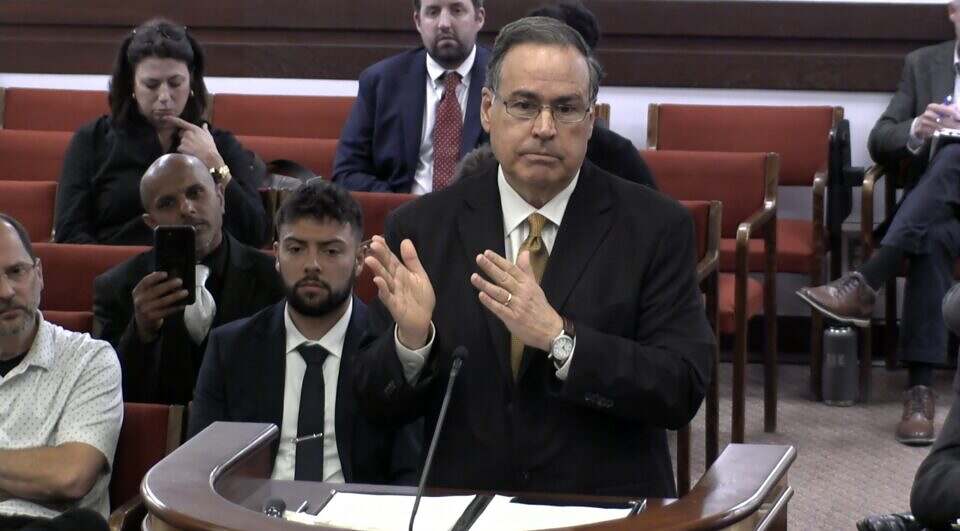
Summoned to testify at the hearing on the legislation was none other than the Palmetto State’s chief justice, John Kittredge. In his testimony, Kittredge offered a spirited rebuke of the co-parenting presumption – arguing family court judges should remain singularly focused on the best interests of the children who appear before them as opposed to hewing to some legislatively imposed “statutory framework.”
“A statutorily mandated, rigid, one-size-fits-all approach to child custody is contrary to the structure of a court of equity that is seeking to determine in each individual case what the best interest of the minor child is,” Kittredge said. “If it is the desire of the legislature to impose preferences and presumptions, it seems that any such preference, any such presumption should be aligned with the gold standard of the child’s best interest.”
Addressing H. 4622 specifically, Kittredge noted the legislation provided just one instance in which judges would be permitted to depart from the new co-parenting presumption.
***

RELATED | ATTORNEY BREAKS DOWN DOGE SC PROPOSAL
***
“I notice in one of the pieces of legislation there’s an exception – if there’s physical violence,” he said. “That makes sense. Everyone would nod their heads and say ‘that makes sense.’ But when you start listing how you get away from the presumption, you better have a lot of paper to write on because there are a million difference scenarios that would get you away from that presumption.”
“What about the serial adulterer who regularly exposes the child to his or her paramour?” Kittredge asked. “What about the mother or the father who has mental health challenges? What about situations where there’s addition in the home? It could be alcohol, it could be pain medication?”
“The law has given me one out,” Kittredge said, referring to the physical violence exemption. “Absent that one out, I’m still bound by that presumption. Hopefully there’s a way to navigate around that and get to the best interests (of the child), but it’s navigating a minefield.”
Reddy was not pleased to see his proposed legislation challenged. He responded by blasting Kittredge not only for the comments he made – but for appearing before the legislative panel in the first place, accusing him of being part of the Palmetto State’s “political ruling class.”
***
The people of South Carolina are fed up with not being heard and not being taken seriously by the Political Ruling Class. It’s time for something different. pic.twitter.com/tG7yM6XmVh
— Reddy for Governor (@reddyforgov) April 6, 2026
***
“Kittredge’s testimony on behalf of this system blurred the critical line of separation of powers,” Reddy insisted. “The people elect legislators to make policy, not judges. The chief justice of the S.C. supreme court actually goes to a hearing and is testifying against a bill on behalf of the trial lawyers of this state. Have you ever heard of anything like this?”
Actually, Kittredge made it abundantly clear during his testimony that his appearance was compulsory.
“I’m not here voluntarily,” he said. “I’m here because I was summoned to come and share my experience and my understanding of the issues globally.”
Irrespective of the impetus for Kittredge’s testimony, is it bad that he shared his thoughts?
Don’t we want justices who are unafraid to share their views with lawmakers? Isn’t that what judicial independence is all about?
Neither Kittredge’s comments nor Reddy’s reaction to them appear to have moved the needle on the bill, which has been sitting in the judiciary committee since it was filed last December. Keep it tuned to FITSNews for updates in the event that changes…
***
ABOUT THE AUTHOR…
Will Folks is the founding editor of the news outlet you are currently reading. Prior to founding FITSNews, he served as press secretary to the governor of South Carolina. He lives in the Midlands region of the state with his wife and eight children.
***
SOUND OFF…
Got something you’d like to say in response to one of our articles? Or an issue you’d like to address proactively? We have an open microphone policy! Submit your letter to the editor (or guest column) via email HERE. Got a tip for a story? CLICK HERE. Got a technical question or a glitch to report? CLICK HERE.

13 comments
Patricia DeTreville is one of many attorneys that Reddy likely knows about.
Has been rumored to be notorious like others who practice family law. Tactic to generate cash flow is to throw gasoline on divorce cases where opposing litigants have money and own property. Then have crony judge friends order all legal fees be paid by her client’s adversaries based on unfounded reasons. Nevermind the adversary’s attorney. Down with it all, ineffective counsel.
First the chief Justice gave some very reasoned examples of why one size fits all, second it’s apparent that Reddy has never read the SC Constitution, there are no separation of powers in SC. The constitution was specifically written that way. The legislature controls ALL of the power. I’m not opining that this is right just that it’s a fact. That’s the main reason that it doesn’t matter who the governor is, they are absolutely powerless to do anything but advocate for what they want. The citizenry are the only ones with the power to change anything and most could care less.
Kittredge is no expert in Family Law. He is just another narcissistic idiot on a power trip
Who is the scum that summoned him to testified? Don’t they know they broke the law?????.
Shesshus, these people should be in straight jackets! Expose them all and demand federal prison time
The trial lawyers are criminals!
It is obvious that you are not a real attorney.
Did you know many SCCOL statutes contain the wording “Constitution and Laws of this state and the Constitution and Laws of the United States”?
I have served as a volunteer GAL/Guardian ad litem as well as on the Foster Care Review Board for a combination of some 30+ years. ANY standard other than “the best interest of a child/children” is insufficient.
You been involved that long then you were part of the GAL problem that was brought to light, before.
The truth is that the current system already has a presumption: “primary” parent gets 85% of time with children, “visiting” parent gets 15%. All the judges and lawyers who argued against the bill know this—their income depends on it—but pretended they didn’t
In the current system, even if a judge wants to give a parent 50% time with a child, they cannot because of that presumption, which is derived from case law/judicial precedent stemming from…the same SC Supreme Court that Kittredge presides over. So basically he is arguing against the legislature taking away his authority, which mainly benefits trial lawyers who make bank on a system that holds children hostage from fathers
Will—do you know *who* summoned Kittredge? Are you just assuming that it was legislators? Can you actually report on who invited him to testify?
I want the DOJ to snoop around with Federal agent from outside the state of SC. The ones assigned here can not be trusted.
Hey Greg, so well said. I asked TA Moore – the chairman – right after. He defended the CJ’s appearance, as shown here: https://youtube.com/shorts/5_ARgUDsxq0?si=a7x9lvYCyIU56CtI
What Veni said.
The current chief justice of South Carolina should know that a presumption is just that: a presumption, meaning it can be rebutted.
No one said the bill has an irrebuttable presumption.
Kittredge is excellent at playing victim and at throwing others under the bus.
He was “summoned” by whom? Could the Chief Justice not resist a summons if it were unlawful, a fortiori of dubious authorship?
Kittredge wants to perpetuate a system of belief in magic and wants to not question anything he says or gets people to say in praise of him like that facially incredible story of a bear appearing to him and his friend and subordinate judge Chuck Simmons, which bear Kittredge supposedly outran with his magical powers leaving Simmons to his fate.
Apparently Simmons survived the bear and told the story to South Carolina’s Daily Gazette.
Maybe Kittredge laid his hands on Chuck Simmons and thereby transmitted some magical bear-outrunning powers to the subordinate judge, too.
The point is: even under the “best interest of the child,” judges determine that “best interest” solely by their own magical powers.
No requirement to consult sociological, psychological, pedagogical, medical, penological and/or any kinds of the study that abound in the non-magical world of real science and real scientists.
The bottom line is that you can now get your child taken away from you SOLELY BECAUSE a judge said so; and Kittredge wants it to remain this way.
Why would Kittredge want it so? Easy! He is three years from aging out and returning to private practice.
They can fill books with LAW Kittredge does not know or pretends to not know. And universities are filled with science Kittredge does not even know exists.
Kittredge had no retribution to fear. He is never up for re-election because of aging out.
It is not the Legislature neutering the judiciary. It is the reverse.
The General Assembly calls in officials form the executive branch all the time to give insight and feedback on proposed laws – why are people getting rankled up because it’s the judicial branch instead this time – and Kitteridge didn’t even ask for this?
Rom Reddy’s reaction is petulant and childish, not even addressing the substance of what Kitteridge said. I think the judicial branch has every right to comment upon a law (and it is prudent to ask for their input) that is effectively going to place controlling guidelines on how they can rule in equity. I’m starting to sour on Reddy – I was expecting more from that guy.
Huge difference.
First, the Legislature has oversight power over the executive, because, as the names indicate, the executive dispenses the money the legislature appropriates. These are the two political branches of government.
Second, the Legislature’s power over the supposedly a-political Judiciary is supposed to be SOLELY the power of impeachment.
Third, a judge is ETHICALLY forbidden from engaging in political activity AND from making public statements on issues that are, or that are likely to come, before his court.
Fourth and foremost, both the federal and the state judiciaries are NEITHER required NOR permitted to give advisory opinions. Their constitutional powers are limited to deciding cases or controversies within their jurisdiction and properly before them after acquiring personal jurisdiction over the parties involved. In the U.S., the judiciaries are allowed only the most minimal of administrative powers absolutely necessary for their judicial functions, such as hiring law clerks or secretaries, but no more.
Power-hungry Kittredge continues to violate the two Constitutions he swore to defend; and he does so by ruthlessly punishing his critics and lavishly rewarding his sycophants.