
by MARK POWELL
***
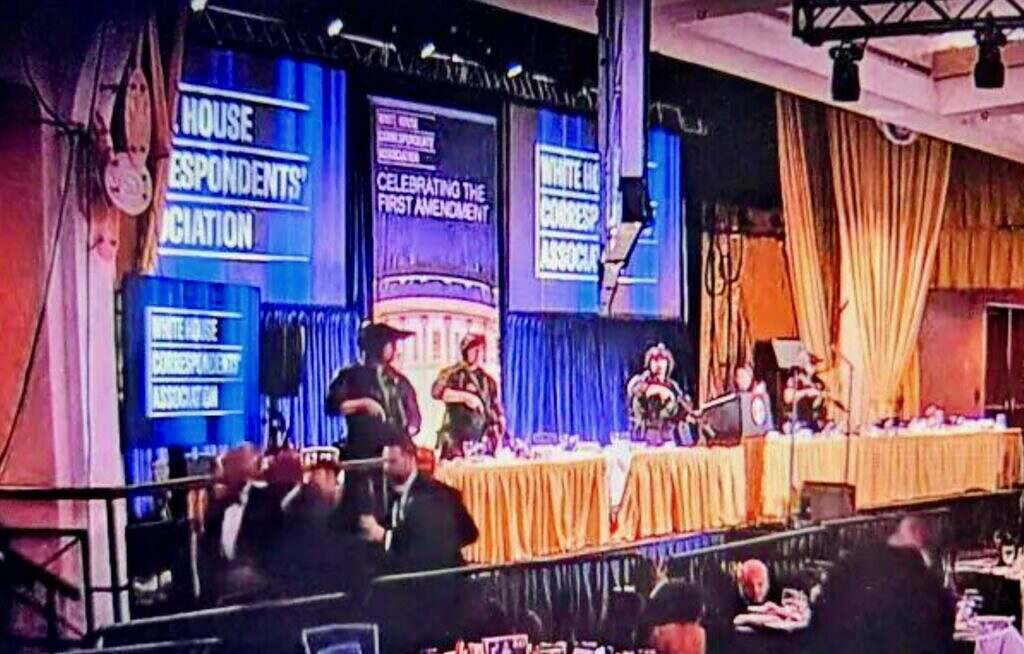
We’re learning more about Cole Tomas Allen, the 31-year-old California teacher and engineer who entered the Washington Hilton’s ballroom lobby on Saturday night with murder on his mind. Allen is accused of firing shots as he tried to burst in on the White House Correspondents’ Dinner, one of D.C.’s glitziest galas with the crème de la crème of capital society in attendance.
Allen has stated he was targeting U.S. president Donald Trump – whom he described as “a pedophile, rapist, and traitor” – and other high-ranking members of his administration.
A portrait of a deeply disturbed person is emerging. In addition to a manifesto explaining his reasoning for the attack, Allen’s alleged association with a fringe group called the Wide Awakes is also raising red flags. This collective mishmash of far leftists calls itself “an open-source network who radically reimagine through creative collaboration.”
Whatever the hell that means…
They also seem to believe in something called “theatrical protest tactics,” yet at the same time, permit individuals to self-identify with loose movements without representing them.
Again, whatever the hell that means.
These troubled souls are so fringe, they make the woke progressive radicals who comprise the ‘Squad’ look positively mainstream.
***
RELATED | SHOTS FIRED AT WHITE HOUSE CORRESPONDENTS’ DINNER
***
Of interest? The group proudly takes its name from another national youth movement that rose to prominence more than 165 years ago – which makes this the perfect time to revisit the original Wide Awakes.
To begin with, you must understand a fundamental fact: Daily life in 1860 America was boredom on steroids. No TV or movies, no internet or smartphones, no recorded music or on-demand streaming entertainment. No college or sports teams of any sort. No gyms or coffee shops to hang out in.
People, especially young people, craved excitement. Something — anything — to break up the dreary monotony of work, church, and not a whole heck of a lot else.
Enter the Republican Party.
The GOP was still brand new then, having been founded a mere six years earlier. In 1860, the Democrats and Republicans were the exact ideological opposites of the two parties we know today. Democrats were, for the most part, the conservatives, Republicans the liberals.
Younger generations are historically inspired by newness and the prospect of change. Republican organizers shrewdly took advantage of this innate idealism, offering a new form of participatory politics (and thus entertainment) in the process.
As much as we love to romanticize the past, the truth is often much less savory. For example, while we are wistfully nostalgic for the more peaceful, principled politics of bygone eras, the truth is gangs often terrorized political elections throughout a big chunk of the 19th Century (particularly Democrat-aligned gangs in Northeastern cities).

***
After an unsuccessful initial foray into presidential politics in 1856, GOP organizers set their sights on 1860 – realizing they needed to get tough or get routed at the polls. They thought winning Connecticut’s early spring gubernatorial election would be a good indicator of their chances later that year. So, they made a major push there.
When a well-known abolitionist figure arrived in Hartford to stump in late February, five young Republican textile workers led a torchlight parade through town to promote it — fighting off a group of Democratic street hooligans in the process.
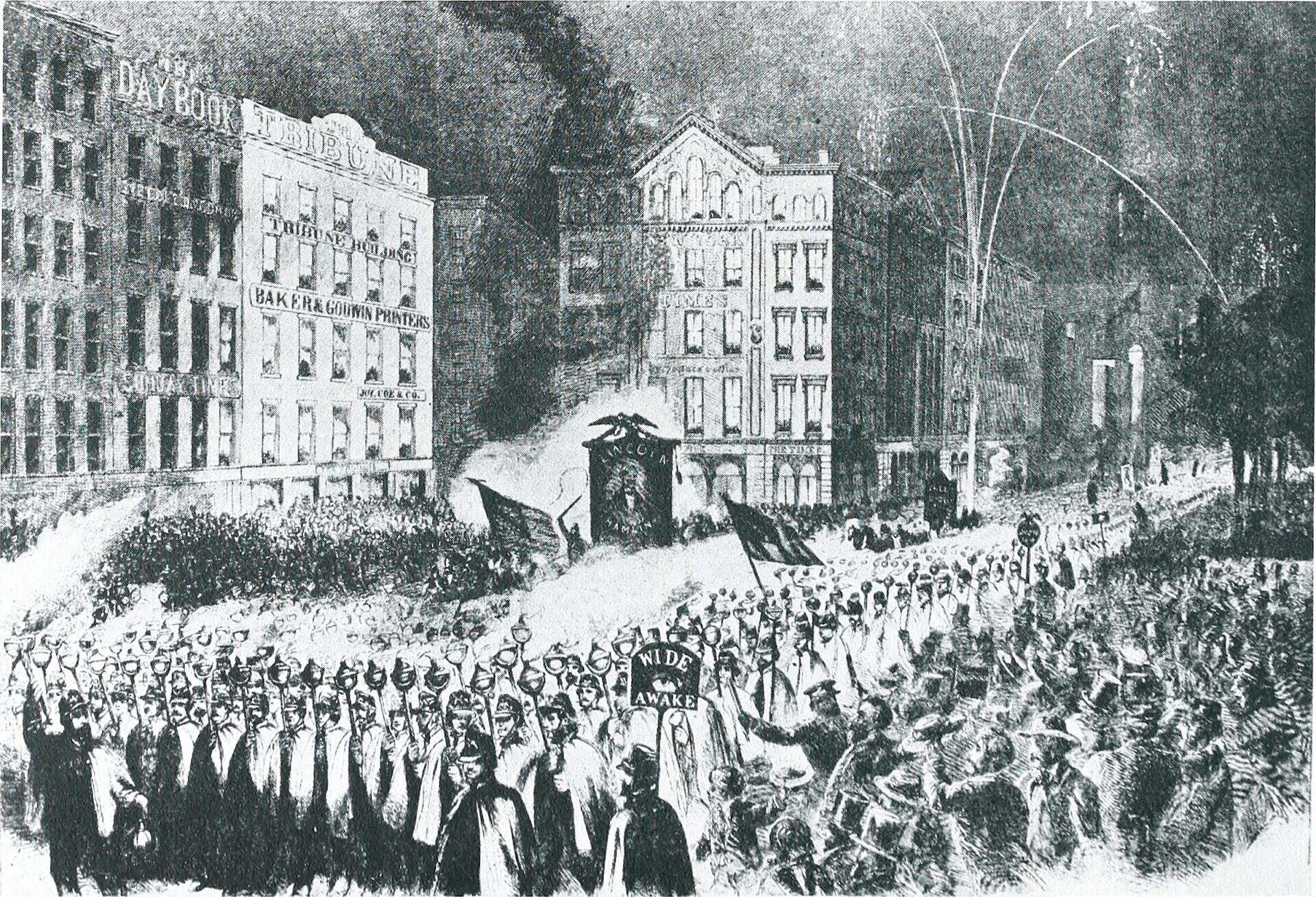
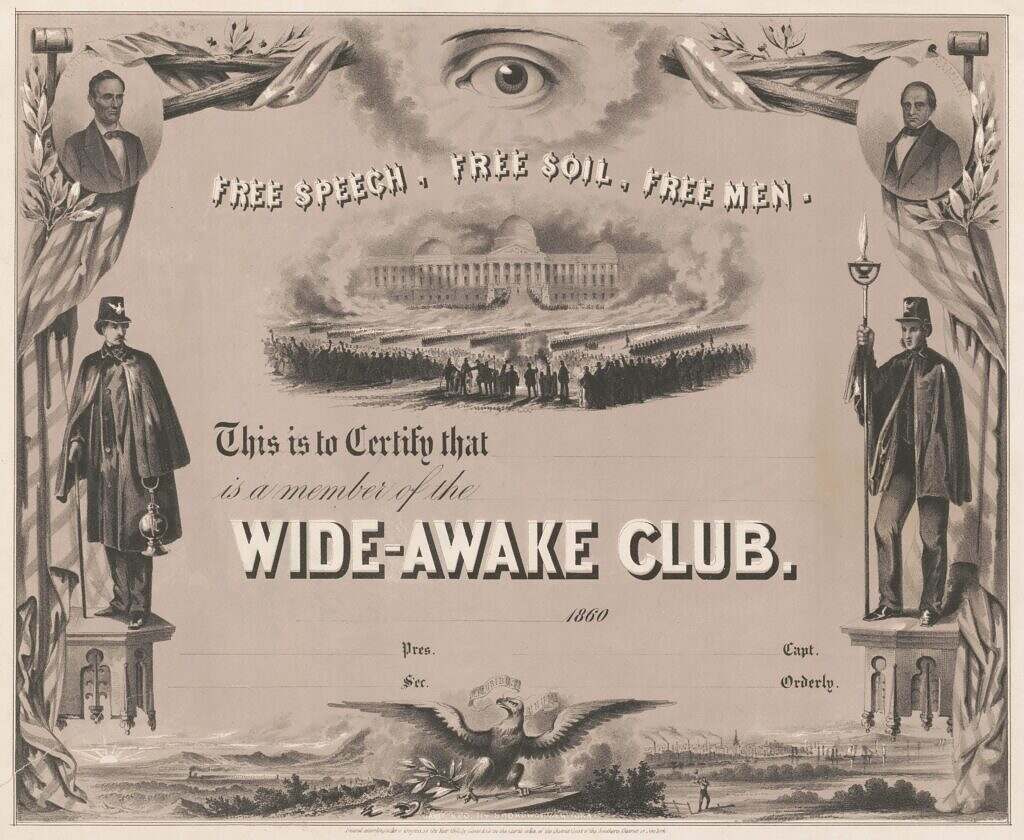
Suddenly, a new group was born. Republican strategists rolled into action, recruiting young males in their 20s. They led massive torchlight parades that received widespread news coverage, escorted Abraham Lincoln and other prominent Republican candidates, marched in formation, and wore black capes (chiefly to protect their clothes against coal oil leaking from their torches overhead). One such parade on the night of October 3, 1860 saw more than 10,000 participants marching through three miles of downtown Chicago.
A newspaper christened them the “Wide Awakes,” using a popular term from the 1850s that meant staying alert and on your toes. The New York Times praised its members “young men of character, earnest in their Republican convictions.”
Suddenly, joining the Wide Awake became the popular thing to do for young Northerners.
***
***
The movement was as much social as it was political. My new book, ‘Witness To War‘ (Stackpole Books 2026), contains this excerpt from a letter written in Upstate New York on October 8.
“I suppose you are a Lincoln man. I hope so, and a Wide Awake, too. We have a Wide Awake company of about 75 at this place. There is a company in every place where there is a dozen houses around here. Our club went to a pole raising yesterday about four miles from here. There was three companies there, about 200 people. We raised a pole 140 feet out of the ground. Put it eight feet in the ground. We had a gay old time. It is getting late and I do not know what to write more, so I will bid you goodbye with three cheers for Old Abe. Hurrah, hurrah, hurrah.”
In all, it’s believed some 500,000 young members joined the group. That utterly terrified the South. And with good reason. By then it was painfully obvious the country was dancing on the precipice of open warfare. The prospect of an organized paramilitary group set off alarm bells, especially here in the Palmetto State, where it was viewed as a dagger aimed at the heart of Dixie.
Many prominent South Carolinians spoke out against the organization.
U.S. senator James Chestnut in a letter: “These ‘Wide Awakes’ are drilling everywhere… they mean mischief.”
The Charleston Mercury thundered in an editorial, “torchlight processions… with unformed ranks… present the spectacle of a disciplined force rather than a political club.”
Governor William Henry Gist even cited it in his November 1860 official message to the state legislature: “Organizations, semi-military in their character, have been formed under the name of ‘Wide Awakes’… prepared to carry out the purpose of their party.”
That purpose, according to Gist, was to “overawe the South.”
These fears weren’t misplaced. For when the war came six months later, historians believe an incredible 75% of all Wide Awakes joined the Union army (compared to approximately 50% of the Northern male population.
Those who enlisted traded their black capes for blue uniforms. And when they eventually reached places like Georgia and South Carolina in 1864 and 1865, the torches they carried weren’t for parades.
***
ABOUT THE AUTHOR…

J. Mark Powell is an award-winning former TV journalist, government communications veteran, and a political consultant. He is also an author and an avid Civil War enthusiast. Got a tip or a story idea for Mark? Email him at mark@fitsnews.com.
***
SOUND OFF…
Got something you’d like to say in response to one of our articles? Or an issue you’d like to address proactively? We have an open microphone policy! Submit your letter to the editor (or guest column) via email HERE. Got a tip for a story? CLICK HERE. Got a technical question or a glitch to report? CLICK HERE.
