

by JENN WOOD
***
An Upstate attorney is facing felony marijuana trafficking charges in a case that highlights South Carolina’s fractured approach to regulating hemp-derived THC — where enforcement is outpacing the law.
Ashaley Boatwright, 37, — an Anderson, S.C. lawyer and owner of Boatwright Legal — has been charged in the Palmetto State’s tenth judicial circuit with trafficking marijuana in connection with an investigation into a local dispensary, according to court records and arrest warrants.
Two separate general sessions cases filed in December 2025 (.pdf) accuse Boatwright of trafficking marijuana in quantities between ten and 100 pounds — a felony offense carrying significant mandatory prison exposure under state law.
Both cases remain pending, with prosecution assigned to the South Carolina Attorney General’s Office (SCAG).

***
The charges stem from an investigation into Abduction Dispensary, an Anderson business previously targeted by law enforcement.
According to investigative materials, officers first executed a search warrant at the location on July 31, 2025 — seizing a range of cannabis-related products, including plant material, wax, edibles and concentrates.
Authorities allege those products contained THC levels exceeding the legal threshold.
A second search warrant executed on December 4, 2025 yielded additional illegal substances — reinforcing what investigators describe as ongoing criminal activity despite the earlier enforcement action.
Court documents reviewed by FITSNews identify Boatwright as an owner of the business.
***
WHAT INVESTIGATORS ALLEGE
Affidavits (.pdf) tied to Boatwright’s arrest assert he was in constructive possession of more than 10 pounds of marijuana and marijuana-derived products located at the Anderson dispensary.
Those materials — including waxes, extracts and edibles — allegedly tested above South Carolina’s legal THC limit, placing them outside the definition of lawful hemp.
Investigators further allege that the seized products included substances with Delta-9 THC concentrations exceeding 0.3 percent — the threshold that separates legal hemp from illegal marijuana under both state and federal frameworks.
The warrants — executed by Anderson Police Department (APD) investigators — form the basis of two separate trafficking cases now pending in General Sessions court.
Court records indicate Boatwright was released on a $10,000 personal recognizance bond, meaning he remains free pending trial so long as he complies with court conditions. A bond order further reflected a potential $20,000 financial obligation if he fails to appear as required.
His case remains active, with no public disposition or trial date currently set.
***
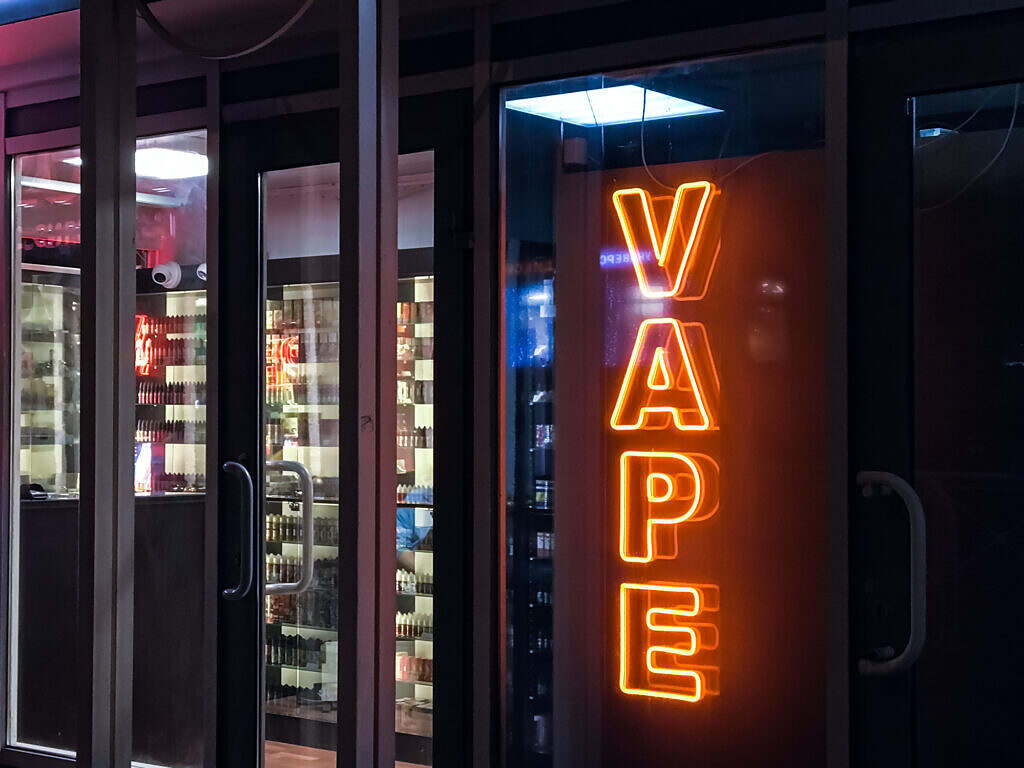
RELATED | S.C. ‘GANJAPRENEUR’ VAPE SHOP STING
***
DEFENSE PUSHES BACK ON “OWNER” CLAIM — AND CHARGES
Boatwright’s attorney, Catherine Wyse, is forcefully disputing both the factual basis of the charges and the characterization of her client’s role in the business.
In a statement provided to FITSNews, Wyse described Boatwright as “a devoted husband and father” and a combat Marine who served in both Iraq and Afghanistan before building a legal career in the Upstate representing clients — often in cases involving government or law enforcement overreach.
According to Wyse, Boatwright was not an owner of Abduction Dispensary but instead served as its business attorney — retained specifically to help the operation comply with South Carolina’s hemp laws.
“He provided legal advice and representation when needed, but he was not an owner,” Wyse said, adding that Boatwright was “dumbfounded” to find himself charged as such in a case carrying significant felony exposure.
The defense further frames the prosecution as part of a broader uncertainty surrounding hemp enforcement in South Carolina — where, Wyse argues, the law has legalized certain products while regulators and law enforcement continue to test the outer boundaries of what conduct will be criminally prosecuted.
Wyse also warned that the case has sent shockwaves through the legal community, raising concerns that attorneys providing regulatory guidance to clients in emerging industries could themselves become targets of prosecution.
Boatwright “is innocent of these charges and is eager to prove that in court,” Wyse said, adding that the defense expects the office of Alan Wilson to ultimately review the evidence and “make a just and fair decision.”
***
A CASE ROOTED IN A FRACTURED LEGAL LANDSCAPE
Boatwright’s prosecution is unfolding against the backdrop of a rapidly escalating — and deeply fractured — fight over hemp-derived THC products in South Carolina.
Since the 2018 federal Farm Bill legalized hemp containing less than 0.3 percent Delta-9 THC, a booming retail market has emerged — one that state lawmakers have spent years struggling to regulate.
Those efforts have repeatedly stalled.
In recent weeks alone, competing proposals in the South Carolina Senate collapsed before lawmakers ultimately advanced a heavily amended compromise — one that restricts potency, limits where certain products can be sold and effectively reshapes which businesses are allowed to participate in the market.
That fight is not just about legality — it is about control.
Liquor stores, convenience retailers and stand-alone hemp shops are all competing for access to a lucrative and fast-growing industry, while lawmakers attempt to draw lines that satisfy social conservatives, business interests and law enforcement.
In the absence of a clear and consistent statutory framework, enforcement has stepped in to fill the gap.
State and local agencies have launched coordinated crackdowns on retailers they believe are operating outside legal limits — executing search warrants, seizing products and, increasingly, pursuing felony trafficking charges based on total product weight.
In other words, what lawmakers have struggled to define, prosecutors are now testing in court.
***
LAWMAKERS STRUGGLE — AND STUMBLE — TO DEFINE THE RULES
While enforcement has accelerated, the law itself remains in flux — and increasingly shaped by political infighting.
During the current legislative cycle, South Carolina lawmakers have advanced — and in some cases failed to pass — competing proposals that would ban intoxicating hemp products outright, restrict THC potency and sales, or create a regulated framework with testing and labeling requirements.
Recent efforts in the Senate underscore that instability. Lawmakers rejected one compromise before advancing a heavily amended version that redraws where and how certain THC products can be sold — effectively determining which businesses can participate in the market.
Some proposals would classify many of these products as contraband, aligning them with illegal marijuana. Others attempt to preserve a legal market under tighter controls, including age restrictions, potency caps and point-of-sale limitations.
For now, however, no clear or consistent standard has emerged — leaving courts, prosecutors and defendants to navigate a shifting legal landscape where the rules are still being written.
***

RELATED | ‘CANNABIS CONSUMABLES’ COMPROMISE REACHED
***
PROFESSIONAL CONSEQUENCES: BAR DISCIPLINE LOOMS
Beyond the criminal case, Boatwright is now facing a second — potentially career-ending — exposure: professional discipline.
Under South Carolina’s Rules for Lawyer Disciplinary Enforcement, attorneys charged with serious crimes — particularly felony drug offenses — may face interim suspension and formal disciplinary proceedings, up to and including disbarment if convicted.
The South Carolina Supreme Court has the authority to impose immediate restrictions on an attorney’s ability to practice law upon proof of serious criminal charges, even before a case is resolved.
In January, the court’s disciplinary counsel decided not to suspend Boatwright while the case is pending.
***
THE BIGGER PICTURE
Boatwright once positioned himself as an advocate — guiding clients through the legal system. Now, he is navigating it as a defendant in a high-stakes felony prosecution.
His case underscores a broader reality playing out across South Carolina:
What was once treated as a regulatory gray area is increasingly being enforced as a criminal offense.
And until lawmakers clearly define where hemp ends and marijuana begins, that line will continue to be drawn — case by case, courtroom by courtroom.
***
ABOUT THE AUTHOR …

As a private investigator turned journalist, Jenn Wood brings a unique skill set to FITSNews as its research director. Known for her meticulous sourcing and victim-centered approach, she helps shape the newsroom’s most complex investigative stories while producing the FITSFiles and Cheer Incorporated podcasts. Jenn lives in South Carolina with her family, where her work continues to spotlight truth, accountability, and justice.
***
SOUND OFF…
Got something you’d like to say in response to one of our articles? Or an issue you’d like to address proactively? We have an open microphone policy! Submit your letter to the editor (or guest column) via email HERE. Got a tip for a story? CLICK HERE. Got a technical question or a glitch to report? CLICK HERE.

3 comments
After almost 70 years on Earth, the only lives I’ve seen destroyed by marijuana are those lives ruined by its criminalization. And by the way, I don’t use marijuana myself. Perhaps I could if SC would allow a safely regulated product.
No, pleas don’t, specially at your age; and I mean that in utmost respect.
NOTHING is free from side-effects. If you managed to live 70 years without it, why start now?
It needs to come out of the gas stations and unregulated head shops, have responsible and accurate labeling and testing, not be marketed like candy or as something appealing to kids, and be in child-proof and unmistakable packaging or containers sold only to people over 18 or 21. Win-win.
It should not be an argument about who is allowed to profit from it. Because it has become that way, it’s pretty obvious this is more about control than good governance.