
by DYLAN NOLAN
***
If I told you there was one crime in South Carolina that has a statute of limitations – which crime would you guess it is?
If you’ve been following this news outlet for long enough, you very may well have guessed it: public corruption at the S.C. State House. That is the one crime for which prosecutors are prevented from seeking justice after a fixed period of time – proving once again there is a different set of rules for those who operate under the capital dome in Columbia, S.C.
This week, a leader in the conservative S.C. Freedom Caucus announced the filing of a bill (H. 5247) to change that.
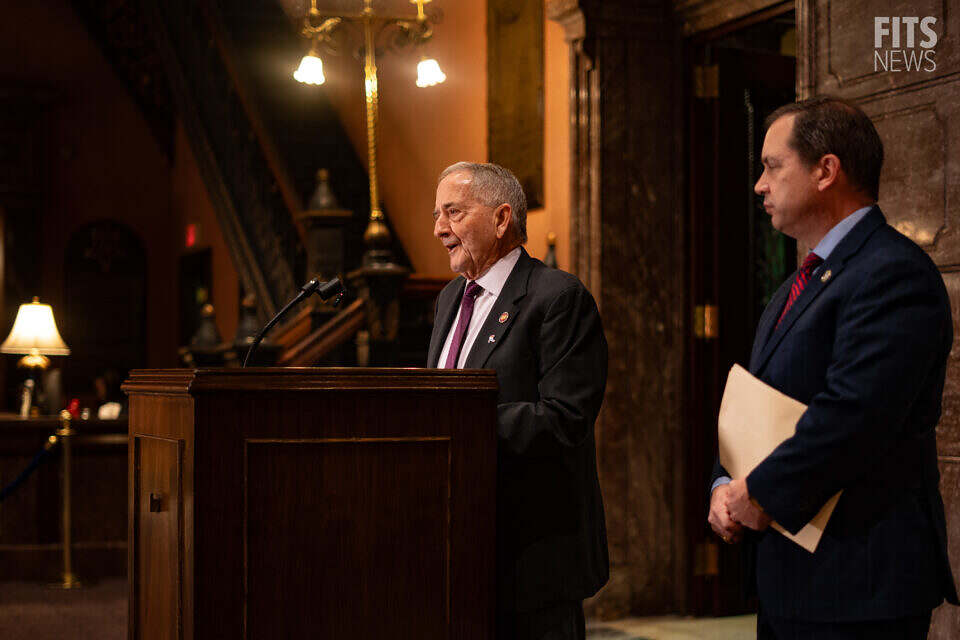
At a press conference on Thursday morning (February 26, 2026), state representative Joe White spoke out against a statute capping public corruption investigations and prosecutions to four years after the commission of the crime.
***
***
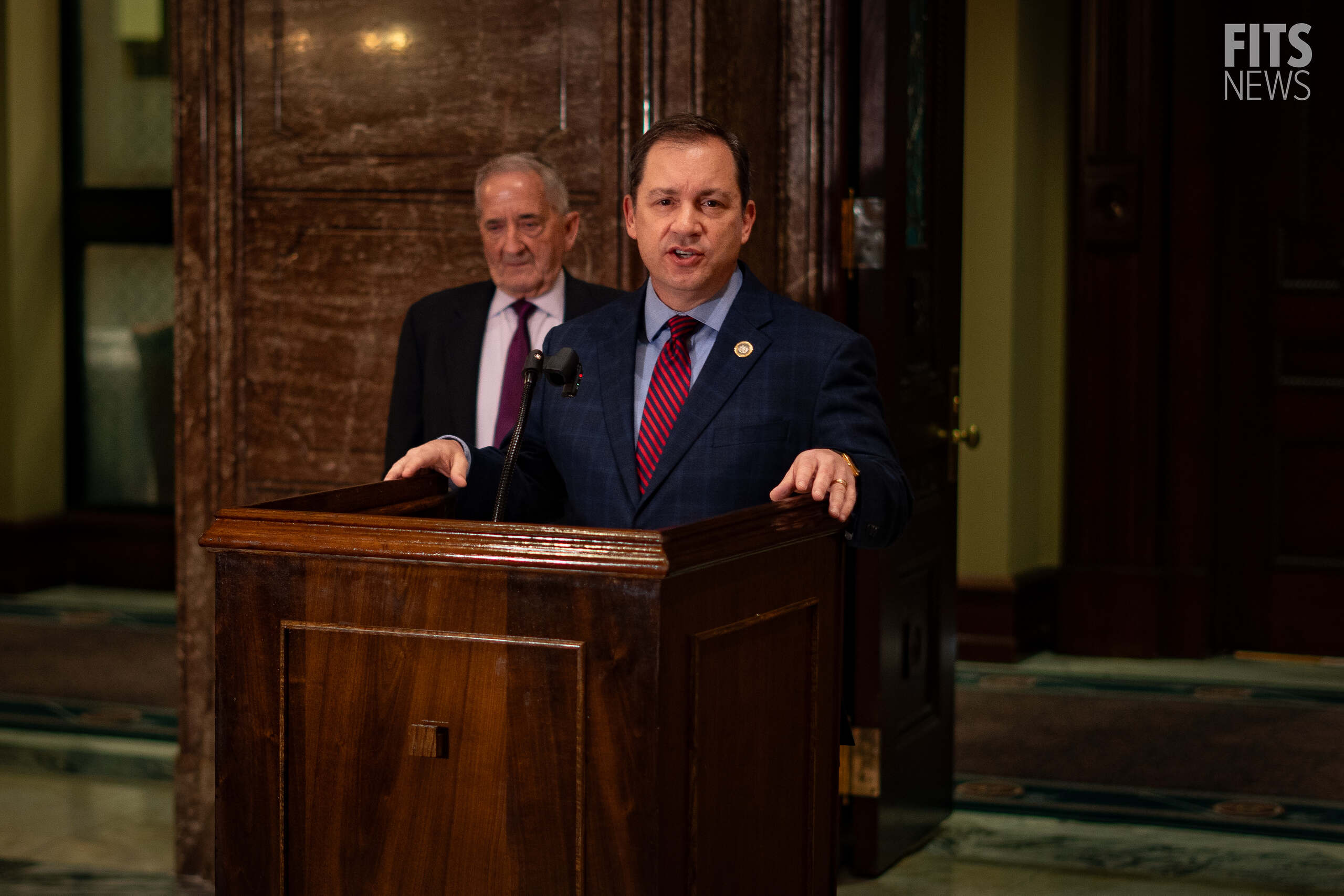
“It’s a simple bill,” White began. “If someone breaks the law at the State House, they should not be able to run out the clock and walk away.”
Lawbreaking at the S.C. State House has a long history – and that’s just the corruption we know about. Widespread misconduct at the Palmetto State capital resulted in a federal investigation in the late 1980s and early 1990s entitled ‘Operation Lost Trust.’
Using hidden cameras and microphones, federal authorities were able to document an extensive network of corruption. Seventeen members of the S.C. General Assembly were either found guilty – or pled guilty – to a variety of crimes which collectively included bribery, conspiracy and extortion.
White argued alongside first circuit solicitor and attorney general candidate David Pascoe that these crimes are likely still occurring – and that prosecutors shouldn’t have their hands tied in trying to address them.
***
***
Pascoe is the only state-level prosecutor to successfully pursue a public corruption prosecution through the “Probegate” criminal inquiries in the late 2010’s.
“Public corruption is not easy to uncover,” White said. “It can take years to find the emails, the money trail, the coordination. Sometimes, prosecutors don’t even discover the wrongdoing until years later – but by then, the four year statute of limitations is gone.”
White characterized his bill not as an attack on the state’s system of government – he repeatedly and effusively praised the ethics of the majority of his colleagues and lobbyists – but rather as something that will bolster the trust of South Carolinians in their government by allowing the unethical few to be held accountable.
“It does not attack judges, it does not attack legislators,” White argued. “It strengthens the structure.”
“If misconduct is uncovered five years from now or 10 years from now, the people of South Carolina still deserve justice,” he concluded.
***
***
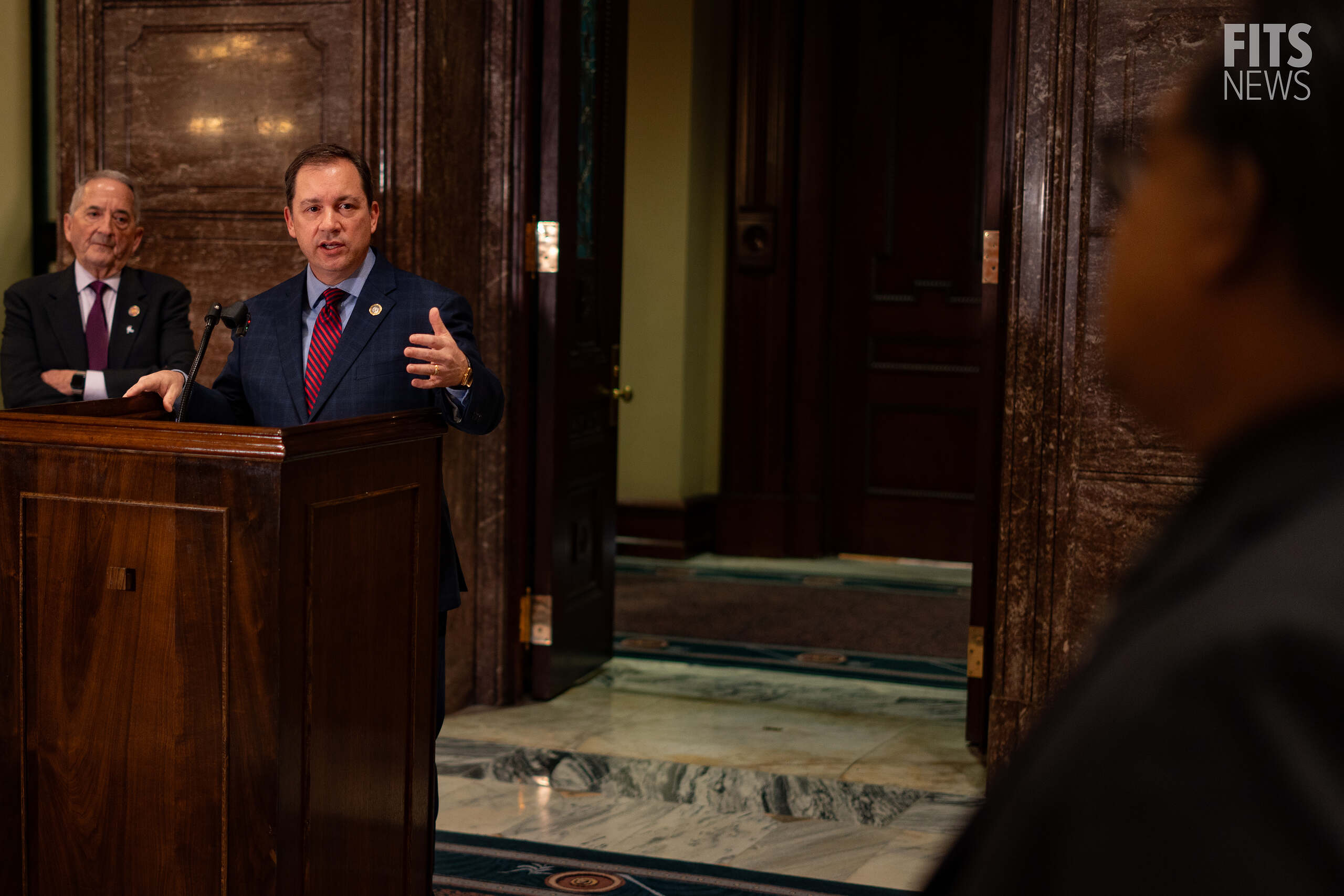
Pascoe cited a 2018 statewide grand jury report (.pdf) released to the public by now-retired circuit court judge Clifton Newman as he took the lectern to argue in favor of removing the statute of limitations on public corruption.
“In 2018 the South Carolina state grand jury issued a grand jury report outlining the corruption in this state and the corruption committed by members of the General Assembly,” Pascoe said. “The report also outlined the many weaknesses we have with our state’s ethics laws, which include our laws dealing with illegal lobbying.
Pascoe claimed the recommendations on addressing these loopholes have been largely ignored.
Pascoe spoke from personal experience about the impediment the four-year statute of limitation imposes on prosecutors.
“During the corruption probe we encountered countless delays that prevented us from any prosecutions – or almost any prosecutions – of illegal lobbying,” Pascoe noted, adding that prosecutors “had a huge problem, the statute of limitations had run or was about to run on every single one of those cases.”
***
***
When asked if he believed legislators and lobbyists were still colluding to break the law, Pascoe said it’s hard to believe they aren’t.
“It would be impossible to think that there’s not some type of illegal activity or illegal lobbying going on,” Pascoe recalled that “we just had a state senator stand up and make an allegation of it last year.”
The pay-to-play dynamics of the South Carolina State House were laid bare on March 4, 2025, when S.C. senator Tom Fernandez dropped a bombshell during the floor debate on S.244, the session’s marquee tort reform bill.
“The trial lawyer lobby has offered me campaign fundraisers in the amount of $50,000 to $100,000 per campaign if I voted against this,” Fernandez said, noting he was saying “the quiet part out loud.”
***
Once again, “the quiet part out loud.” South Carolina’s trial lawyer lobby effectively bribing state lawmakers… did it work? Stay tuned for an updated report… #SCStatehouse pic.twitter.com/MBzYSTtPFr
— FITSNews (@fitsnews) September 2, 2025
***
Pascoe said the incident “needs to be investigated” – and has, in fact, vowed to launch such an investigation on “day one” in the event he is elected attorney general.
“The clock is ticking on that,” he said, referring to the Fernandez case.
Pascoe clarified that even if White’s bill were to pass, it would not retroactively apply to any current misconduct.
Filed during the waning portion of the state’s two-year legislative session, White’s proposal faces an uphill climb to secure support and advance beyond the House judiciary committee this session; however he recounted a similar uphill battle during the first few years of his push for judicial reform – committed to taking a similar approach to pushing this issue in future sessions.
“There’s no reason not to bring it back up session after session until we get enough legislators that say, ‘hey, let’s pass this thing,” White told FITSNews.
***
ABOUT THE AUTHOR…

(Via: Travis Bell)
Dylan Nolan is the director of special projects at FITSNews. He graduated from the Darla Moore school of business in 2021 with an accounting degree. Got a tip or story idea for Dylan? Email him here. You can also engage him socially @DNolan2000.
***
SOUND OFF…
Got something you’d like to say in response to one of our articles? Or an issue you’d like to address proactively? We have an open microphone policy! Submit your letter to the editor (or guest column) via email HERE. Got a tip for a story? CLICK HERE. Got a technical question or a glitch to report? CLICK HERE.

2 comments
Common law misconduct currently covers corruption with no statute of limitations on any elected or appointed officials including the governor, general assembly, judges etc as they are defined as public officials under state law. This seems like a bit of free campaign advertising for Pascoe. Not a knock on Pascoe as he is a very able and accomplished prosecutor, however; we don’t need more laws we just need to enforce what we have.
Enforcement that is seriously lacking, indeed. No statute of limitations should always stay in place.
Former removed Family Court judge and several of her crony lawyer friends hopefully get bit in their corrupt butts.