
|
Getting your Trinity Audio player ready...
|
by MARK POWELL
***
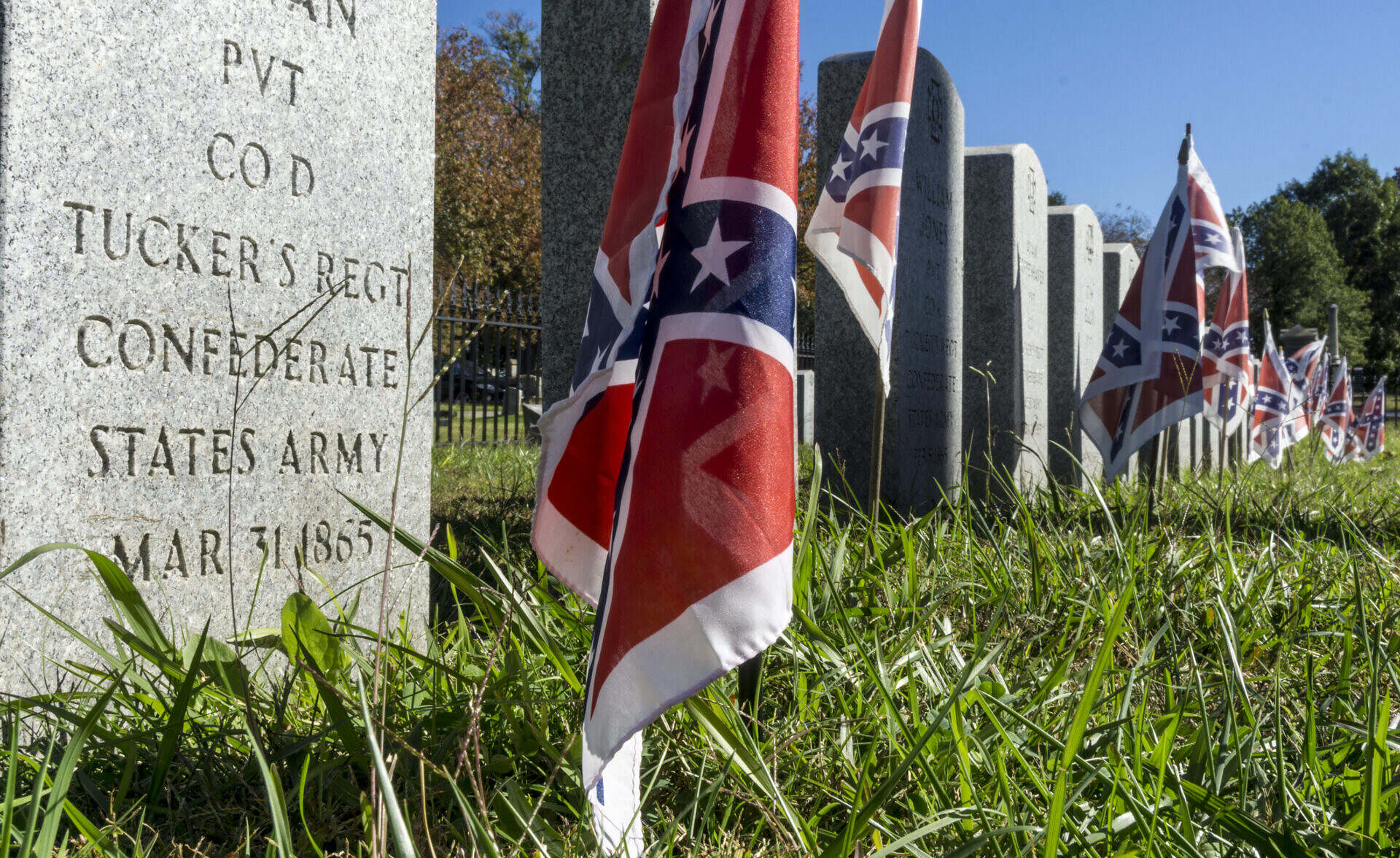
If you go to the South Carolina Department of Motor Vehicles (SCDMV) on Monday, May 11, 2026, you’ll find locked doors. Ditto for other state government offices, too. Why? It’s Confederate Memorial Day, an official state holiday.
Many newcomers to the Palmetto State often ask, “why does South Carolina observe Confederate Memorial Day?”
It’s a fair question. And as I’m about to explain, the answer may surprise you.
More than 160 years after the guns fell silent, few subjects remain as contentious as the War Between the States. Everyone from academic elites to armchair history enthusiasts wax opinionated as to what caused the conflict – which is where things get tricky.
Debate swirls around three core issues: states’ rights, slavery, and secession. Each of these are important matters worthy of extended discussion – but none of them expressly address the question at hand.
Causation doesn’t account for the war’s human toll. Of the more than 60,000 men who wore gray from South Carolina, around 18,000 of them didn’t return home. That fatality rate of nearly 30% was among the South’s highest – and most of the dead didn’t even own slaves.

***
When Confederate Memorial Day was established here in 1896, memories of the war – and reminders of its destruction – were still fresh. They have faded considerably over the intervening 130 years, yet are worth revisiting now.
I contend that South Carolinians of 1896 understood the day commemorated far more than a failed military conflict. It also honored the hardships endured on the home front as well as the battlefront.
My new book, ‘Witness To War’ (Stackpole Books 2026), opens a unique window into that time through in-the-moment accounts. Rather than argue or debate, please allow the witnesses to explain those turbulent times to us, in their own words, through the following excerpts.
Consider the anxiety and uncertainty facing Mary Cross, a Charleston carriagemaker’s widow, after the Federals seized the first parts of the Palmetto State.
***
Charleston, S.C.
November 19, 1861
Thank you very much for your kind invitation to me and my children to share the hospitalities of your house. We will be glad to accept your generous offer when we are obliged to leave our homes. We do not know at what moment we may be obliged to leave. Our city is in great confusion—people moving from the island around to the city for safety. The people in the city are going off to the country. I suppose you have heard they are in possession of Hilton Head, Port Royal, Beaufort, and Pinckney Island. By the papers, we see that 11,000 troops are expected from New York. If so, they will attempt to march here.
You know that when the order from Gov. Francis Pickens comes for the women and children to leave the city, they will be obliged to run off without taking a second suit to their backs. When that time comes, you will see us. We were thinking of packing up what things that are valuable and sending them up to you for safekeeping as we will have to leave them for the Yankees take such things as silver, etc.
***
***
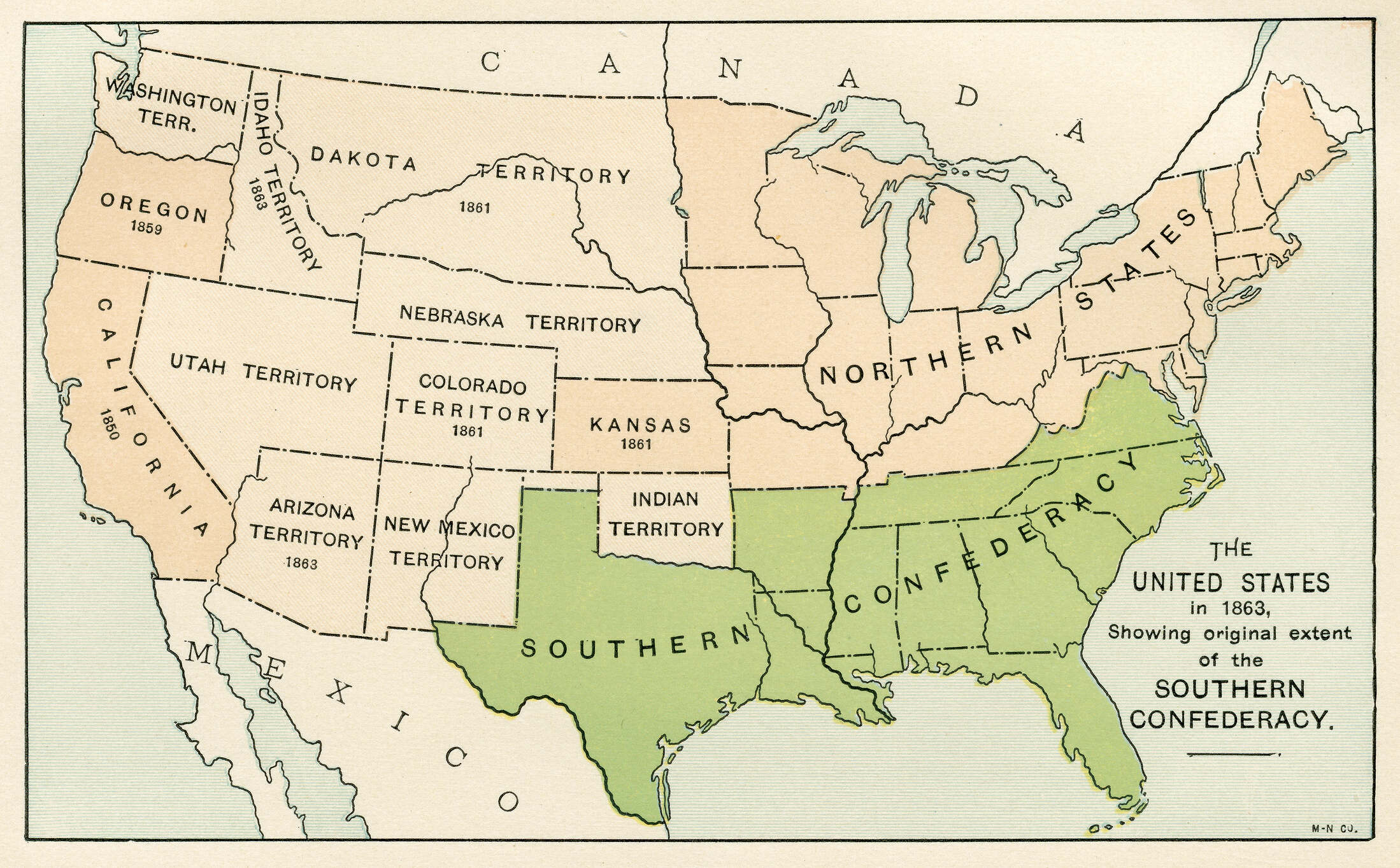
Because South Carolina was the first state to secede from the Union, and the war had commenced at Fort Sumter, Northerners marked it for savage retribution, as noted by Charles Howe, a teenager serving in the 36th Massachusetts Infantry.
***
Middleburg, Ky.
May 12, 1863
Yesterday, the report came that Vicksburg had surrendered, and 30,000 prisoners were captured. I hope it is true, and then “Goodbye, Southern Confederacy.” I want to see Charleston, South Carolina, in ashes before the war ends, for I think that place ought to suffer for its folly.
***

***
Charleston did indeed suffer. When Union troops seized several islands in its harbor, they hauled in powerful cannons and bombarded the Holy City, not distinguishing between military targets and civilians, as related by J. W. Norris in the 1st South Carolina State Troops.
***
Charleston, S.C.
October 20, 1863
The Yankees are firing very rapidly and steadily for the past few days—nearly every fire causes the sash on our windows to rattle. They have not thrown any more shells into the city since Monday as they burst their gun. There are very few nice, clean children in the city. Most of them are dirty and bad-looking. All the better sort have gone out to the country [to escape the bombardment]. The government issued red peas, which have so hard a skin on them we can hardly eat them.
***
As the war reached its closing months, the fighting reached the state’s interior. Mary Barclay Kirby, one of the “Treasury Ladies” who signed Confederate currency by hand, updated her son serving in Louisiana.
***
Columbia, S.C.
January 27, 1865
How do you feel about Confederate prospects across the Mississippi River? Everything on this side has looked dark for the past month. The fall of Savannah and Sherman’s march through Georgia with so much ease have caused the people of South Carolina to feel rather uneasy about their state. I very much fear that Charleston will next be prey to Yankee rule.
***
***
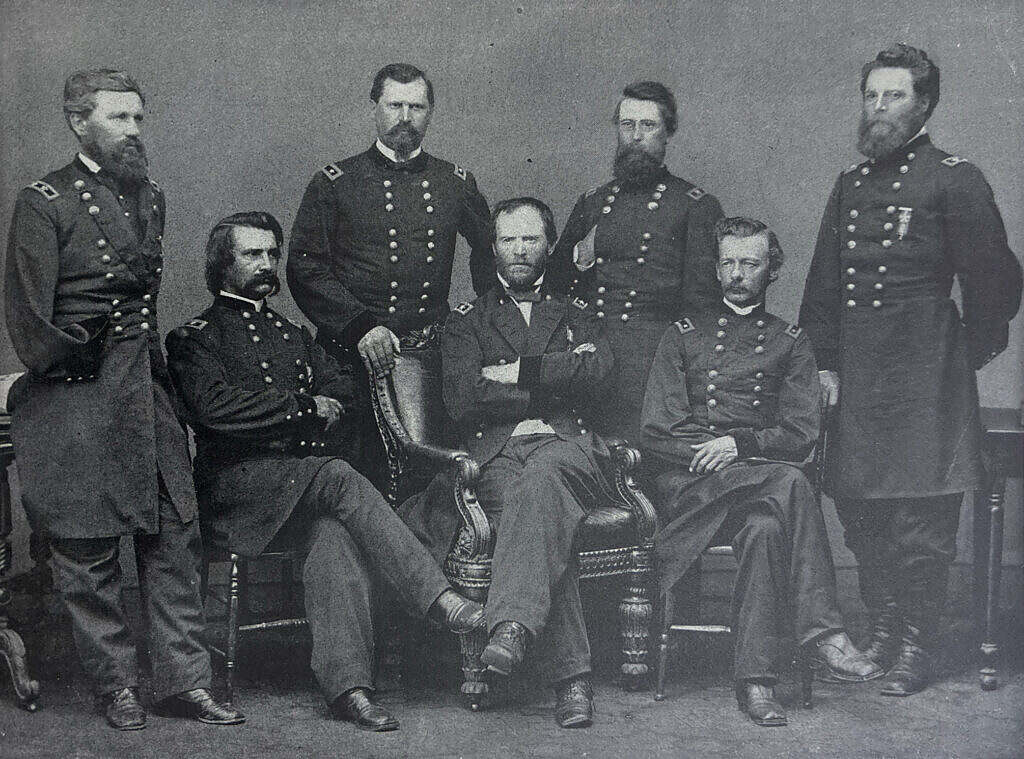
Sherman was eying Columbia instead. When his soldiers arrived, most of it was destroyed in a massive fire on February 17. John Lockwood, quartermaster of the 30th Iowa Infantry, described the scene.
***
Near Goldsboro, North Carolina
March 30, 1865Our division went into South Carolina, within whose borders we traveled some three hundred miles, subsisting mainly off the country through which we passed, leaving little or nothing upon which to subsist the Rebel army [and their families].
One of the most impressive incidents was the burning of Columbia, the capital of South Carolina. It was truly an awfully grand scene to behold. As I stood in the midst of the shower of falling sparks and flakes of fire, I felt sad to witness the destruction of so much valuable property, and so many helpless women and innocent children so summarily turned out of their comfortable homes.
As to the blame attaching for firing Columbia (for it was not done by order), it cannot be justly done. As I believe that the perpetrators were divided among various corps—the liberated prisoners (who had been incarcerated there), the negroes, and possibly other citizens—with whiskey infusing and inflaming the whole.
***
Mary Margaret Pugh recounted the atrocity from the civilian perspective.
***
Sumter, S.C.
March 4, 1865
We did not apprehend much immediate danger, but the first thing we knew, they were marching through our state. Great excitement has prevailed.
When Columbia was attacked, Miranda sent us word she hoped they had enough provisions left to do them [survive]. The neighbors clubbed together and hired a guard to protect their property. The old State House was pulled down. Nearly all of Main Street is in ashes. We heard 1,200 were burnt, and thousands were rendered homeless. Another rumor says nine-tenths of the city was burnt, only about 60 houses left. They wrote to Sumter that the people were starving and begged them to send some provisions over, which has been done, I think. The old Baptist and the Methodist Churches were burnt.
They searched all boxes and trunks, gathered a large quantity of gold and silver, more than they had done anywhere else. [Federal] soldiers are passing about constantly, and horses are being impressed for service. We have let another one go, the black pony. Yours have not been interrupted. The Mannings sent their horses and mules to Lynches Creek, and they were all captured.
***
RELATED | BEFORE BIDEN, ANOTHER PRESIDENT FLEW COMMERCIAL
***
James A. Stewart, a private in the 98th Ohio Infantry, succinctly summed up the situation during the army’s southern march thusly:
Goldsboro, N.C.
March 27, 1865
We marched through the Mother of Rebeldom [South Carolina]. Suffice it to say, we left her in ashes. A black mark that will take years to rub out.
***
Stewart was correct. South Carolina’s economy suffered well into the 20th Century. A case can even be argued that in some ways, it never fully recovered from the war’s devastating impact.
When the fighting stopped, the nation was shellshocked. A recent war widow in Iowa put it this way:
***
DeWitt, Iowa
August 8, 1865
“Now that the cruel war is over, and I look back and see the many lonely homes, I wonder what it all meant.”
***
Occasions like Confederate Memorial Day, Juneteenth, and others restore humanity to history. They’re important reminders that the past is more than abstract dates and names whose meaning and significance fade over time. They are opportunities to remember that the men and women of the 1860s endured enormous personal hardship and sacrifice to stand by, as Lincoln famously put it, “as God gave them to see the right.”
And that is why we have this state holiday…
***
ABOUT THE AUTHOR…

J. Mark Powell is an award-winning former TV journalist, government communications veteran, and a political consultant. He is also an author and an avid Civil War enthusiast. Got a tip or a story idea for Mark? Email him at mark@fitsnews.com.
***
SOUND OFF…
Got something you’d like to say in response to one of our articles? Or an issue you’d like to address proactively? We have an open microphone policy! Submit your letter to the editor (or guest column) via email HERE. Got a tip for a story? CLICK HERE. Got a technical question or a glitch to report? CLICK HERE.

7 comments
Because South Carolina primary voting republicans/rednecks are losers? And enjoy celebrating losing?
Actually the law was passed during the reign of that great Democrat, Benjamin “Pitchfork” Tillman, when the state legislature was fully Democrat controlled. Dems controlled all of the SC “gubamint” from 1878 until 1990. the law was revitalized in response to the over reach of the SC NAACP during the Confederate flag hubub. After the flag was removed, the NAACP failed to live up to their end of the agreement. oh, the flag was put on top of the state house by, yes, you guessed it, democrats.
I’m ready o do it again.
Thanks for a fine article. As Lincoln so eloquently put it: “We cannot escape history… We will be remembered in spite of ourselves.”
I have never understood why a state such as ours, that has been so strongly held and guided by Judeo-Christian values for basically its entire history (although it has waned somewhat in recent years), never recognizes Good Friday as a state holiday, but keeps Confederate Memorial Day. I’d rather give up Christmas – which was never Christ’s birthday anyway and has become essentially a materialistic gluttony-fest, and instead observe Good Friday.
Congaree Cat Fish Top Fan, I agree.
The 7th of January, the Eastern Orthodox, Russian Orthodox, and (until recently) the Ukrainian Orthodox Christmas, became a national holiday in majority-Muslim Egypt long after I had graduated medical school With Honors and came to the U.S. of a very expedited and very selective subset of the Fulbright Scholarships.
But it was not a state holiday, or a university holiday, in my first academic year at university, which I had joined at age 17 from a private missionary all-girls high school, where both the Eastern and Western Christmases and other Christian holidays were days off.
What to do? We Coptic Christian students asked ourselves. I decided and advised in French “C’est plus chretien de venir et faire son devoir que de celebrer.” And basically, the majority of my Coptic colleagues agreed with me and showed up for the scheduled lectures. Only our Moslems colleagues had assumed we will not show up and the lectures will be cancelled on account of our being a near-majority of the student body (though a minority in the population at large) and did not show up. So the Eastern Orthodox Christmas ended up that year (1971) being a holiday for Moslem students at university.
Just a true story you would not hear from anyone other than I.
Republicans reviewed the holiday and decided it was all white to keep it.