
by CHRIS SHARP
***
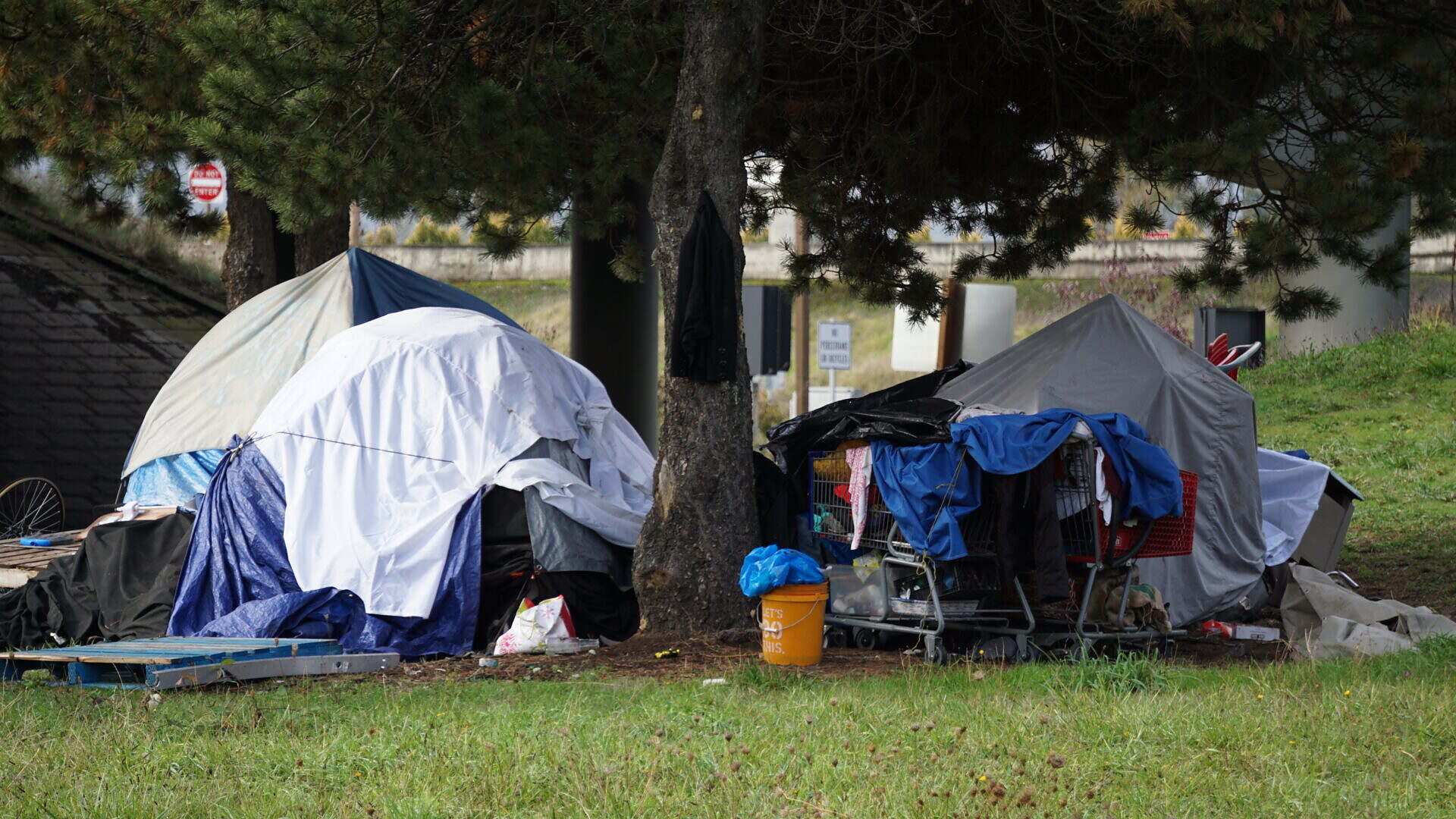
South Carolina’s homelessness crisis keeps getting worse. Across the state, from Charleston to Columbia and beyond, chaotic encampments in public spaces are growing. These encampments aren’t good for anyone, least of all the people who live in them.
Meanwhile, every year, our state throws more money at the problem. In 2023 alone, South Carolina spent more than $54.8 million to shelter 67% of the state’s homeless population (equivalent to about $20,000 per person) while leaving more than 1,300 people unsheltered, despite the fact that 13% of beds specifically allocated for the homeless were left unused.
Many of those 1,300 are living in encampments instead. For their sake, and for the sake of South Carolina’s communities, our state must help the unsheltered homeless get off the streets and into safe, stable living situations. To achieve this, South Carolina should follow the lead of states like Kentucky, Indiana, and Utah by banning unsanctioned camping in public spaces like sidewalks and parks.
Encampments are a disaster for everyone involved. Conditions there are inhumane, and the individuals who live in them are often victims of crime (including violence, sexual assault, and the drug trade). They are also perpetrators of both violent crime (including robbery at rates 175 times higher than the average person, and assault at rates 130 times higher) and property crime (including arson at rates 514 times higher and burglary at rates 183 times higher).

***
Despite this, powerful interests oppose reform. These advocates for the status quo argue that banning camping would “criminalize homelessness.” In their view, homelessness is caused entirely by a shortage of affordable housing. If enough affordable housing (and, coincidentally, more taxpayer funding for the NGOs they work for) were provided, they claim, the problem would quickly disappear.
Despite decades of trying, it hasn’t yet – and we can’t expect to achieve different results using the same tactics. In fact, contrary to their narrative, careful examination of data reported by South Carolina to the federal Department of Housing and Urban Development (HUD) reveals that South Carolina already has enough available beds to provide shelter for the state’s entire unsheltered population.
In 2024, the most recent year for which complete data is available, the state had 5,804 beds intended specifically for homeless people and 4,593 total homeless people (including both those living in shelters and those living outside). Despite there being no shortage of available beds, 1,846 South Carolinians remained unsheltered. The fact that the Palmetto State cannot connect many of these people with free, available housing suggests that affordability alone is not the source of the problem.
The real problem is behavioral. While South Carolina’s overall homeless population has shrunk in recent years, those left on the street have become sicker. The number of individuals with serious mental illness or chronic addiction has increased by 8%. Roughly 22% of South Carolina’s unsheltered population suffers from severe mental illness, and an additional 23% suffers from drug addiction. These numbers are self-reported, and the real numbers are likely much higher.
***
RELATED | SOUTH CAROLINA INCOME LEVELS GAINED MODEST GROUND IN 2024
***
Rather than continuing to ignore these realities, state and local governments increasingly see that compassion means structured intervention. Excessive focus on housing alone doesn’t help homeless people for whom a lack of housing is a consequence, rather than a cause, of their problems. Taking a stand against unsanctioned street camping, by contrast, creates much needed opportunities to connect them with treatment, housing, and other services.
Change may finally be around the corner. At the local level, Greenville has already taken steps to ban urban camping. At the state level, legislation (S. 1101 and S. 1102) promises to introduce drug-free homeless service zones and establish limits on where camping is allowed. If passed, these measures would improve conditions for one of the neediest populations living in the most dire environments in our state, providing not only basic sanitation and central locations for mental health and addiction treatment, but also protection from the crime that plagues unregulated encampments.
Lawmakers should go a step further. If they truly wish to help South Carolina’s homeless and address the worsening homelessness crisis, they must not heed those who benefit from the failing status quo. Instead, they should forge a new path by completely banning unsanctioned public camping. By doing so, they can empower South Carolina communities to help the homeless escape the dangers of street living and build stable lives.
***
ABOUT THE AUTHOR…

Dr. Chris Sharp is a senior fellow at the Cicero Institute, where he focuses on homelessness, public safety, and higher education policy.
***
SOUND OFF…
Got something you’d like to say in response to one of our articles? Or an issue you’d like to address proactively? We have an open microphone policy! Submit your letter to the editor (or guest column) via email HERE. Got a tip for a story? CLICK HERE. Got a technical question or a glitch to report? CLICK HERE.

1 comment
Housing, food, water, health care, education, under capitalism those aren’t needs, they’re commodities. It isn’t that we can’t provide the unhoused with such things, but the system necessitates a constant demand for a profit-seeking venture to provide them. When you can’t allow yourself to look outside of such a system, well, then there simply is no solution to it. You’ve successfully externalized it, to the peril of the unhoused.
When your primary focus is profits, by definition your focus is no longer on meeting the needs of people. You must abdicate one at some point. Many have already made that decision.