
by WILL FOLKS
***
Officials with the U.S. Department of Energy declared a site emergency at South Carolina’s Savannah River Site (SRS) on Wednesday afternoon (October 28, 2026) – one which initial reports suggested involved an “unfiltered ground-level radiological release.”
SRS officials did not immediately confirm the release of any radiological material, and later stated there were no “detectable” levels released as a result of the incident.
“An event is in progress that has triggered emergency response activities at the Department of Energy’s Savannah River Site,” a brief warning statement issued by the agency at 6:21 p.m. EDT noted.
“At this time, there is no indication of a consequence beyond the Savannah River Site boundaries,” the statement continued.
The site emergency was declared at 5:39 p.m. EDT, according to a subsequent notice from the facility. That notice revealed that “a fire was reported at the Savannah River National Laboratory,” one officials said “has since been extinguished.”
“No contamination has been reported outside the affected facility,” the statement added.

***
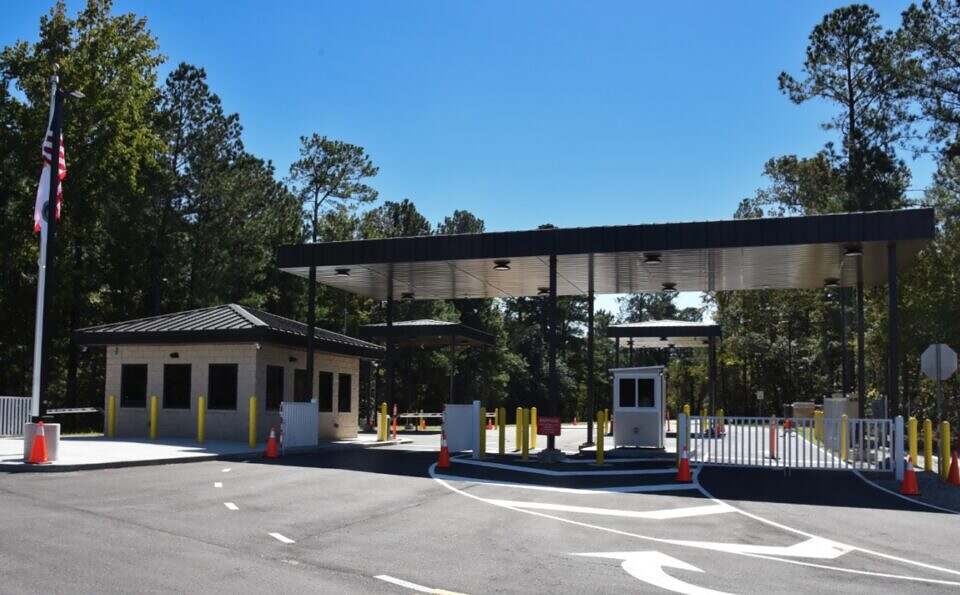
“As a precaution, barricades at site entrances have been closed to incoming traffic,” the second statement continued. “Rail, river, and air traffic in the vicinity of SRS is also being restricted. SRS officials are directing response efforts and have notified the appropriate state and local government agencies.”
The incident also resulted in a partial lockdown of the sprawling facility – which covers 198,344 acres and includes parts of Aiken, Allendale and Barnwell counties.
“In areas at SRS affected by the incident, employees who are not involved in emergency response or shutdown operations have been sheltered as a precaution,” the statement noted.
That lockdown was reportedly lifted within an hour of the emergency notice being issued, however.
***
UPDATE |
At 9:45 p.m. EDT, officials at the site notified the public the emergency had been “terminated” and that “protective actions have been lifted, and site barricades have reopened.”
The notification confirmed the fire was “extinguished,” and offered a promising update on the radiological front.
“Radiological surveys indicated no detectable levels of contamination,” the statement noted.
***
ABOUT THE AUTHOR…

Will Folks is the founding editor of the news outlet you are currently reading. Prior to founding FITSNews, he served as press secretary to the governor of South Carolina. He lives in the Midlands region of the state with his wife and eight children.
***
SOUND OFF…
Got something you’d like to say in response to one of our articles? Or an issue you’d like to address proactively? We have an open microphone policy! Submit your letter to the editor (or guest column) via email HERE. Got a tip for a story? CLICK HERE. Got a technical question or a glitch to report? CLICK HERE.

2 comments
This is reminiscent of incidents from SRS that I read in The State and The Columbia Record newspapers in the 1970’s, 1980’s, and possibly beyond. During those times, it was common to read that there had been an “accidental release” of radioactive gas or other material at SRS. Those articles usually ended with a statement or quote from some SRS spokesperson or other official to the effect that, the release was “not deemed hazardous”, “was not hazardous to the public”, or something of similar effect. Almost invariably, a couple of days or a week or so later, there would be a very brief followup article indicating that the previously reported release of radioactive gas or other substance was actually greater than first thought, but was still no danger to the public. Often, a week or two, maybe a month or two later; there would be yet another very brief article or blurb, again to the effect that the amount of released radioactive material was found to be even greater still than the last reported “larger amount”, but still was no hazard to the public. On some occasions, there may have even been a fourth such release of info, but I recall at least three being fairly common, back then.
I always wondered what the “real” story was on the quantity of material released was and its actual hazard level to the public.
In the very early 90s SRS had a Major Tritium Spill into the Savannah River! it Caused the Beaufort Jasper Water and Sewer Authority to shut Down the Intake Pumps in the Savannah River! BJWSA Gets the Water they Supply to Beaufort and Jasper Counties from the Savannah River!